e n

Photo Feature: Tilka Manjhi (11 February 1750 – 13 January 1785)

He led the famous revolt of the Tribals against the British from 1771 to 1784 and in 1778 wrested the Ramgarh Camp from them by forging a joint front with Pahadia Sardars

Tilka Manjhi was India’s first freedom fighter. Born in 1750, Manjhi, who fought for throwing off the British yoke almost a century before the 1857 revolt, was never given his due place in history.

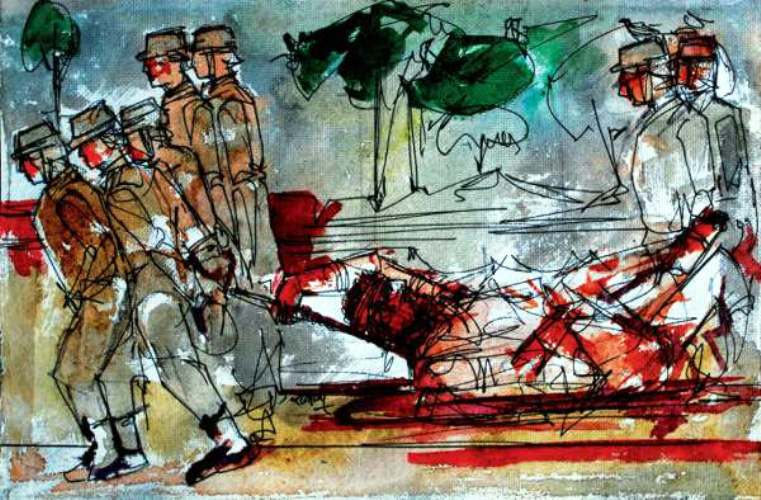
He led the famous revolt of the Tribals against the British from 1771 to 1784 and in 1778 wrested the Ramgarh Camp from them by forging a joint front with Pahadia Sardars. In 1784, Tilka Manjhi killed Augustus Clevland, the magistrate of Rajmahal. A major offensive against Manjhi’s guerrilla army followed, under the leadership of Ayarkut. It is said that after Manjhi was captured, he was tied to four horses and dragged up to Bhagalpur. Even after being dragged for miles, the tenacious fighter was still alive. His body may have been soaked in blood but his mind was aflame. His blood-red eyes instilled fear in the hearts of the British. On 13 January 1785 he was hanged from a huge banyan tree at a road junction in Bhagalpur.

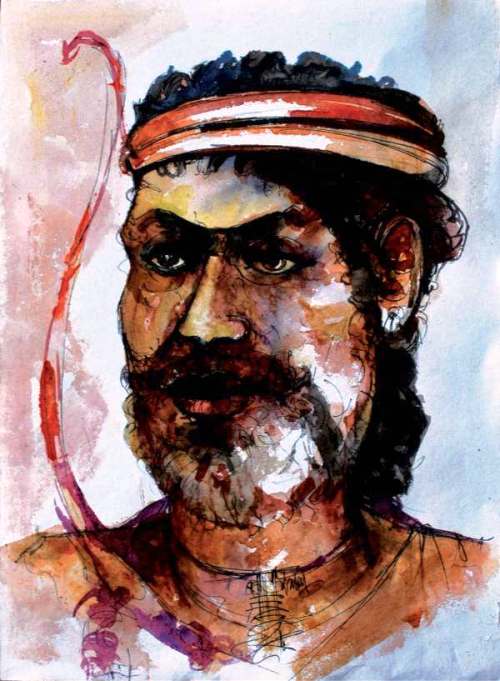
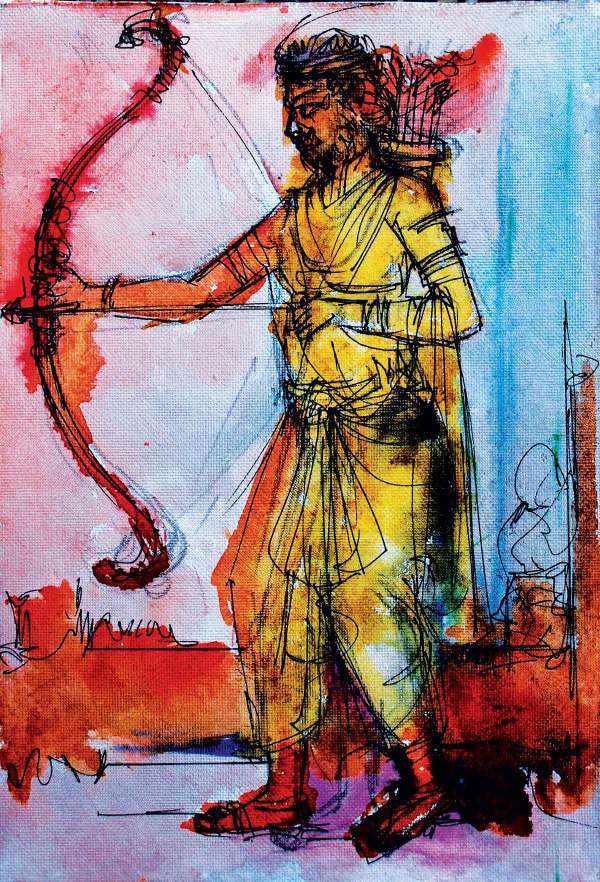
How this great Tribal hero has been ignored by history is evident from the fact not a single portrait of his is available for the nation to gratefully preserve.

To fill this void, on the occasion of his birth anniversary – 11 February – well-known painter Dr Lal Ratnakar has prepared three paintings specially for FORWARD Press, depicting scenes from the life of Manjhi. The FORWARD Press family is indebted to him.
pfp-1-copy-1


pfp-2-copy-1


pfp-3-1

Published in the February 2016 issue of the Forward Press magazine
About The Author

Rajan Kumar

Rajan Kumar is Assistant Editor (Hindi), Forward Press.

Related Articles

Discovering young Ambedkar’s Indo-US trade petition
‘We, the representatives of India and members of the Indian Society for the Promotion of Commerce, request to the high-intelligence of the officers of...
Beyond Sacrifice: Reflections on the multifaceted life of Ramai
Was Ramabai just a dutiful housewife of Babasaheb, or was she an active co-emancipator who, like Babasaheb, envisioned a society free from man-made divisions...
Dr Ambedkar’s interactions with Indian scientists of his era
In my limited research, I found documented evidence of at least four leading Indian scientists who had interactions with Dr B.R. Ambedkar. They were...
‘Lo Bir Sendra’ reveals yet more facets of the multifaceted Jaipal Singh Munda
In his recently republished memoir, Jaipal Singh recalls founding labour unions in the Gorumasahini and Badampahar iron-ore mines (in then Orissa) of the Tatas....
How Ambedkar led deeksha ceremonies in Nagpur and Chandrapur despite ill health, and Bombay was to follow
Why did Babasaheb Ambedkar sacrifice his valuable health to write the books? Why did he take on a mission to embrace Buddhism through multiple...