Haryana Chief Minister Manohar Lal Khattar has said that his government would soon rehabilitate the Dalits of Mirchpur who have been living away from their

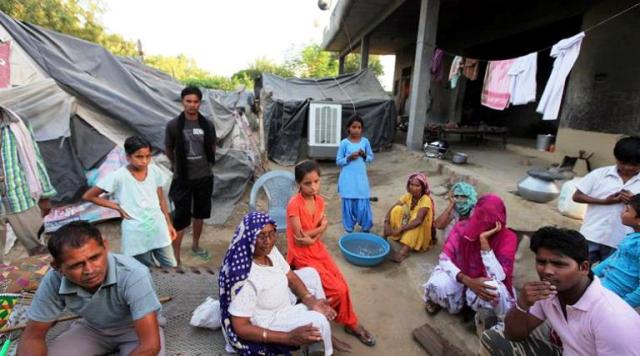
homes for the past five years. On 2 June, Union Minister of State for Social Justice and Empowerment Ramdas Athawale met Khattar at Haryana Bhawan, New Delhi, and requested him to take urgent steps for the rehabilitation of the Mirchpur’s displaced Dalits and for providing compensation to them. Dozens of Dalit families have been living at the Tanwar farmhouse in Hisar since their homes came under attack in 2011. He also discussed the growing incidents of atrocities against the Dalits in Haryana and the various programmes for their welfare.
Khattar told Athawale that the Haryana government was trying to resettle Mirchpur Dalits under some existing housing plan or identify a separate piece of land for them. Vedpal Tanwar, the owner of Tanwar farmhouse, has expressed his gratitude to Athawale and Khattar. Besides providing them shelter at his farmhouse, Tanwar is also leading the legal battle for the rehabilitation of and compensation for the Mirchpur Dalits.
Athawale also requested Khattar to expedite the disbursement of the monetary compensation (Rs10.5 lakh) to the family of a Dalit woman who was raped and murdered in Rohtak in the first week of May. The Haryana government had announced compensation of Rs8.5 lakh from a fund created under the SC-ST Atrocities Act and an additional Rs2 lakh from the Red Cross.
Athawale also discussed backlogs in appointments to government posts in Haryana, creation of a congenial atmosphere for Dalit students and teachers in universities of the state, ensuring that the SCs are not deprived of the land allotted to them and resolving the issue of reservations for Jats by increasing percentage of reserved seats. He drew the chief minister’s attention to the fact that Dalits were yet to be given possession of the land allotted to them in 1962. Even in 2009, some Dalit landless families were allotted land but the government did not ensure that they got possession.
The chief minister told Athawale that the Haryana government was committed to the ideology of Dr Ambedkar. Khattar told Athawale about a four-day event centred on the thoughts of Ambedkar that was organized at the initiative of the government recently. Athawale reminded the chief minister about the sensitivities of Dalits. “The Dalits need respect from government and society as much as they need welfare programes. The protection of their dignity is of crucial importance,” Athawale said.
Forward Press also publishes books on Bahujan issues. Forward Press Books sheds light on the widespread problems as well as the finer aspects of Bahujan (Dalit, OBC, Adivasi, Nomadic, Pasmanda) society, literature, culture and politics. Contact us for a list of FP Books’ titles and to order. Mobile: +919968527911, Email: info@forwardmagazine.in