A Dalit who never had the chance to attend school is now on a mission to ensure that the youth from marginalized communities get educational skills to challenge social inequalities. Kolluri Sathaiah established the Phule Ambedkar Centre for Philosophical and English Training (PACPET) on 26 January 2022 under the parent educational training organization, Amrutha Sathaiha Kolluri Educational Society (ASKES). Political theorist Prof Kancha Ilaiah Shepherd, co-founder of ASKES-PACPET, provided the intellectual foundation for the institution. The political theorist argues that there is no alternative to proficiency in English to overcome three thousand years of hegemony of Sanskrit and Brahmanism. Inspired by Dr B.R. Ambedkar, Jotiba and Savitribai Phule, and Prof Shepherd’s vision of transformation through education, the centre offers multi-dimensional training in English language skills, anti-caste philosophy, sociopolitical concepts, gender sensitization, data science and, more recently, sports training for youth from marginalized backgrounds.
PACPET provides a flagship month-long training programme titled “Free residential intensive programme on English language skills, sociopolitical concepts, and anti-caste philosophy” as well as sports training to students in their formative ages from across the country. The accommodation and training are actually provided free of cost. Over the past four years, more than 1200 students from across India have joined the programme.
Long before PACPET trained its first student, Kolluri Sathaiah, born into a poor Dalit family, spent much of his early life as a wage labourer. Growing up amid poverty, inhuman caste-based discrimination and social exclusion, he witnessed the adversities faced by not only his family but also the wider community. These experiences deepened his commitment to social justice for disadvantaged communities. Over the years, he devoted himself to labour rights struggles, community service, supporting Adivasi families, and the educational empowerment of youth from poor and underprivileged backgrounds. For him, education was a pathway not merely to employment but also to dignity, equality and social transformation. Although he never had the opportunity for a formal education, Sathaiah’s vision and determination gave birth to PACPET, an initiative designed to equip the marginalized youth with knowledge, skills, critical awareness and confidence to challenge persistent inequality and shape their own future.
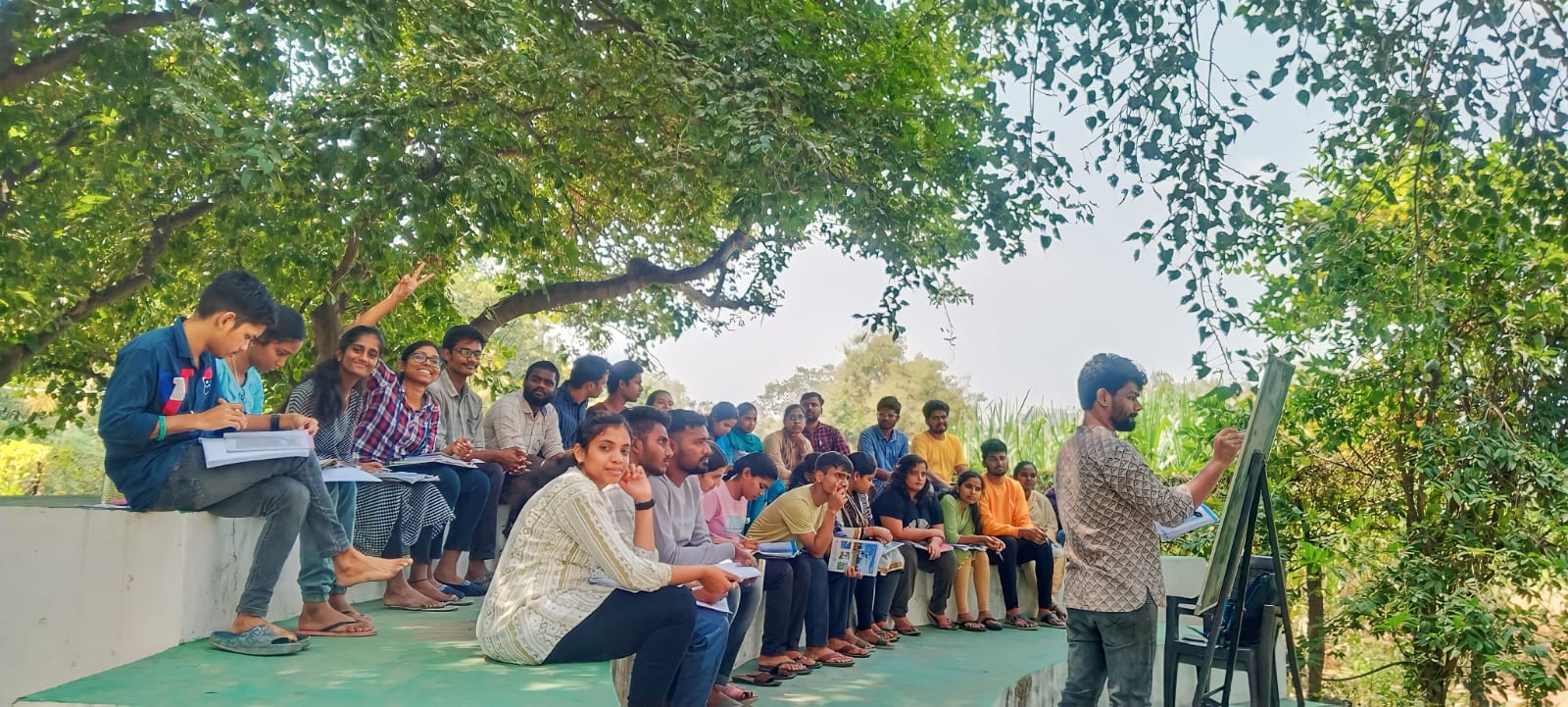
The initiative addresses the core issues among marginalized and first-generation learners that continue to shape today’s India. Historically, large sections of society were systematically denied education; and this still hinders their participation in the social, political and economic affairs of society. Although the Constitution guarantees the right to education for all Indian citizens, the gap between the historically privileged minority and the historically marginalized masses remains significant and reproduces and perpetuates inequality. Inequalities in access to resources and opportunities continue to affect the chances of young people seeking to raise their social position. Through its educational programmes, PACPET seeks to bridge this gap by providing skill development and critical engagement with questions of equality, justice, caste and gender.
A space for learning, unlearning and relearning
Education is one of the primary means of socialization. In modern society, educational institutions are not merely places of learning or the means to shape an individual’s personality, but also an important determinant of social change. Yet, educational spaces can often reproduce social hierarchies through uneven access to resources, linguistic barriers, and fear of being judged based on one’s background. Against this backdrop, PACPET offers an alternative through its distinctive pedagogy. This place is conceived for learning, unlearning and relearning through critical engagement with social realities that create new possibilities for them to imagine a better society.
For many students, the programme transformed their understanding of learning. A boy from Tamil Nadu explains, “PACPET taught me the importance of raising rational questions. Questioning can reform societal perceptions. PACPET did not give me answers; it gave me questions sharp enough to cut caste, yet gentle enough to transform society.” His remarks capture the centre’s commitment to question social realities and foster critical consciousness.
A Muslim student, Adhil, reflects on the idea of unlearning, saying, “Learning is a lifelong process, but what we learn matters. At PACPET, I learnt to unlearn outdated notions and relearn knowledge, which leads to the liberation of thought and a deeper understanding of reality.”
“PACPET is the world’s safest classroom,” says Babita, an alumna. This is an acknowledgement of the institution’s attempt to create a learning space, where students are encouraged to ask questions, share experiences, and engage in discussions without fear of ridicule or judgement. For many first-generation learners, classroom discrimination and exclusion have often debarred them from expressing themselves. The PACPET classroom seeks to challenge conventional pedagogies, foster a culture of dialogue and encourage students to think critically, speak confidently, make mistakes, and learn from one another.
English beyond communication
At the heart of PACPET’s pedagogy lies its emphasis on learning the English language. Today, English is not only a communicative language but also a language of democratic assertion, rational critique and a means to access knowledge that has historically remained inaccessible to marginalized communities. PACPET draws inspiration from Ambedkar and Phule, who viewed the English language as an instrument for social mobility and emancipation.
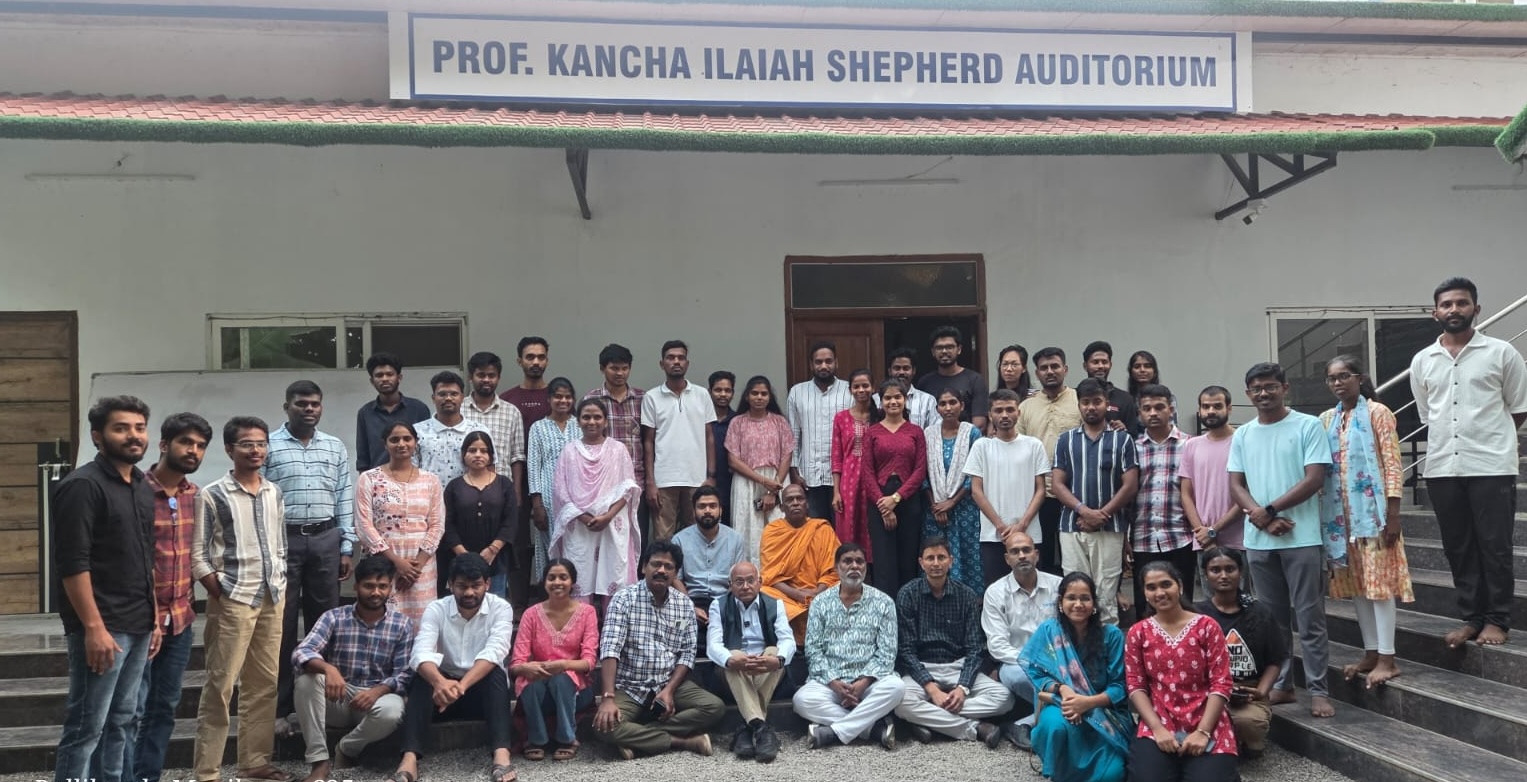
Many participants come to PACPET with little or no exposure to spoken English and often carry a deep sense of hesitation and fear about speaking in English. Rather than restricting English to formal lessons, students are encouraged to speak the language even in everyday interactions throughout their stay on campus. Faculty members emphasize participation over perfection, helping students navigate their fear and gain confidence in expressing themselves. Proficiency in English opens the door for many first-generation learners to access institutions, intellectual spaces and public life that have so far remained beyond their reach.
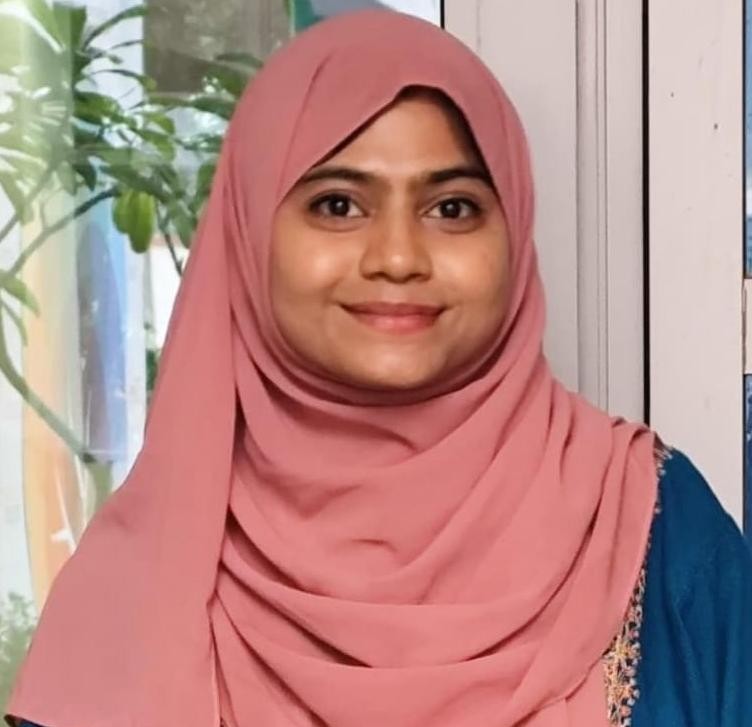
The transformative power of this programme is reflected in the experiences of students learning English. A young girl from Telangana, belonging to a Shudra caste and educated in a regional-language medium school, recalls arriving at PACPET with a fear of speaking English. She explains, “PACPET removed my fear. Today, even if my English is not perfect, I can speak boldly. This institution gave me confidence, awareness, and most importantly, self-respect.” For her, English is just another language but also a means for empowerment.
To sum up, PACPET represents an effort to bridge the knowledge gap between the historically excluded communities and others and counter the persistent educational inequalities. It has emerged as a space where hundreds of young minds are encouraged to find their voices. By combining language skills with critical thinking and collective learning, PACPET offers a small but meaningful pedagogical intervention that reframes education as an instrument to bring about social transformation and equality.
Forward Press also publishes books on Bahujan issues. Forward Press Books sheds light on the widespread problems as well as the finer aspects of Bahujan (Dalit, OBC, Adivasi, Nomadic, Pasmanda) society, culture, literature and politics. Contact us for a list of FP Books’ titles and to order. Mobile: +917827427311, Email: info@forwardmagazine.in