e n

Bihar’s first OBC chief minister recalls how B.P. Mandal succeeded him

This post is only available in Hindi. Visit the Forward Press Facebook page and and follow us on Twitter @ForwardPressWeb

In 1967, the Congress was in unfamiliar territory. It faced a tough challenge in the Lok Sabha and Assembly elections. It was still in power at the Centre but had lost states to other parties. Bihar got a non-Congress government for the first time. An alliance of Jan Kranti Dal (JKD) and Samyukta Socialist Party (SSP) formed the government with Mahamaya Prasad Sinha at the helm. It was known as the United Front government. Sinha had defeated K.B. Sahay in Patna assembly constituency.
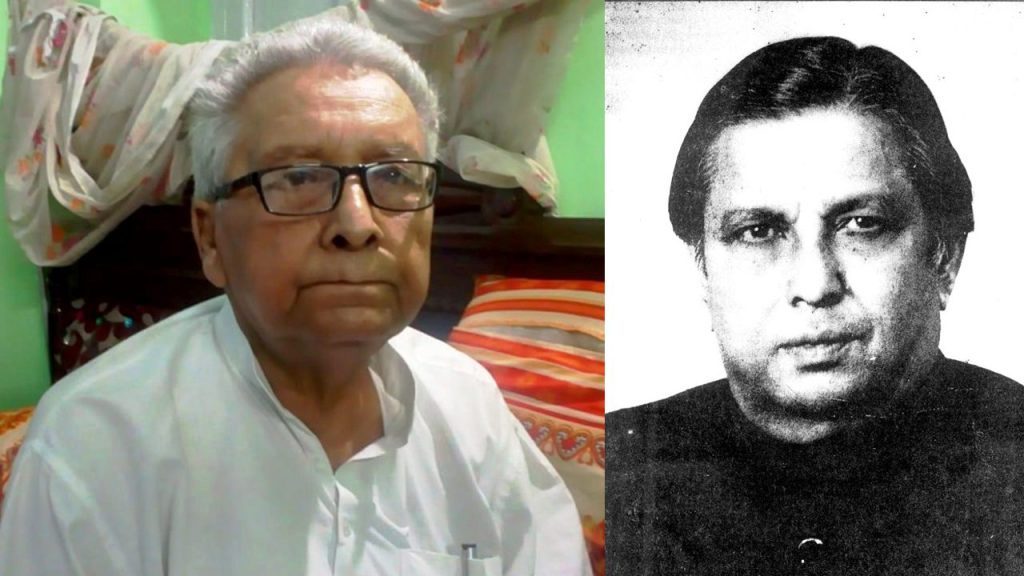
Satish Prasad Singh and B.P. Mandal

Sinha assumed charge on 5 March 1967. His party had 24 MLAs while SSP had 68. The politics of the Backwards was becoming vocal following the decline of the Congress. It also had an impact on the United Front government. The government had three SSP ministers but they should not have been ministers according to their party’s constitution. One of them was B.P. Mandal, who became a minister even though he was a Member of Parliament. Ramanand Tiwari had become minister while still being the president of the Bihar chapter of SSP. Bhola Singh was a minister despite being an MLC.

READ THE FULL ARTICLE HERE: Bihar’s first OBC chief minister recalls how B.P. Mandal succeeded him


About The Author

Birendra Yadav

Birendra Yadav is a senior journalist who has held key positions at Hindustan, Prabhat Khabar and several other dailies. These days, he publishes “Birendra Yadav News”, a sought-after weekly in Patna’s political circles

Related Articles

Shabbir Ahmed Ansari: Harbinger of Pasmanda consciousness
Shabbir Ahmed Ansari’s life shows that social reform is not only about sloganeering. It is also about making use of constitutional and legal provisions...
Third generation of Muslim leadership: Hopes and ironies
The rise of the Hindu backward castes in the political arena in the 1980s was a novel phenomenon. Naturally, most of its leaders were...
Phule’s Sarvajanik Satyadharma in times of religious hatred
What is surprising is that references to how Phule saw Islam and Christianity are totally missing from the discourse even as communalism in general...
Pluralisation challenges to contemporary anti-caste movements
Contemporary anti-caste movements have become experts in pluralism (counting identities, demanding quotas) but have lost the art of pluralisation. The global crisis of democracy...
Discovering Babasaheb’s lost speeches in the West
At the time of the Round Table Conferences, Dr Ambedkar had become a sought-after speaker in the UK, the US and Canada, as a...