e n

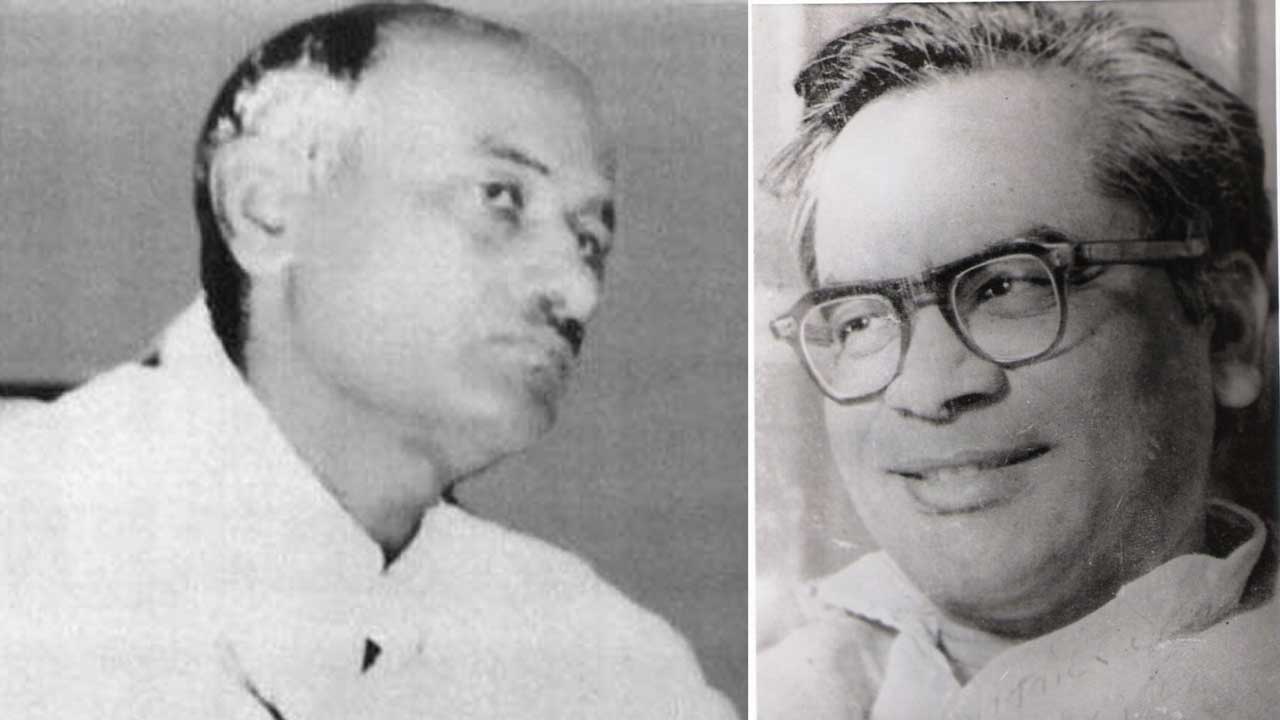
Jagdeo Prasad refused to be a political instrument of the upper castes

Jagdeo Prasad devoted his entire life to the service of the Bahujans and paid with his life. In a conversation with Upendra Pathik, his brother Virendra Prasad recalls his simple life, his struggle and his sacrifices

Special on the birth anniversary of Jagdeo Prasad (2 February 1922 – 5 September 1974) 

Jagdeo Prasad (2 February 1922 – 5 September 1974) is counted among leaders who turned the issues of the poor and the deprived into the fulcrum of politics, especially in North India. He was often described as the Lenin of Bihar. Taking Ram Manohar Lohia’s slogan of “Picchda pave sau mein aath” (The backwards are entitled to 80 per cent) a step further, Jagdeo Prasad talked of “Nabbe banam das” (90 versus 10).

READ THE FULL ARTICLE HERE: Jagdeo Prasad refused to be a political instrument of the upper castes

About The Author

Upendra Pathik

Upendra Pathik, who worked as a journalist in the 1980s and 1990s for 'Navbharat Times' and 'Prabhat Khabar', has also been the national president of Arjak Sangh’s cultural committee. He continues to write today and is known for his humanist take on social issues

Related Articles

Revisiting Meera and Raidas: Who was Girdhar Nagar?
Meera shedding social inhibitions was not about quitting royal life and embracing a spartan existence; it was about a widow being drawn to a...
Shabbir Ahmed Ansari: Harbinger of Pasmanda consciousness
Shabbir Ahmed Ansari’s life shows that social reform is not only about sloganeering. It is also about making use of constitutional and legal provisions...
Phule’s Sarvajanik Satyadharma in times of religious hatred
What is surprising is that references to how Phule saw Islam and Christianity are totally missing from the discourse even as communalism in general...
Discovering Babasaheb’s lost speeches in the West
At the time of the Round Table Conferences, Dr Ambedkar had become a sought-after speaker in the UK, the US and Canada, as a...
Jotirao Phule’s ideology and literature
Phule challenged the traditional concept of literature. For him, literature was not only about aesthetics. It was a tool for ushering in social justice....