India has a long history of discrimination, harassment and exploitation in its Higher Education Institutions (HEIs). After the departure of the British from the Indian shores, harassment took on myriad forms in the HEIs. It was just the ‘educational version’ of the harassment that pervaded society at large. Yet even today, the Bahujan are unable to see beyond the forms of harassment symbolized by Eklavya, Shambuk and the like in the mythologies and scriptures. They don’t feel the need to add to those the new forms of harassment that have emerged. That has caused the consciousness of mobilization and struggle against the ideology of harassment to stagnate. A lot can be said on this topic. But for now, let’s confine ourselves to UGC Regulations 2026.
What does an education institution mean? We all know that educational institutions have operated in the manner of laws and rules to deny this society the right to acquire an education. A machinery in place to harass and punish those who dare to violate these rules. Modern educational institutions are supposed to build society. They are supposed to develop confidence in the organizing and building of society among those who have been deprived of these opportunities. Dr Ambedkar is a case in point. After the promulgation of the Constitution of India, there emerged the imperative of building a power structure founded on equality, as mandated by the Constitution. At the same time, there were deep-rooted rules, norms and customs that only inequality could sustain. The protagonists of the old norms and customs, rather than implementing the Constitution, chose the path of using the Constitution to have their way. What was only required was an illusion that the Constitution was being implemented. The subtlety of this exercise of creating an illusion of adhering to the Constitution rooted in equality, while protecting and preserving the ideology of inequality can easily be understood.
Oppression was starkly visible in the rural hinterland. Instances of massacres, rapes and social and economic boycott were too numerous to be counted. Then came the incident at Khairlanji in Maharashtra. In 2006, Bhaiyalal Bhotmange’s wife Surekha, their daughter Priyanka and their two sons Sudhir and Roshan – both blind – were murdered. The incident underlined the urge to crush the section of the deprived that had somehow managed to slightly improve its lot. It was the time when a small section of the Bahujan, who had managed to get jobs, was eagerly looking at sending their next generation to institutions of higher learning. The Bahujan were not as visible on campuses of HEIs as those organizing themselves around their fundamental issues. Consequently, in 2006, the central government had to take a decision to set aside some seats in the HEIs for socially and educationally backward sections of society – in other words, introduce reservations for them.
The targeting of the Bahujan in HEIs grew exponentially after 1990, though sporadic incidents were reported even earlier. For instance, I was told that in 1973-74, Ram Prakash Kori, a topper in Sagar University, qualified for admission to a course in medicine. However, he was forced to commit suicide shortly after getting enrolled. After the introduction of reservations for the OBCs in HEIs, such incidents assumed a ‘communal’ form – just as the massacres in the rural areas did in the 1960s. The implementation of the recommendations of the Mandal Commission in the early years of 1990s seems to have a direct correlation with such incidents assuming a ‘communal’ and institutional form. The University Grants Commission (UGC) has been issuing guidelines to combat oppression and discrimination on campuses since the 1990s. After incidents of oppression on campus began finding increasing mention in Parliament, following the implementation of the Mandal Commission report, the government, in 1996, said in the House that guidelines for controlling ragging in HEIs had been issued from time to time. The MPs who raised the issue of ragging in Parliament were not elected from Delhi or other mega cities. They were mainly Dalit members like Ramdas Athawale and Devendra Prasad Yadav, Rajo Singh, Ashok Kumar Patel, Sultan Salauddin Owaisi, Ummareddy Venkateswarlu, T. Ventariselvan and Rampal Singh, among others. But they merely raised the issue in Parliament. They did not politically oppose the ideology of oppression. The result was that discrimination, harassment and exploitation in HEIs assumed the form of subjugation.
Subsequently, a committee led by former CBI director R.K. Raghavan was constituted on the orders of the Supreme Court. At the time, Raghavan told me that nowhere in the world harassment of students was as vicious as in India. Raghavan said that the oppression had turned violent and included homosexual abuse. He was also of the opinion that the colleges and the universities lacked the will to stop this harassment.
The fact is that after Mandal took effect, harassment in the institutions of higher learning turned increasingly vicious. It was euphemistically called ragging, masking its dreadful character. One can say without hesitation that the English language has been historically used in Indian society to create an illusion of democracy, where none exists, and to hide the ground realities. Language was used as a weapon, for had the discourse shifted to investigating the ground realities related to harassment, it would have triggered a debate on the political connection of the hegemonic ideology of the campuses. The ground reality can be understood from the reports of two committees – the first being that of the Raghavan committee. I asked Raghavan why he did not visit AIIMS – the largest medical institution in the country – from where complaints of harassment were pouring in. Suicides in medical institutions had been a regular occurence for some time. Raghvan replied in a rather harsh tone that the panel was not an investigative agency. It was supposed to hear out the different parties and find out what all was being done in the name of ragging. That was probably the reason the panel did not list social prejudices as a factor behind the harassment. But the second report exposed the social factors behind the harassment taking a vicious turn. This report was written by then UGC chairperson Sukhadeo Thorat, who did visit AIIMS.
A doctor, who had graduated from AIIMs, told the Thorat committee that harassment of students in the institution fell into two categories. The students lacking proficiency in English had to face harassment as soon as they entered the institution. In the second category were students who came from socially and educationally backward communities. The harassment of the students in the second category was consistent and never-ending, though with time it became confined to the hostels. All this finds mention in the report of the three-member committee headed by Prof Thorat. The two other members of the committee were Dr K. M. Shyamprasad and R.K. Shrivastava.
Dozens of students testified in writing before the committee about the ragging of Dalits and the Adivasis. The seniors made students from the reserved communities sit on the floor, locked the doors of their hostel rooms. After being harassed for five days, the victims had no choice but to leave hostels. Dr Ajay Singh told the panel that he was harassed from the very day he entered the hostel. Dozens of students reported that their rooms were locked from the outside, abusive comments were written on the walls outside their rooms and they were told to leave the hostel or face consequences. Dalit and Adivasi students were forced to abandon their rooms on the first and second floors and move to the fourth and fifth floors in a top institution like AIIMS. All Dalit and Adivasi students were made to reveal their caste and they were abused and humiliated. The ragging is not of individuals, but of entire castes and communities. They face discrimination even in sports. In dining facilities run by non-government agencies, Dalit-Adivasi students are seated separately.
Those who endorse the treatment of Eklavya and Shambuk should find out how many students have committed suicides in HEIs due to casteist harassment. We know about Rohit Vemula and Payal Tadvi because they chose to relate their tales of harassment themselves. Deaths due to harassment are now classified as suicides, rather than murders. Quoting from the reply of the government in Parliament, MP Shivanand Tiwari wrote on social media: “Over the past five years, 100 students have committed suicide in IITs, IIMs and other institutions of national importance. Almost all of them were Dalits, Adivasis, OBCs and minorities.”
According to research scholar Megha Malini Pathak, 219 complaints of harassment were received from students in HEIs in the country in 2020. In 2021, the number grew to 511. The UGC noted that in 2025-26 the complaints of caste-based harassment from colleges, universities and other educational institutions had grown by 118 per cent.
Ideology of harassment and government machinery
When the issue of harassment of students in HEIs began coming up more often in Parliament, the government, in 1996, said that guidelines for stopping ragging were being issued from time to time. The government also said that educational institutions have been asked to amend their rules to provide for expulsion of students found guilty of ragging.
How many students were actually penalized on account of ragging? In August 2004, the School of Planning and Architecture, Delhi, instituted an inquiry into a written complaint of abuse and physical violence. The accused were fined and were suspended from the institution for three weeks. But even such mild punishment was meted out only in a few cases. This, when years ago, the Union Government had said that in cases of particularly cruel forms of harassment, action can be taken under sections 302, 304(A), 307, 324, 325, 326, 339, 340, 341, 342, 343, 349, 350, 351, 352, 353, 357, 358, 376, 377, 383, 509 and 511 of the IPC. Compare this with how many students from weaker communities were thrown out of educational institutions, how many failed in interviews, how many denied admissions citing NFS (None Found suitable) and how many denied enrolment in PhD programmes.
In 1996, the government announced that a high-level committee had been constituted to investigate complaints of harassment in the National Institute of Fashion Technology (NIFT). The directives issued by the Supreme Court in 1998 during the hearing of a petition were communicated to all states, union territories and universities. The IIT-Delhi constituted its own committee. AICTE issued directives to the vice-chancellors of all technical universities and the secretaries in-charge of technical education in state governments, asking them to end harassment in institutions under their jurisdiction. None of these institutions fell under the purview of the UGC.
In September 1999, the UGC appointed a committee of specialists headed by K.P.S. Unni to suggest measures for combating ragging. The report of the committee was sent to all universities and colleges. They were also asked to give details of the action taken by them against ragging. Only 169 universities bothered to answer. The committee recommended to the central and state governments to promulgate laws to stop harassment in HEIs. The law, it said, should make harassment a cognizable offence with punishment commensurate with the seriousness of the crime.
Such laws were made. In fact, there is a long list of them. Karnataka promulgated an act in 1983, Tripura in 1990 and Tamil Nadu in 1996. Maharashtra, Kerala, Assam, Himachal Pradesh, Jammu & Kashmir and even newer states like Jharkhand and Chhattisgarh have such laws in place. However, the incidence of ragging and harassment is growing. In 2006, the Supreme Court constituted a committee headed by Raghavan. The story of that committee has already been detailed. The death of Aman Kachru in 2009 jolted the government machinery into a brief spell of action. But since then, till 2026, we have only been hearing of more and more such incidents.
UGC guidelines and regulations
The fact is that for UGC, Dalit, Adivasi, OBC, Economically Weak Sections (EWS), the physically disabled, women and minorities are just labels or objects. A study of the regulations issued to date shows that they hardly differ from each other. Barring the addition of new groups of potential victims, there has been nothing new in them. OBCs were added in 2023 (University Grants Commission (Redressal of Grievances of Students) Regulations). Women were added in 2016.
The truth of regulations dated 13 January 2026
There is nothing new in the regulations issued on 13 January 2026, when compared with the regulations issued since 2009. On a petition related to a Kerala University, the Supreme Court gave some guidelines. Accordingly, the UGC notified the guidelines, in addition to the notifications. The regulations have limitations in that they take into consideration only incidents that happen in certain parts of campuses, such as canteens, basements, etc. In 2009, for the first time, a discussion was held with students of a particular community but the community was not named. The 2012 regulations specifically referred to harassment of students from Scheduled Castes (Dalits) and Scheduled Tribes (Adivasis). Since 2015, harassment of women students began increasingly coming to the fore. In the same year, the definition of campus was expanded to include bank counters, health centres, etc. In 2019, explicit instructions were issued to give a hearing to the complaints of OBCs, minorities and physically disabled persons, besides Dalits, Adivasis and women. In short, as new forms or new classes of victims were identified, they were added to the regulations. Thus, the bureaucracy simply played with words. The machinery for stopping harassment too was evasive. Institutions were directed to create mechanisms ranging from committees for redressal of grievances of students to ombudspersons. But here, let us confine ourselves to comparing the 2023 and the 2026 regulations. The 2023 regulations directed action on complaints of discrimination against Dalits, OBCs, Adivasis, women, minority community and physically disabled students. The regulations stated that either the chairperson or one of the members of the grievance redressal committees for students should be a woman. Secondly, the chairperson or one of the members should be a Dalit or an Adivasi or an OBC. The regulations also empowered the ombudsperson to take action against the complainant if the complaint was found to be untrue.
The 2026 regulations have given a new name to the machinery for action against harassment. It is called the Equal Opportunity Centre. The Equal Opportunity Centre will have an Equity Committee. In fact, ‘equity’ is the buzzword of the new Regulations and finds numerous references. The regulations, the notification says, are aimed at “Eradicating discrimination on the basis of religion, race, gender, place of birth, caste, or disability, particularly against the members of scheduled castes and scheduled tribes, socially and educationally backward classes, economically weaker sections, persons with disabilities, or any of them, and to promote full equity and inclusion”. It should be noted that EWS – that is Savarna students from poor families – are also covered by the regulations. Like prior regulations, these regulations also give the criterion for the selection of the members of the Equity Committees. The committees must include representatives of SCs, STs, OBCs, the physically disabled and women. The regulations also provide for a person aggrieved by the report of the Equity Committee, submitted after inquiry into a complaint, to appeal to the ombudsperson. The ombudsperson may appoint an amicus curiae to facilitate the hearing of an appeal. The amicus curiae appointed by the ombudsperson shall be paid a reasonable fee by the HEI. The regulations do not stipulate any penalty or punishment – at least not against any individual. At most, UGC could cut ties with the HEIs concerned.
Interestingly, the regulations are largely confined to creating a machinery for receiving complaints and inquiring into them. As for penalty, the UGC only says that if, after an enquiry, it is established that an HEI has not complied with any provision of the regulations, it may debar it its university support programmes and remove it from the list of HEIs. The regulations do not spell out what action will be taken by the ombudsperson on the complaints. However, it is being publicized that the complaints will be forwarded to the police. This is a blatant untruth. The fact is that only complaints involving murder, attempted murder, violent attack etc – that is, crimes which come under the purview of the Bharatiya Nyaya Sanhita – can be forwarded to the police.
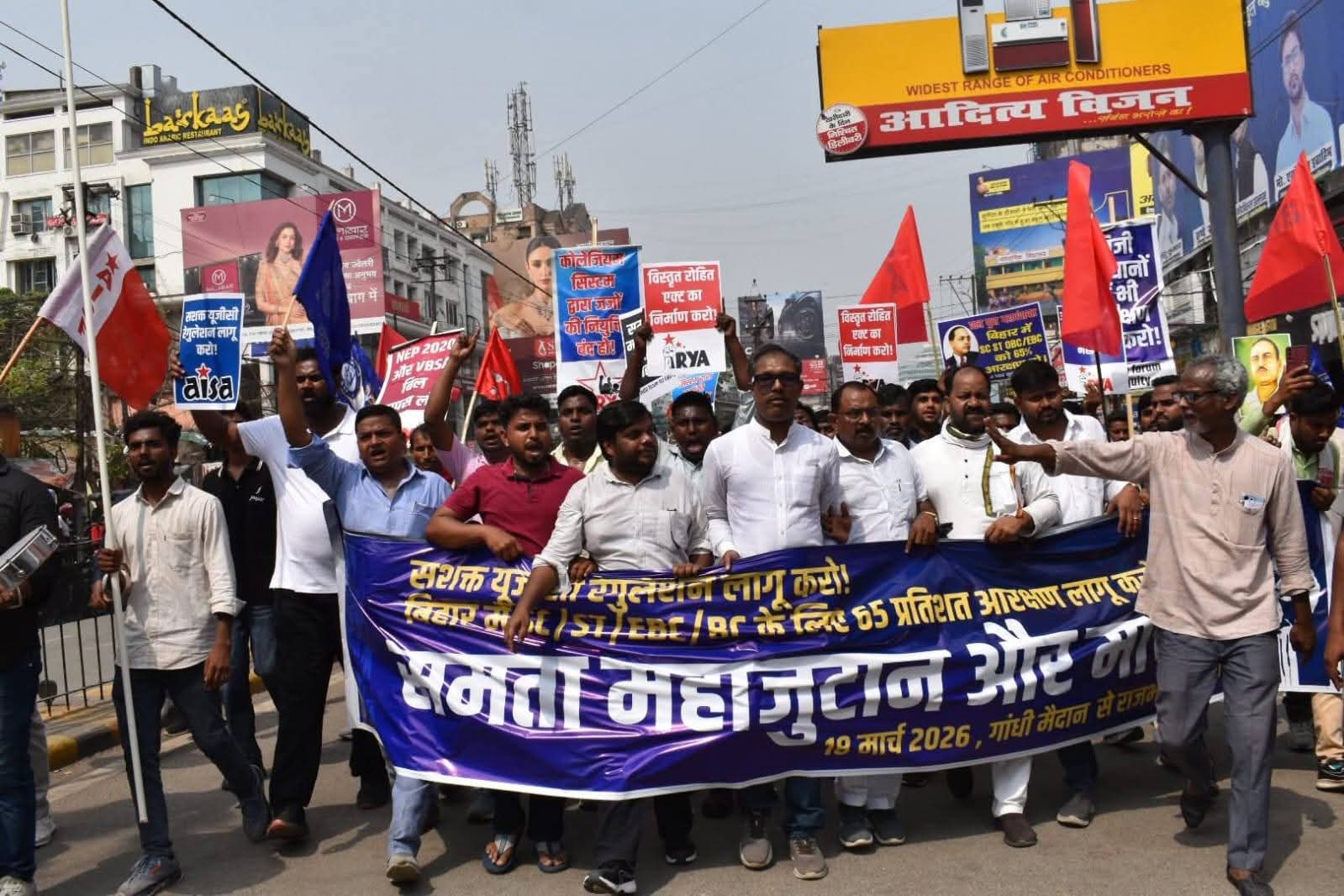
The UGC Regulations have been opposed since the day of their notification. This opposition has come mainly from the Savarnas. The opponents are not ready to specify which particular provisions they are opposed to. That is because the provisions only promote the idea of equity. The toolkit of the opponents has nothing to do with the provisions of the regulations. The opposition is a casteist reaction. Egged on by casteist sentiments, the opponents have attacked the leadership of the ruling parties. Our society is not ready to accept even a minimal level of equality. It doesn’t even want to talk about equality. It does not want to acknowledge the rights of the weaker sections. But mind you, those speaking ill of the regulations are not against the ideology of the ruling party. Actuated by casteism, they have been selectively attacking the leaders of the ruling party. They are as callous and ruthless in their opposition to the regulations as they are in their obnoxious activities on campuses of HEIs.
We need to understand the politics behind the entire chain of events – from the notification of the regulations to a stay on their implementation by the Chief Justice of India. The opponents of the regulations will continue to back rightwing politics because that’s the only way unconstitutional decisions will be taken to perpetuate their domination. Reservation on an economic basis is one such decision. The rightwing politics wants to draw into its camp the section of society that wants to establish equality and is looking for the political path that will take the country towards it. The rightwing politicians and their organizations are masters in the art of weaving illusions. They can easily project themselves as great protagonists of equality. Their real objective, of course, is to infiltrate the ranks of the flagbearers of equality. As for the Supreme Court, its stand on the regulations is in consonance with its attitude towards measures seeking to push the cause of social justice.
(Translation from the original Hindi by Amrish Herdenia)
Forward Press also publishes books on Bahujan issues. Forward Press Books sheds light on the widespread problems as well as the finer aspects of Bahujan (Dalit, OBC, Adivasi, Nomadic, Pasmanda) society, culture, literature and politics. Contact us for a list of FP Books’ titles and to order. Mobile: +917827427311, Email: info@forwardmagazine.in