The Dhamaal franchise has never promised realism. Since its first instalment in 2007, the series has relied on absurd situations, slapstick humour and improbable coincidences to deliver entertainment to family audiences. Indra Kumar’s Dhamaal 4 continues that formula, taking its protagonists on yet another treasure hunt packed with excessive CGI, fantasy landscapes and references to earlier instalments of the franchise as well as to Ajay Devgn’s past films. As family entertainment, the film (un)doubtedly delivers moments of laughter and spectacle. Yet beneath its playful surface lies a pattern that contemporary Indian cinema can no longer afford to ignore: humour that depends on stereotypes and the marginalization of already vulnerable communities.
Body-shaming
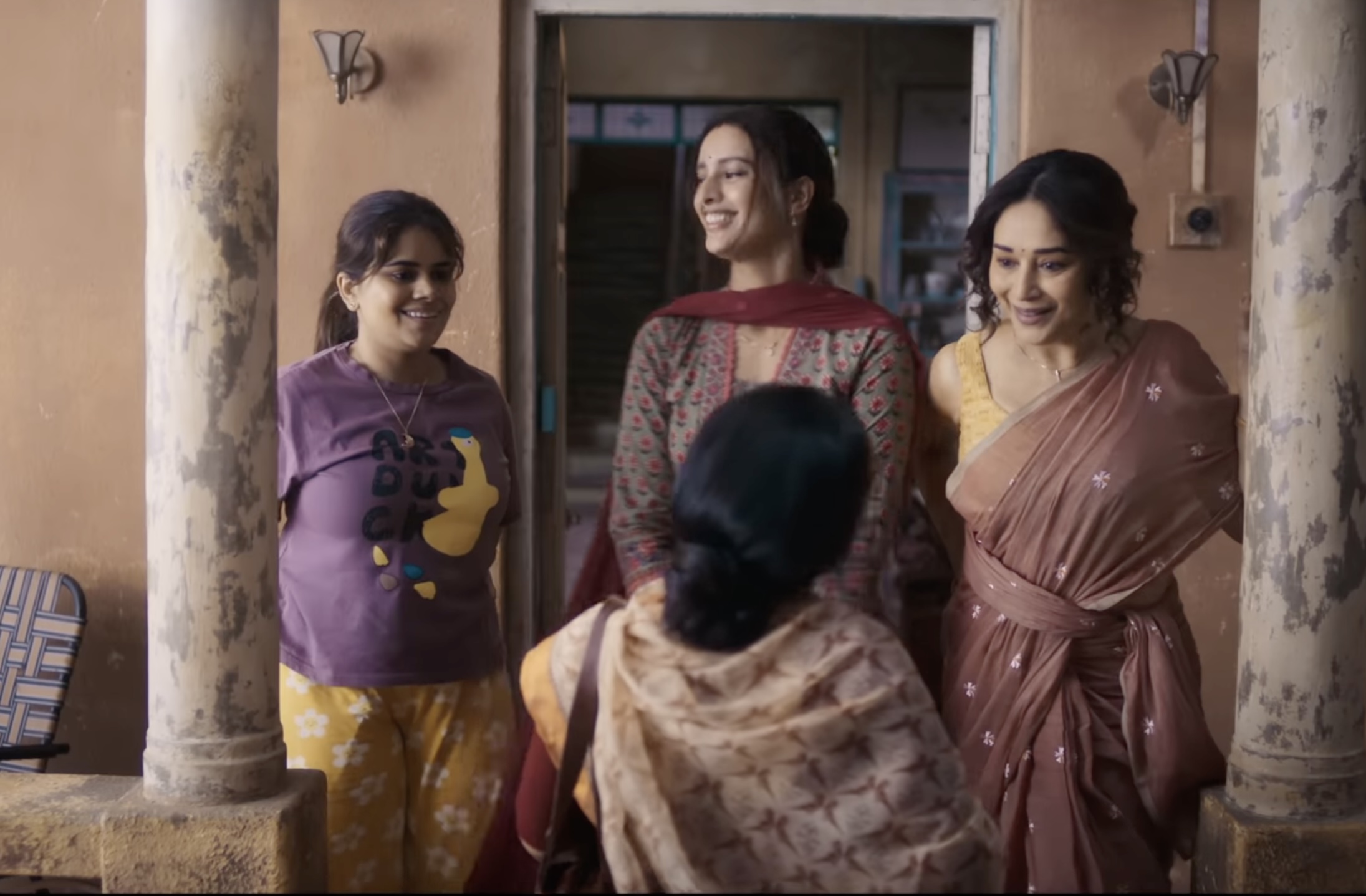
Perhaps the most visible example is the film’s treatment of body size. The character played by Anjali Anand is repeatedly reduced to the butt of jokes, with her body becoming the primary source of humour rather than her personality or actions. The jokes rarely move beyond presenting an overweight woman as inconvenient, burdensome or undesirable. Such humour has long been normalized in Indian cinema, particularly when directed at women, but repetition does not make it harmless. It merely (re)inforces the idea that some bodies exist primarily to be laughed at. From a feminist perspective, this reflects what scholars describe as “sizeism” – the social devaluation of individuals based on body size. Rather than challenging such prejudices, the film encourages audiences to laugh at the character rather than empathize with her, normalizing discrimination as harmless entertainment.
The problem extends beyond body-shaming. More broadly, the film’s women occupy limited narrative space, often functioning as romantic interests, visual spectacle or comic targets rather than equal participants in the adventure. The very first appearance of Esha Gupta’s character, for instance, frames her less as a narrative presence than as an object of visual attraction. While the franchise includes women in its ensemble cast, the comic narrative remains overwhelmingly male-driven, reproducing familiar gender hierarchies within mainstream commercial cinema.
‘Bihari accent’
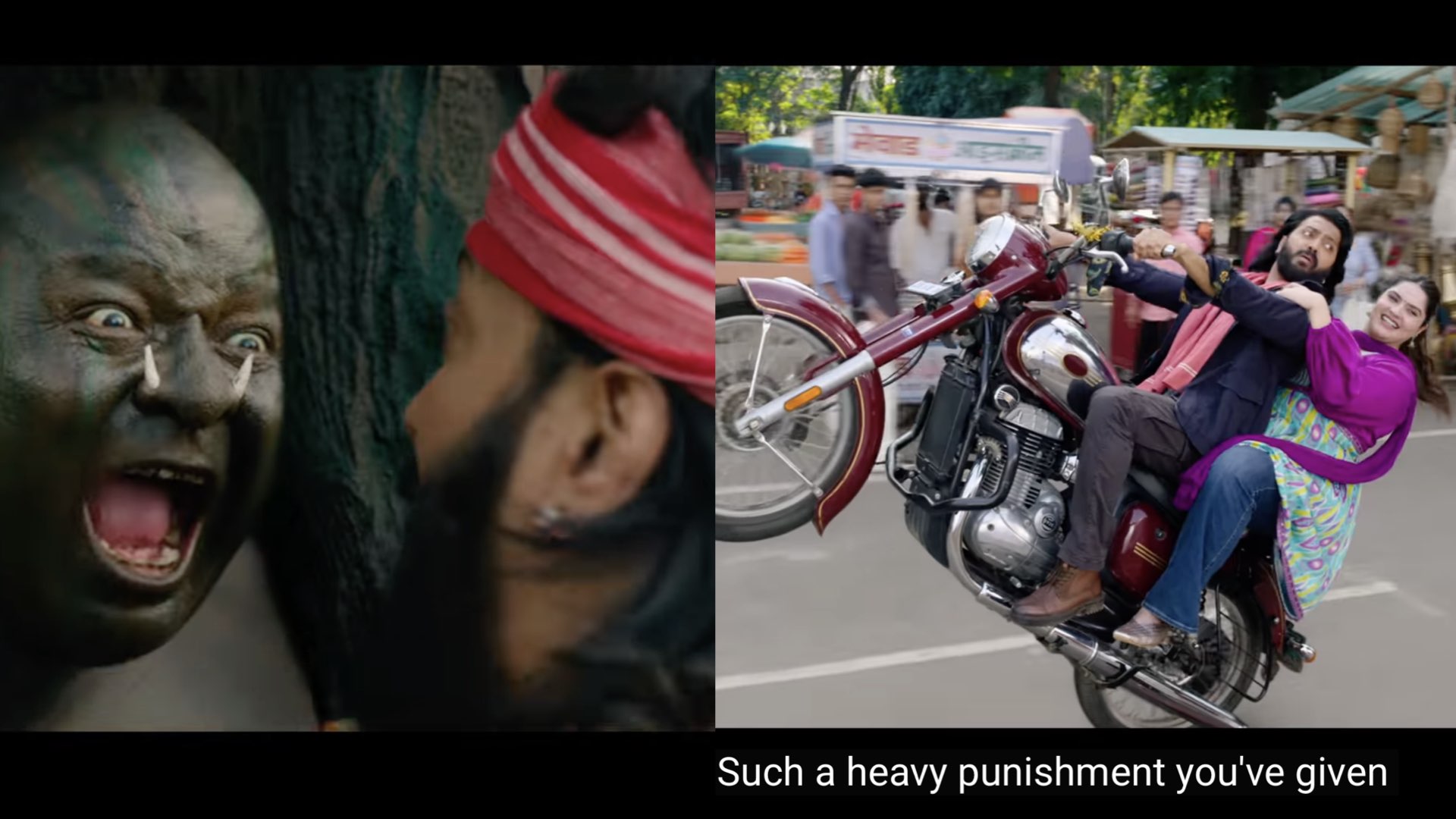
The film also relies on familiar regional stereotypes for humour. Riteish Deshmukh’s Bhojpuri-inflected dialogue delivery and exaggerated gestures, seemingly echoing the screen persona associated with Shatrughan Sinha, may be intended as affectionate parody. Yet Hindi cinema has long treated Bihari accents and Bhojpuri speech as comic devices, encouraging audiences to associate them with rusticity, foolishness or social backwardness. This humour carries a deeper social history that popular cinema rarely acknowledges. For decades, large numbers of migrants from Bihar and eastern Uttar Pradesh – many belonging to historically marginalized caste communities – have travelled across India in search of work due to unequal access to education, land ownership, infrastructure and economic opportunities. Their labour has sustained farms, construction sites, factories and urban households, while more privileged social groups often inherited wealth and became educated, and their social mobility helped them escape those stereotypes. In this context, laughter directed at the accent is rarely just about language; it can reproduce older hierarchies of caste, class and region by turning the experiences and identities of migrant communities into yet another punchline.
Treasure hunt in Adivasi land
The film’s central adventure provokes ethical concerns. The protagonists travel to an island inhabited by indigenous people in search of treasure that belongs to the local community. Yet the narrative frames this as an innocent and exciting expedition rather than questioning the morality of outsiders claiming ownership over indigenous wealth and resources.
Ironically, when another character appears motivated by greed, the protagonists readily condemn him while remaining blind to the fact that their own actions are driven by a similar desire for appropriation. The treasure hunt itself reproduces a familiar colonial logic in which outsiders assume entitlement to wealth sitting in indigenous lands while indigenous claims to ownership remain secondary or invisible. The narrative thus risks normalizing extractive relationships with indigenous lands and resources by presenting such appropriation as adventure rather than exploitation. The treasure hunt becomes an allegory, however unintended, for a broader history in which outsiders have treated indigenous territories as repositories of wealth to be discovered, claimed and removed. Equally troubling is the representation of the island’s inhabitants. They are portrayed through familiar cinematic clichés involving exaggerated speech, mysterious rituals, irrational behaviour and the suggestion that violence against outsiders is their natural instinct. Cultural difference functions primarily as a source of comedy and fear. Indian cinema has long represented tribal communities through fantasy, caricature and the familiar “jhingalala” imagination rather than through their lived realities.
Such portrayals reproduce a colonial image of indigenous communities as primitive, threatening or outside modernity while erasing the diversity, histories and political agency of India’s Adivasi peoples. Rather than engaging with indigenous communities as contemporary social and political actors, the film turns them into comic spectacle and exotic backdrop for the protagonists’ adventure. The film’s treatment of one eccentric character is similarly uncomfortable. He is repeatedly viewed with suspicion and forced to prove his loyalty despite consistently acting in good faith. Trust arrives only after dramatic acts of heroism, reinforcing the familiar cinematic idea that some individuals must continually earn acceptance while others receive it by default.
Beyond representation, Dhamaal 4 frequently abandons internal narrative logic altogether. Characters travel implausible distances with ease, appropriate boats and property without consequences and overcome obstacles through convenient plot devices. Comedy certainly allows room for exaggeration, but even absurd worlds require some internal coherence. Ironically, the film concludes with a surprisingly reflective message: one does not go to distant lands to find treasure because the real treasure is one’s family and the relationships one nurtures. Yet moments later, another treasure map appears – the lesson is immediately forgotten and the characters return to decoding fresh clues, setting up Dhamaal 5. Perhaps that ending captures the film perfectly. It gestures towards self-awareness but quickly retreats into familiar formulas. Indian comedy is capable of laughter-filled entertainment that does not depend on body-shaming, misogyny or the caricaturing of labouring and indigenous communities. The challenge is not to become less funny, but to become funnier without punching down.
Forward Press also publishes books on Bahujan issues. Forward Press Books sheds light on the widespread problems as well as the finer aspects of Bahujan (Dalit, OBC, Adivasi, Nomadic, Pasmanda) society, culture, literature and politics. Contact us for a list of FP Books’ titles and to order. Mobile: +917827427311, Email: info@forwardmagazine.in