e n

Poona Pact: The advent of Chamcha Yug in Dalit politics

Kanshi Ram believed that by forcing Ambedkar to sign the Poona Pact on 24 September 1932, Gandhi pushed the Untouchables into the ‘Chamcha Yug’ (The era of stooges). Kanshi Ram’s only book, Chamcha Yug, dwells on the nature and the form of the post-Poona-Pact Dalit politics. Alakh Niranjan throws light on the significance of this book

Kanshi Ram’s Chamcha Yug: The manifesto of Ambedkarite politics 

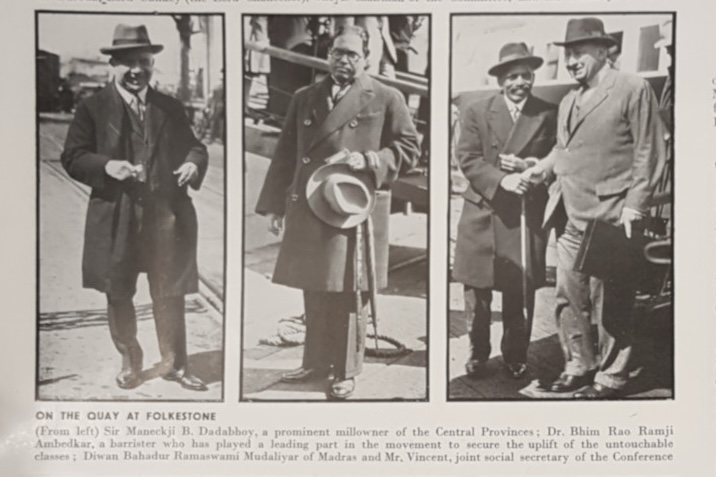
The day 16 August 1932 holds special significance in the history of modern India. It was on this day that the British government announced the Communal Award for India. The Communal Award was a milestone in India’s Constitutional. It was an approval in principle to universal adult suffrage and communal representation in India. It officially recognized the Untouchables, who were already a distinct social, cultural and religious community, as a separate political grouping. Although Gandhi and the Congress strongly opposed the recognition of Untouchables as a community distinct from the Hindus, British Prime Minister Ramsay MacDonald found the facts and the arguments presented by Dr Ambedkar at the Round Table Conference convincing and forceful enough to announce a separate electorate for the Untouchables. They were also to get the right of double vote.  

READ THE FULL ARTICLE HERE: Poona Pact: The advent of Chamcha Yug in Dalit politics

About The Author

Alakh Niranjan

Alakh Niranjan is a Dalit commentator who writes regularly for various newspapers and magazines. He is the author of 'Nahi Raha ki Koj mein: Dalit Chintak' (Penguin)

Related Articles

Discovering young Ambedkar’s Indo-US trade petition
‘We, the representatives of India and members of the Indian Society for the Promotion of Commerce, request to the high-intelligence of the officers of...
Beyond Sacrifice: Reflections on the multifaceted life of Ramai
Was Ramabai just a dutiful housewife of Babasaheb, or was she an active co-emancipator who, like Babasaheb, envisioned a society free from man-made divisions...
Dr Ambedkar’s interactions with Indian scientists of his era
In my limited research, I found documented evidence of at least four leading Indian scientists who had interactions with Dr B.R. Ambedkar. They were...
‘Lo Bir Sendra’ reveals yet more facets of the multifaceted Jaipal Singh Munda
In his recently republished memoir, Jaipal Singh recalls founding labour unions in the Gorumasahini and Badampahar iron-ore mines (in then Orissa) of the Tatas....
How Ambedkar led deeksha ceremonies in Nagpur and Chandrapur despite ill health, and Bombay was to follow
Why did Babasaheb Ambedkar sacrifice his valuable health to write the books? Why did he take on a mission to embrace Buddhism through multiple...