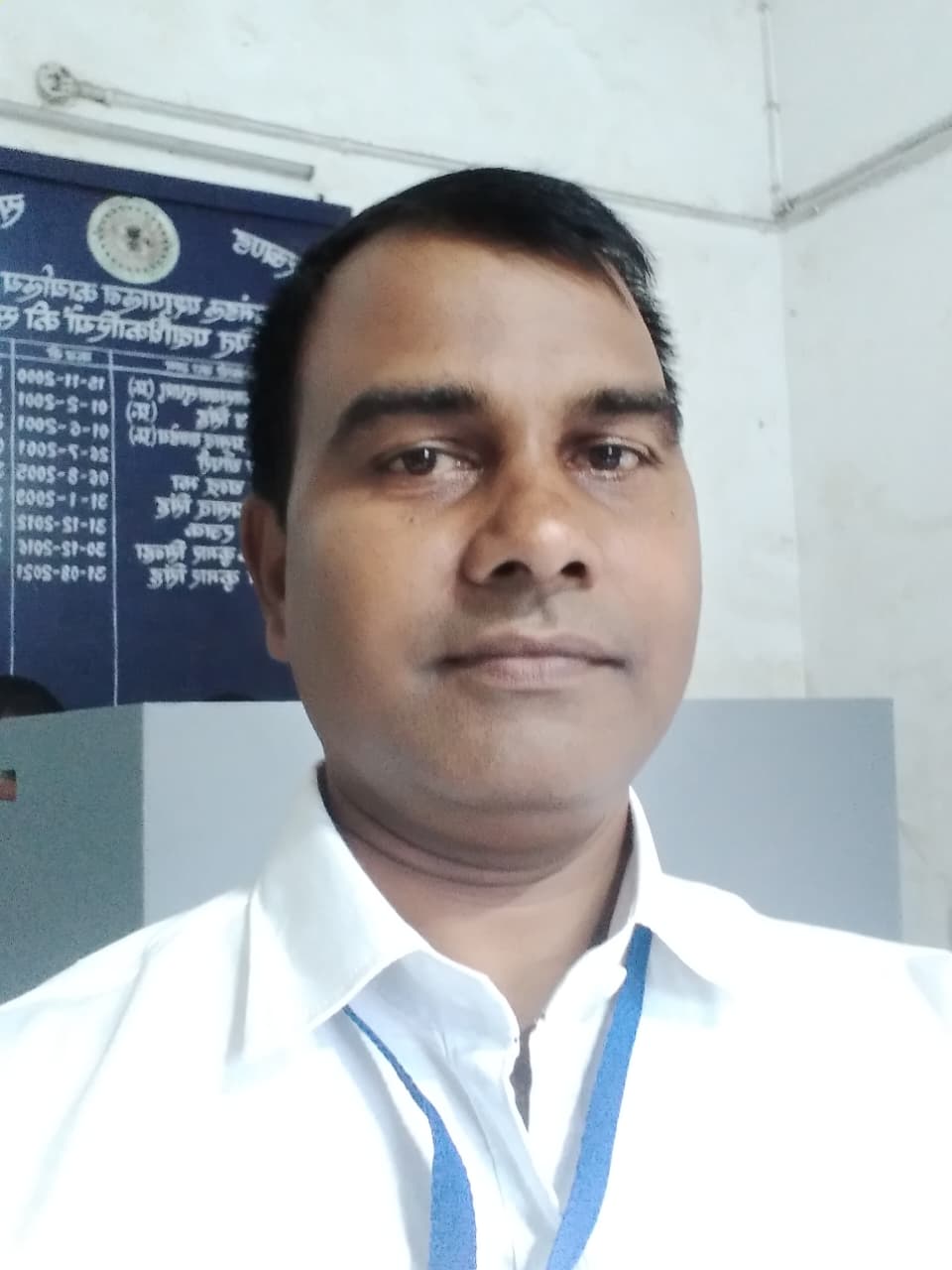
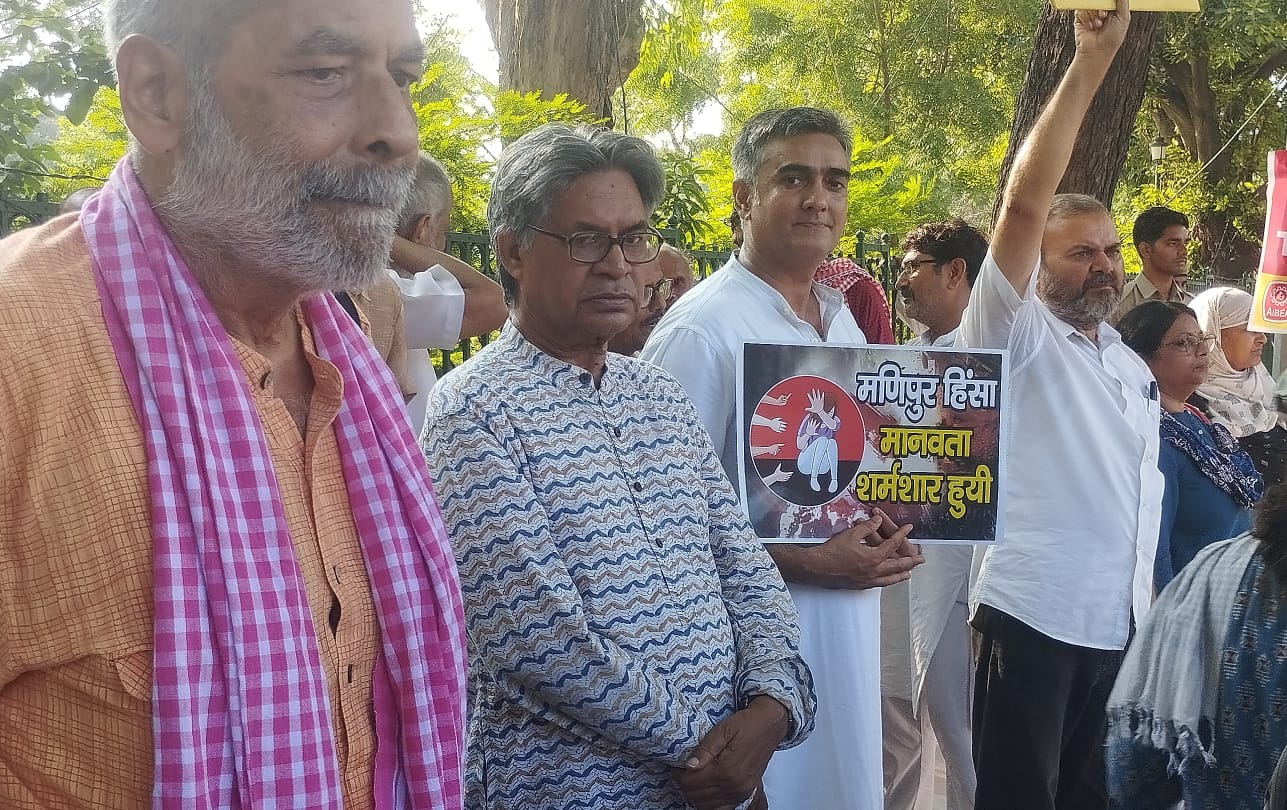
Virendra Yadav (5 March 1950 – 16 January 2026)
Virendra Yadav was a bold and committed intellectual, who challenged the traditional elitist approach to evaluation of literature and made the marginalized and their sensitivities and concerns central to Hindi criticism. This was nothing short of historic.
Yadav was born in Jaunpur, Uttar Pradesh on 5 March 1950. After completing his postgraduation in political science from the Lucknow University, he took to journalism. His stint as a journalist enabled him to have a dynamic interaction with the present.
His journey from journalism to literary criticism enriched his ideas. Hence, what informed his vision of criticism was a deeper understanding of sociopolitical issues that went beyond aesthetic interpretation and engaged with issues related to power, dominance and oppression.
Virendra Yadav believed that the centrality of the marginalized was a prerequisite for the democratization of literature. He came forth as a disruptor, who refrained from retiring into the comfortable cocoon of neutrality. He is alive and awake to the progressive and pro-people role of literature.
The central characteristic of his critical vision was repudiation of literary elitism, as also of the idea that literature is something to be merely enjoyed or relished. He was particularly harsh on the stream of Hindi criticism that used elitist artistic norms to evaluate literary works. He believed that elitist vision had confined literature to a narrow understanding and appreciation of aesthetics, ignoring its social relevance and transformative power.
As an antidote, Virendra Yadav went for canon formation and used the methodology of subaltern study to analyze Hindi novels. This makes him a post-Marxist thinker, which mandates understanding the multi-dimensional structures that sustain oppression based on caste, gender and religion, rather than confining oneself to the concept of class struggle. Referring to the limitations of using class to understand Indian society, Yadav wrote that caste dominates Indian society to such an extent that “Even as the caste-based occupational divisions are becoming increasingly unproductive and meaningless, the stranglehold of the caste system is tightening.”
Yadav was insistent that novels should not be read only as literary works, but as images of the social order. Even as questions were being asked about the social role of literature, Yadav had taken up the most daunting challenge of criticism – that is, to provide literature with a social context and make it more meaningful. He was firmly against treating literature merely as something to be relished.
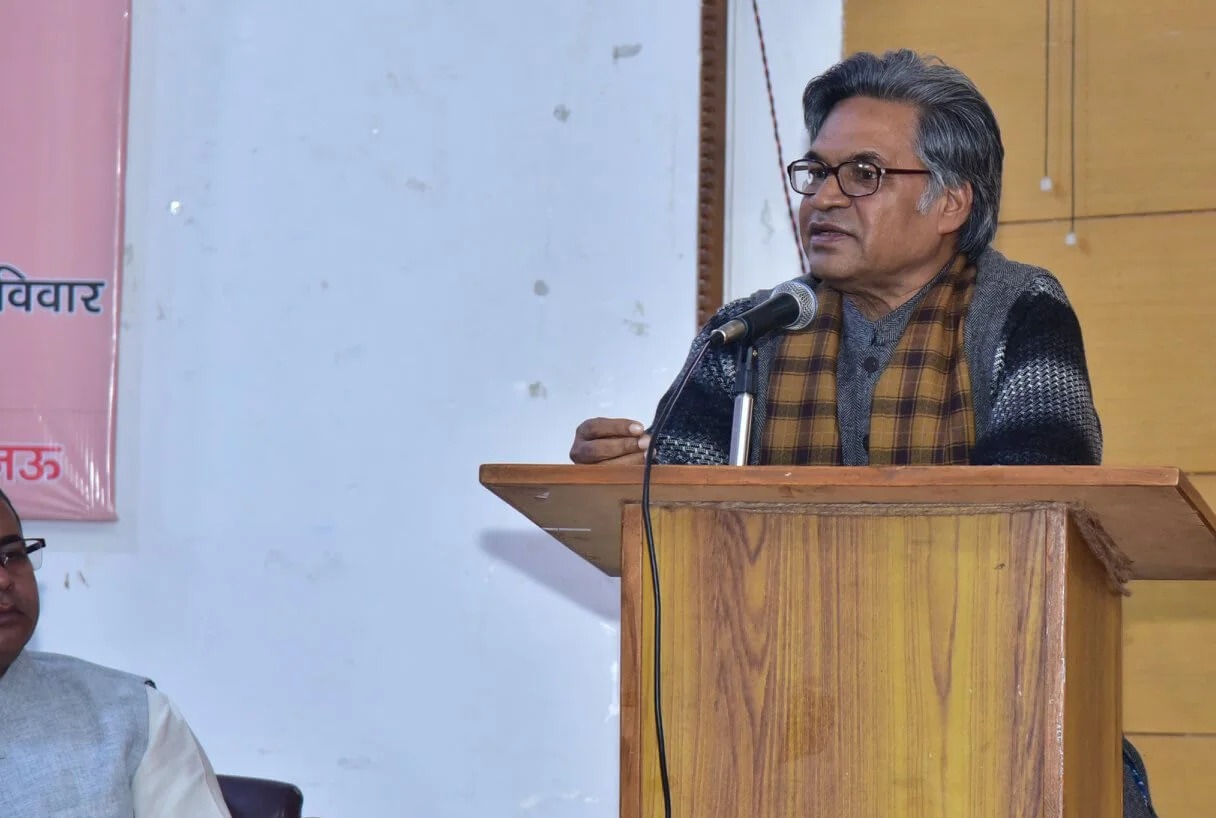
The writings of Yadav had a vast canvas – both in terms of topics and discourse. His books on literary criticism set new goalposts. His much-acclaimed book “Upanyas Aur Varchasva Ki Satta” accords him a unique identity in the field of critical appraisal of novels. This work uses novels to analyze the structural frame sustaining the socio-economic-cultural dominance informing Indian society, besides underlining his commitment to progressivism. He frees progressivism from its Marxist cage and projects it as a force that backs all writers fighting reactionary forces. This shows that Yadav was not a fossilized, but a creative Marxist critic. “Vimarsh Aur Vyaktitva” is a collection of his miscellaneous writings that examine the thought process of writers like Premchand, Gunter Grass, Nirad C. Chaudhuri, Krishna Sobti, Rajendra Yadav, Dr Dharamvir, Arundhati Roy and Gitanjali Shri, among others. Through his memoirs, it also depicts the literary milieu of Lucknow and Allahabad. In this book, too, he records his disagreements without demur.
Yadav also made his presence felt in the field of Dalit discourse. In one of his articles, he tries to enunciate the concept of “Dalit evolutionism”. He also dwells on the history of the struggle for Dalit identity in Indian society and on Dr Ambedkar’s concept of a new society.
Virendra Yadav was known as an ardent scholar on Premchand. His essay on Premchand’s Godan titled “Aupniveshik, Sanskritik Rashtravaad Aur Bharatiya Kisan: Sandarbh Godan” was much talked about and is considered a comprehensive text on the famed novel. According to Yadav, in Godan, Premchand reveals how the British government-landlord nexus extracted land revenue from the cultivators and dispossessed them of their land showing no mercy and without taking into account the fertility of soil. He also draws attention to Premchand’s suggestions on land reforms and on resolving the problems of the growers.
Virendra Yadav also scoured for writers steeped in the tradition of Premchand and examines their progressivism in the contemporary literary context. His work shows how a classic can be re-read in the terms of today’s theoretical framework (like subaltern studies) and used in the discovery of new meanings.
The committed critic in Yadav got him embroiled in many controversies. In 2013, the selection of recipients of awards instituted by the Uttar Pradesh Hindi Sansthan triggered a row. Yadav jumped into the controversy, raising an important issue. He wrote, “History shows that the Hindi Sansthan has been awarding only Dwij writers. Shudra and Dalit writers have always been missing from its lists.”
He also asked whether writers like Rahi Masoom Raza, Shani, Asghar Wajahat and Abdul Bismillah did not deserve top awards from the Sansthan. For Virendra Yadav, this was not about individual, but institutional bias. He commented: “Being a dwij is the mandatory eligibility for being picked for an award by this institution. And so, if two Shudras figure in the list of 112 writers to be honoured, it must be due to some other reasons.” This episode reveals yet another facet of his critical faculty – that he was alert to and curious about the internal politics and exclusionary tendencies of literary bodies and sought to revolt against them.
Yadav not only critically appraised literary works, but also the institutional structures of literature and the social, casteist biases informing their functioning. He believed that democratization of literature should not be confined to just the themes and subject matter of literary works, but should also extend to the system that recognizes and honours the litterateurs.
Virendra Yadav’s biggest contribution is the inculcation of a sense of moral-social accountability in Hindi criticism. Through his writings, he tried to establish that criticism is not just about analysis and interpretation of the semantics and the aesthetics of literary works, but that it is also a tool that uses literature to understand the inner contradictions and struggles of society and to identify those with a progressive potential. He paved the way for the study of Hindi novels from a subaltern perspective. That not only led to a reappraisal of the works of writers like Premchand and Renu but also afforded a theoretical framework for understanding the contemporary Dalit and OBC writings.
He is even more relevant in these times, when literature is increasingly being portrayed just as a means of entertainment and personal expression. Virendra Yadav reminds us of what Premchand had said: “Literature doesn’t march behind politics. It marches ahead of politics as its advance guard.”
Virendra Yadav was a recipient of a host of prestigious awards, including Uttar Pradesh Hindi Sansthan’s Sahitya Bhushan Samman, Devishankar Awasthi Aalochna Samman, Gulab Rai Samman, Shamsher Samman and Mudrarakshas Samman. But his real achievement is that he enriched Hindi criticism with a socio-political consciousness by linking literature with life and its struggles.
Yadav consistently struggled to establish commitment to morality and social responsibility as intrinsic to literature. He not only proposed a new canon for literary readings but also courageously exposed the casteist and hegemonistic approach of literary bodies. His literary vision was a synthesis of Marxist class analysis and the methodology of subaltern studies – a vision that could better grasp the complexities of Indian society, and especially the issue of caste.
In these times, when literary discourse seems to have been confined to semantic acrobatics and personal adulation or censoring, Virendra Yadav’s works remind us that standing by the truth and justice is the final objective of literary criticism. His oeuvre is suffused with the idea of a literary engagement that is guided less by classical norms and more by the need to ameliorate human suffering and promote social justice. In the field of Hindi criticism, Yadav will be remembered as an alert sentinel who saw and tried to establish literature as a potent weapon for social change and not merely as something to be relished.
(Translated from the original Hindi by Amrish Herdenia)
Forward Press also publishes books on Bahujan issues. Forward Press Books sheds light on the widespread problems as well as the finer aspects of Bahujan (Dalit, OBC, Adivasi, Nomadic, Pasmanda) society, culture, literature and politics. Contact us for a list of FP Books’ titles and to order. Mobile: +917827427311, Email: info@forwardmagazine.in