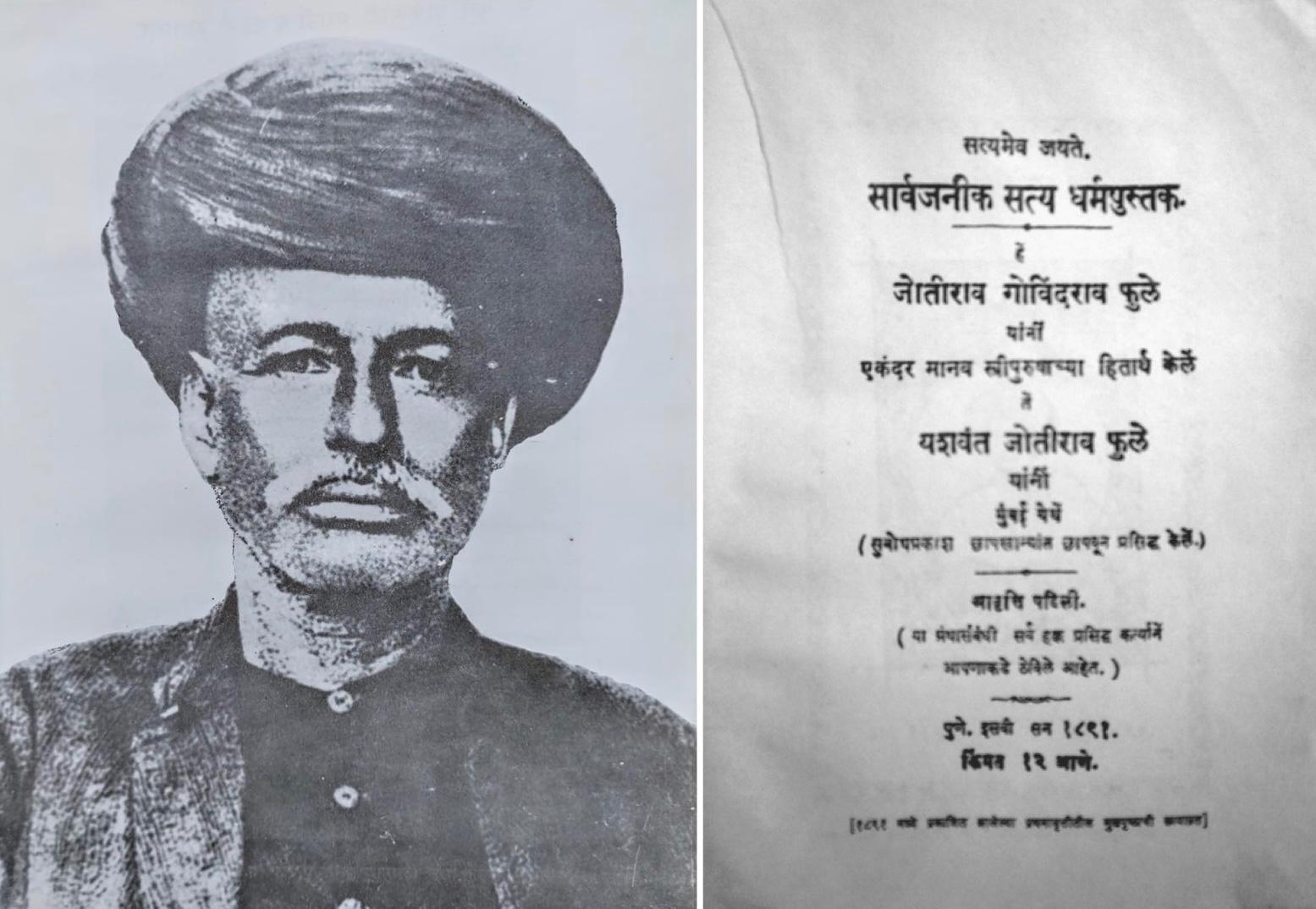
As we stand on the doorstep to the bicentenary of the birth of Jotirao Phule (11 April 1827 – 28 November 1890), we need to pause and ponder. We need to dwell on what Phule’s politics was, and what direction the Bahujan politics – which claims to be guided by him – is taking. Have the stars that lit up the skies during the OBC resurgence in the Mandal era gradually sunk into Kamandal? Has the growing hatred against the Muslims turned the OBCs into flag bearers of Brahmanism? Have the Bahujan (or OBC) intellectuals, satisfied with a limited share in power, fallen prey to Islamophobia? How did Phule view Islam? And, did the Muslims have a place in his politics aimed at freeing society from the clutches of Brahmanism?
Jotirao Phule was not a social reformer in the conventional sense. He had a unique vision and a very clear idea of how to make it a reality. It is not without reason that Gail Omvedt saw him as the harbinger of Indian renaissance. Indian historians and renaissance researchers may never have accepted the true significance of Phule’s life and work but Gail Omvedt states emphatically, “Phule’s thought represented the fulfilment of the renaissance desire for social transformation along revolutionary lines. In sociological terms it makes good sense that he – and not the later elite thinkers, from Ranade through Tilak – should be seen as the primary renaissance figure. Any culture, after all, rests upon a class society and the dominance of a particular class.”[1]
A particular set of circumstances shaped Phule’s beliefs and outlook. In his times, though Peshwai was still a formidable influence in society, its stranglehold had loosened a bit owing to the advent of the British and modern English education, along with the spread of the universal idea of equality. Phule was the inheritor of Kabir’s brand of resistance and was imbued with the desire to secure justice for the exploited masses. That equipped him with a broad vision and great courage. He was born into a comparatively well-off Mali family, slotted as Shudras under the Varnashrama system. In keeping with his father’s desire and aided by the modern education he had acquired, he could have led a comfortable life by becoming a part of the system, just as one can achieve success today by allying with the new and powerful Brahmanical social order. I don’t wish to go into the details of how, as a writer, thinker, missionary and a fearless activist, he fought for the victims of untouchability, for the Shudras facing discrimination, for the women of all classes and varnas, as well as for the farmers, workers and toilers. Phule and his wife Savitribai are rightly being commemorated today for seeing through web of the cruel Brahmanical deceit and challenging it by devising an alternative way of life; for promoting education, especially among women; for making arrangements for the rehabilitation of the widows (which mainly freed Brahmin widows from a horrific life); for working in the interest of the farmers and the workers; for mercilessly attacking the brahmanical-patriarchal order that prevailed among the Shudras and for questioning the very idea that a society divided into castes can constitute a nation.
What is surprising is that references to how Phule saw Islam and Christianity are totally missing from the discourse even as communalism in general and hatred against the Muslims in particular is used to nullify the struggle of those who dream of an egalitarian society.
Shaken by Phule’s peerless struggle, brahmanical thinkers like Bal Gangadhar Tilak launched a public campaign to infuse retrograde ideas into politics and society. Communal hatred was among the key factors that contributed to the success of their campaign. Prior to the formation of the Hindu Mahasabha and the RSS (in 1915 and 1925 respectively), Tilak (1856-1920), had done everything to prompt the founding of these organizations. Wearing the cultural cloak in this battle between brahmanical domination and its opponents, Tilak did influence the liberal, secular and progressive intellectuals of the day. Phule was alive to the possibility – not only with respect to religion but also in the terms of the rule of the Bhats and the difference between the British and the Muslim regimes. According to Omvedt, Phule knew that Brahmanism was using the State as well as religion to perpetuate the exploitative social order.[2]
Phule believed that the egalitarianism guiding Islam and Christianity was much more liberal, humanistic and emancipating than the oppressive social order ordained by the Aryan Brahmins. In 1891, he wrote a Powada hailing Prophet Mohammed, the founder of Islam. Titled “Manav Mohammad” it was published by Subodh Prakash Press, Pune. In this book, he presents Mohammad Saheb as a light that dispelled darkness. He praises Mohammad Saheb for his monotheism, for embracing everyone, for lifting people from a state of ignorance and dejection, for treating humans as humans, for promoting brotherhood and for raising his voice in favour of human rights. Needless to say that for the followers of a religion that did not treat them as humans and which forced them to endure barbaric norms like untouchability, the message of Islam was like a soothing balm. Ambedkarite thinker Kanwal Bharti, who has been vocal not only against the oppression of the Dalits but also against anti-Muslim violence, has been highlighting this fact in his writings.
Well-known Marathi thinker Prof Fakruddin Bennur writes that the Shudras embraced Islam to free themselves from slavery. Quoting from the fifth edition of ‘Mahatma Phule Samagra Vangmay’ (p 317) edited by Yashwant Dinkar Phadke, he writes, “As Islam entered India, drawing on the strength of its monotheism, its adherents began ridiculing the selfish religion of the Aryan Bhats. That led to some Shudras enthusiastically switching to Islam.” Phule talks about Islam and Christianity with respect. About Islam, he said, “While playing with my Muslim neighbours and other Muslims, I got to see through the fake beliefs of the selfish Hinduism and caste discrimination that informed it. I am obliged to them for this.”[3]
Jotirao Phule could clearly discern the difference between the Muslim rulers and the ordinary Muslims. He never put the Muslims masses in the dock for the atrocities committed by the Muslim rulers. While thinkers like Tilak, out to prove the superiority of the Aryans, saw them as victors, Phule viewed the Aryans as evil invaders who used religion to exploit the toiling masses. Many of today’s Bahujan thinkers frequently spew communalism while talking about the reservation regime. Unlike them, Phule did not leave the Shudras who had adopted Islam to their fate. According to Gail Omvedt, the influence of radical feminists like Tarabai Shinde and Pandita Ramabai served to strengthen Phule’s ideas about issues related to women. Phule stoutly defended the two scholars. The “Aryan lobby” was also enthused by them. But when Ramabai moved to England and adopted Christianity, many Brahmin scholars, including Dayanand Swami, criticized her bitterly. However, Phule stood by her.
Phule’s humanistic ideas and his vigilant politics ensured that he always stood in opposition to the ideas and the schemes aimed at deepening the communal divide. He tried to ensure that primary education did not remain the exclusive preserve of the Brahmins, that the Shudras, Ati-Shudras and the Muslims also had access to it. Phule pioneered the idea that Muslims are a part of the Bahujan – an idea that was theoretically accepted by Kanshi Ram’s Bahujan Samaj Party after its rise in north India.
In his representation to the Hunter Commission, Phule demanded that primary education must be made free for all children up to the age of 12 years. Prof Bennur writes that in this representation, Phule voiced a special concern for Muslim children. He writes, “Muslims also keep away from schools. I don’t know why they are not interested in (learning) Marathi or English. And there are very few schools that use their language as the teaching medium.” Phule’s concern for education of the Muslims and his reference to schools that use their language is important. The intellectuals who fall prey to communal propaganda hyphenating language with religion or to the hate campaign woven around Union Civil Code would do well to learn from Phule.
Jotirao Phule grew up in an inclusive social milieu. He was admitted to a Scottish Mission School. Earlier, he had been withdrawn from another school. Among those who persuaded his father Govindrao Phule to resume his education were a Christian scholar called Lijit and Gaffar Khan Munshi. Having completed his school education, Jotirao’s father turned his son and his wife Savitribai out of his home. He had been exasperated by the protests from the brahmanical society against Jotirao’s revolutionary ideas. Usman Shaikh supported the couple and provided space to them to run a school. Usman’s sister Fatima Shaikh joined Savitribai as her associate and colleague. When Phule founded Satyashodhak Samaj, he made it a point to enlist the support of people from all communities. Phule firmly rejected Hinduism owing to its brahmanical orientation and instead proposed an alternative religion that was theist but liberal and egalitarian. According to Gail Omvedt, “in his book Sarvajanik Satyadharma, Phule imagines an ideal family with a Buddhist father, a Christian mother, a Muslim daughter and a Satyadharmavadi son. There is no Hindu in the family. He did not see Brahmins as a caste but as an incorrigible group of scoundrels. He believed that if the Brahmins wanted to be accepted by society, they would have to first give up their claim on Hinduism which accords them the status of gods on earth.”[4] Quoting Phule, Omvedt writes, “Once all Arya Bhats-Brahmins have thrown their bogus religious literature into the dustbin and begin behaving truthfully with all humans, then, without doubt, all women and men would bow before the creator of this world and would pray for the wellbeing of the Aryans.”[5]
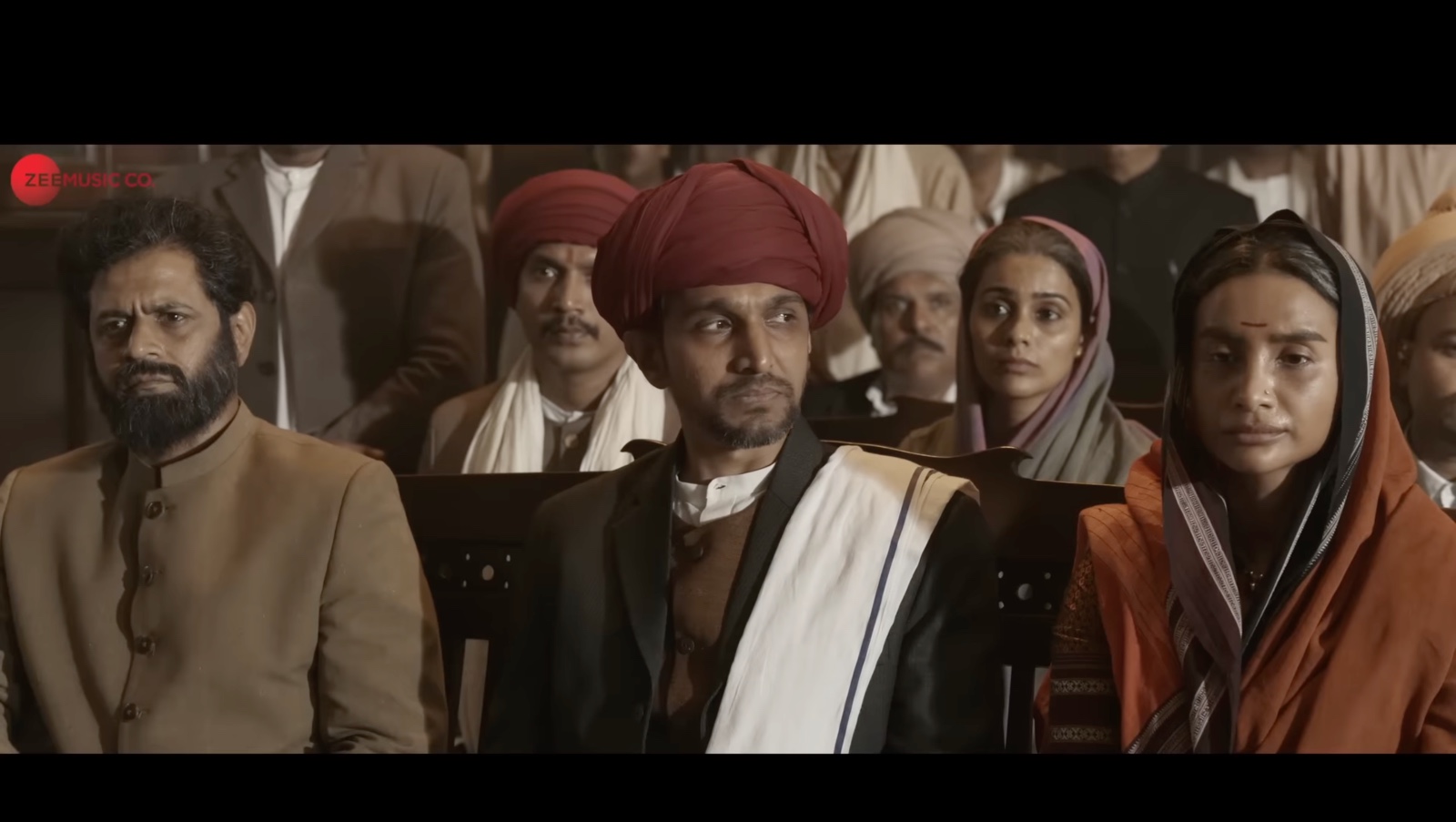
It was not that Phule never received the backing of the Brahmins. Many conscious and justice-loving Brahmins helped him openly. It is also not that communal divide was non-existent then, though, of course, it had not assumed the horrific form it did later. Addressing a meeting organized by the Delhi unit of the Janwadi Lekhak Sangh on 4 April 2026, Subhash Gatade, quoted Kabir’s couplet, “Hindu kahein mohi Ram piyara, Turk kahein Rahman; Aapas mein dou ladi-ladi muye, maram na kou jana” (Hindus say that they love Ram, Turks says they love Rahman; Both keep fighting with each other, none knows the essence) to assert that the communalism had struck roots even in the pre-British India.”
As a scholar, Jotirao Phule was well aware of this poisonous phenomenon and combating it was a part of his humanistic politics. Phule had died before the 1893 communal riots in Bombay but his Satyashodhak Samaj joined the campaign for re-establishing religious harmony. His associate Narayan Meghaji Lokhande (1848-1897), who had forged Bombay’s first trade union ‘Bombay Mill Hands Association’, worked tirelessly to initiate a dialogue between the two communities, restore peace and stop the exodus of workers due to the riots. Around 60,000 people joined a rally of Satyashodhak Samaj led by him under the aegis of “Sarvadharma Sammelan”. Lokhande was conferred with the title of “Rao Bahadur” by the Government of Great Britain and the “Justice of Peace” award by the British Indian Government for his endeavours to establish peace and amity. That shows that Phule and his Satyashodhak Samaj played a key role not only in launching a trade union movement rooted in secularism but also in countering communal frenzy. Phule himself joined the meetings of textile workers to aid the workers’ movement being built under the leadership of Lokhande. It is worth noting that this all happened much before the advent of the leftwing workers’ movement in India.
Significantly, even as Phule’s followers were mobilizing people in favour of communal peace and amity and were uniting workers against the conspiracies being hatched by the torchbearers of Brahmanical domination, Tilak was converting Ganeshotsava from a festival confined to homes into a ten-day public spectacle. To counter the liberating influence of non-Brahmin thinkers like Phule and their efforts for establishing an egalitarian social order, and, of course, to keep the hegemony of Brahmanism intact in Maharashtra, Tilak and others of his ilk began promoting religion-based cultural nationalism, glorification of the ancient past and sowed the seeds of religion-based division pitting “locals” against “outsiders”. Later, the Hindu Mahasabha and the RSS took up this campaign in a far more effective and aggressive manner. There is little doubt that Phule’s legacy still survives in Maharashtra but it is the brahmanical forces, now known as Hindutvavadis, that are dominant in politics. As Phule’s Satyashodhak Samaj began losing steam, radical interventions became increasingly rare. As for north India, the rise of Bahujan Samaj Party led to Phule and his beliefs becoming a part of popular consciousness. Ambedkar considered Phule his guru and leftist intellectuals, too, accepted his contribution in different ways, but it was Kanshi Ram who took Phule to the masses in the Hindi belt. In any case, the influence of Dayanand Swami in the northern parts of India in the 19th century had played a major role in subverting the radical renaissance propagated by pioneers like Phule and in preserving and protecting the hegemony of Brahmanism. Another intellectual of the same school – Swami Vivekananda – won wide acceptance in Bengal and other parts of the country, strengthening brahmanical hegemony.
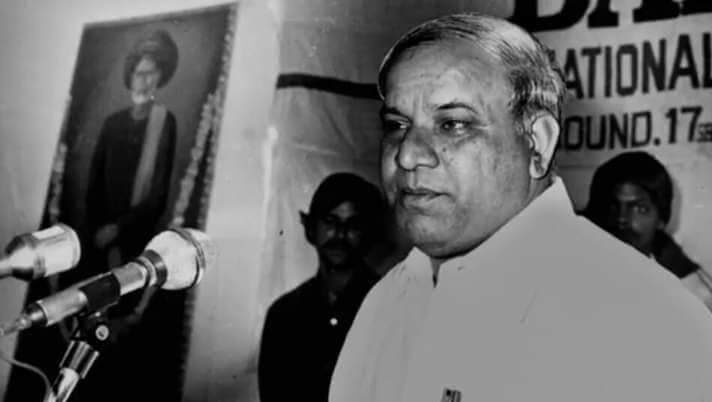
What is noteworthy is the fact that in a society where different communities hunt for heroes among themselves, it was the Dalits (even if belatedly), rather than the Shudras, who felt the need to take Phule ideas and movement forward. Unfortunately, while the political satraps from OBC castes did use Phule’s portrait and name to give a fillip to their politics, they still took recourse to the same Manuvadi politics – to which Phule was dead opposed – to grow and progress. The political opponents of Phule’s ideology have adroitly managed to portray the ideas of thinkers like him as being favourable to them. But what is ironic is that a section of Bahujan intellectuals have also sided with the forces opposed to Phule and his ideas. Did skirting the issue of communalism by dubbing it as “politics of the seculars” and according top priority to grabbing a share in power lead to this state of affairs? And mind you, all this happened despite the roadmap unveiled by thinkers like Phule being readily available.
References:
[1] From Gail Omvedt’s paper titled “Jotirao Phule and the Ideology of Social Revolution in India”, published in ‘Economic and Political Weekly’ in 1971, which became a chapter of her PhD thesis. This paper was republished in the form a booklet by Critical Quest, New Delhi.
[2] Gail Omvedt, Dalit Dhrishti, Vani Prakashan, New Delhi
[3] Phule Samagra Vangmay, Y.D. Phadke (ed), Government of Maharashtra, p 324
[4] Gail Omvedt, ‘Dalit Dhrishti’, Vani Prakashan, New Delhi
[5] Ibid
(Translated from the original Hindi by Amrish Herdenia)