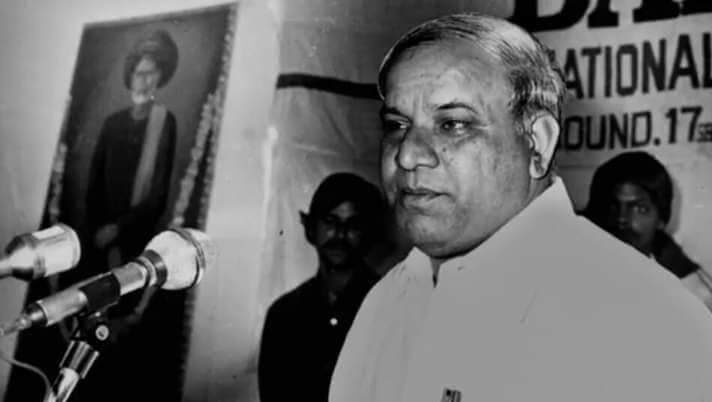
Shabbir Ansari, a key pillar of the social justice movement in general and the Pasmanda movement in particular, breathed his last in Maharashtra’s Jalna on 22 March 2026. He was 79 and was ailing for some time. Shabbir who lived in Nutan Vasahat – the old quarters of Jalna – has left behind his wife, three sons and six daughters. His death is a personal loss to his family. But in him, the OBCs, and especially the Pasmandas, have lost an ideologue. Shabbir Ansari was among the few Muslim leaders who not only recognized the caste-based inequalities prevailing in his community, but fought against them both on the ground as well as through legal-judicial means. The vacuum left by his death in the movement for securing social justice to the Muslims will be difficult to fill. Coming from a humble background, he became instrumental in securing a constitutional identity to crores of marginalized people. His life throws ample light on the structure of Indian society.
In the years immediately following Independence, like the rest of the country, the Marathwada region of Maharashtra was also in the grip of fear and uncertainty. India was free but Jalna was still under the rule of the Nizam of Hyderabad, who was unwilling to merge with India. Amid political instability and social tension, the poor and the middle-class Muslim families of Jalna faced twin challenges. On the one hand, Razakars (members of the paramilitary wing of an Islamic party of Hyderabad state) committed atrocities against them, while on the other hand growing communalism was making life difficult for them. Shabbir Ansari learnt about those tough times from his mother – an unlettered but bold weaver. His father Shaikh Dawood was a labourer. At the time, the family lived in the Sadi locality of Jalna, where Hindu and Muslim weavers worked and lived together like brothers. But there was no escaping the impact of the political storm raging outside. After the Indian army marched into Hyderabad, an atmosphere of fear and anxiety gripped Jalna. The Ansari family abandoned their home in the darkness of night. Shabbir Ansari’s pregnant mother, with little children in tow, was going around looking for shelter. Then their Hindu neighbours, despite the obvious risks involved, brought them back and assured them of their safety. Shabbir Ansari could never forget this story. It made him a lifelong believer in Hindu-Muslim unity. It also taught him the importance of helping others in times of distress.
Shabbir Ansari was born a few weeks after the accession of Hyderabad State to India. For the family, the new arrival symbolized the hope of better times.
Shabbir was born in Jalna but his family’s ancestral village was Paathri in the Parbhani district, where his ancestors had been living for generations, making a living out of weaving. Grinding poverty, lack of resources and a big family made life very difficult. Shabbir’s father moved to Jalna, hoping for a better life, but nothing really changed. His parents had to work very hard to put food on the table for the eight members of the family. At the time, education wasn’t a priority. Shabbir’s elder brother could not complete his education and joined the family vocation at a young age. Somehow, Shabbir was drawn to education. His mother also wanted at least her younger children to study. Despite familial and economic problems, Shabbir was sent to a school. He got up before Fazr (the first, early-morning namaz), brought bread from a bakery and sold it door-to-door. Next, he collected cow dung, lent a hand to his parents in their weaving work and then went to school. In the evening, he did odd jobs at a tailor’s to augment the family’s income. Despite this hard life, he did well in his studies. He had an interest in subjects like science and mathematics. His teachers liked him. But due to financial constraints, he could not study uninterruptedly.
Shabbir’s path was strewn with hurdles. The family lacked the means to even pay the nominal fees of the school regularly. He had to drop out from school in Standards 4,7 and 9. Family responsibilities, the pressure to work and the societal outlook that education was useless – all consistently came in his way. But he was determined to study. He believed that education was the only way to grow and progress in life. His mother’s unceasing support and his own willpower ensured that after every disruption, he managed to resume his studies. Battling the odds, he cleared the Standard 10 examination with high marks, scoring 100 per cent in mathematics. When he expressed the desire to study further, his brothers washed their hands of him. They said they couldn’t bear the expenses. That did demoralize Shabbir but he did not abandon the idea of acquiring higher education.
His dreams of studying in Bombay shattered, he returned to Jalna. He was sad and confused, but instead of surrendering, he decided to rebuild his life afresh. The economic condition of the family forced him out of his family’s traditional occupation of weaving. The skills acquired during his work at a tailoring shop opened a new avenue for him. With the help of his friends, he bought a sewing machine and set up a small tailoring shop under a thatched roof on Anand Swamy Road. Everything was pitted against him, but his hard work and his dedication made him a go-to tailor for stitching coats and trousers in Jalna. As his clientele grew, he rented out a proper shop, bought more sewing machines and employed workers. His economic condition improved, and he left his hard times behind.
Better economic conditions reignited his unfulfilled desire to acquire higher education. He joined Jalna’s JES College, opting for science subjects, dreaming to become a doctor. He took time off from his shop to attend college. But due to growing demands of his profession and familial responsibilities, he could not continue with his studies. His dreams were shattered once again. He got married and accepted the new responsibilities that came with marriage. Though he had earned a good name for himself as a tailor in Jalna, he was not happy. He began looking at expanding his business. With the help of a loan from the Maharashtra Finance Corporation, he set up a small unit manufacturing readymade clothes. At the time, readymade clothes were not very popular in small cities and he struggled with low demand. Due to delays in supply of raw material and his limited understanding of the market, his enterprise failed. Within less than a year, financial constraints forced him to shutter his unit and he once again moved to Bombay in search of work.
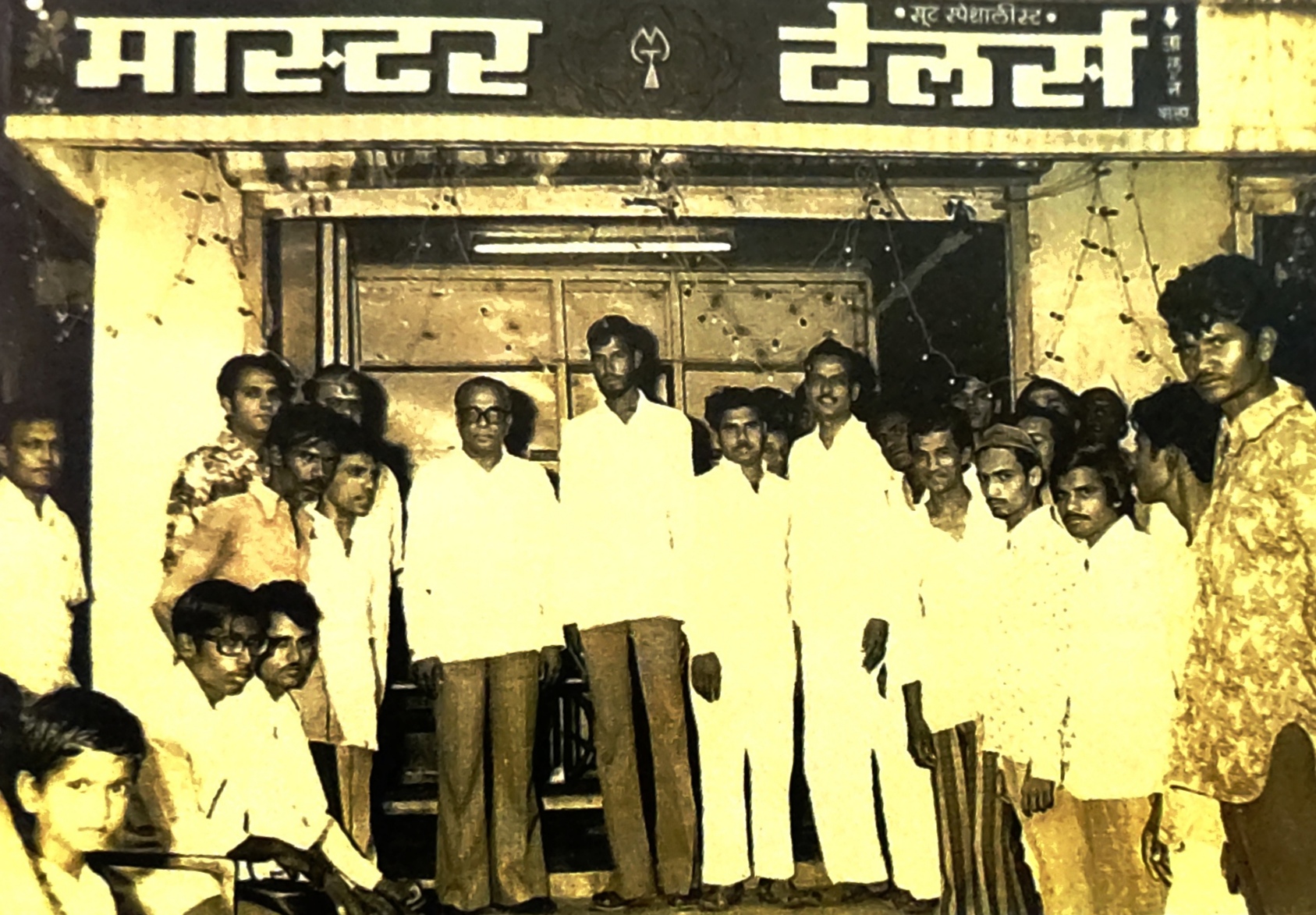
In Bombay, he began working as “cutting master” at a hosiery factory owned by a Sindhi businessman. Hard work and dedication soon made him an expert. He tried to set up a small factory of his own and also began working as a supervisor in another factory. But he again met with failure due to uncertainties of the job market. But his stay in Bombay equipped him with a socio-political vision. Many political leaders and social activists from Marathwada used to visit Mumbai and gradually he became close to them. During the fearful atmosphere of the Emergency, he used his contacts to help many people. His acquaintance with Mantralaya (secretariat) officials and leaders kindled in him a desire to do something for society, rather than limiting himself to earning a living.
The lifting of Emergency was followed by a period of political upheaval in the country. Socialist movements, the rights of the OBCs and reservations were among the issues that occupied centre stage in the national discourse. That made him reflect on the societal structure. His first serious encounter with the issue of caste came when, while studying in Aurangabad, he happened to go through a government list of the communities categorized as OBCs. He was surprised to find the names of Muslim communities like Julaha, Nadaf, Panjari and Bahishti on the list because he believed that the caste system had no place in Islam. To satisfy his curiosity, he asked religious scholars and his family members. The common answer he received was that all followers of Islam were equal. But that did not match his personal experience. He had seen members of his community being subjected to social scorn. The question that befuddled him was that when discrimination was a common practice, why the community was in denial of this reality.
He was an avid reader of newspapers and that enlarged his vision. The Dalit movement and the debates around the Mandal Commission report made him realize that the issue of social justice was intertwined with the very structure of Indian society. He decided to meet the ideologues of the OBC movement. That was how he met advocate Janardan Patil, who introduced him to the provisions of the Indian Constitution, especially Article 340, and to the thoughts of Dr Bhimrao Ambedkar and Chhatrapati Shahu Maharaj. That marked a decisive turn in his life. He realized that it was imperative to understand the social inequalities within the Muslim community. He became associated with the national OBC movements and played a key role in the founding of the Rashtriya Picchda Varg Mahsangh. In 1981, he founded the Maharashtra Rajya Muslim OBC Sangathan, which aimed at giving a distinct identity to the OBC Muslims and making them aware of their constitutional rights. This was a historic move, because there was no organization worth its name representing the Muslim OBCs at the time.
The organization was in place, but expanding its activities was an uphill task. Even talking about caste to Muslims was a challenge. The belief in the religious ideal of equality made the Muslims hesitant to discuss casteism within the community. The membership campaign for the new organization faced opposition and hurdles. But Shabbir Ansari did not give up. He kept visiting different parts of the state to hold meetings. Some leaders of OBC and Dalit movements did extend support to him. But what brought about a decisive change in the situation was the decision of the central government to implement the recommendations of the Mandal Commission in 1990. That energized the OBCs and initiated a dialogue within the Muslim community on issues like reservation and social justice. Slowly, Shabbir’s organization began getting wider support. By 1993, it managed to establish an identity for itself in the state. Scores of associates and workers contributed to sustaining the movement.
Shabbir had to face acerbic criticism and societal resistance as he tried to expand the footprint of the Maharashtra Rajya Muslim OBC Sangathan. His loyalty to his religion was questioned and he was humiliated and labelled as a kafir. For Shabbir – a devout Muslim who offered namaz five times a day – this was deeply hurtful. But he continued his struggle for the deprived. He was subjected to bitter interrogation at a mosque in Bombay in the presence of hundreds of people. He patiently put three questions to the assembly. The first was whether they accepted the Constitution of India. The answer was yes. The second question was that when they believed that it was Allah who did everything and was the only giver, then why did they approach the courts during the Emergency? The third question was that when divisions based on occupations such as Darzi, Bunkar and Kasai existed in the community, how could talking about their constitutional rights be construed as anti-Islam? His logic forced the audience to rethink and his detractors fell silent. This incident inaugurated a new discourse on social justice in the Muslim community.
Leaders like Janardan Patil and Kapil Patil encouraged him to expand the activities of the Muslim OBC Sangathan in Maharashtra. The implementation of the Mandal Commission report served to increase awareness in the Muslim community. The Rashtriya Pichhda Varg Mahasangh helped Shabbir expand his work at the national level. He toured states like Karnataka, Kerala and Andhra Pradesh. He noted the lack of active leadership among OBC Muslims in some north Indian states. Along with his associate Vilas Sonawane he went from village to village and from one locality to another. He apprised people of government schemes and of the process for getting OBC certificates. But his visits were not free from risks. In Akola, there was an attempt to assault him but his associates deftly handled the situation. His work on the ground began winning appreciation in intellectual circles. People faced numerous problems when they approached government offices to get an OBC certificate. He tried to resolve these problems by making use of the laws and rules in force. He launched public awareness programmes and took part in rallies and events held at the national level. The growing clamour for social justice in the country led to Parliament seriously debating the issue.
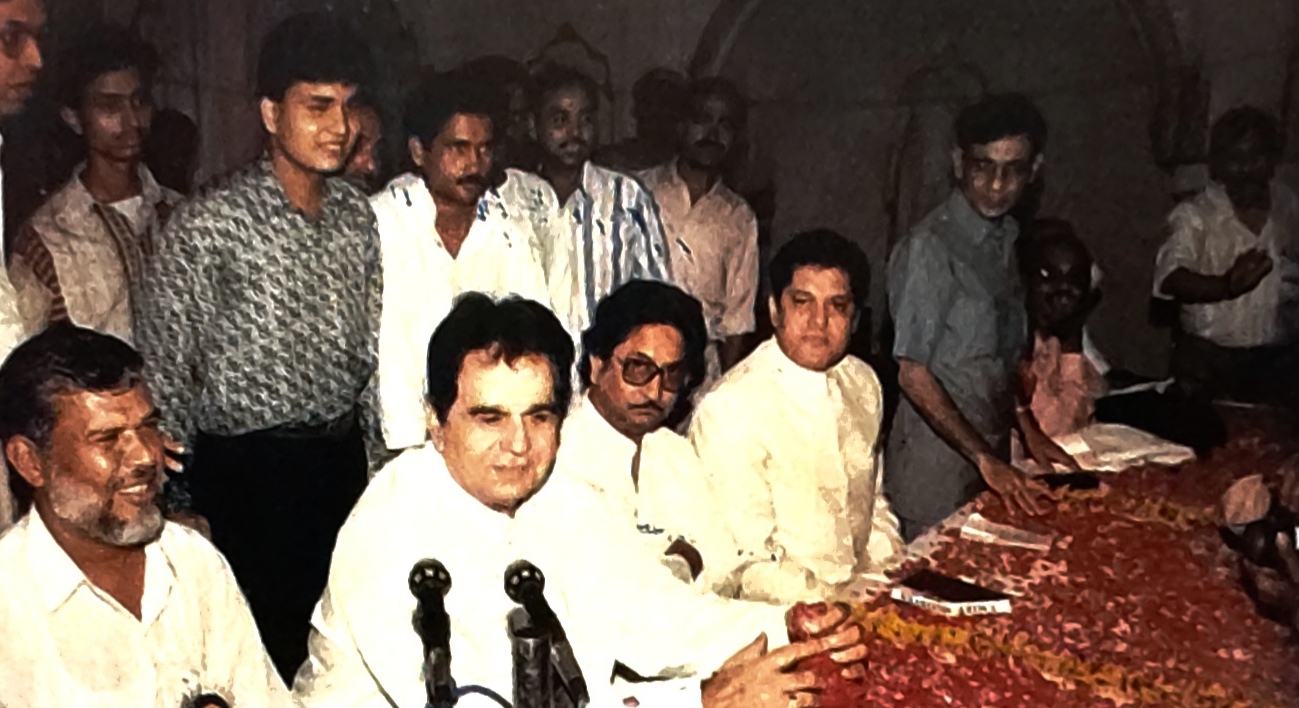
A convention at Mumbai’s Haj House in 1993, which was attended by thespian Dilip Kumar and many national leaders, won him wide recognition. The association of Dilip Kumar boosted the movement. The actor began participating in the meetings of the organization. Dilip Kumar addressed many public meetings along with Shabbir Ansari and Vilas Sonawane. Dilip Kumar’s presence in rallies held in Aurangabad (Maharashtra) and Lucknow drew the attention of the political class. Dilip Kumar repeatedly emphasized that reservation for Pasmanda Muslims should be seen as a tool for ending their social backwardness. Thanks to the efforts of Shabbir Ansari, the movement garnered popular support and became established as a powerful social voice.
One of the historic accomplishments of Shabbir Ansari was mobilizing the denotified and nomadic Muslim communities. He made members of small communities like Chhaparband, Shikalgar, Madari, Saap-Sapera, Garudi, Paathrot, Bhaishti, Fakir and Irani-Blaochi aware that they too were part of the OBC community. He used unconventional means to draw the attention of an apathetic government machinery towards them. He took out a procession with hundreds of bears to draw attention to the community of bear rearers. Similarly, he laid a siege to the tehsil office with monkeys along with members of the community which made a living by staging performances of monkeys on streets. During a campaign for the Saperas, he got them to release their snakes on the premises of an office to make the officials understand the kind of risks and problems the community faced. These protests showed that even the marginalized communities could come together and fight for their rights.
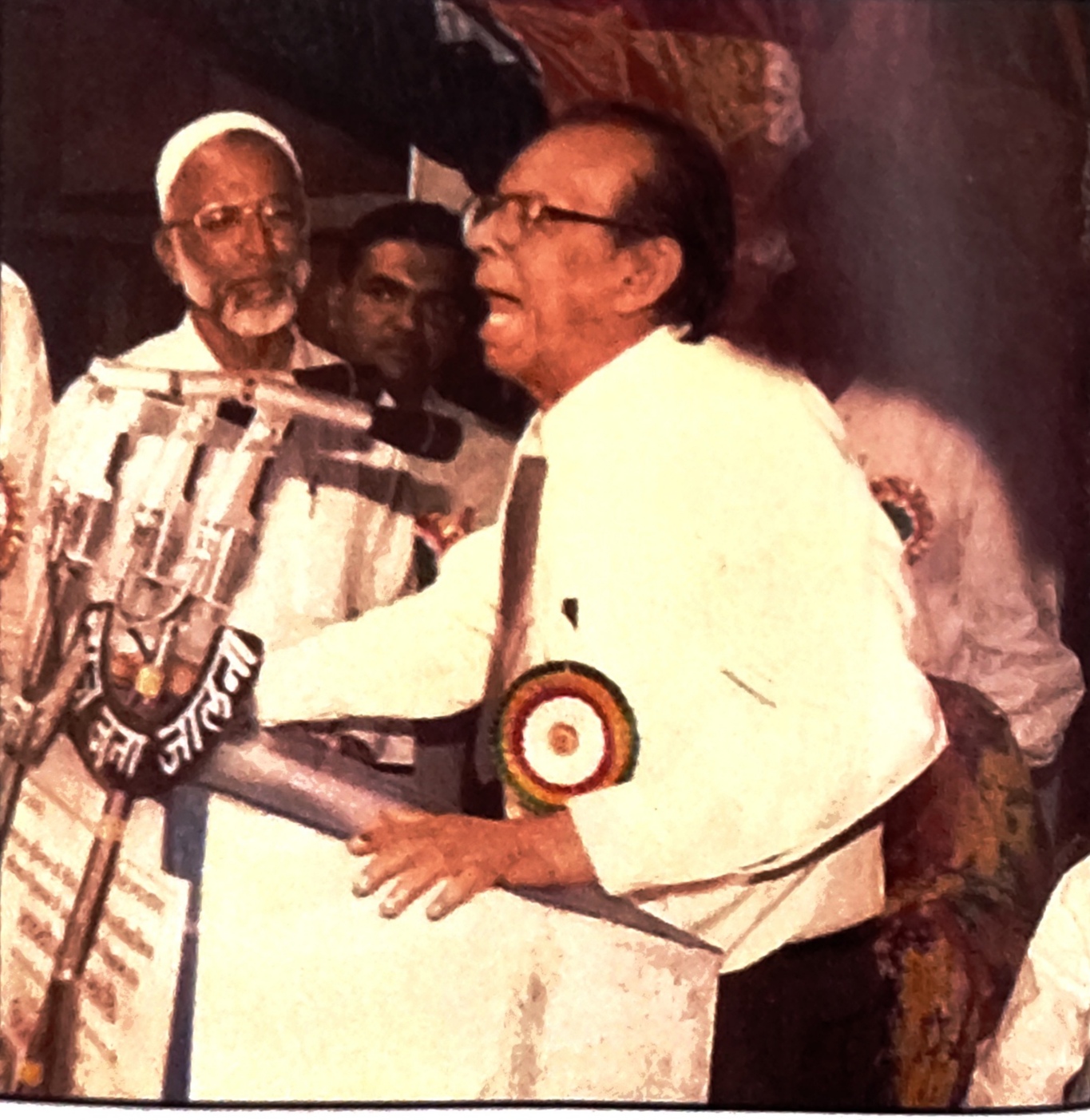
He staged a hunger strike in Kolhapur in September 1995, which forced the state government to initiate discussions that ultimately led to a decision in October 1995 that locally-recognized social identities and means of livelihood would be taken into account while issuing OBC certificates. In the year 2000, the state government formally recognized the All India Muslim OBC Sangathan. In October 2001, the then chief minister Vilasrao Deshmukh issued an order saying that the recommendation letters of Shabbir Ansari should be treated as a secondary evidence. That came as a great relief to thousands of people who did not possess documents to prove their caste identity. His four-decade-long struggle transformed the lives of Muslim OBCs. Reservations opened new avenues of opportunities and education. Now, OBC Muslim youth are entering administrative and technical services and Muslim girls are evincing interest in acquiring an education. Due to the reservation regime, many OBC Muslims are in leadership positions in local bodies. The movement led by Shabbir Ansari boosted the self-confidence of the Muslims, encouraged them to get an education and laid the foundations of social equality. This movement will inspire future generations.
Shabbir Ahmed Ansari’s life shows that social reform is not only about sloganeering. It is also about making use of constitutional and legal provisions at our disposal. From a tailoring shop at Jalna, he reached the corridors that policymakers tread. He used the laws to open avenues for the OBCs. It was due to his efforts that reservations brought hundreds of educated youth into the mainstream. This is his biggest achievement.
His legacy is not limited to the organizations he forged. He made the marginalized communities conscious and aware, and instilled self-confidence in them. He juxtaposed the religious ideal of equality against the bitter lived reality of discrimination. The vacuum created by his passing can only be filled by the educated class he helped build. He was a social warrior who devoted his life to securing the rights of the deprived.
References
Shabbir Ansari, ‘Mandalnama’ (in Urdu, compiled by Dileep Waghmare), Kitab Daar, Mumbai, 2024
(Translated from the original Hindi by Amrish Herdenia)
Forward Press also publishes books on Bahujan issues. Forward Press Books sheds light on the widespread problems as well as the finer aspects of Bahujan (Dalit, OBC, Adivasi, Nomadic, Pasmanda) society, culture, literature and politics. Contact us for a list of FP Books’ titles and to order. Mobile: +917827427311, Email: info@forwardmagazine.in