Under the banner of “Bastar 2.0”, recent media reports and policy narratives present the region as moving from conflict towards development. New roads, tourism projects, and investment plans are framed as signs of a region finally integrating into what policymakers often call the national mainstream. The decline of Maoist violence is increasingly narrated as evidence that Bastar is entering a new era.
This framing has become central to how development in Bastar is imagined today. Unlike many other regions, where development is discussed primarily in terms of economic growth or infrastructure expansion, contemporary discussions of Bastar are closely tied to questions of security, State presence, and the consolidation of peace after decades of conflict. These investments are presented not only as development initiatives but also as indicators of a region moving beyond violence.
The transformations underway are significant. Yet they also raise an important question: what kinds of futures are being created for the young people moving through Bastar’s expanding educational system?
The dominant narrative follows a familiar sequence: security, then development, then stability. On the ground, however, the experiences of many young people are more complicated. More students are entering classrooms and remaining in school longer than previous generations. But the pathways connecting education to secure livelihoods remain fragile.
Schooling and uncertainty
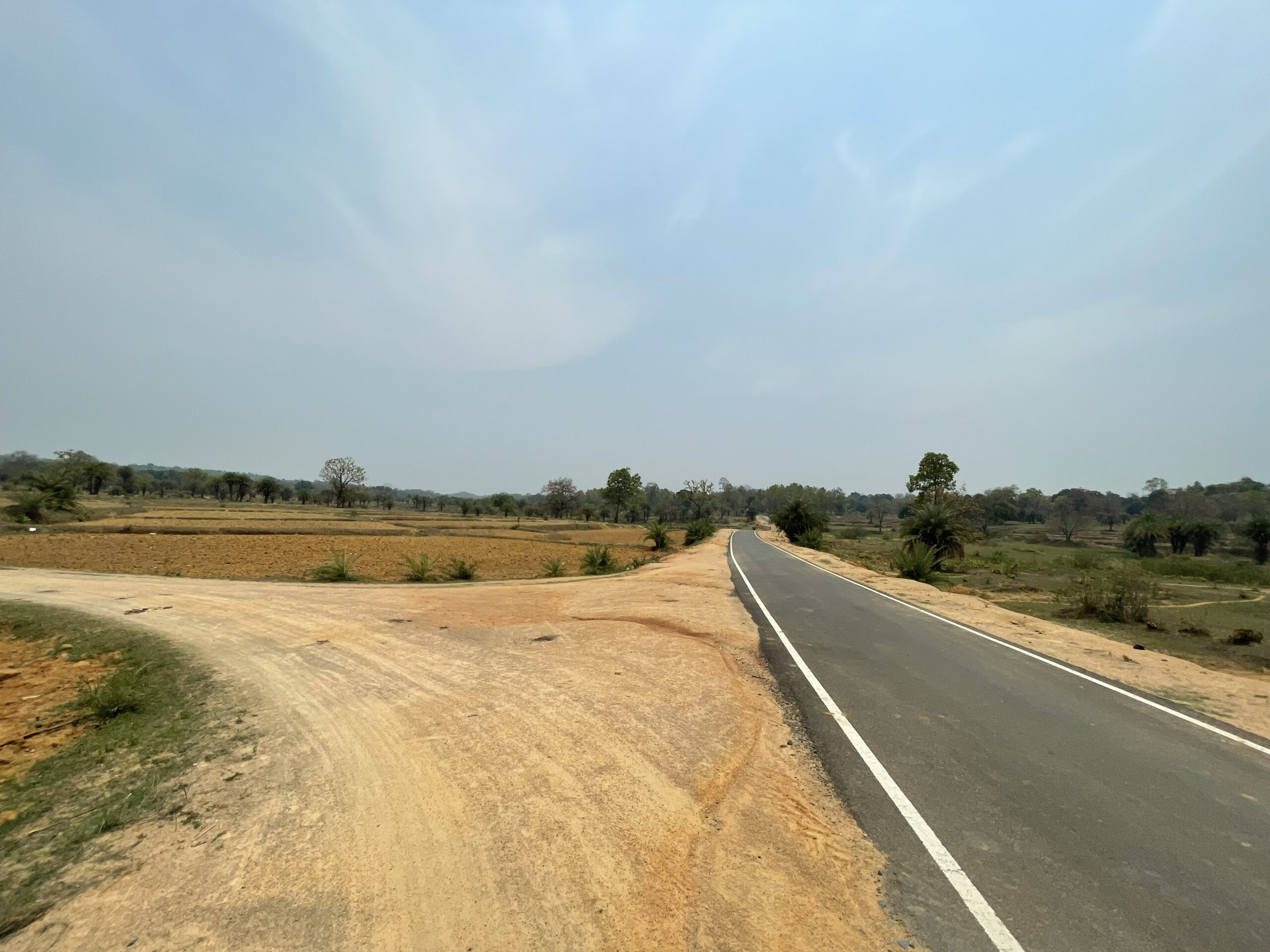
Over the past decade, access to schooling in Bastar has expanded significantly. State-run hostels have brought students from remote villages into nearby towns. Classrooms are fuller, and attendance has improved. These are important gains. But for many Adivasi students, schooling is only the beginning of a far more complex journey.
Part of this situation reflects Bastar’s particular social and geographical context. Many villages remain distant from urban centres, connected only recently through expanding road networks. Generations of conflict, uneven infrastructure, and limited institutional presence have meant that large numbers of Adivasi families are encountering formal educational systems for the first time. Many students entering secondary school today are first-generation learners whose parents have had little direct experience with higher education, competitive examinations, or professional employment.
This matters because educational mobility depends on more than access to classrooms. It also depends on access to information, guidance, networks, and familiarity with institutions. Families with longer histories of schooling or urban employment draw upon practical knowledge about admissions, scholarships, examinations, and career opportunities. For many first-generation learners in remote Adivasi villages of Bastar, such networks and sources of guidance are far less readily available. Schooling becomes only one part of the journey; figuring out what comes after school can be equally challenging.
Over months of spending time in schools and hostels in Bastar during 2023, I repeatedly encountered concern about the future rather than confidence in conversations about what lay ahead. Students spoke about fear, few opportunities, and unclear pathways after school. Educators expressed similar concerns. As one government school teacher put it, “There has been development in Bastar. But the way children are being educated, the city does not provide what they need.” School brings students in. It does not necessarily carry them forward.
Education is often imagined as a ladder leading towards mobility. But many students step onto it without knowing where it leads – or whether it leads anywhere at all.
“I feel scared when I think about my future,” Bunty (name changed), a 16-year-old student in Grade 11, told me. He wanted to prepare for competitive examinations after school but worried that studying would leave him with little time to earn money. If family resources ran out, he would have to stop studying and find work. “I try to suppress these thoughts,” he added quietly. “I guess I will find some work.”
Across Bastar, Adivasi students frequently spoke of government jobs – as teachers, police personnel, or administrative workers. These are not simply career preferences. In a region marked by fragile livelihoods and limited private-sector opportunities, they represent some of the few imaginable forms of long-term stability. Such positions remain intensely competitive.
Over time, many students adjust their ambitions as they come to recognize what is realistically within reach. As Neeru, a 15-year-old student, explained, “I want to join the army or police, though I will become a teacher … my family wants me to do so.” Another student, Pihu, described feeling doubtful that years of preparation would lead anywhere. What changes is not only what students aim for, but what they allow themselves to hope for.
The burden of aspiration
“Bastar 2.0” places considerable emphasis on infrastructure, connectivity, and economic growth. These transformations matter. But roads, tourism projects, and investment plans do not automatically create sustainable futures for young people moving through expanding educational systems. While more students are remaining in school, opportunities beyond it remain scarce. Families continue investing heavily in education despite having few assurances about what it will ultimately deliver.
What is emerging is not simply a gap between education and employment, but a transfer of risk onto Adivasi youth themselves. Schooling expands, but the responsibility of turning education into a livelihood is pushed onto students and their families. Young people are expected to navigate complex and competitive pathways with little guidance and few guarantees. The burden of uncertainty is no longer carried primarily by institutions; it is absorbed by those moving through them.
This contradiction lies beneath the language of “mainstreaming”. State institutions encourage young people to become disciplined, aspirational, and future-oriented, even while the opportunities available to them remain narrow and precarious. Young people are asked to continuously prepare themselves for futures that may never fully arrive.
There is also a spatial dimension to this mismatch. Development imagines Bastar moving steadily towards greater integration with urban India. For many young Adivasis, this movement remains uneven. They study in towns, yet remain tied to home villages where agricultural work, wage labour, and family responsibilities continue to shape everyday life.
In the hostels I spent time in, this tension was visible repeatedly. Students spoke of preparing for examination-driven futures while remaining embedded in households where time was organized around work, obligation, and economic survival. Schooling raises expectations. However, it does not release many young people from the circumstances that continue to govern their lives. It also raises a more direct question: what kinds of work are actually becoming available, and to whom?
Beyond the language of development
This is not an argument against investment in infrastructure, education, or public services. Bastar has long required greater public investment, and the decline in Maoist violence has created an important opening. But development, on its own, cannot carry the expectations now being placed upon it.
For many young people in Bastar, the challenge no longer lies in reaching school. It lies in figuring out what comes after it – higher education, employment, or the opportunities available beyond their immediate surroundings. If “Bastar 2.0” is to move beyond a narrative of visible transformation, it will have to confront these less visible transitions and ask what expanding institutions actually make possible – and for whom.
Bastar may well be at a turning point. Yet turning points are defined not only by what ends, but also by what emerges in its place. Roads can connect places, and tourism can bring visibility. They do not create pathways. In contemporary Bastar, education is generating aspiration faster than it is creating viable futures, leaving Adivasi youth to carry the risks of a system that promises movement without guaranteeing arrival.
Forward Press also publishes books on Bahujan issues. Forward Press Books sheds light on the widespread problems as well as the finer aspects of Bahujan (Dalit, OBC, Adivasi, Nomadic, Pasmanda) society, culture, literature and politics. Contact us for a list of FP Books’ titles and to order. Mobile: +917827427311, Email: info@forwardmagazine.in