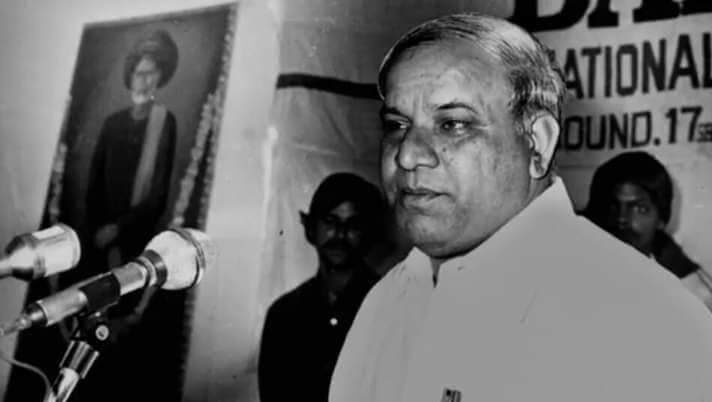
Centenary of the Ad Dharm Movement of Punjab
(11-12 June 1926 – 11-12 June 2026)
The Ad Dharm movement was the only movement of its kind in the northwestern region of India that aimed at creating a dignified space for the then Untouchables (outcastes or the lowest castes) by constructing a distinct socio-cultural and political identity for them through religious regeneration, spiritual empowerment, cultural transformation and political assertion. Though preceded by the Adi movements of south India, Ad Dharm movement came into existence on its own in response to the socio-cultural and religious circumstances in the region. Like the Satyashodak Samaj movement of the Shudra-atishudras in Maharashtra, the Ad Dharm movement became a household name among the Untouchable community of Punjab.
Babu Mangu Ram Mugowalia, a household name among the Untouchables of Punjab, was the main architect of the Ad Dharm movement in the mid 1920s. Seth Kishan Dass of Bootan Mandi, in Jalandhar district, who was a reputed leather merchant in his time, provided the financial backbone. Hazara Ram Piplanwala, Hari Ram Pandori Bibi and Sant Ram Azad, all from the neighbouring Hoshiarpur district, were among the leading personalities of the Ad Dharm movement. Babu Mangu Ram Mugowalia founded the movement at a school that he had himself established in his hometown (Mugowal, Garhshankar tehsil, Punjab) after spending 16 years abroad – in America, Singapore, the Philippines and other countries. He had escaped the death sentence given by the British government for attempting to smuggle weapons to India and remained in exile. Along with four other co-Ghadarites – Baba Hari Singh Usman, Gambhir Singh, Harnam Chand and Harnam Das – he had been captured by British soldiers and sentenced to death. German soldiers helped him escape from British custody. While Mangu Ram was in exile the British mistakenly announced his execution, and his widow, Piari, in keeping with the tradition, married his elder brother. On his return to his village, which left everyone astonished, he entered into a second marriage, with Bishno, and had four sons.
After spending a long period away from India, Babu Mangu Ram Mugowalia, to his utter surprise, did not find any change in the living conditions of his community in Punjab. In his own words: “While living abroad I had forgotten about the hierarchy of high and low, and untouchability; and under this delusion returned home in December 1925. The same disease from which I had escaped started tormenting me again. I wrote about all this to my leader Lala Har Dayal ji, saying that until and unless this disease was cured, Hindustan could not be liberated. In accordance with his orders, a programme was formulated in 1926 for the awakening and upliftment of the Achhut qaum (untouchable community) of India.”
Also Read: Punjab’s Ad Dharm movement – which turned Untouchables into proud Mulnivasis
He had first gone to America in 1909. It was there while working in the farmhouses of California that he came in close contact with the Ghadar movement, a radical organization which aimed at liberating India from British rule through armed insurrection. (In 2022, a photo of Mangu Ram was installed at the Gadar Memorial Hall, San Francisco (California, USA), which is housed in the building that served as the headquarters of the Ghadar party.) After returning to India and settling back in his native village, Babu Mangu Ram Mugowalia opened a school for children of the Untouchable community. The school was temporarily housed in the garden of Risaldar Dhanpat Rai, a landlord of his village, and a half-acre land was later donated for the purpose by Lamberdar Beeru Ram Sangha, another landlord of the same village. The school had five teachers, including Babu Mangu Ram, and it was at the school that the first official annual meeting of the Ad Dharm movement was held on 11-12 June 1926.
A poster was made announcing this meeting of the Ad Dharm movement, which described the hardships faced by the Untouchables at the hands of so-called upper castes and issued an appeal to the community to come together to chalk out a common programme for their liberation and upliftment. Eventually, the movement spread throughout the entire length and breadth of the whole of undivided Punjab. Mugowalia set a clear agenda for Ad Dharm movement and effectively intervened to promote the cause of downtrodden and carve out a separate identity for them.
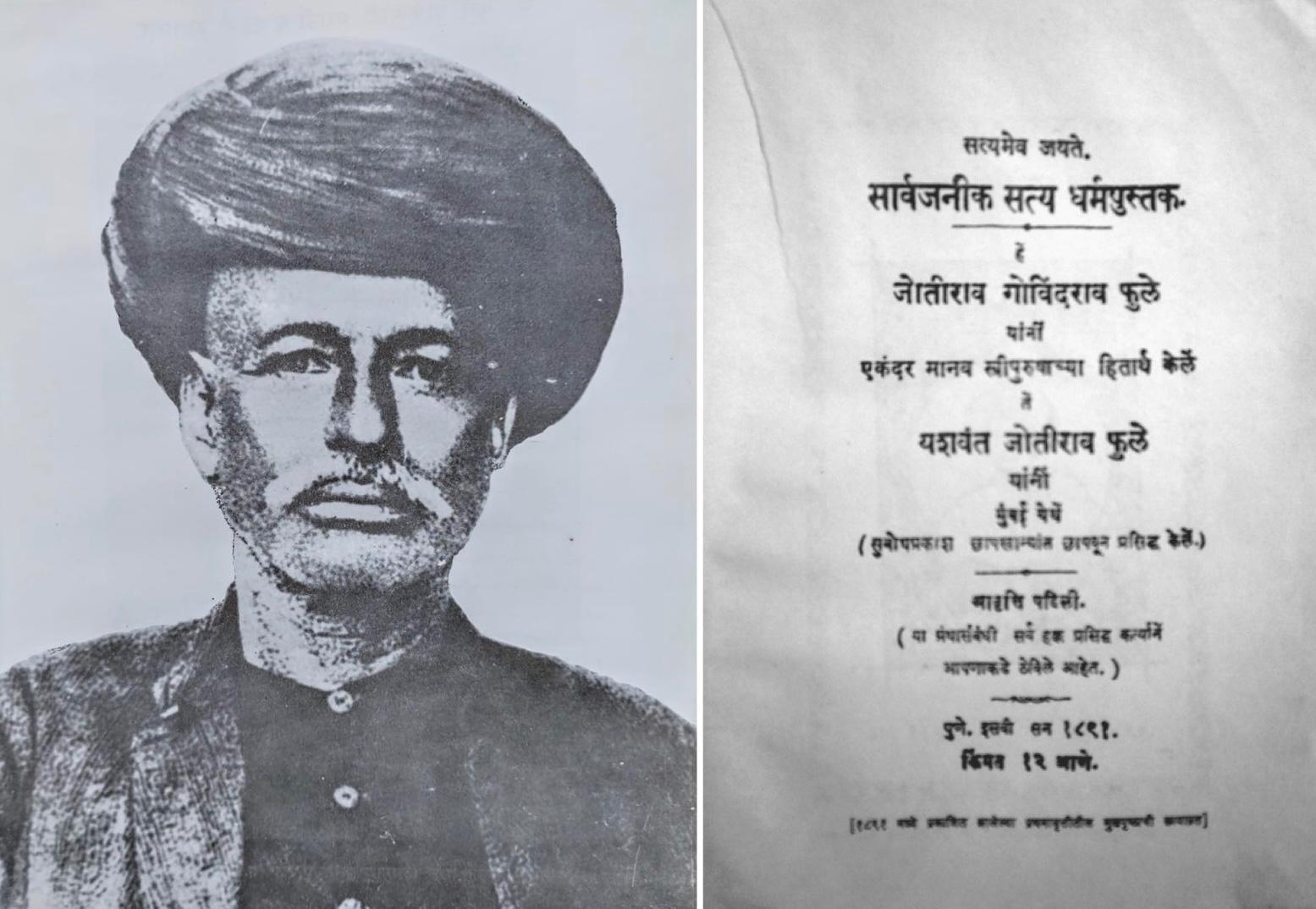
Babu Mangu Ram Mugowalia is to Punjab what Mahatma Jotirao Phule is to Maharashtra. If the Maharashtra lowest castes owe their social awakening to Mahatma Jotirao Phule, Punjab’s former Untouchables are similarly indebted to Babu Mangu Ram Mugowalia. Phule was influenced by the writings of Thomas Paine, the famous English-born American political activist, theorist, philosopher and revolutionary of the 18-19th century. Babu Mangu Ram Mugowalia had his first taste of freedom, social equality and human dignity during his time in the United States. It is there that he also came into contact with the revolutionary freedom fighters popularly known as Ghadri Babas. He aspired to both fight against the caste-based social evil of untouchability and to replace it with a casteless, all-encompassing social freedom, as well as to join the struggle to free India from British rule.
Ad Dharm and Ravidass Panth
Although Guru Ravidass was already a revered figure among the Untouchable community of Punjab, it was the Ad Dharm movement that used images of Guru Ravidass to great effect to concretize the newly conceived lower-caste cultural space in the region. Under the adept leadership of Babu Mangu Ram Mugowalia, the Ad Dharm movement tactically built mass appeal by using an image of Guru Ravidass in its emblem, reciting his bani, and narrating legends about him as illustrations of the power, pride and glory of oppressed segments of society.
Using the messianic aura of Guru Ravidass, including his utopian vision of Begumpura, the Ad Dharm movement prevailed upon the British regime to declare a separate religion (Ad Dharm or primeval religion) for the lower castes in Punjab in 1931. Consequently a total of 418,789 persons registered themselves as Ad Dharmis in the Punjab census of 1931. Eventually, this religion of the Untouchables dwindled into a separate caste – Ad Dharmi or Ravidassia – that now comprises 11.48 per cent of the Scheduled Castes (former Untouchables) in Indian Punjab as per 2011 Census. Since then, Ad Dharmis have organized themselves into various Guru Ravidass Sabhas (societies) and established a large number of Ravidass Deras. The proliferation of Ravidass Deras is often seen as a sign of the increasing appeal of the Ravidassia identity in the state. A vernacular field study completed in 2003 put the number of deras at around 100. Since then, many more such deras have come into existence in Indian Punjab. More than half of the Ravidass Deras are located in four districts – Hoshiarpur, Jalandhar, Kapurthala and Nawanshahr of the Doaba region of Punjab lying between two rivers Sutlej and Beas – also known for highest concentration of Scheduled-Caste population.
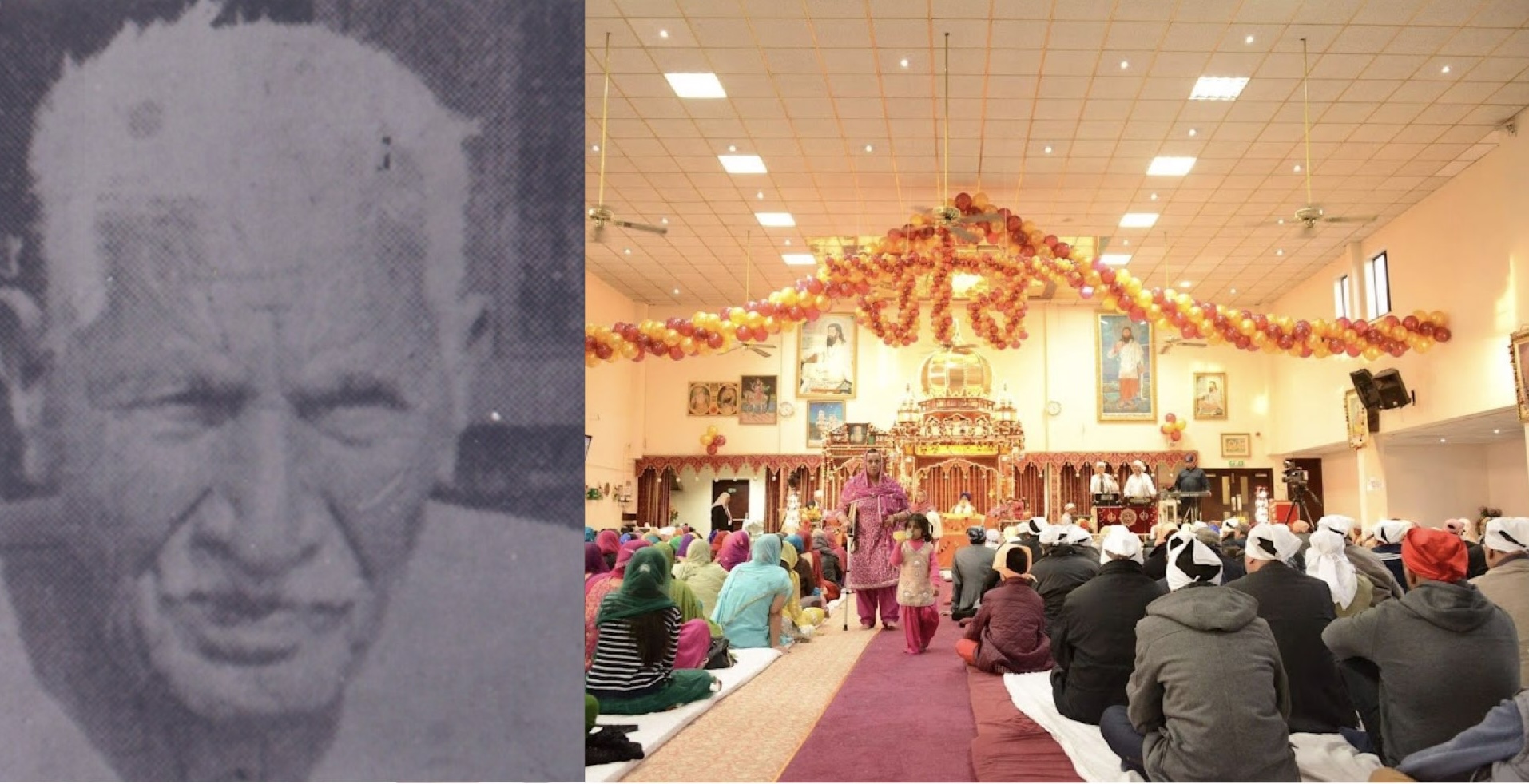
The phenomenon of Ravidass Deras has caught on with the SC diaspora as well. They have established Ravidass Deras in different parts of the world. Some of the most prominent among them are in Canada, in the cities of Vancouver, Calgary, Brampton, Toronto, and Montreal; in the United States in the cities of New York, Sacramento, Pittsburgh, Seattle, Fresno, Fremont, Houston, Selma, and Austin; and in the United Kingdom in the cities of Wolverhampton, Birmingham, Bradford, Coventry, Derby, Lancaster, Southall, Southampton, Kent, and Bedford. Since 2010, many Ravidass temples/gurdwaras have also been built in Austria, Italy, France, Germany, Spain, Holland, New Zealand, Greece and Lebanon. In contrast to Hindu temples and Sikh gurdwaras, where SCs face discrimination, Ravidass Deras provide an alternative religious domain where they need not hide their identity. Their distinctiveness also lies in the fact that they neither take refuge in any of the mainstream religions nor emulate the dominant socio-cultural ethos of upper castes. In fact, they contest the long-imposed supremacy of other castes. To underline their separate identity, Ravidass Deras have formulated their separate rituals, ceremonies, slogans, symbols, auspicious dates, customs, ardas (prayer), kirtan (musical rendering of sacred hymns), festivals and iconography. These deras, in fact, have been functioning as centres to sensitize lower castes and to facilitate their empowerment. The entire array of religious and cultural activities in Ravidass Deras revolve around the teachings and life of Guru. Free food (langar/community kitchen) and state-of-the-art medical health facilities are also provided in some of these deras. Some deras have opened English medium model middle/high schools, complete with modern teaching technology. The bestowal of the prestigious Padma Shri award on Sant Niranjan Dass, the present head of Dera Sachkhand Ballan situated near Jalandhar, for his lifelong inspiring contributions to social work, spiritualism, and societal harmony within the Ravidassia community, and the visit of Prime Minister Shri Narendra Modi to Dera Sachkhand Ballan on 1 February 2026 on the occasion of the 649th celebration of Guru Ravidass jayanti have provided a boost to dera culture in Punjab.
Ad Dharm, Ambedkar and electoral politics
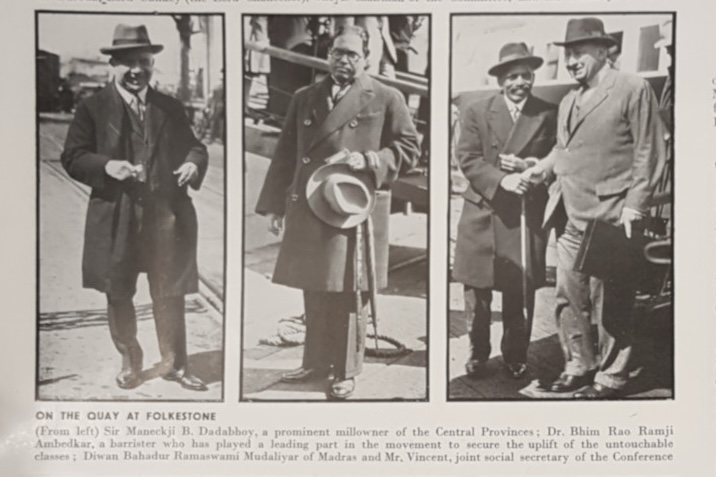
Babu Mangu Ram Mugowalia supported Babasaheb Dr B.R. Ambedkar in the latter’s demand for separate electorates of Depressed Classes (later designated as Scheduled Castes) to elect their own representatives at the London Round Table conferences. Under the able leadership of the Babu Mangu Ram Mugowalia, Ad Dharm movement contested Punjab Provincial Assembly Elections in 1937 and 1946, which made the SCs of Punjab an important stakeholder in the state legislature. In the 1937 Assembly elections in Punjab, eight seats were reserved for the Scheduled Castes. The Ad Dharm contested all seats with the help of the Unionist Party. Ad Dharm candidates won seven seats. One seat (Hoshiarpur) went to a Congress candidate, Moola Singh, who defeated Hazara Ram Piplanwala of Ad Dharm with a margin of seven votes.
In 1946 Babu Mangu Ram won the Hoshiarpur assembly seat. (Fifty years later, in 1996, Hoshiarpur would send Kanshi Ram to Parliament.) The tremendous response to the call of the Punjab unit of Scheduled Caste Federation to gather at Bootan Mandi to listen to Babasaheb Dr B. R. Ambedkar during his canvassing in Jalandhar on 27 October 1951 for the first general election in Independent India was, in fact, the direct outcome of the fertile political ground prepared by Babu Mangu Ram Mugowalia. The next day Babasaheb held a mock parliamentary debate at the campus of DAV College Jalandhar where he also addressed the students and the faculty together, followed by public addresses at Ludhiana and Patiala on 28 and 29 October, respectively.
The Ad Dharm movement headed by Babu Mangu Ram Mugowalia played a dominant role in creating the distinct markers of the separate SC identity in Punjab. It revived the memory of their heroes – Bhagwan Valmik Ji, Satguru Namdev Ji, Satguru Kabir Sahib and Satguru Ravidass Ji – and brought forth an urge to become rulers themselves. It was this urge that became sharper under the stewardship of Babasaheb Dr B.R. Ambedkar. If one is to make sense of socio-political consciousness among the SC community in Punjab, they cannot do so without studying the pioneering work done by Babu Mangu Ram Mugowalia.
The story of Ad Dharm and its originator, Babu Mangu Ram Mugowalia, would remain incomplete without acknowledging the seminal contribution made by Mark Juergensmeyer, reputed Social Anthropologist and Political Scientist of the University of California, Santa Barbara, the USA, who did his PhD thesis on this very movement. The thesis was published as the classic “Religious Rebels in the Punjab: The Social Vision of Untouchables”. It was after the publication of his field-based study of the movement and its founding father that the people of the region came to know the significant role played by Babu Mangu Ram Mugowalia towards the upward social mobility of the lower castes in Punjab and sterling contributions of the historic Ad Dharm movement. In one of his latest writings Mark Juergensmeyer portrayed Babu Mangu Ram Muggowalia, founder of Ad-dharm Mandal, as a saint. He wrote in a Facebook post: “In the early history of sainthood, one of the most certain paths to beatification was martyrdom. The term “martyr” comes from the Greek martur, which means “witness.” Those who witness to their faith to the extent that they would rather die than renounce it are the prime exemplars of martyrdom. This leads us back to Mangu Ram. There is no question that this definition fits his remarkably brave stance. The very fact that after living in California he would return to India, the land that regarded him as an outcast, is amazing. And then to champion the rights of his people in the face of resistance from those of upper castes is even more remarkable. How many of us would risk such a thing? One thinks of Nelson Mandela, who spent decades rotting in the South African prison on Robben Island before the political winds shifted. When Mandela was finally released, he was hailed as a hero and made the first President of the post-apartheid country. That was Mangu Ram’s trajectory. Though he did not become President of India, eventually he served in the legislature and was rewarded by the Indian government as a Freedom Fighter. … I am sure that Mangu Ram, despite all of his greatness, was still a human, with all of humanity’s shortcomings. Yet there was something about him that marked him as different. He was a shining star, not easy to emulate, but greatly to admire. We cannot all be saints. But thank God there are such beings on the face of the earth. We are all better for having lived in a world touched by them, by those like Saint Mangu Ram.”
Forward Press also publishes books on Bahujan issues. Forward Press Books sheds light on the widespread problems as well as the finer aspects of Bahujan (Dalit, OBC, Adivasi, Nomadic, Pasmanda) society, culture, literature and politics. Contact us for a list of FP Books’ titles and to order. Mobile: +917827427311, Email: info@forwardmagazine.in