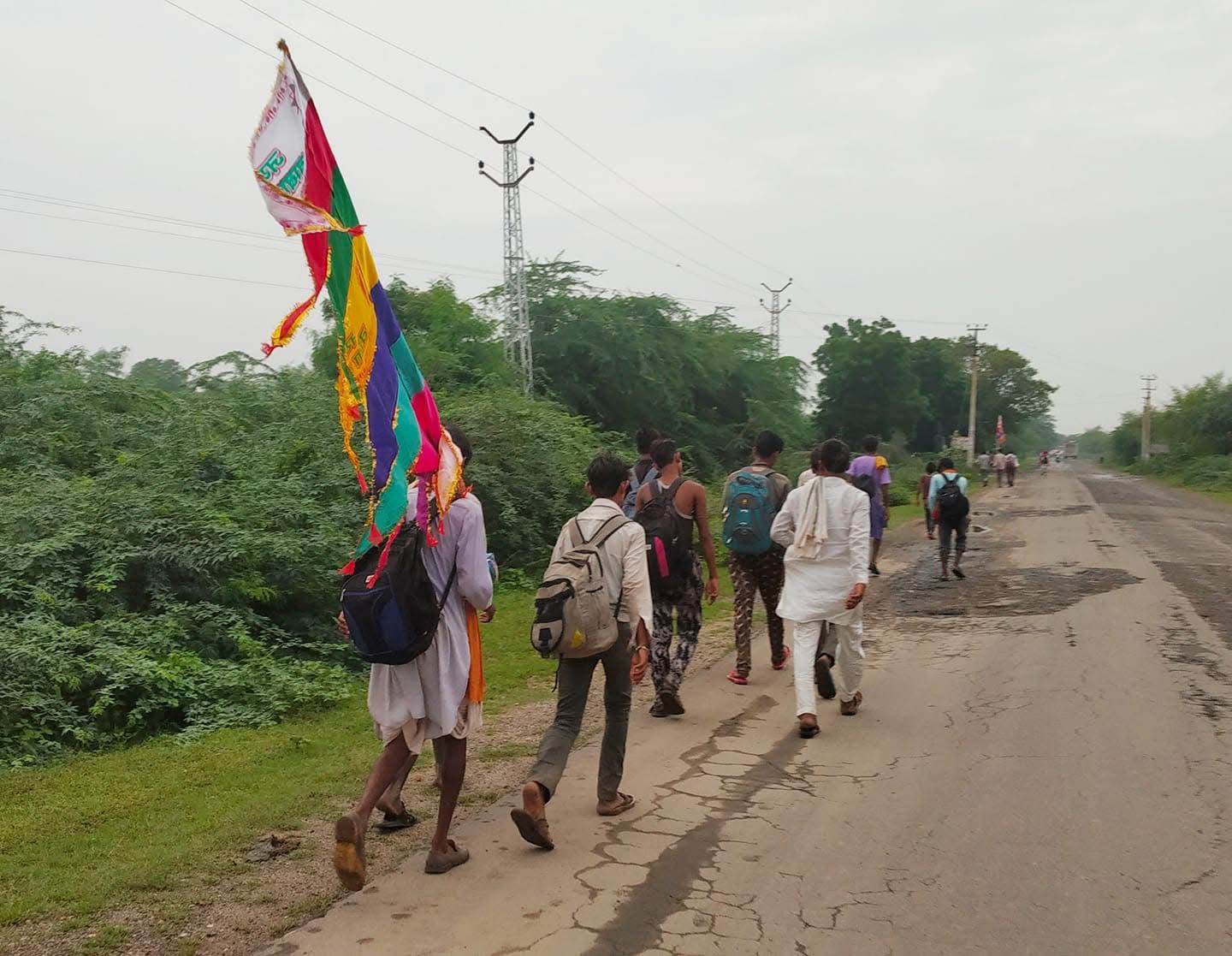
These days, lakhs of people are flocking to Ramdevra near Pokhran in Rajasthan’s Jaisalmer district. Some are going there on foot; others ride buses, bikes, trucks, trains and cars. They hail from a large landmass – extending from Nandurbar in Maharashtra to Malwa in Madhya Pradesh. Among them are pilgrims also from Mewar, Hadauti (Kota, Jhalawar and Baran), Khairad (Bundi and Bhilwara), Dhoondaadh (Dosa, Tonk and Jaipur) and Marwar (Jaisalmer, Barmer, Jodhpur and Pali) in Rajasthan. They are also from Gujarat and Delhi. Those walking hold aloft a flag with five colours, resembling Buddhist Dhamma’s Panchsheel. They keep on chanting “Jai Baba Ri”. Community kitchens called Ram Rasaude (Ram’s kitchen) have been set up on the way for the “jaatrus” – as these pilgrims are known. The kitchens are run for a month by the residents of the villages and the towns that fall on the routes to Ramdevra.
The “jatra” (pilgrimage) is held in the month of Bhadon but it is very different from the Kanwar Yatra. The pilgrims are disciplined – they don’t provoke others in the name of religion or caste. They rest wherever they find a suitable place. They eat food served in the Ram Rasaudas and sing bhajans to Baba, as Ramdev Pir is affectionately called.
A couple of years ago, in one of my articles, I had asked where these pilgrims, flags in their hands, were going. I wanted to know whether they were aware of the beliefs of Ramdev Pir, if they knew about him and what is being done today in his name.
Ramdev Pir’s Jatra makes for an interesting study in a deeply casteist society like ours. The jatra passes through villages populated by rabid casteists, yet there hasn’t been a single incident of them being discriminated against on the basis of their caste or being subjected to untouchability. That is because Ramdev Pir wanted the people to rise above the considerations of caste. So, during the jatra, the hosts adhere to his message and serve the jaatrus without any kind of discrimination.
Until about two decades ago, the jatras attracted a handful of people and even these were overwhelmingly from the Dalit and the OBC castes.
The destination of the jaatrus is Ramdevra (Runicha) village in Jaisalmer, where there is a Samadhi of this 14th-century Sufi Saint. The annual fair at Ramdevra is not just a religious event. It can well be described as a “gathering of the deprived”. It is a symbol of social unity and Dalitbahujan consciousness. There are no distinctions of caste or religion at the event.
Who was Ramdev Pir?
Ramdev Pir was a rebel saint of the 14th century, who fought against the varna system and the hegemony of the upper castes. Upper-caste historians tried to underplay the rebel in Ramdev Pir and instead hailed him as a king or an incarnation of god. The idea was to suppress his revolutionary legacy. But his identity as a follower of the Sraman tradition and the Mahadharma he adopted has been inspiring Dalitbahujan movements.
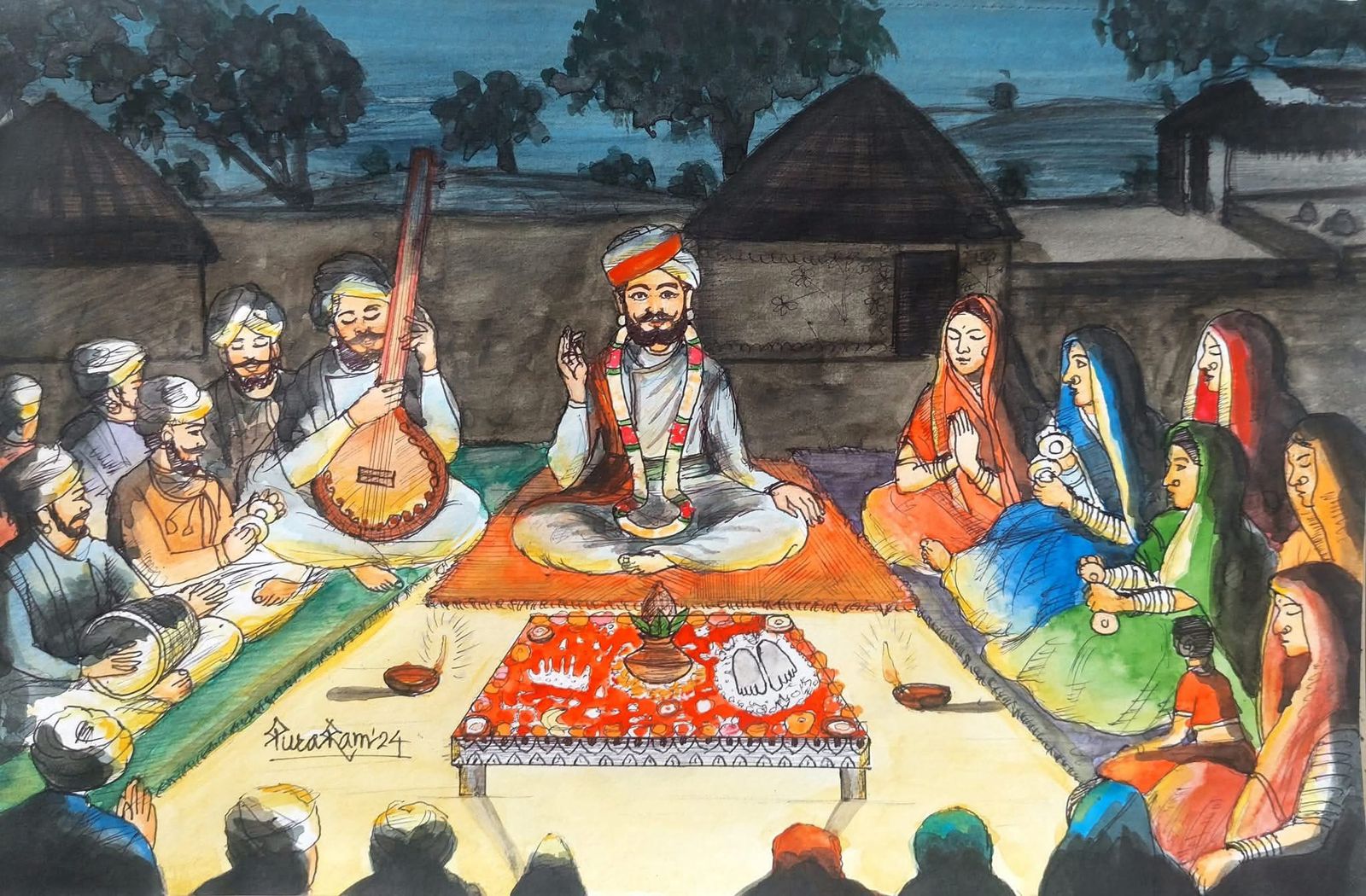
Mahadharma was a spiritual tradition that developed in the Malwa region of Rajasthan, Kutch in Gujarat and Sindh around the 12th century. Its followers included Hindus, Buddhists and Muslims. This sect was greatly influenced by Naths, Siddhs and Sufi saints. Its adherents believed in meditating and keeping a low profile. They organized Ratri Jagrans (singing bhajans all night) which were called Jamma Jagrans. The believers in Mahadharma adopted Buddhist practices. They were also known as Beej Margis, Alakhnamis and so on in different regions.
Ramdev Pir is addressed as “Baba Ramdev” by the Hindus and “Ramsa Pir” by the Muslims. Ramdev ji was initiated into the Khoja Nizari Ismaili sect, which was a syncretic community inspired by the Sufi tradition. Ramdev urged his followers to shun religious fanaticism and ritualism.
The Bhadwa Fair, organized at the mausoleum of Ramdev Peer at Runicha (Ramdevra), exemplifies this solidarity. Lakhs of Hindu and Muslim devotees gather there for “ziyarat” (paying obeisance). Almost 90 per cent of the pilgrims are Dalits, Adivasis, OBCs and Muslims, which shows the overarching reverence for Ramdev.
Now, of course, Pokhran reminds us more of India’s nuclear weapon test and less of Ramdev Pir’s heritage. Even here, Ramdev Pir is being projected as a demi-god – a conjurer with magical powers. The worldly and spiritual aspects of his teachings are being pushed into the background, and this is being done deliberately. Not much is available in writing about Ramdev Pir. We know about him through the poetry and the stories preserved in the collective memory of society. Ramdev was an amazing personality, a real saint who, 600 years ago, discarded distinctions of caste, varna, clan and religion and chose his own unique way. Even today, lakhs walk the path shown by him.
Attempts to Hinduize Ramdev Pir
In these times when all Dalitbahujan folk heroes and their ideas and teachings are being communalized, it was impossible that Ramdev Pir would be spared. No wonder then saffron colour cloth is offered at his samadhi. But what is even more sinister is designating Ramsa Pir not only as Baba Ramdev but also “Hindua Suraj” (The Sun of Hindus) and “Gaurakshak” (Protector of cows). Some have declared that he was martyred at a young age while fighting Aurangzeb to protect cows. Instead of accepting him for what he was – a syncretic, revolutionary saint – attempts have been made in the last two decades to squeeze him into a communal straitjacket. But falsifying history doesn’t change facts.
Ramdev Pir and Aurangzeb belonged to different times. When Ramdev Pir was born in the 14th century (sometime between 1352 and 1385), Muhammad Bin Tughlaq ruled the Delhi Sultanate, which included most of the Indian subcontinent. He was succeeded by Daulat Khan Lodi, Khizr Khan, Mubarak Shah and Muhammad Shah. This was a period of instability. It marked the fall of the Tughlaq clan and the rise of the Sayyid dynasty. Aurangzeb ruled from 1658 to 1707. In fact, the Mughal Period, to which Aurangzeb belonged, had begun only in the 16th century (1526) with Babar defeating Ibrahim Lodi in the First Battle of Panipat. Thus, around 150 years separated Ramdev Pir’s birth and the advent of the Mughal era.
A close inspection of Ramdev Pir’s Samadhi (tomb) reveals that its structure is similar to the mazars built on the graves of Muslims. Dr Kumud Sharma, in her research work, “Loknayak Baba Ramdev: Lok Dharma Aur Lok Parampara” says, “There is a mazar on the Samadhi of Ramdev ji. Given the manner in which Ramdev ji is worshipped, it seems he had some ties with Muslim pirs.” (p 133-134)
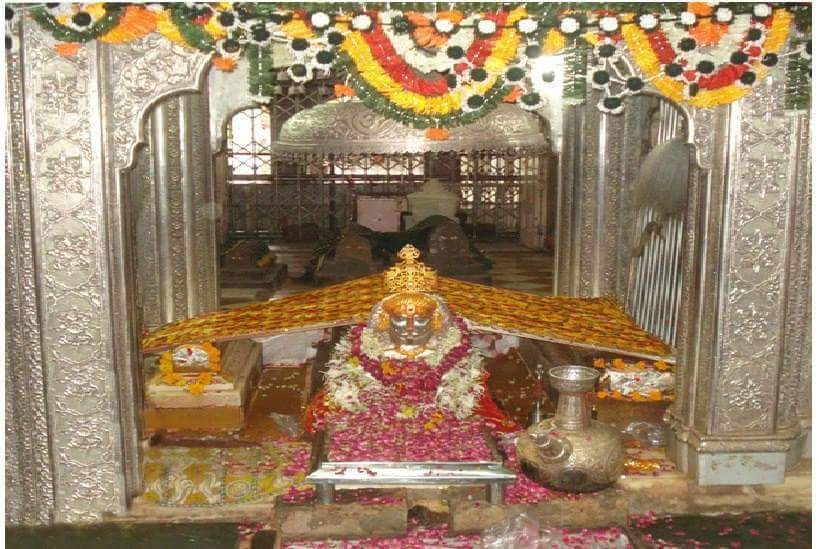
Dr Sona Ram Vishnoi, who has done extensive study and research on Ramdev Pir, writes in his book “Baba Ramdev Ka Itihaas Evam Sahitya”: “The samadhis of Ramdev ji and his ancestors are located at Runicha. On one of them is inscribed a verse from the Quran about the omnipotence of god.” (p 21) Mira Reyam Binford, in her book “Mixing in the Colour of Runecha”, writes that on his mother’s Mazar, adjacent to Ramdev Pir’s, is inscribed a verse from the Quran which means that whatever happens in this world is God’s doing; there is nothing in the hands of men. Dominique-Sila Khan explores in detail the relationship between the Ismaili Shia Nizari sect and Ramdev Pir in the chapter entitled “The Nizari Dawa in Rajasthan” of her book “Conversions and Shifting Identities: Ramdev Pir and the Ismailies in Rajasthan”. According to Dominique-Sila, the followers of Ramdev Pir use words like “jamma”, “muquam”, “baargaah”, “gaadi”, “takia” and “dhuni”, which belong to the Nizari tradition.
The origin of Nizari tradition
You must be wondering what the Nizar sect is about. History tells us that after the death of Al-Mustansir Billah, the Fatimid Caliph and Ismaili Imam, in Egypt in 1094 AD, the Ismailis split into two. Those who sided with the Imam’s elder son Nizar, came to be known as Nizaris and those who went with his younger son Mustali came to be known as Mustalis. In India, Nizaris are known as Khojas and Mustalis as Bohras. After cutting ties with his brother, Shah Nizar began ruling from the Alamut Castle in Iran and began dispatching missionaries to different parts of the world. One of the missionaries, Ismaili saint Nuruddin Nazrani, arrived in India in 1094. This Sufi saint began working among Dalitbahujan castes like Kharwa, Kunbi, Kori and Megh. Pir Nuruddin did not reveal his real name and assumed a new name Satguru Nuru. His preaching led to the founding of the Satpanth, which was further spread by the efforts of Imam Shah from Pirana near Ahmedabad.
According to well-known historian and Buddhist scholar Tara Ram Gautam, Baba Ramdev was revered and worshipped by the Dalit castes of Rajasthan. He was the most influential missionary of the Khoja and subsequently the Nizari communities of Ismaili sect. In Ismaili sect, he was addressed as Pir. There are many famous “Dhunis” (places of worship) of the Nizari sect. This sect stood for harmony between Hinduism and Islam. It was a non-Hindu sect and Muslims also kept a distance from it. When Imamshah’s ‘Dhuni’ was established at Pirana, Baba Ramdev went to meet him and became a Nizari. Since then, he came to be known as “Neza Dhari” (holder of the flag).
Ramdev Pir’s followers address him as “Naklang” (spotless, flawless) Neza Dhari. One of the lines in a bhajan sung in his honour is “Pichham ki dharan soon mara alam raja aaya ho”, which seems to be a reference to Shah Alam Nizar’s arrival from western Iran. This is the same Shah Nizar who ruled from Alamut in Iran. Ramdev Pir’s bhajans are called ‘Bani’. They contain words like Shah Nizar, naklang, Alam Raja, Alamut, Multan, Mecca, Shams, Noor and Matang.
Today, the “puja” at the Samadhi five times a day, the Quranic verse inscribed on it and Ramdev being addressed as Pir are among the hundreds of pointers to the fact that Ramdev Pir stood for Hindu-Muslim harmony. That Muslims visit the Samadhi even today shows that Ramdev had a close association with Sufi Islam.
Ramdev’s supernatural image
In the popular psyche, Ramdev is a god who performs miracles, cures diseases and resolves crises. This blind reverence has hidden from the public view his real personality and all that he represented. Those running businesses in the name of religion have concocted stories of the miraculous exploits of this revolutionary saint, consigning his beliefs and philosophy to oblivion. This has been the fate of many great people.
About six decades ago some descendants of Ramdev Pir collaborated with Dingal (a dialect of western Rajasthan in which verses on valorous fighters was sung) poets to convert the concocted stories of miracles into bhajans in the form of Khamma Khamma (folk songs) and popularized them. Ramdev Pir, who was an environment lover, imbued with scientific and progressive thinking, was given the status of a demi-god. Some incidents from his life were exaggerated. Others were faked. Ultimately, a great spiritual preacher and reformer was reduced to a street conjuror.
The stories on miracles performed by Ramdev Pir lack credibility because the characters, time and place are not backed by historical evidence.
Ramdev Pir: My connection and curiosities
For the past five generations, my family members have been the “purohits” at Ramdev Pir’s temple. I inherited this work. I began performing the puja and other rituals at the temple when I was just 6 years old. This continued till I turned 15. Even as a child, I had curiosities about him, which turned into questions after I grew up. Thus began an endeavour to find answers to them.
I always found the story of his miraculous birth unbelievable. How can anyone be born without parents? How did Ramdev ji, without being born, turn up at the home of Ajmal ji (his father), as “Kumkum kera charan dharate” – a line from one of his bhajans – suggests?
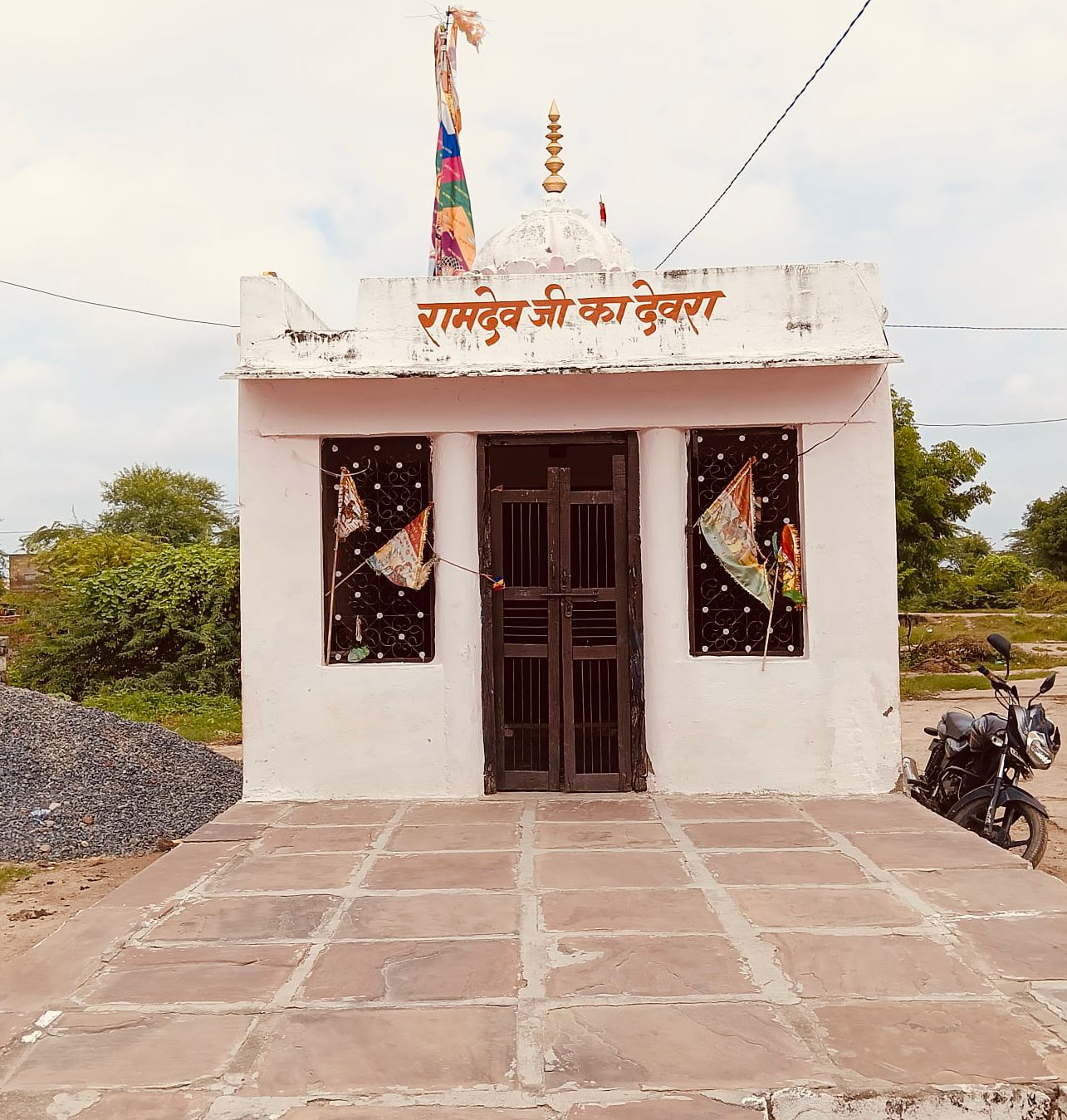
I was also perplexed why the Charans (bards in the courts of Rajput kings), who wrote “Khyats” (prose on kings) and “Rasos” (epic poems on life and works of kings) on even smalltime rulers and insignificant battles, did not write anything in honour of the “king of Runicha”? How and why was Ramdev ji ignored by the poets and singers known as Vanshavali Gayaks, Pothi Vachaks and Vansha Prashansaks who sang paeans to the ancestors of kings and rulers? I also noticed that at the time, Baba Ramdev was revered only by a few Dalit castes. Only Dalits worshipped him. Ramdev ji’s “pagalias” (footprints) were found only in Dalit settlements. The “pagalias” were small platforms on which earthen lamps and incense sticks were lit on the second day of the Shukla Paksha (fortnight that begins from New Moon day and ends on Full Moon day). At the time, idols of Ramdev were not to be found anywhere. The pagalias were called “Alakh ji’s Pagalias” and those who performed puja there were called “Alakhnamis”. The Alakhnamis did not believe in the Varnashrama Dharma and other Vedic constructs.
Until some years ago, most of the jaatrus belonged to the Dalit and OBC castes. Then, suddenly, there was a surge in people of all castes and sects marching to Ramdevra. Now, members of all communities join Ramdev’s Jatra. But even today, most of the temples of Ramdev Pir are located in the settlements of Dalits and other backward castes.
Why is Ramdev Pir missing from religious books?
I also used to wonder why scriptures and other texts don’t say anything about Ramdev Pir. The Brahmins have described different forms and incarnations of the so-called god – whether murderer Narasimha or the deceitful Vamana or Varaha – in their scriptures and composed slokas, chaupais and aartis on them. But they ignored Ramdev Pir. He doesn’t find mention in any scripture. How did this happen?
Other questions
Many want to know the form in which caste-based discrimination existed in western Rajasthan during the lifetime of Ramdev Pir. Was Manusmriti’s code enforced strictly in this desert area? Was the varna and the caste system so strong as to make upper castes shun even the shadow of the Dalits?
These questions stem from the assumption that the varna system was yet not strictly enforced in Rajasthan at the time. People used to sit together and work the fields together. The population density was low and the people were engaged in different trades. They took care of each other’s needs, bartered their products and worked together. If this is true, untouchability must not have been as pervasive as it is today.
But if these assumptions are correct and untouchability was not strictly enforced, then how could Ramdev have emancipated the Untouchables? Which incidents in his life show that he contributed to the elimination of untouchability? The scholars who have done research on Ramdev say that the only evidence that he worked for the emancipation of the Untouchables is that the “pagalia” is imprinted on his flag. But then, how did that emancipate the Untouchables?
Many scholars hold the view that Ramdev conducted Jamma Jagran for castes that were considered low. This is touted as his contribution to the emancipation of the Untouchables. But, then, Jamma Jagran was a part of Mahadharma. Kheenwan-Ransi (Dalit saint Kheenwan and Ramdev Pir’s grandfather Ransi) and Dharu-Ugamsi (Dalit saints Dharu Megh and Ugam Singh) had been organizing these events before Ramdev. Then, what was Ramdev’s unique contribution? He did attend the Jamma Jagrans held in the homes of low-caste people. But was a Jamma Jagran held at Ramdev’s home attended by people of all castes? Was a communal feast held at his home? Did he ever do anything to grant the low, deprived castes an equal status to the others or to give them the right to fill water from common sources? Did he fight the contemporary rulers and feudal lords for securing the rights of the deprived classes? It doesn’t seem he did any of these things. Then, how did Ramdev become a symbol of emancipation of the Untouchables, protector of the Dalits and of equality? When untouchability was not widely and strictly practised in his times, how could he have ended it?
Similar questions are asked about Ramdev being projected as a great hero of Hindu-Muslim solidarity. Was the hatred between the Hindus and the Muslims as strong in his time as it is today? Then, Muslims ruled a large part of India and the Hindu and Muslim kings had a love-hate relationship. Land revenue and the desire to expand one’s kingdom were the key causes of conflicts, which were the causes of suffering for the common people. Neither the literature on Ramdev nor historical accounts tell us whether the relations between the Hindus and the Muslims were informed by love or hate. In Ramdev Pir’s times, the Muslim population must have been small. The Muslims must have been mainly part of the armies of the emperors, and armies rarely stayed at a place for long. As such, they must have had limited contact with the ordinary Hindus. So, where was the need for Hindu-Muslim harmony?
In those times, Hindu-Muslim unity was not as imperative as it is now. Then, how and why did Ramdev work for Hindu-Muslim unity? Ramdev was not the ruler of a kingdom – which would have enabled him to forge unity between the two communities. He was not the founder of a new sect or religious denomination, which would have enabled him to unite the two communities by initiating them into a new, common faith. Can he be called a symbol of Hindu-Muslim unity merely because he was known as Ram Sa Pir?
Ramdev Pir in folklore
Hundreds of questions about Ramdev Pir kept swirling in my mind for years. Ultimately, in 2004-05, I decided to research him. I made dozens of trips to places associated with Ramdev Pir – right from his birthplace Undu Kashmir to his mausoleum Ramdevra. A study of literature on Ramdev Pir and interviews with people associated with him revealed many new, interesting facts.
Broadly speaking, three different things are said about his birth. The first is that he was an incarnation of Krishna, the ruler of Dwarka. This view is held by the believers in the doctrine of incarnation. Most of the devotees of Ramdev fall in this slot. Though it is an unscientific and illogical idea, it finds place in the “Banis” of different saint-poets and in popular legends. Needless to say, there is no evidence to back it.
The second view is that Ramdev Pir was a Kshatriya of the Tanwar (Tomar) clan. The evidence cited in support of this theory includes the old Khayats, popular beliefs, stone inscriptions, handwritten books and the Bhat texts of the Tanwars, which tell us that Ramdev Pir’s mother was Mainadi and his father was Ajmal. They were Tanwar Kshatriyas and descendents of Tanwar Anangpal, who is described as a “Chakravarti Samrat” (an emperor whose writ ran over a large area).
“The Tanwars claim that they are descendants of the Pandavas. They ruled Delhi for an extended period of time. Hence the saying ‘Jab tab Dilli Tanwaron Ki’. Tanwars reached Marwar from Tumvaravati. In Marwar, Ramdev ji Tanwar, known as Ramsa Pir, was believed to have been a miracle-working personality. He is worshipped in Marwar, Mewar and Malwa. Every year a big fair is held at Ramdevre village in Pokhran, where his Samadhi is located.” (Report Mardumshumari Rajmarwar, p 8, 1891, Rai Bahadur Munshi Hardayal Singh)
Citing Jogi Daan Baareth’s ‘Tanwar Vansh Ka Sankshipt Itihaas’, Dr Sonaram Vishnoi writes: “In the 34th generation of the Tomar [Tanwar] dynasty was born Anangpal-II, who was a Chakravarti Samrat and an unchallenged ruler of Delhi. He did not have a son and so he nominated his Dauhitra (daughter’s son) Prithviraj Chouhan as his successor. Ramdev Pir was born into the fourth generation of Anangpal. According to historian Laxmidutt Baarhath, Ramdev ji was born on Saturday, the Sudi Dwitiya (the second day of the fortnight of the waxing moon – Shukla Paksha) of the Bhadrapad month in Vikram Samvat 1405. Different historians have given different dates of his birth. Folklore has it that he was born on Ujali Beej (The second day of the Shukla Paksha). There is no unanimity among the scholars on the date and the place of his birth. Among others Tuvaravati, Delhi, Pokhran, Runija and Undu Kashmir are said to be his birthplaces. The ‘Bahis’ (records of births and deaths in a family) say different things about the family, place of birth and samadhi of Ramdev Pir.”
The third version is from the school that believes that the Dalitbahujan are the original inhabitants of India. They dismiss the unscientific theory that Ramdev was an avatar of Dwarkadheesh (Krishna). They also argue that Ajmal Tanwar’s wife Mainadi could not have given birth to Ramdev so soon after the birth of her son Veeramdev. They claim that Ramdev Pir was the son of a “rikhiya” (a devotee) called Sayar Jaipal, who was a disciple of Ajmal Tanwar. In support of their claim, they cite the Bhat Bahi of the Jaipals, records of lineages, folklores and the bhajans and verses of rikhiyas, which were orally passed from one generation to another.
Be that as it may, the caste, clan or family of great personalities is not important. It has no bearing on their greatness. Whether any or none of the theories about Ramdev Pir’s birth is true does not detract from what he meant to society and his contributions to society.
It seems that in keeping with the norms prevalent then, Ramdev Pir completed his entire education under Ajmal ji, who had great love for him. The Siddhi (enlightenment) acquired by Samas Pir and passed on to Ajmal Pir and his younger brother Dhanrup Pir (father of Sugna and Laachha), was imbibed by Ramdev with ease. That was how Ramdev Pir acquired a high position in the spiritual world and proved he is a Siddha by his noble deeds.
Baalinath is revered as the guru of Ramdev Pir. But when Baalinath met Ramdev Pir for the first time, the latter was already a young man. He had visited Baalinath’s Dhuni to ask Bhairavmal Bhoothda to leave Pokhran and go to Sind. It is thus not clear whether Baalinath was Ramdev Pir’s guru.
An account of their meeting says that Baalinath asked Ramdev Pir, “Kinn ro poot kathe soon aayo, kayeen ke batlayeeje?” (Who are you and from where have you come?) Clearly, Baalinath was not acquainted with Ramdev. Then, how could he have been Ramdev’s Guru? What folk poet Harji Bhaati says about Ramdev in one of his Bhajans sounds utterly incredible. “Dado Rinsi, pita Ajmaalsi, karne to Tunwar kehvayeejai. Baalinath Swami to chelo, Ramdev keye batlayejai” (Rinsi was my grandfather, Ajmaalji was my father, I am a Tanwar Rajput by deeds and a disciple of Baalinath Swami. I am called Ramdev).
When Ramdev described Baalinath as his guru, the latter was surprised. Obviously, there is something amiss here. How could someone whom he did not even know be his disciple? He asked Ramdev, “When did I make you my disciple?” This proves that Baalinath was not Ramdev’s guru. Anyway, Pokhran was never ruled by the Tanwars. Baalinath was never the “kulguru” of the Tanwar dynasty. Even today, the descendants of the Nath community have no ties with Ramdevra and do not have a Guru-Shishya relationship with the Tanwars. In his Bani, Ramdev accepts the importance of a guru but nowhere does he say that he took deeksha from Baalinath.
Though Baalinath could have been Ramdev’s “isht” (first-choice, ideal) guru, it was Ajmal who was his real guru. That’s why, in the Banis called “Chaubis Praman”, there is no mention of any guru. Instead they only refer to Ramdev as the son of Ajmal, as the lines “Ajmal sut Ramdev Bhakhe” and “Bhane Ramdev Ajmal sut” suggest.
In the Indian ascetic tradition and in the Sufi Peeri-Mureedi order [Relationship between spiritual guide (Pir) and follower (Mureed)], the disciples do not refer to their biological father but their religious guru as their father. Ramdev did the same. One possibility is that originally the lines must have referred to “Ajmal Shish” (disciple of Ajmal), which might have got distorted to “Ajmal Sut” (Son of Ajmal). Either way, it is clear that Ajmal Pir was the real guru of Ramdev.
Here it would be pertinent to briefly dwell on the political situation in Marwar during the time of Ramdev Pir. According to well-known historian Heerachand Ojha, Seeha, a Kshatriya from the Rathore clan, ruled Marwar at the time. He was succeeded by his descendants Rawal Maal ji (Mallinath) and Mehva (Mewa). During the time of Ramdev Pir, cities like Jaipur, Jodhpur and Bikaner were yet to be founded. The well-known cities and towns in his lifetime were Badmer, Nagaur, Sambhar, Siwana, Jaisalmer, Janglu Desh, Aamer, Tumvaravati, Jalaur, Ajmer and Chittor, among others. The Hindu and Muslim rulers were in perpetual conflict as part of their endeavour to expand their principalities. Fear and deprivation was the lot of the common man. There was no one to pay heed to the woes of the poor and the miserable. Among Hindus, casteism was rampant.
Rajasthan was no stranger to birth-based discrimination and the concept of high and low. Ramdev assailed both, and sent out a message of equality, not only at the spiritual level but also at the social level. He worked for promoting spiritual brotherhood among the Hindus and the Muslims. Amid the prevalence of the purdah (veil) system, he fought for giving women the right to participate in prayer ceremonies. At a time when people were reluctant to even visit the neighbouring village, he persuaded the mahajan (merchants) to travel to places across the seas for business. At a time when lower-caste people were shunned, he sang bhajan to the tune of chautare (veena, a string musical instrument) sitting among them, drank water from their homes and accepted prasad from them. All these were his way of resisting the discriminatory practices that were taking root in Rajasthan.
The people faced all sorts of problems ranging from the caste taboos imposed by the brahmanical religion to the atrocities carried out by fanatic Muslim rulers. As such, uniting the ordinary people was imperative. That was what Ramdev did. He was not driven by political motives. He was a votary of egalitarian society. He hated casteism and was opposed to ignorance, hypocrisy and evil customs. He believed in doing good to others and in non-violence. He never killed anyone. A religious flag fluttered at the top of the spear he carried. That was why he was also referred to as “Naklang Nejadhari” (Holder of harmless spear). Even today, his followers greet each other with “Jai Baba Ri”. He is described as “Nole ghode ra aswar, dholi dhwaja ra dhani” (The owner of the white flag, riding a green horse). His flag was imprinted with the images of Sun, Moon and Pagalia.
Attempts to fit him into the frame of the Varnashram Dharma failed because he rejected it. He believed in this world, not the other world. He respected women. He did not confine himself to the boundaries of any caste. A band of people like Ramdev emerged following the decline of Buddhism. They believed that idol worship and worshipping god with attributes was nothing but hypocrisy. Some of them became Tantriks. Others became Nath Panthis, Nirgunas and Vaishnavas. Ramdev also openly spoke against yagnas and animal sacrifice. This group represented the Sraman stream, presenting themselves as contrary to the Brahmanical religion. This stream subsequently turned into the Nirgun stream. It didn’t accept caste or Varna. It did not discriminate between the Hindus and the Muslims. Ramdev lent strength to this stream. They sang Bhajans and Banis in their congregations – called Jamma – sitting with people of all castes. But the Sanatani priests rejected this egalitarian stream, branding it as Kunda Panth.
Ramdev Pir was not a king. He ruled over no one. He never went to war. His was a spiritual kingdom. He ruled over the hearts of the people. His message was humanism and he had followers in Multan, Sindh, Marwar, Malwa, Mewar and Kutch.
A study of the spiritual tradition of Ramdev Pir brings many interesting facts to light. It also exposes the attempts to confine him to a particular school of thought. His ideas, his work among the people, documents and other pieces of evidence do tell us about his thoughts on religion, sects and spirituality.
That Ramdev Pir was drawn to the Ismaili Nizari sect is well known. Also well known are the efforts to present him as an avatar of Krishna. But not much has been said about his strong bonds with the Nath and Siddha traditions. Renowned scholar on Buddhism, Dr Tara Ram Gautam, in his article “Baba Ramdev ji: Siddha Paramapara Ke Sashakt Pratinidhi” writes, “Baba Ramdev ji emerged at the time of the merging of the Nath and Siddha traditions, which ultimately led to the Siddha tradition becoming a part of the Nath sect. During the time of Ramdev, this process of assimilation was gathering steam. There were social reasons for this assimilation but there were also political reasons.”
Using Bhajans, Satsangs and Jamma Jagrans as his vehicles, Ramdev Pir spread the message of religious egalitarianism among the people. Accompanied by the veena (tambura), he sang many bhajans conveying this message. He also wrote Bhajans, Banis and Sakhis in lyrical forms. Their numbers must have been in the thousands. But they were neither written down nor were they preserved in the oral tradition. Still, Meghwal and Kamad singers, known as Rikhiyas of Ramdev Pir, have preserved some of his Banis. Of course, today it is difficult to attribute any particular Bani to Ramdev with any degree of certainty. The Banis which are available are known as “Chaubis Praman”.
However, there are many versions of the texts of these Chaubis (twenty-four) Banis. The versions sung by the singers from Kamad or Megh community are different from those sung by non-Dalit communities. It can easily be discerned that every possible effort has been made to erase the words “rikh” and “megh” from the Banis. Be that as it may, the “Chaubis Praman” available now introduce us to Ramdev Pir’s ideology and Nizari Dawa (tradition). They assail hypocrisy and talk about yoga, dhyan, samyak samadhi, bhakti, guru and sharnagati.
Tara Ram Gautam describes Ramdev Pir as a key representative of the Siddha tradition of Buddhism. He writes, “The words ‘Sen’ and ‘Seni’ used in Banis of Baba Ramdev ji are synonymous with Shunyavaad and Shunyavaadis of the Siddhas. The ‘Bhav’ in his works refers to ‘Vigyaptimatrata’ of the Siddhas. His Yoga, is in fact, ‘Anuttar Yoga’ of the Siddhas. ‘Mahamudra’, ‘Padmapraman’, etc are a continuation of the Siddha tradition.” Referring to the use of words like Nemmandal, Ranunkar, Unkari, Ajar, Bajar, Brahma, Akash, Paanch Tatva, Ghat, Bhoot, Jog, Avdhoot Nath, Pannch Bedi Paat, Jogiyan Ki Jugat, Jugat Maanyali Mugat, Devta Ki Drishti, Padde Bhela Paanch, Saini Sant, Vrat, Padde Ka Dashdosh, Pyala Maanhi Posh in Ramdev’s Banis, Tara Ram Gautam proves that Ramdev was a strong proponent of Siddha tradition and his preaching was deeply influenced by the preaching of Tathagat Gautam Buddha. At the same time, he also promoted the Nizari sect and followed the path shown by the Siddhas and the Naths. Ramdev also shared the Sufi beliefs and propagated Satpanth (Sirate Mustkeem). He took forward the ideas and beliefs of Buddha. Arguably, he was the only sant who represented a unique communion of Hinduism, Islam and Buddhism.
Ramdev Pir’s Dalitbahujan narrative
While researching on Ramdev Pir, I concluded that the stories about miracles performed by him are part of a brahmanical conspiracy to shift attention from his socio-spiritual ideas and to ensure that the people remain unaware of his real personality and beliefs. Ramdev Pir was a rebel saint with a deep understanding of spiritualism. He fought for ending discrimination based on caste, varna, religion and gender and tried to build solidarity between people from different religions and castes.
In paintings, he is always shown astride a horse, with his sisters Dali Bai and Sugna Bai performing his aarti and his bard Harji Bhati waving a chanwar, standing behind him. But I was surprised to know that Ramdev Pir and Harji Bhati were separated by some 300 years.
The same is true of the concocted stories vis-à-vis the Mughals and the Maharanas of Chittor. They are not in conformity with the times when the characters of these stories lived. Ramdev Pir is an example of how the rebellious voice of a people’s saint is co-opted by Brahmanism.
Kumud Sharma writes in her research work “Loknayak Baba Ramdev: Lokdharma Aur Paramapara” that “Ramdev made several interventions in society. He had a great personality, he stood for morality, was spiritual, emphasized Nirgun Upasana and the right to equality and his teachings were about welfare of humanity, which is why people accorded him the status of a great saint.”
Ramdev Pir was a lifelong opponent of social discrimination and untouchability. He adopted Dali Bai – a Dalit girl – as his sister. Many scholars claim that Dali Bai was Ramdev’s own sister. Her samadhi sits next to Ramdev’s samadhi on the temple premises, where Dalit Meghwals of the Jaipal Gotra conduct pujas. Dali Bai and Ramdev Pir participated in spiritual events together. This was a revolutionary act at a time when women were not allowed to enter temples and to lead religious ceremonies, including Bhajans and Satsangs.
By giving Dali Bai a respectable position, Ramdev Pir promoted social acceptance and self-respect of women. He established the Kamadia sect, which stood for social equality and Bhakti. The Dalits and other deprived communities were given an equal status in this sect. Ramdev mobilized the rikhiyas of the Meghwal community and inspired them to protest social oppression. Even today, Ramdev Pir’s “Than” or “Devra” (place) are found in Meghwal neighbourhoods.
There is no denying the fact that Ramdev Pir played a key role in equipping women with spiritual and social rights. He married Netlade, who was physically disabled from birth. This symbolized his intent to break social customs. Besides, women were given the right to join Satsangs and Bhakti dances (such as Terahtali), which was a unique step in those times. Ramdev Pir strove to secure respect and equality for women. He adopted the Mahadharma of the Megh tribe, which stood for social equality and service to humanity and was against ritualism. The principles of Mahadharma inspired Ramdev to work for the people languishing on the margins of society. Due to his revolutionary ideas and work, he was forced to take his own life (take samadhi) at Runicha at the age of 33. The place where he died is still a spiritual centre for the Dalitbahujan.
Ramdev Pir’s teachings are still relevant for the battle for securing social justice and equality. It is imperative to reinterpret the legacy of Ramdev Pir so that more and more people are acquainted with his revolutionary ideas. The place where his samadhi stands and the Bhadwa Mela are symbols of social unity and harmony. The Bhadwa Mela is not a religious event. It is a celebration of Dalit consciousness and social unity.
Today, it is necessary to view Ramdev Pir’s legacy from a new perspective. He was not only a folk hero but a rebel against the varna system and proponent of social unity. His teachings tell us that real “dharma” is serving humanity and working for religious harmony and social justice.
(Translated from the original Hindi by Amrish Herdenia)
Forward Press also publishes books on Bahujan issues. Forward Press Books sheds light on the widespread problems as well as the finer aspects of Bahujan (Dalit, OBC, Adivasi, Nomadic, Pasmanda) society, culture, literature and politics. Contact us for a list of FP Books’ titles and to order. Mobile: +917827427311, Email: info@forwardmagazine.in