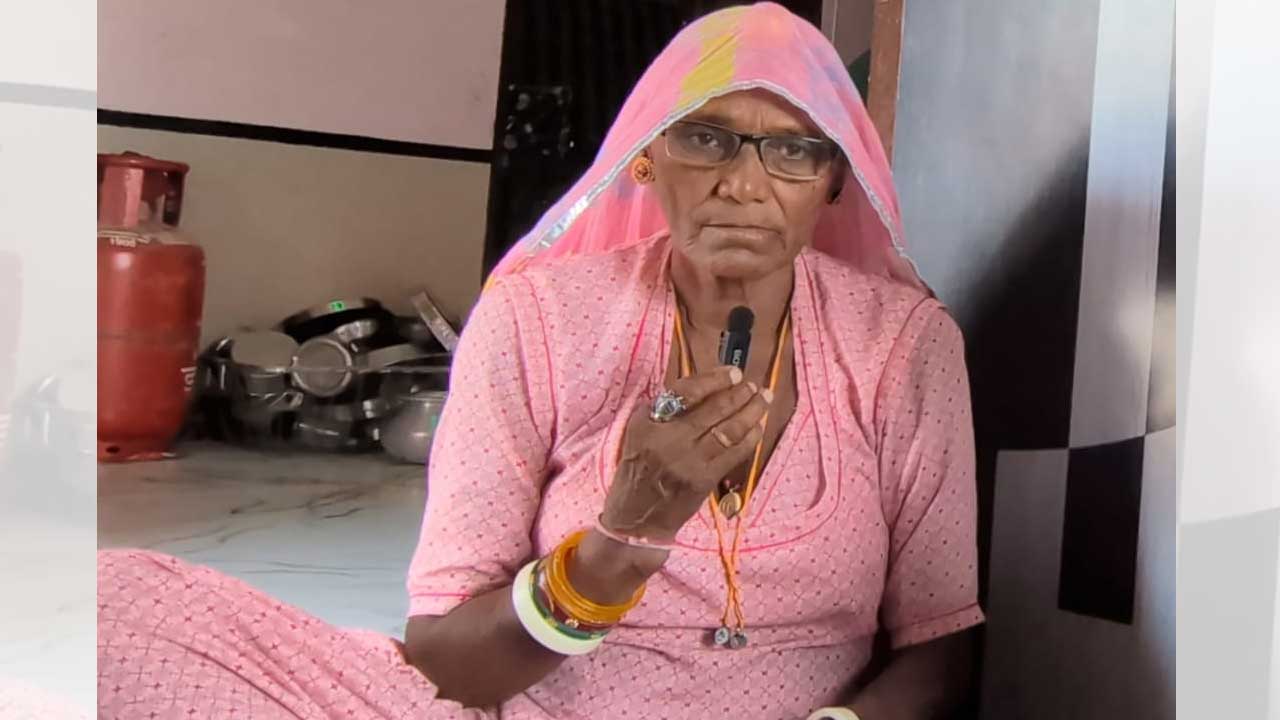
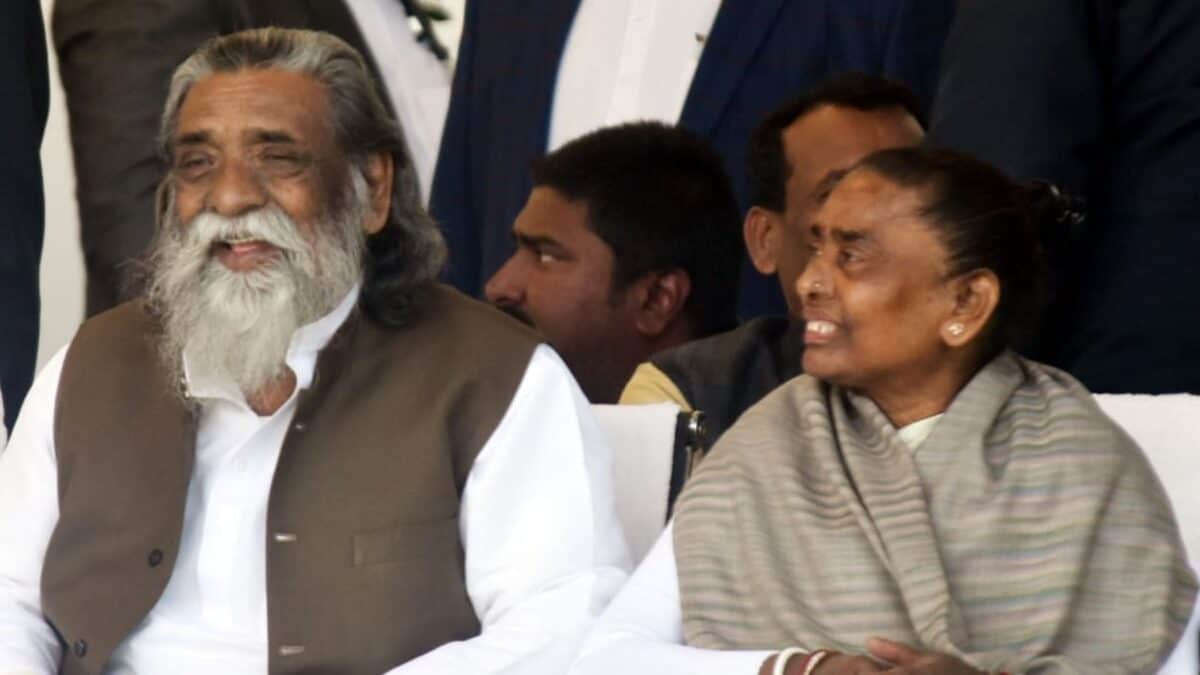
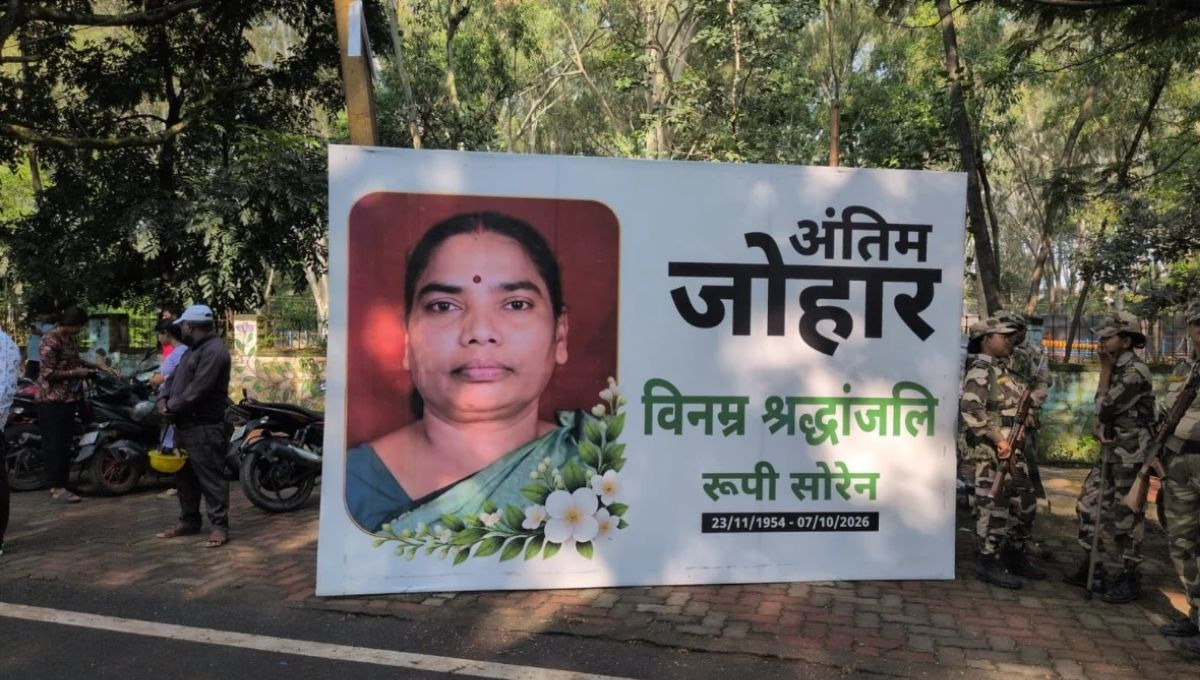
Dishom Guru Shibu Soren’s life partner Rupi Soren is no more. She passed away on 7 October 2026. She was married to Shibu Soren at a tender age and most of her youth was spent waiting for the return of her husband who was perpetually on the run from village to village and from jungle to jungle during his long battle against the bloodsucking moneylenders. They got married in 1962 and their first child, Durga Soren, arrived eight years later. That was the time when the struggle against the exploitative moneylender cartel was at its peak. Shibu Soren had begun frequenting the Adivasi-dominated Tundi block of Dhanbad district and set up his famous Pokhadia Ashram there, which not only became the hub for his movement but also the centre for many creative endeavours.
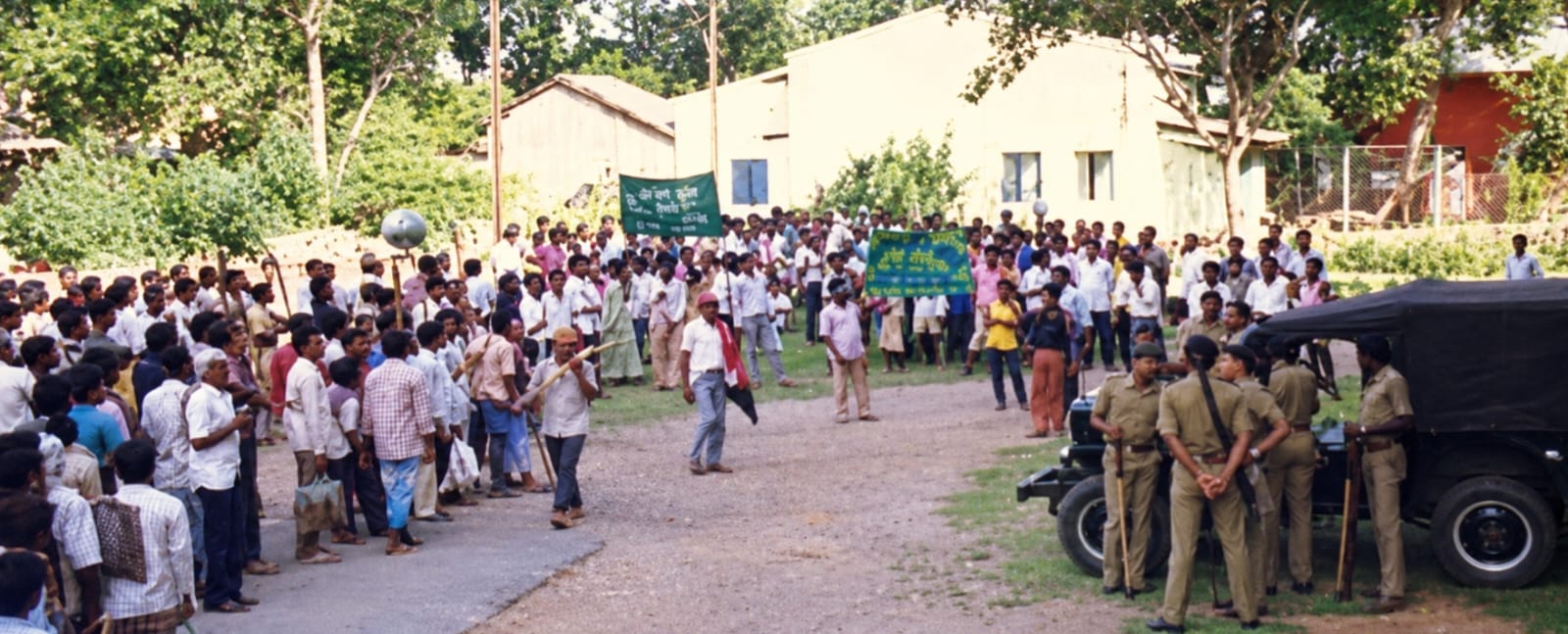
Before settling down in Tundi, Guruji’s life was absolutely chaotic. Those were the days when he was metamorphosing from a teen into a young man. He devised a unique weapon for his movement – Dhankatni. If the Mahajans have usurped land of the Adivasis fraudulently or in the name of realizing their debts, let them grow crops on it, but once the crop is ready, it is to be harvested and treated as public property – a lion’s share going to the original landowner, a portion set aside for future needs and the rest used to feed the comrades of the movement. When his father Sobran Manjhi was murdered, Shibu was around 16 years of age. Initially, he used to fell trees in the forests of Nemra and take the wood to Jhalda Tuleen for sale. Subsequently, he immersed himself fully into the movement.
During the course of the movement, cases of murder, loot and arson were registered against him and his associates at dozens of police stations in northern Chota Nagpur. With the police close on his heels, he kept moving from one place to another and that too, riding an old Norton motorcycle.
The readers may well question the need for this elaborate prelude. Well, it would help them imagine the kind of life Rupi was leading as she progressed from girlhood to becoming a young woman. She used to run her household with the help of her mother-in-law, Sonamani, and the wife of Shibu’s elder brother, Rajaram. Whether it was police raids or threats by moneylenders, she faced them stoutly. She waited for her husband’s return with desolate eyes, always confident that he would return.
Her confidence was shaken once – when the policemen stabbed Shibu Soren’s associate Vasant Pathak with knives and other sharp-edged weapons till he bled to death. Sonamani fondly embraced her and assured her that nothing would happen to her husband.
Her confident waiting for Shibu Soren resumed and continued until 4 August 2025 when Guruji passed away. This was when she lost faith and the separation became unbearable. Medically, of course, her end came as her heart stopped beating.
From 1989 to 2003, I was stationed at Bokaro as a journalist and was a frequent visitor to Shibu Soren’s home in Sector 1 of the town. During my visits, I used to meet Rupi, too, and found her to be a calm, gentle woman, taking care of her home and family. In 1990, Guruji was elected to the Lok Sabha for the first time. His constituency was Dumka, where he built a house. But he lost the next election – held under the shadow of Indira Gandhi’s assassination – from the same constituency. He returned to Bokaro, which became his base as he travelled to different areas of Jharkhand – from Ranchi to Dhanbad to Dumka. Rupi Soren also contested Lok Sabha elections once. That was because Guruji had been elected to the Rajya Sabha in 1998. So, Rupi was named the Jharkhand Mukti Morcha (JMM) candidate from Dumka, facing Bharatiya Janata Party heavyweight Babulal. She lost by a thin margin of around 4,000 votes. She never returned to electoral politics. She was happy and content being a housewife.
The couple’s eldest son, Durga Soren, was born in 1970. Until then, Guruji had not visited Santhal Pargana, nor met lawyer and senior leader of the Sadans (Kudmis) Binod Bihari Mahato or A.K. Roy. The three would later forge the Jharkhand Mukti Morcha (JMM).
Nevertheless, Guruji had already become well known. He was seen as a pioneer of Dhankatni, and stories about his unique movement had found place in prestigious magazines like Dharmayug and Dinman. Before that, he was just a rebel, with cases against him filed in dozens of police stations. Shoot-at-sight orders were issued against him. Once, while on the run, he reached Nemra, where he was informed that he had been blessed with a son. In my novel Samar Shesh Mein, I have depicted this turn of events.
Nemra is comparatively peaceful. Nestled between hillocks, the land is covered with lush green paddy crop as far as eyes can see. Rivers, streams and ponds are overflowing with water, cascading down the hills. The greenery around is reflected on the bodies of humans and animals, too. Naked kids are enjoying themselves, splashing water in the ponds. A child, hearing the sound of Shibu’s motorcycle, rushes to Sonamani to convey the news.
Sonamani has been a bit dispirited these days. Rajaram has quit his job and is back in the village, managing the fields with the help of Shankar and Ramu. Lalu (Shibu Soren’s youngest brother) keeps shuttling between Jainamore and Bokaro. There is relative peace in the house. The two daughters-in-law manage the household between themselves, leaving Sonamani with little to do. She spends most of her time worrying about Shibu. The gloominess of Shibu’s wife weighs heavily on her. But what is the way out? Shibu doesn’t have a permanent abode. How can she go with him? Then, the word arrives that Shibu is coming. She gets up from the cot and stands at the door to welcome her son, both daughters-in-law right behind her.
Shibu is parking the motorcycle in the lane. His clothes are dirty and his beard and hair are overgrown. His lean body has grown leaner, making him look taller than he is. Shibu stops at the door. He can walk in only if Sonamani moves back. She does. Shibu bends his head and goes inside. Crossing the courtyard, he sits down on a small cot on the verandah.
Sonamani comes closer to him. “Why do you keep on running from one place to another? You have no concern for us. Next time wherever you go, take your wife along.”
Shibu doesn’t respond.
“Where is Bhaiya? The moment I entered the village, I was told that he has quit his job and is back here. What happened?”
“He was not comfortable there. Whenever he came to the village, he spent months here. Finally, he has quit his job and returned home.”
“But he is nowhere to be seen. Where is he?”
“He has gone to Hedberga. It is the weekly market day there.”
Shibu lay down on the cot. Sonamani kept talking about the home and the village. Then, she asked, “Shibu, why have you come alone? Where is Vasant?”
The question came as a jolt for Shibu. Embroiled in the struggle in Tundi, he had almost forgotten about Vasant – his buddy for years. But Vasant was still alive in the memory of Nemra, in the memory of Sonamani. After a brief silence, he said softly, “Vasant is no more, mother. Some goons killed him. They entered his home at night like thieves. He was asleep. They stabbed him to death in his sleep.”
Sonmani shuddered. Shibu’s wife began sobbing. Sonamani kept her hand on Shibu’s head and looking towards her daughter-in-law, standing just outside, said, “Why are you crying? Nothing will happen to your husband.”
A sudden drowsiness enveloped Shibu. He wanted to forget everything. Vasant’s death. The shoot-at-sight order against him. The turmoil in Tundi … everything. He succeeded in doing so. But then he felt something soft lying on his chest. He opened his eyes. It was a newborn baby.
Sonamani was smiling. Startled, Shibu got up and placed the baby on his lap.
“Whose child is this?”
“Yours. Who else’s?” said Sonamani, laughing.
Shibu’s heart was filled with ecstasy – both for the child and its mother. He looked out. The child’s mother was coyly looking towards him. She was no longer crying. Her face was radiant with the pride of motherhood.
For the first time, Shibu felt sorry for his wife. When undergoing the pains of childbirth, a woman desires nothing more than her husband’s presence. But he was away from her. He did not even know that he had become a father. He looked apologetically towards her. But she had already forgiven him.
“What’s the name of the child?”
“You have to give it a name.”
Gazing at the child, Shibu said, “His name will be Duruga … Durgua.”
Rupi is no more. But she will live on in the memories of her family and in my novel.
(Translated from the original Hindi by Amrish Herdenia)
Forward Press also publishes books on Bahujan issues. Forward Press Books sheds light on the widespread problems as well as the finer aspects of Bahujan (Dalit, OBC, Adivasi, Nomadic, Pasmanda) society, culture, literature and politics. Contact us for a list of FP Books’ titles and to order. Mobile: +917827427311, Email: info@forwardmagazine.in