A protest can end in a day. Its digital record can shape public memory for decades. So what happens when the record is quietly erased – one reel at a time?
The latest crackdown on the July student protests led by the Cockroach Janta Party (CJP) involves social media platforms, which are facing growing pressure from the Indian government. Meta has reportedly been blocking accounts and removing reels by protesters that had garnered millions of views, while X is moderating posts linked to the protest that are reported to it under Section 79(3)(b) of the Information Technology Act. The Indian Express noted a massive surge in state-backed restrictions on online content on Facebook, Instagram and Youtube in its large-scale censorship drive. According to the article, there was one blocking order by the government, every 68 seconds, approximately 1,275 every day.
In the digital era a movement’s success relies as much on its infrastructure as its physical mobilization. In Jose van Dijck’s conception of digital memory, posts on digital platforms are not simply political communication, they are decentralized citizen-generated repositories of evidence. Consequently the removal of such content is not only a question of moderation or censorship but of collective memory, as deleting the archives alters how future publics remember, reconstruct and verify political events.
Citizen-recorded videos have fundamentally transformed how political events are documented and recalled. George Floyd’s murder became globally undeniable because the video on Darnella Frazier’s smartphone survived. Investigators probing the January 6 attack on the US Capitol relied extensively on social media posts uploaded by the participants themselves, while open-source investigators at organizations such as Bellingcat reconstruct armed conflicts and human rights violations by verifying hundreds of publicly available footage authenticated through geolocation, timestamps and metadata.
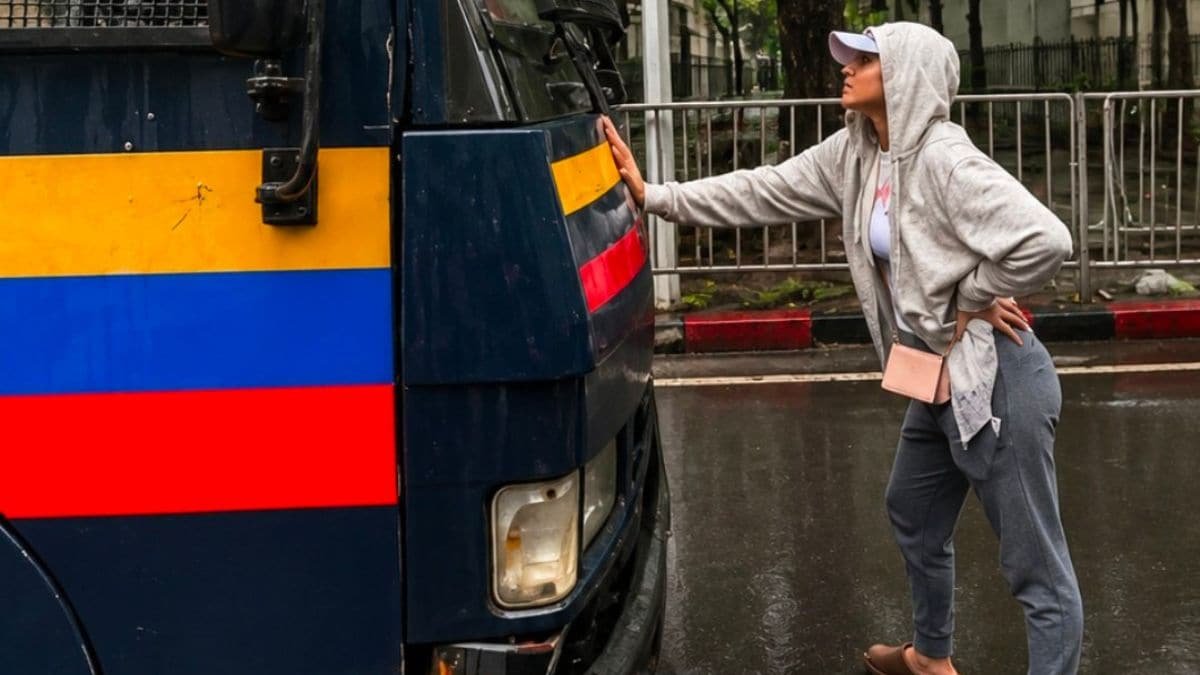
For over a decade, the BJP had built one of the world’s most sophisticated media machines through two channels: extensive social media operations, creating an influential persona and favourable coverage on mainstream television news channels. Yet the Gen Z beat them at their own game, using satire, mockery and memes to demand the education minister’s resignation.
Sociologist Zeynep Tufekci argued that social media powers networked protests. The smartphone turned every protestor into a micro-documentarian whose footage constitutes evidence as much as activism. Gen Z’s instinctive fluency in contemporary digital culture allowed them to build narratives that bypassed traditional gatekeepers. They understood which trends, audio to use, how authenticity, satire outperforms speeches, how algorithms reward participation over propaganda. While prime time television debates on CJP protests concentrated on traffic disruption, public disorder and clashes with law enforcements, the countless reels documented the youths’ side of story: protestors’ testimonies, injured demonstrators and students facing tear gas, pellet guns and lathi charges by the Delhi police.
Digital creators and independent journalists became central to preserving the movements’ memory. When fact checkers reconstructed the events of July 20 Chalo Sansad march they relied on hundreds of user-generated videos with different timestamps and vantage points. Additionally, international coverage of the movement drew heavily on footage captured by the protestors themselves. This marked a profound shift in who gets to write history.
Collectively these videos functioned as a public archive. When large volumes of documentation disappear, future efforts to verify and understand events become more complex. The loss is not merely algorithmic visibility; it is historical memory. Platforms routinely remove content in response to national legal requests, court orders or their own moderation policies. Governments, including India’s, possess legal mechanisms to seek content restrictions under domestic laws, while tech giants maintain that they comply with applicable legal obligations in jurisdictions where they operate. These legal processes, however, raise a significant democratic question: what happens when visual records of a movement exist on privately owned platforms that can be compelled, or choose to, remove it?
In the aftermath of the protests, the BJP sought to capture Gen Z’s attention as Prime Minister Narendra Modi embraced reels and encouraged his ministers to amplify their digital presence. Yet authenticity proved harder to engineer than visibility, as much of the content was met with parody rather than persuasion. Thereafter, BJP appears to follow the mantra “if you can’t beat them, try to be them, if that fails too, delete them”.
Every deleted video removes one witness, every removed account weakens the chain of evidence and free speech. History has always belonged to those who preserved the record. The credibility of an event no longer rests on one broadcaster’s camera but on the convergence of hundreds of smartphones documenting the same moment from different perspectives. The defining question raised by the CJP protests is therefore not whether social media can mobilize dissent. We already know it can.
The more urgent question is: who controls the archive of democracy?
Philosopher Jacques Derrida famously stated in Archive Fever, that archives are never neutral – they shape, power and control what a society remembers and forgets. If the public record of dissent can disappear one reel or post at a time, then what is being erased is not simply content but the evidence through which a nation remembers itself and future generations reconstruct the truth.