e n

The RSS lost the West Bengal Assembly elections

On his frequent visits to West Bengal, Mohan Bhagwat, the RSS chief, started to project himself as an intellectual to the Bengali Bhadralok. To that end, the RSS persuaded many cultural personalities to join the BJP and offered candidatures, writes Bhanwar Meghwanshi

The ties between the Rashtriya Swayamsevak Sangh (RSS) and Bengal are old. The RSS officially began working in Bengal in 1934 but its unofficial ties with Bengal go back further. Keshav Baliram Hedgewar, the RSS founder, got his medical education in Bengal in the 1910s. The RSS’s own biographers claim that Hedgewar was associated with the revolutionary organization Asnushilan Samiti and had participated in the uprising under a pseudonym. While the historical documents related to the Freedom Movement do not confirm this claim, what can be accepted is that the RSS founder Hedgewar did have ties with Bengal. When the RSS formed the Bharatiya Janasangh as its political wing, Shyama Prasad Mukherjee was appointed its first president. He contested the first General Elections in 1952 from West Bengal and won. The Hindu Mahasabha, a communal party which has been playing a leading role in the politics of Hindutva, also has had a political base in Bengal. But the RSS could not get a foothold in Bengal because of the long rule of the Left Front – this when Bengal has been most suitable and fertile for its politics of hate.

READ THE FULL ARTICLE HERE: The RSS lost the West Bengal Assembly elections

About The Author

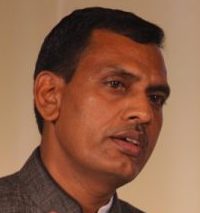
Bhanwar Meghwanshi

Author, journalist and socio-cultural activist Bhanwar Meghwanshi is the editor of Shunyakal.com. His autobiography ‘Main ek Karsewak tha' is about his early days as a Rashtriya Swayamsevak Sangh (RSS) worker and how he left the organization and became its staunch critic. The English translation of the book was published recently under the title ‘I Could not be Hindu’.
Related Articles

Behold, the Light of the world!
This Christmas season, may we look beyond the twinkling lights and decorations, to the Light of the world who has entered our dark world...
Bihar looks set to become a graveyard of social justice and a playground for corporate czars
In the new Nitish Kumar-led 27-member council of ministers, eight are from the upper castes, five from EBCs and eight from OBCs. Then, there...
Kant, Phule and Ambedkar, and the need for a collective struggle for the right to reason
In societies that are unequal not incidentally but structurally, the issue is not simply 'immaturity', as Kant poses, but being deprived of a social...
Social composition of the 18th Bihar Assembly
The Rajput have the highest representation among all the castes, while Kushwahas top Backward Classes, followed closely by Yadavs. Dhanuk and Ravidas have most...
Sohrai: An Adivasi festival that celebrates oneness with nature and coexistence with cattle
‘Sohrai’ means ‘appreciating and caressing’. The festival is about caressing cattle, pampering them and expressing gratitude towards them; it is about the relationship between...