The figure of the dacoit in Indian cinema has long functioned as a charged site of rebellion, closely tied to questions of caste, land and social humiliation. As Eric Hobsbawm (2010) argues through the concept of “social banditry”, outlaws often emerge from oppressed communities, contesting state authority and dominant social orders through acts that violate the law. In the Indian context, this framework is particularly useful for understanding how dacoity becomes entangled with caste-based dispossession. Hindi films such as Ghulami, Bandit Queen, Sonchiriya, Paan Singh Tomar, and Guddu Rangeela map this terrain, portraying outlawed figures as products of deeply unequal social worlds structured by caste, class and systemic violence. In Bandit Queen[1], especially, the figure of the dacoit is inseparable from the Dalit life-world – marked by humiliation, sexual violence, and entrenched exclusion – where banditry emerges less as deviance and more as a response to structural brutality. Yet even in such narratives, Dalit subjectivity is often mediated through spectacle or framed as exceptional, rather than grounded in everyday experience. The use of the term “dacoit” for a Dalit protagonist is not neutral; it draws on a long history of caste-based criminalization, risking the reinforcement of entrenched stereotypes.
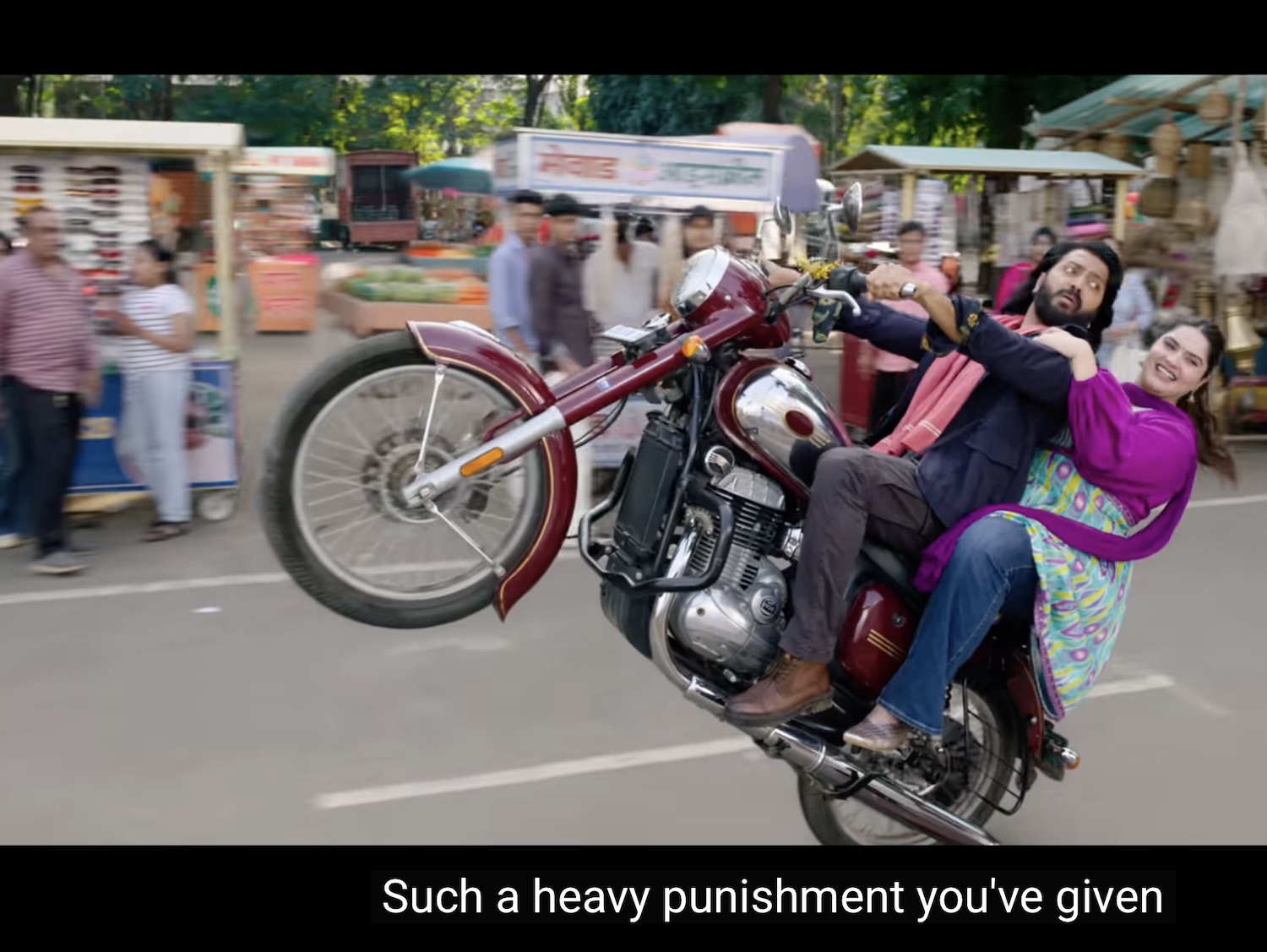
The Telugu film Dacoit: A Love Story, directed by Shaneil Deo, follows this familiar pattern. What initially appears to be a story of resistance gradually reveals itself as a deeply uneven narrative. At its core, the film constructs a morally virtuous Savarna female protagonist, intelligent, compassionate and willing to defy social norms, while reducing the Dalit male lead to a sacrificial figure within her story. She is portrayed as someone who challenges her family, enters into an inter-caste relationship, and undergoes emotional turmoil. But this suffering is narratively strategic. It functions less as a meaningful engagement with caste oppression and more as a device to secure her moral legitimacy. In contrast, the Dalit male protagonist bears the full burden of violence embedded in the social order. He is framed through familiar caste-coded markers – poor, uneducated, and even incapable of acquiring basic skills such as driving.
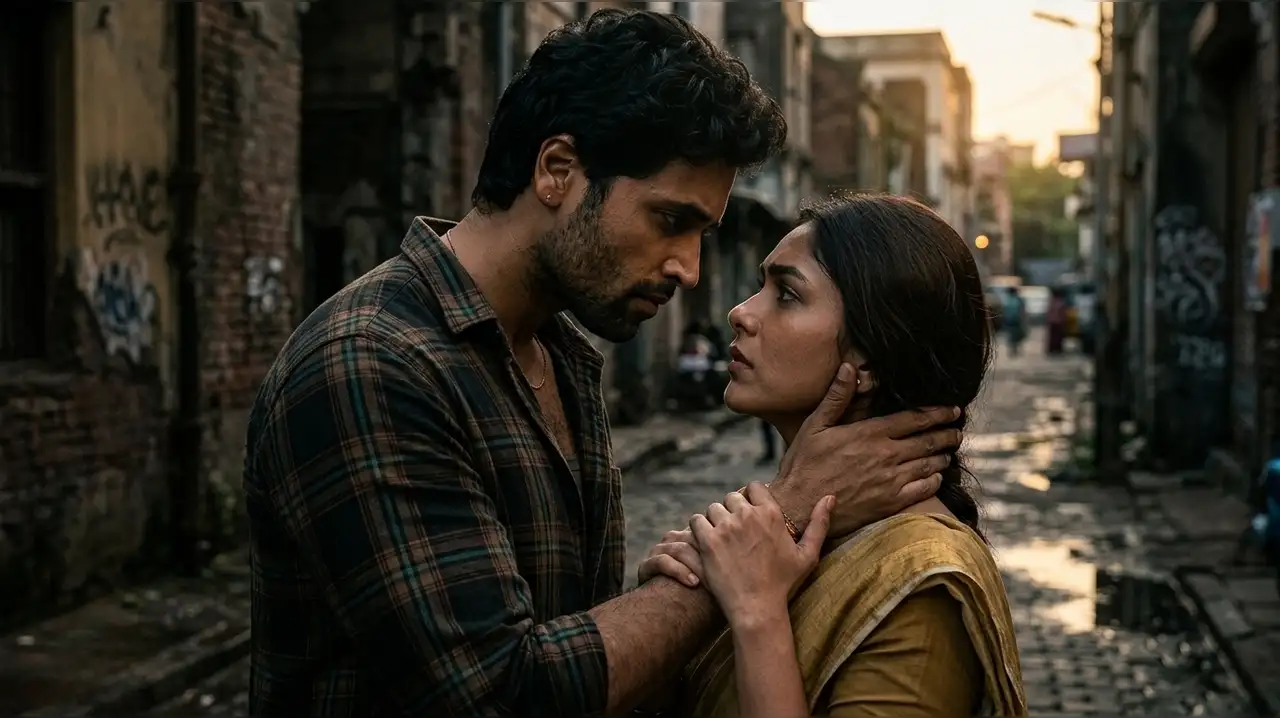
His appearance is also deliberately darkened to signify Dalit identity, reflecting a persistent cinematic tendency to equate Dalitness with darker skin, despite the wide diversity of Dalit lived realities. This visual coding is not incidental; it draws on a long-standing representational vocabulary through which caste is made legible on screen. His life trajectory is defined by punishment. His relationship with a dominant-caste woman invites not just social disapproval but institutional violence: he is falsely implicated, criminalized, and recast as a dacoit. Yet the film reframes this violence as a matter of circumstance or personal failure rather than a consequence of caste hierarchy. His failed attempts, his vulnerability, and his reactive decisions are emphasized in ways that subtly shift responsibility onto him, while the structural conditions shaping his dispossession remain unaddressed.
This produces what can be called a “decoy protagonist”. While the narrative appears to centre him, his agency is consistently undermined. His actions are reactive, his suffering instrumental, and his trajectory ultimately serves another purpose. He sacrifices repeatedly, his freedom, his dignity, his future, and in the film’s most striking moment of narrative extraction, even his death is converted into value for the female protagonist. As he lies dying, he gives his heart for transplantation to save her life. The symbolism is unmistakable: the Dalit body is reduced to a tool of service for the dominant caste. This echoes B.R. Ambedkar’s critique of the so-called village republic, where Dalits are confined to waiting, serving, and submitting, existing only to “do or die”.
In contrast, the ethical positioning of the female protagonist remains largely untroubled. While she is shown to suffer for entering the relationship, her priorities reveal the limits of her defiance. Her concern lies in preserving her familial world and securing stability, while the Dalit protagonist’s life appears secondary. Her empathy does not translate into an enduring ethical commitment to him as an equal subject; instead, his presence becomes the condition through which her moral depth is performed.
A crucial dimension of this dynamic is the subtle reinforcement of the savarna saviour complex. The dominant-caste character emerges as the moral anchor of the story, while the Dalit protagonist’s experience is mediated through her perspective. His caste identity shapes his criminalization and eventual death, yet the narrative refuses to foreground caste as the structural cause, dispersing responsibility across personal choices and individual inadequacy.
The effect is telling. By the time viewers leave the theatre, the Dalit protagonist’s fate does not register as the consequence of caste transgression, of loving across rigid social boundaries, but as the outcome of his own limitations. Simultaneously, the female protagonist is remembered as the one who suffered for love, reinforcing a familiar inversion in which the burden of tragedy is shifted away from caste structures and onto individual misjudgment. This flattening is also tied to a lack of lived-experience nuance. As Ambedkarite thinkers have long argued, there is a difference between representing oppression and having lived it. Filmmakers removed from the material realities of caste often fail to capture its everyday textures, the silences, humiliations, and subtle forms of resistance that define Dalit life. Instead, the narrative falls back on familiar tropes: the wronged man, unjust imprisonment, failed rebellion and redemptive sacrifice.
Ultimately, Dacoit reinforces a troubling pattern within Indian cinema, particularly in Telugu filmmaking. Even when Dalit characters occupy central roles, their stories rarely culminate in dignity or transformation. Instead, they are marked by sacrifice, extraction and erasure. Resistance is permitted, but only within limits that leave the underlying social order intact. In this sense, the dacoit is not a figure of rupture but containment, his rebellion narratively absorbed so that caste hierarchy remains undisturbed.
[1] The film is a biopic of Phoolan Devi, who was born into the Mallah caste, classified under the constitutional category of OBC. Our framing of her as a Dalit comes from the broader socio-cultural realities where certain communities within the OBC category, particularly those at the lower end of the hierarchy, continue to face forms of marginalization and discrimination comparable to those experienced by Dalit communities.