The issue of OBC reservations in National Law Universities (NLUs) has again come to the fore. The National Commission for Backward Classes (NCBC) has issued notices to all the 23 NLUs asking them why they have not been setting aside seats in its courses for the OBCs. The NCBC has asked the vice-chancellors of the institutions to appear before the commission to explain why they haven’t been adhering to the law for reservations in central government’s institutions of higher education.
 Admissions to NLUs are granted through a national-level Common Law Aptitude Test (CLAT). Eighteen of these institutions have a provision for state quota in admissions, which means that 25 per cent seats are reserved for the candidates hailing from the state where the particular institution is located. But there is no clear provision for reservation for the OBCs.
This year, admissions have to be granted to 2,175 seats in the NLUs. In most of them, seats are reserved for SCs, STs and the economically weak general-category candidates but there is no provision for the OBCs. For instance, in the National Law of India University, Bengaluru, there are 80 seats in BA-LLB course. Of these 55 are in the general category while 12 are reserved for SCs, six for STs, five for NRIs and two for the physically challenged candidates. In NLU Bhopal, there are 75 seats in the all-India quota and 25 seats in the state quota. Not a single seat of the national quota is reserved for the OBCs, while seven of the state-quota seats have been set aside for them. Some of the NLUs follow the reservation rules of the state governments concerned while others overlook both the central and state rules.
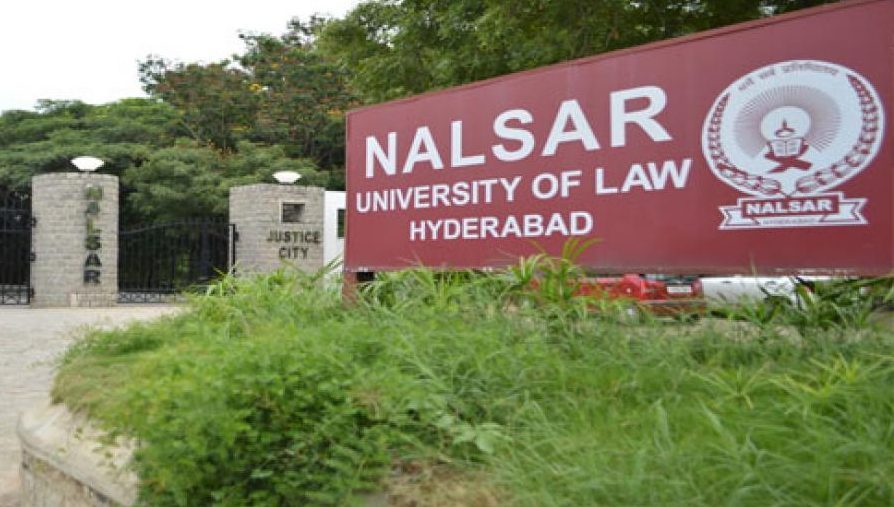
The NALSAR University of Law, Hyderabad, is also encroaching on the rights of the OBCs. Of the 105 seats in the BA-LLB course in the university, 84 are in the all-India quota while 21 are reserved for candidates from Telangana. Sixty-five seats of the all-India quota and 16 seats of the state quota are in the general category. Thus, 81 of the 105 seats are to be filled with general-category candidates. Eight per cent seats are reserved for STs and 16 per cent for SCs. A student of NALSAR University had moved court seeking reservation for the OBCs in these institutions. That sparked a debate on the issue.
Also Read: 3000-plus seats in medical colleges given to upper castes on a platter
The NCBC has asked all these premier institutions to furnish information about their reservation rosters and backlogs in admissions of OBCs. They have also been asked to spell out their reservation policy. The commission says that these institutions have been giving a go-by to the OBCs. The commission has scheduled a hearing on the issue in New Delhi on January 20.
In June 2019, the commission had asked Faizan Mustafa, the vice-chancellor of NALSAR University to present his side on the matter. Faizan Mustafa told the commission that reservations in the institution are governed by the NALSAR Act, which has no provision for reserving seats for the OBCs. The statute only provides for a domicile quota.
The NLUs are autonomous institutions and the Chief Justice of India is their Chancellor. These institutions are run by the Bar Council of India and the Union Ministry of Law and Justice. They are often described as the IITs of legal education.
(Translation: Amrish Herdenia; copy-editing: Anil)
Forward Press also publishes books on Bahujan issues. Forward Press books shed light on the widespread problems as well as the finer aspects of the Bahujan (Dalit, OBC, Adivasi, Nomadic, Pasmanda) community’s literature, culture, society and culture. Contact us for a list of titles and to order. Mobile: +919968527911, Email: info@forwardmagazine.in).