The Cockroach Janata Party (CJP) which was aimed to be a satire, ends up giving hope to millions of young bloods of Mother India. This should not be seen as a mere coincidence. The CJP has become the face of those who are fed up with the corrupt system and “wants” change. The question arises is where do Muslims, Dalits and Adivasis stand vis-a-vis the envisaged change?
CJP was born after Chief Justice of India Surya Kant harshly criticized the vocal, critical youth in the media and social media, calling them cockroaches. Abhijeet Dipke, a former Aam Aadmi Party worker based in the USA, upon hearing the remarks by the CJI, launched the Cockroach Janata Party handle on X and started tweeting. Views and likes came and shares multiplied. Within a few days CJP became a sensation and was branded as a hope for the nation.
Initially, the party published its manifesto on their social media handles, Instagram, Facebook and X. Their manifesto has five demands: (1) End post-retirement Rajya Sabha seats for judges, (2) arrest the Chief Election Commissioner under UAPA if any legitimate vote is deleted, (3) 50 per cent reservation for women in Parliament and Cabinet positions, (4) cancel media licences of Ambani and Adani for free independent media, and (5) ban party-hopping MLAs/MPs from contesting elections for 20 years.
The Cockroach Janata Party (CJP) amassed over 22 million Instagram followers, surpassing India’s ruling Bharatiya Janata Party (BJP), and attracted 40,000+ formal members within just two days. The movement’s popularity surged when prominent figures like activist Sonam Wangchuk declared himself an “honorary cockroach” and pledged to join CJP’s June 6 Delhi protest, while Bollywood personalities like Anurag Kashyap and Sonakshi Sinha became CJP followers on instagram, and Trinamool Congress MPs Mahua Moitra and Kirti Azad engaged with the satire as legitimate political discourse.
This appears to be a remarkable moment. And yet, the Muslim thinker in me refuses to be swept along by the tide. Something is conspicuously, almost surgically, absent from this entire spectacle.
Read the five-point manifesto once more. Slowly. Ask yourself, where is the Muslim? Where is the Dalit? Where is the Adivasi? Where is the question of mob-lynching, of bulldozer justice, of the Waqf Amendment, of the systematic economic and social exclusion of 200 million citizens who happen to carry a particular faith? Where is the mention of caste atrocities that claim lives in villages that Instagram has never heard of?
The silence is not accidental. It is architectural.
The CJP has chosen five demands that are universally palatable, demands that an upper-caste Hindu liberal in Pune, a Punjabi NRI in Toronto, and a college student in Indore can all nod at together. Judicial reform, electoral integrity, women’s reservation, media freedom, anti-defection law – these are the grievances of a class that feels the system has stopped working for them. But the system was never designed to work for Muslims, Dalits and Adivasis. Their complaint is not that the machine is broken. Their complaint is that the machine is always pointed at them.
This distinction is not semantic. It is the entire difference between reform and justice.
What the CJP is offering, and what its 22 million followers are enthusiastically consuming, is the dream of a cleaner, fairer, more accountable version of the same India. An India where judges cannot be bought after retirement. An India where your vote counts. These are legitimate demands. But they are demands made from a position of relative privilege, the privilege of believing that the core structure of this nation, if only uncorrupted, would be good for everyone. That is a belief that Muslim, Dalit and Adivasi lived experience does not support.
A Dalit woman in Hathras does not need a cleaner judiciary as much as she needs a judiciary that believes her. A Muslim boy in a Uttar Pradesh jail, arrested under UAPA for a WhatsApp forward, does not need media freedom as much as he needs a country that does not presume his guilt because of his religion. The CJP manifesto does not speak to either of them, not because it forgot them, but because speaking to them would cost followers. It would make the movement “political” in the dangerous sense, which could make Bollywood celebrities log off and Sonam Wangchuk issue clarifications.
There is a term for this kind of movement, majoritarian liberalism. It wears the clothes of dissent but protects the comfort of the majority. It criticizes power but not prejudice. It wants a better system, but implicitly, for the same people the present system was always meant to serve. It is the politics of the educated, upwardly mobile Indian who feels personally let down by institutions, not the politics of those who were never let in.
This is not to say the CJP is malicious. Dipke’s original tweet was a joke that grew legs, and jokes cannot be expected to carry the weight of a full liberation theology. But the danger lies precisely in the innocence of the moment, in the way 22 million people can feel like they are part of a revolution while the actual revolution, the one that would require confronting Hindu majoritarianism, casteism, anti-Muslim State violence by name, remains outside the frame.
Mahua Moitra engaging with the satire. Anurag Kashyap joining in. These are not trivial matters, these are signals of what the CJP is and is not willing to accommodate. Moitra is a politician who speaks on Muslim issues selectively, when it is electorally useful. Kashyap is a filmmaker who has been vocal on certain freedoms and remarkably quiet on others. Their endorsement tells you something about the CJP’s unspoken ceiling.
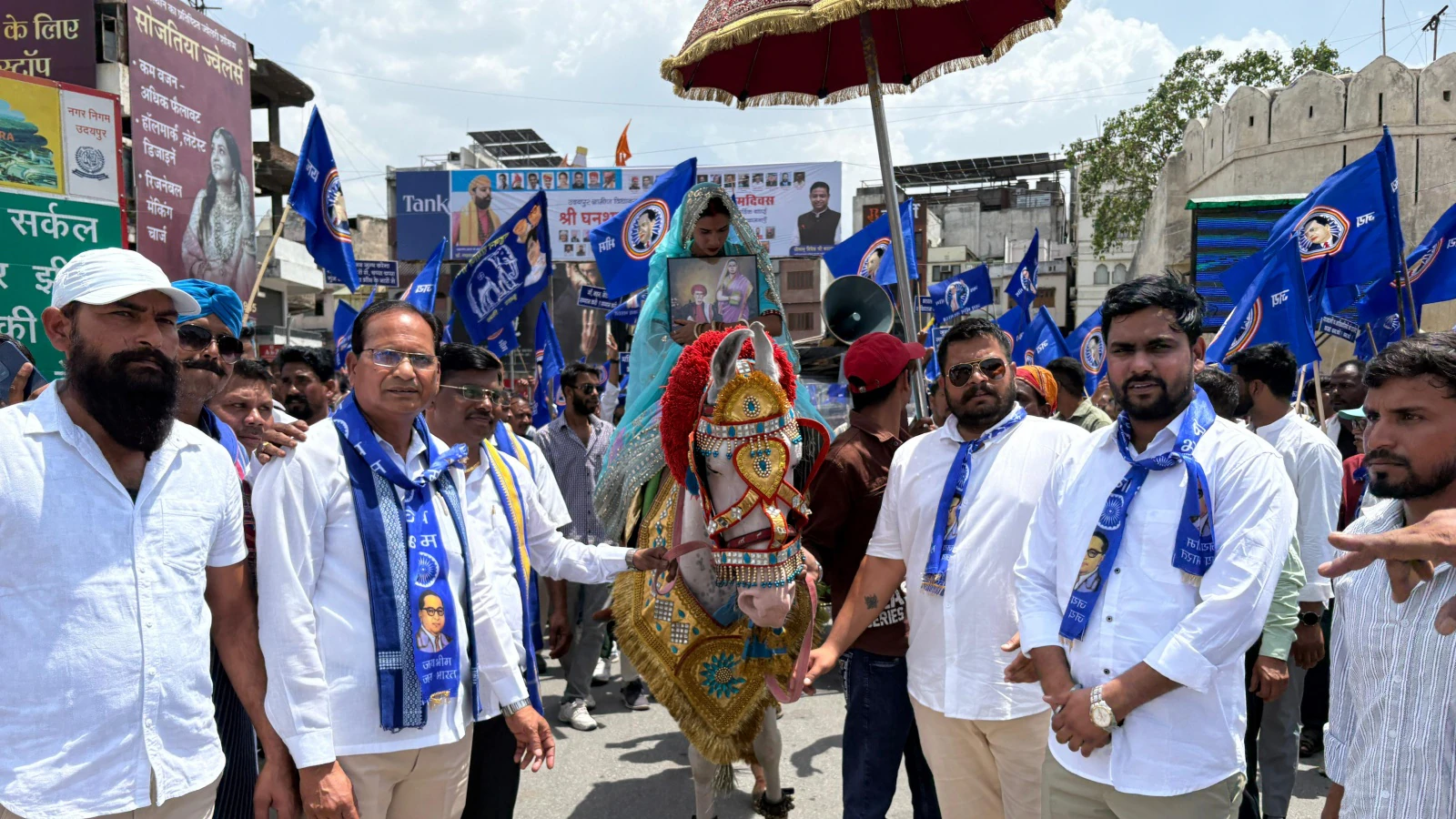
Why can’t Pasmanda-Bahujan build a similar movement?
But before the critique of the CJP becomes too comfortable, before it becomes another opportunity for Dalitbahujan (Dalit-OBC) and Pasmanda Muslim intellectuals to perform their own marginalization and call it analysis, a harder question must be asked. Why, in 2026, the joke of a former AAP worker settled in America becomes a 22-million-strong national movement and we, with the accumulated history of Ambedkar, of Phule, of Kabir, of Fatima Sheikh, of the Pasmanda movement itself, are still only able to create a ripple?
This is not a self-flagellating question. It is a diagnostic one. Because the answer reveals structural problems that no amount of ideological clarity will fix on its own.
The first problem is the economy of attention. The CJP went viral because its founder operated in a digital ecosystem that rewards wit, brevity, and relatability to a dominant cultural centre. Pasmanda-Bahujan activists, when they raise their voices on the same platforms, are systematically shadow-banned, reported into silence, or simply drowned out by an algorithm that treats upper-caste cultural references as neutral and Dalitbahujan political grammar as fringe. This is not paranoia. It is a documented pattern. A Dalit activist tweeting about manual scavenging deaths reaches thousands. A Brahmin comedian tweeting about bureaucracy reaches millions. The infrastructure of viral visibility is not neutral. It has a caste.
The second problem is more painful because it is internal. Pasmanda-Bahujan movements have historically been extraordinarily good at producing thinkers and extraordinarily poor at producing organizers. The intellectual tradition is rich, the organizational architecture is fragile. Ambedkar gave us the grammar of liberation, but the sentence was never fully written. Every decade produces brilliant Dalitbahujan voices who critique power with precision and then watch power ignore them, not because the critique was wrong, but because critique without organization is a letter that was never sent.
The third problem is coalition failure. Pasmandas and Dalits share the largest overlapping experience of structural violence in India. They share the indignity of untouchability in different religious idioms. They share the bottom of every economic indicator. And yet, the Pasmanda Muslim activist and the Dalit Ambedkarite activist frequently treat each other with more suspicion than either treats the Brahmin liberal who is nominally their ally. This fragmentation is not organic. It has been manufactured, maintained and periodically refreshed by a political establishment that understands, more clearly than many Bahujan activists do, that a Pasmanda-Dalit coalition would be structurally ungovernable for the present order. The CJP does not have this problem. Its constituency is, in cultural terms, already unified. Its followers share a language, a set of references, a common sense of what India should look and feel like. Pasmanda-Bahujan movements have to build that unity across genuine differences, which is harder, slower, but more necessary.
What Dalitbahujan activists must do among themselves
The honest answer to this question is unpleasant. It requires Dalitbahujan activists to stop doing some things they are very comfortable doing, and to start doing things that are unglamorous, slow, which demand ego-dissolution that movements built on righteous anger rarely achieve.
First, the movement must separate its intellectuals from its organizers, not because they cannot be the same person, but because it must stop expecting them to be. The scholar who writes a devastating critique of the Waqf Amendment does not need to also run a booth-level network in Meerut. These entail different skills, different temperaments, different time horizons. The Left destroyed itself in India partly by demanding that its best theorists also be its best street fighters, and producing people who were mediocre at both. Dalitbahujan organizations need a conscious division of labour: let the thinkers think in public, and let the organizers organize without being asked to also produce publishable analysis.
Second, the question of caste hierarchy within Dalitbahujan spaces must be confronted with the same unflinching honesty that the movement demands from the outside world. Jatav dominance within Bahujan Samaj Party (BSP) structures, Mahar dominance within Ambedkarite spaces in Maharashtra, the persistent invisibility of Valmiki and Musahar communities in the organizations that claim to represent all Dalits – these are not minor procedural flaws. They are structural contradictions that opponents exploit with devastating effectiveness, and that the movement has historically handled by either denying their existence or by ritually acknowledging them and then continuing unchanged.
Third, and most practically, Dalitbahujan activists must invest in the infrastructure of communication that they presently borrow from or cede to others. The CJP went viral on Instagram. Pasmanda and Dalit activists are, by and large, still writing for each other. Long-form Urdu essays and Ambedkarite journals serve a critical purpose but they do not build the kind of horizontal mass solidarity that puts 22 million people in a single digital room within a week. This does not mean abandoning depth for virality. It means understanding that the medium is not ideologically neutral, that ceding digital public space entirely to upper-caste cultural production is not a principled stand, it is an unforced surrender.
A more effective mode of resistance than a lackey CJP
The word “lackey” here is precise and deliberate. The CJP is not an enemy of the Pasmanda-Bahujan people. It is something more dangerous than an enemy. It is a movement that will absorb Bahujan energy, Bahujan bodies at protests, Bahujan social media shares, and Bahujan political goodwill, and produce outcomes that serve a different constituency. It will do this not through malice but through the ordinary gravity of who controls the frame. Bahujan participation in CJP without condition is participation in one’s own marginalization, dressed up as solidarity.
So what does a more effective resistance look like? It does not look like a rival meme party or a competing Instagram account. And it certainly does not look like a press release denouncing the CJP, which would accomplish nothing except to make the denouncers look jealous and the CJP look persecuted. Pasmanda-Bahujan activists must build what might be called a parallel demand architecture. Not a rival to CJP but a supplement that cannot be ignored. A coalition-drafted addendum to the CJP manifesto, signed by Dalit intellectuals, Muslim Pasmanda scholars, Adivasi rights organizations, and OBC community leaders that says these five demands are necessary but insufficient. Here are the demands that more than two thirds of India requires. If they incorporate it, the movement becomes genuinely inclusive. If they refuse, the refusal tells 22 million followers something important about whose revolution this actually is.
And beyond the immediate moment of the CJP, the long-term programme is what matters. The long-term programme is the building of a Muslim-Dalit-Adivasi federation, not a party in the first instance, but a standing coalition with shared infrastructure, shared communication channels, and a shared willingness to subordinate sub-group interests to collective demands on specific, winnable issues. Land rights. Caste census implementation. Anti-atrocity law enforcement. The release of political prisoners held under UAPA who happen to be Muslim or Adivasi or Dalit. Concrete, nameable, trackable demands that cannot be absorbed into the comfortable fog of “systemic reform”.
The question for the CJP is not whether it could fill a protest ground on 6 June in Delhi. The question is whether, when the cameras roll and the slogans rise, it will find the courage to say the names that make its followers uncomfortable.
Until then, those of us who know which cockroaches the system has always truly despised will watch, with interest, and without illusions.
Forward Press also publishes books on Bahujan issues. Forward Press Books sheds light on the widespread problems as well as the finer aspects of Bahujan (Dalit, OBC, Adivasi, Nomadic, Pasmanda) society, culture, literature and politics. Contact us for a list of FP Books’ titles and to order. Mobile: +917827427311, Email: info@forwardmagazine.in