The debate over the Uniform Civil Code (UCC) has long occupied a prominent place in India’s political and constitutional discourse. In Assam, this debate has now moved beyond theory and entered the realm of legislation. In its manifesto for the 2026 Assam Legislative Assembly elections, the Bharatiya Janata Party (BJP) promised to introduce a Uniform Civil Code if voted to power. The elections, held on 9 March 2026, delivered a decisive mandate to the NDA alliance, which secured 102 out of 126 seats, with the BJP alone winning 82. Following the formation of the government under Chief Minister Himanta Biswa Sarma on 12 May 2026, the promise was swiftly translated into action. On 25 May 2026, the government introduced The Uniform Civil Code Assam Bill, 2026 in the Assembly. After extensive debate, the Bill was passed on 27 May through a voice vote despite demands from opposition parties, including the Congress and Raijor Dal, for referral to a Select Committee. Assam becomes the third Indian state after Uttarakhand and Goa to adopt a common civil framework governing marriage, divorce, inheritance, succession, and related family matters. The government has projected the legislation as a historic step towards gender justice and equality. Himanta Biswa Sarma wrote on the X platform on May 15: “The Uniform Civil Code in Assam will ensure equal application of rule of law for everyone in Assam and ensure fair rights to all, especially women and children. The Janjatiya Samaj (Scheduled tribes) of Assam will not be under the purview of UCC Assam to protect their customs and traditions.”
Yet, the true test of any social reform lies in its impact on those who remain on the margins of society.
Why the char areas matter
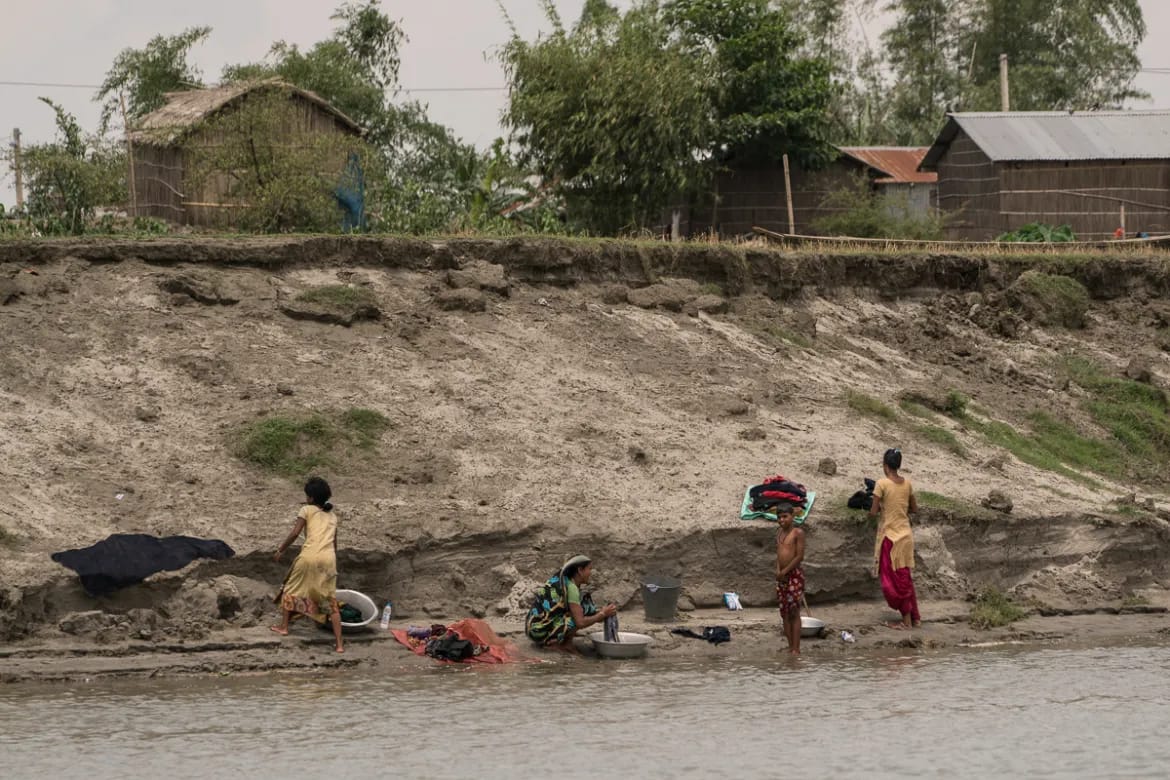
A char in Assam refers to a riverine island formed primarily in the Brahmaputra River and its tributaries. According to the Directorate of Char Areas Development, the Char-Chapori regions remain among the most socio-economically backward areas of Assam. Government data published in 2003 recorded more than 24 lakh people residing in nearly 2,300 Char villages. Given the substantial population growth witnessed over the past two decades, the present population is likely to have crossed four million. The Char areas constitute nearly five per cent of Assam’s geographical area and accommodate approximately ten per cent of its population. A substantial proportion of this population comprises Bengali-origin Muslims whose historical roots can be traced to erstwhile East Bengal. Consequently, discussions about the Char areas are often inseparable from discussions about this community. What makes the situation particularly alarming is the condition of women.
Char women live at the intersection of multiple forms of disadvantage. They face geographic isolation, chronic poverty, inadequate public services, and deeply entrenched patriarchal norms. According to government data, nearly 68 per cent of the Char population belonged to the Below Poverty Line (BPL) category in 2003, when the state’s average BPL category population was around 36 per cent (Chakraborty, 2009). Literacy levels remain distressingly low. While Assam’s overall literacy rate stood at more than 63 per cent in 2001, literacy in the Char areas was estimated at around 19 per cent. Among Muslim women in these regions, the figure was estimated to be below 10 per cent (Directorate of Char Areas Development, 2003). Educational deprivation has far-reaching consequences. Girls are often married at a young age, become mothers during adolescence, and remain economically dependent throughout their lives. Child marriage, teenage pregnancy, maternal health complications and school dropouts continue to be widespread concerns.
As Dr Hafiz Ahmed, President of Char-Chapori Sahitya Parishad, observes: “The condition of health, education, and transportation in the Char areas is extremely poor. The school dropout rate among girls is alarmingly high due to the unavailability of secondary and higher secondary schools and colleges. Many parents are reluctant to allow their daughters to go to distant places for further studies, and the religious fundamentalists who dominate Char society, often treating girls as commodities, discourage higher education for them.”
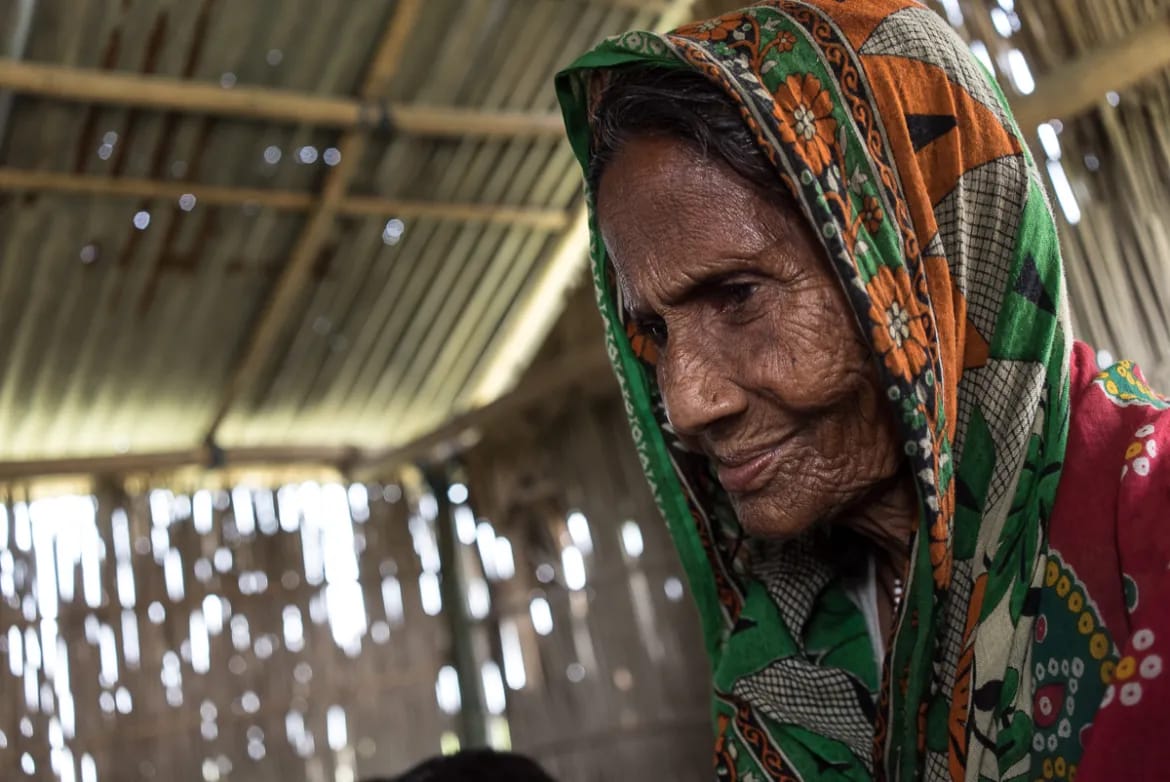
This has been reflected in the lower educational growth among the Char women. Higher education among the women of this community is almost absent.
Dr Hafiz further explains: “Frequent river erosion severely impacts women’s health and education. At present, around 55 percent of the Char population belong to the BPL category, leaving them in deep poverty. Since the Chars are not permanent and many areas are submerged by the river each year, economic vulnerability is a major concern, along with disrupted and challenging transportation facilities. Moreover, a large number of Char residents do not have myadi land (land patta); for instance, in Barpeta district, only around 37.5 percent of the population possess myadi land.”
Significantly, the districts frequently identified for high levels of teenage pregnancy – Dhubri, Barpeta and Goalpara – are also districts with a large concentration of Char villages. Troubling concentration of child marriage can be seen in the Char Muslim concentrated districts of Assam as per the National Family Health Survey (NFHS-5). According to the NFHS-5 district level data, Dhubri records highest concentration of child marriage at 50.8 per cent followed by South Salmara Mancachar (44.7 per cent) and Darrang (42.8 per cent). Goalpara and Barpeta record 41.8 and 40.1 percent respectively, significantly higher than the national average of 23.3 per cent (International Institute for Population Sciences [IIPS] & ICF, 2021). It has to be mentioned that Barpeta, Dhubri, South Salmara Mankachar and Goalpara districts have the highest number of Char villages. This is hardly a coincidence and it reflects a clear pattern that structural disadvantages continue to shape the lives of Char women.
The invisible burden of polygamy
Pijush Hazarika, Assam Cabinet Minister from the ruling BJP, while participating in the debate over the UCC Bill in the Assembly on 27 May, stated: “Where is it allowed to marry up to four times without the consent of his first wife? When a Hindu, Sikh or Buddhist man can go to jail for bigamy, why should male members of one particular community be allowed to indulge in such practices?”
He further asserted that the Bill has been brought to give respect and equal rights to women.
A study conducted in selected Char areas of Goalpara, Barpeta, and Majuli during 2021-2022 revealed that, although polygamy is not as widespread as child marriage, it nonetheless remains a significant social reality among sections of the Muslim Char community (A field study conducted by Ashraful Islam for his PhD thesis titled “Women in the Margin: A Critical Study of the Char Areas of Assam” in 2021). Reliable statistics are unavailable, but its impact on women’s lives is unmistakable. The study revealed that many men entering subsequent marriages neither sought the consent of their existing wives nor fulfilled the Islamic requirement of equal treatment among spouses. In practice, religious justifications were often invoked selectively to legitimize multiple marriages, while the responsibilities attached to such marriages were ignored. This reflects a broader contradiction. Islamic law permits polygamy only under strict conditions of justice and equal treatment. Yet, in many instances, these conditions remain unmet. Consequently, what is defended as a religious practice often functions as a mechanism of patriarchal privilege. The consequences for women are severe. Many women in polygamous households face emotional distress, economic insecurity and unequal access to food, healthcare, education and other household resources.
Children frequently become victims of fragmented family structures and unequal parental support. Perhaps even more significant is the psychological impact of the mere possibility of polygamy. Rohiton Nessa, a 32-year-old Anchalik Panchayat Member representing the Char areas under Balikuri Gram Panchayat in the Mandia constituency of Barpeta district, welcomed the UCC: “The UCC will certainly help bring Char women to the forefront of society. Many women in the Char areas live under the constant fear and insecurity associated with polygamous family structures. This Bill will put an end to that fear. Women will no longer have to worry that their husbands may marry another woman and bring her into the family.”
This will improve their quality of life and give them greater confidence to raise their voices against torture, discrimination and other injustices. Without the fear of their husbands entering into another marriage, women will be in a stronger position to assert their rights and seek justice. Even where polygamy is not widely practised, its acceptance acts as a powerful instrument of control. Many women remain silent in the face of injustice because they fear that resistance may result in their husbands taking another wife. The threat of polygamy thus reinforces patriarchal authority, compels conformity, and limits women’s bargaining power within marriage. In this sense, polygamy functions not merely as a marital arrangement but as a social institution that perpetuates gender inequality.
There is a strong connection between child marriage and the practice of polygamy in the Char regions of Assam. Many girls are married at a very young age and begin bearing children early in life. The combined burden of repeated pregnancies, heavy household responsibilities, and inadequate nutrition often leads to premature physical ageing. As a result, many women appear significantly older by their thirties. Many husbands find their wives less attractive and want to enter into subsequent marriages, as there are no social sanctions against them.
Gender justice vs religious freedom
The Assembly debate on the UCC reflected a larger constitutional dilemma: how should a democratic society balance gender justice with religious freedom? Wazed Ali Choudhury, a Muslim legislator and Leader of the Opposition in the Assam Assembly, voiced his opposition to the Bill: “Uniform Civil Code cannot be enforced in a multi-religious and multi-cultural society like Assam. When several laws are already in place, the UCC will complicate matters. It will create conflict in society.”
On the other hand, supporters of the Bill argue that the state has a constitutional obligation to protect equality, dignity and women’s rights. BJP MLA Diplu Ranjan Sarmah of the New Guwahati constituency, argued that the Bill would eradicate the age-old injustices faced by the women in the state. Critics, however, contend that certain provisions interfere with personal laws protected under Article 25 of the Constitution, which guarantees freedom of religion. The most contentious provision is the prohibition of polygamy. Opponents argue that Muslim Personal Law permits polygamy under specific conditions and that the state should not interfere with religiously sanctioned practices. However, this argument raises an important constitutional question: does every aspect of personal law automatically qualify as an essential religious practice deserving constitutional protection? Comparative experiences from the Islamic world suggest otherwise. Countries such as Turkey and Tunisia have completely prohibited polygamy, while nations like Pakistan, Indonesia and Egypt regulate it through stringent legal conditions (Purwanto et al., 2021).
These countries remain overwhelmingly Islamic despite such reforms. Their experience demonstrates that legal restrictions on polygamy are not necessarily incompatible with Islamic faith. The issue, therefore, is not religion versus secularism. Rather, it is whether a practice that often disadvantages women should continue merely because it has historical or religious roots. A constitutional democracy cannot remain indifferent when social customs perpetuate inequality and discrimination.
At the same time, the prohibition of cousin marriages presents a more complex challenge. Unlike polygamy, whose consequences for women are well documented, cousin marriage involves consenting adults exercising personal choice. Critics therefore argue that banning such marriages requires stronger justification than simply invoking social reform. In this respect, Sherman Ali Ahmed, the only TMC MLA in the Assembly, said, “I have no objections to most of the provisions of the Bill; however, some sections of the Bill, like who a person can marry, violate the verses of the Holy Quran.”
If the state seeks to regulate intimate personal decisions, it must provide compelling evidence that such restrictions serve a legitimate public interest. Consequently, while the argument for regulating polygamy can be defended through the language of gender justice, the case against cousin marriage remains less convincing and may require deeper public deliberation.
Can UCC alone bring Char women into the mainstream?
The strongest argument in favour of the UCC is undoubtedly its potential to advance women’s rights. Provisions relating to the prohibition of polygamy, mandatory marriage registration, inheritance rights, maintenance and protection from arbitrary divorce can significantly benefit Char women. Although Islamic law guarantees daughters a third of inheritance rights, the reality on the ground is often very different. Women frequently surrender their claims under family pressure or are denied their lawful share altogether. Due to illiteracy, poverty and social dependence, few can challenge such injustices. Similarly, while many Islamic scholars argue that instant triple talaq lacks religious validity, countless women have nevertheless suffered because of its misuse.
Legal safeguards are indispensable precisely because social realities often fall short of professed religious ideals. Moreover, in many contexts, religious norms and personal laws have historically institutionalized gender-based inequalities that place women in a disadvantaged position. Therefore, strong legal protections are essential to uphold equality, protect individual rights, and ensure that principles of justice are not subordinated to discriminatory social or religious practices. Mandatory marriage registration can also become a powerful tool against child marriage. Documentation creates accountability, strengthens legal oversight and makes it more difficult to conceal underage marriages.
However, a critical and uncomfortable question persists: can legal reform alone truly transform the lives of Char women? The answer is nuanced, partially affirmative, yet fundamentally insufficient. Anjuman Ara Begum, an academic and human rights researcher from Assam, says: “Women in Char-Chaporis face structural discrimination; for example, they face discrimination at home, at the community level, and also within state institutions. So, UCC is just a minor thing. It is not an enabling provision to empower women; it is more of a regulation to control personal laws. It can control polygamy among Muslims, but polygamy among Muslims has already reduced.”
She has argued for improved educational facilities for the girls near the homes, so that they don’t need to spend money on transportation to reach those facilities – for example, schools. She further contends that the UCC is not the solution to the persistent gender discrimination that Char women have faced for generations, demanding structural reforms to address the unique problems of these people.
Laws can prohibit discrimination, but they cannot automatically eliminate the social conditions that sustain it. The experience of child marriage illustrates this clearly. Despite the existence of the Prohibition of Child Marriage Act, 2006, the practice continued unabated across many Char regions. It must be acknowledged that following the stringent measures undertaken under the leadership of Chief Minister Himanta Biswa Sarma, including the large-scale crackdown on child marriage and the arrest of those involved, the incidence of child marriage has declined significantly across the Char areas. This demonstrates that legal provisions become effective only when accompanied by strong political will. Similarly, while the UCC may prohibit certain harmful practices, it alone cannot emancipate Char women from the deeply entrenched structures of gender injustice and patriarchal oppression that have shaped their lives for generations.
A girl cannot exercise her legal rights if she never receives an education. A woman cannot seek justice if she lacks access to courts and legal awareness. Property rights become meaningless when women remain economically dependent and socially constrained. The greatest barrier facing Char women today is not discriminatory personal laws but the absence of educational opportunities. Higher education remains a distant dream for numerous girls because colleges are located far away from their homes and families are unable or unwilling to bear the costs of accommodation and transportation. Concerns about safety, financial hardship and social honour further discourage parents from sending daughters outside their villages.
Access to higher education can unlock a wide range of opportunities and resources for Char women. The establishment of residential hostels specifically catering to girls from Char areas in major educational centres and district headquarters across Assam could be transformative. Such facilities, if turned into safe environments with subsidized food and free accommodation, could substantially reduce barriers to continued education. While the state government’s Nijut Moina scheme provides financial assistance to female students enrolled in colleges and universities, its benefits can reach girls from remote Char areas only if they are first able to access and continue higher education.
From uniform laws to uniform opportunities
The Assam UCC Bill of 2026 marks a significant milestone in achieving legal uniformity and gender equality. This law addresses numerous persistent problems concerning women’s rights and plays a crucial role in challenging the entrenched patriarchal customs that have subjugated Char women. Nonetheless, genuine empowerment for the disadvantaged Char women cannot be achieved through legal measures alone. To move from marginalization to meaningful inclusion, it is essential to progress from the notion of “one nation, one law” to “one nation, equal opportunity”. A combination of equal opportunities and fair legislation can help overcome the structural and geographical barriers that isolate Assam’s riverine Char communities from the mainstream. This should include easy access to education, healthcare, economic prospects, legal protection and institutional support.
Furthermore, for the women in Assam’s Char regions, true empowerment will be realized not just when the law recognizes them as equal citizens, but when society allows and enables them to live as such. The UCC may open a door. Whether Char women can walk through it will depend on the opportunities, resources and institutional support that follow.
Conclusion
A question remains unanswered: How will the UCC differ from the several existing laws that have already sought to address many of the practices it seeks to regulate? Over the past few years, the state has passed significant legislation to protect women’s rights, including the Assam Prohibition of Polygamy Act, 2025, and the Prohibition of Child Marriage Act, 2026. In 2024, the Assam government abrogated the colonial-era Assam Muslim Marriages and Divorce Registration Act and Rules of 1935, implementing significant reforms including mandatory marriage registration, the prohibition of child marriage, and the dissolution of the Qazi system for marriage and divorce registration. This repeal also contributes to ending practices such as instant triple talaq among sections of the Char Muslim population. In this regard, critics of UCC like Wazed Ali Choudhury contended that the existing legal structure was adequate to solve issues like child marriage, polygamy, arbitrary divorce and marriage registration. He therefore urged the government to withdraw the Bill, arguing that it would cause social polarization. Yet the debate over the UCC extends beyond the existence of laws to the question of their implementation.
One of the most significant challenges lies in the Char areas of Assam, which are geographically isolated, flood-prone, and difficult to access. In many respects, these regions resemble what may be described as “lands without government”, where the reach of state institutions, including the civil administration and law enforcement agencies, remains limited. Consequently, traditional community leaders, or mattabars, continue to play a decisive role in regulating social, civil and political affairs. In such a context, the effectiveness of any legal reform is not only a matter of the law being passed but of the law reaching these peripheral spaces. Notwithstanding these obstacles, the UCC possesses the capacity to enhance the rights of women vulnerable to child marriage, polygamy, and arbitrary divorce. However, its success will ultimately depend on the seriousness of administrative implementation, sustained public awareness campaigns, and the mutual trust and cooperation between Char community and administrative agencies.
References
International Institute for Population Sciences (IIPS), & ICF. (2021). National Family Health Survey (NFHS-5), 2019-21: Assam fact sheet. Ministry of Health and Family Welfare, Government of India. https://nfhs.in
Chakraborty, G. (2009). Assam’s Hinterland: Society and Economy in the Char Areas. New Delhi: Akansha Publishing House.
Directorate of Char Areas Development. (2004). Socio-economic survey report of char areas, 2003-04. Government of Assam.
Purwanto, M. R., Mukharrom, T., Syibly, M. R., & Nurozi, A. (2021). Polygamy in Muslim countries: A comparative study in Tunisia, Saudi Arabia, and Indonesia. In Proceedings of the 2nd Southeast Asian Academic Forum on Sustainable Development (SEA-AFSID 2018) (Advances in Economics, Business and Management Research, Vol. 168, pp. 435-437). Atlantis Press. https://doi.org/10.2991/aebmr.k.210305.082
Forward Press also publishes books on Bahujan issues. Forward Press Books sheds light on the widespread problems as well as the finer aspects of Bahujan (Dalit, OBC, Adivasi, Nomadic, Pasmanda) society, culture, literature and politics. Contact us for a list of FP Books’ titles and to order. Mobile: +917827427311, Email: info@forwardmagazine.in