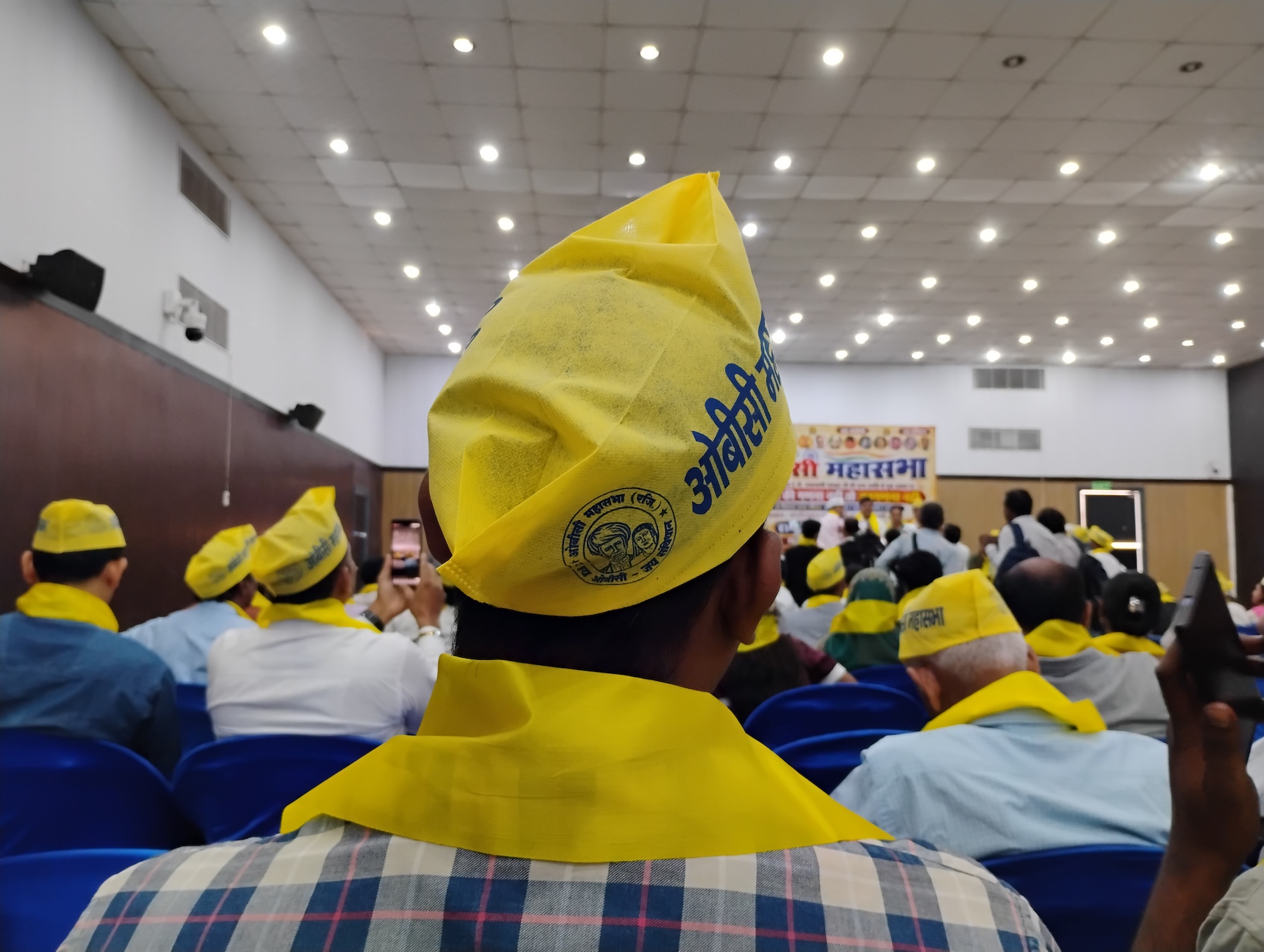
Indians – especially those dwelling north of the Vindhyas – seem to have great reverence for and pride in their ancestors. The notables among their ancestors become the community’s idols and the members want to identify with them. The community concerned also tries to fashion its culture in keeping with the ideals of its revered ones. If that community happens to be on the margins of society, their hero becomes an inspiration to break free from the social stigma thrust on them. He equips them with a feeling of respectability and self-respect. The birth and death anniversaries of such personalities are used to mobilize the community. Of late, processions to mark such occasions have become a key part of community events. On the other hand, political parties have been using these sentiments to serve their ends. Symbols and slogans associated with such personalities and installation of their busts and statues are used for this purpose. A similar campaign has been launched in north India and it may impact the upcoming assembly elections in Uttar Pradesh and Punjab.
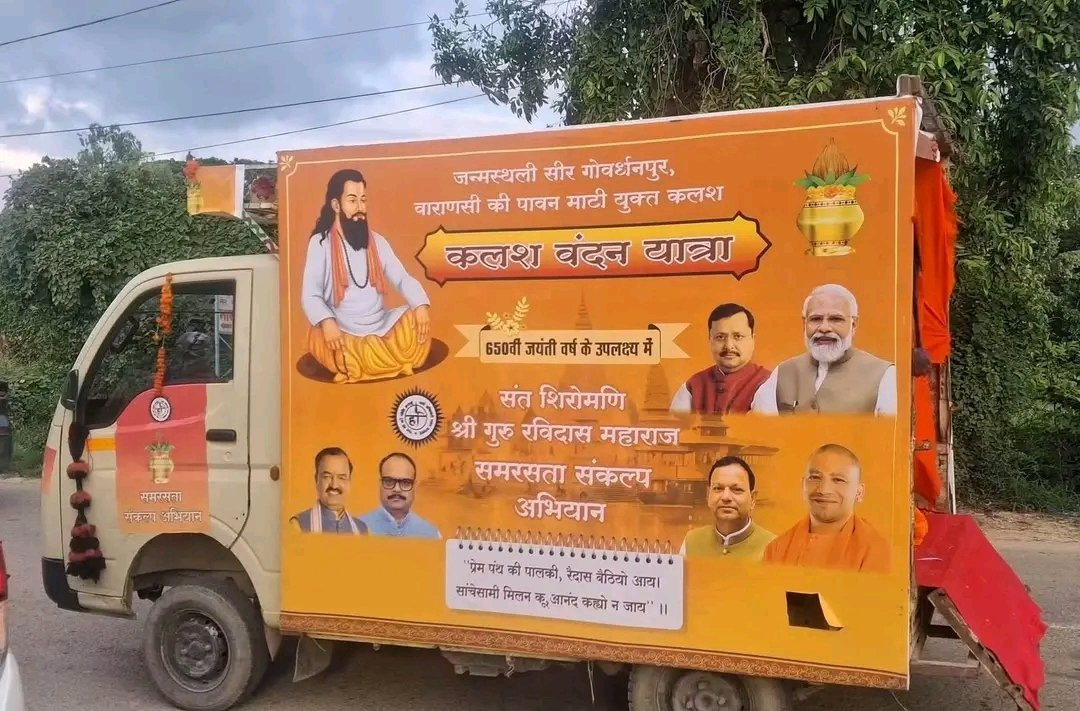
The Bharatiya Janata Party (BJP) has launched a massive campaign centred on Guru Ravidas and aimed at incorporating him into the Hindu sant tradition. The campaign, named “Shri Guru Ravidas Maharaj Samrasta Sankalp Abhiyan”, was launched on 29 July 2026 – the day of Guru Purnima – from Seer Govardhanpur in Varanasi, considered the birthplace of Guru Ravidas. The campaign will continue till 20 February 2027 – which will mark the 650th birth anniversary of Ravidas. Distribution of 131 “kalash” (pots) of sacred soil to representatives from Uttar Pradesh and other states was a key part of the campaign. The soil will be distributed in the 98 organizational districts, 27 states and six organizational regions of the BJP. The entire programme has been organized in keeping with the Hindu religious traditions, with saffron pictures and flags in abundance. Here, it would be pertinent to mention that Sant Ravidas was against rituals, especially ostentatious religious ceremonies, and was opposed to the caste hierarchy integral to Hinduism.
Needless to say, such events are not truly and purely religious. They shroud unsaid political motives and seek to serve vested interests. Sant Ravidas occupies a singular place in history. Social equality was his key message, and he won recognition from almost all sections of society in north India. He was born into a Chamar family in – according to popular belief – in the 14th century. Chamars have historically faced untouchability and are now listed among the Scheduled Castes. Sant Ravidas crafted shoes for a living but it is his teachings that won him great reverence. Many well-known sants and Sikh gurus, including Ramdas and Guru Arjun, have referred to him in the Guru Granth Sahib. Guru Ram Das even wrote that people from all the four varnas bowed before Guru Ravidas. Other sants like Kabir and Nabhadas have also praised him. Members of royal families, including Meera Bai, Raja Peepa, Raja Nagarmal and Rani Jhala Bai, were among his followers. According to Satnam Singh, who has done research on the Chamar Regiment, the Ravidassia community believes that 52 kings and queens were the disciples of Sant Ravidas. An analysis of the beliefs and the traditions associated with Ravidas would show that he can be used to bridge the historical and contemporary gap between the Hindu upper and lower castes. This suits the Bharatiya Janata Party (BJP) and its parent organization, the Rashtriya Swayamsevak Sangh (RSS), whose aim is to unite Hindus under a broad sociopolitical umbrella, having them rise above caste considerations, and then pit them against other religious communities.
The Uttar Pradesh campaign
Voters in both Punjab and Uttar Pradesh – which will elect their new assemblies in 2027 – are being targeted through this campaign. The Ravidassia, Chamar and Jatav communities hold Sant Ravidas in high esteem. These communities together constitute 11.26 per cent of Uttar Pradesh’s population, forming more than half of the state’s Scheduled Castes. Even more importantly, they are scattered and are in a position to impact the results in more than 200 assembly constituencies. In Punjab, too, they are one of the biggest Scheduled Caste communities. Socio-economically, they are on a par with the Ad-Dharmis. Together, they constitute more than 11 per cent of Punjab’s population. Thus, they have an impressive numerical strength. They have the strongest presence in the Doaba region of the state which includes districts like Jalandhar, Hoshiarpur and Kapurthala. Through such campaigns and events, the BJP is trying to woo a chunk of the Dalit population before the upcoming elections. Over the past couple of years, the party has been using relevant religious symbols and promoting target caste/community leaders to expand its political footprint.
On 23 February 2024, Prime Minister Narendra Modi inaugurated developmental projects worth Rs 32 crore at Guru Ravidas’ birthplace. He also laid foundation stones for a museum and a park. In 2026, Sant Niranjan Das, the head of the Dera Sachkhand Ballan, was awarded Padmashri. This Dera (in Jalandhar district) is revered by the Ravidassia community. The Prime Minister visited the Dera and met Sant Nirajan Das. On 1 February 2026, the prime minister announced the renaming of the Adampur airport (again in Jalandhar district) as Shri Guru Ravidas Maharaj ji Airport. A programme is slated for 20 August 2026 at Kaithal, Haryana, in which a statue of Sant Ravidas would be unveiled. Sant Niranjan Das and Union Minister Arjun Ram Meghwal are expected to attend the event. Taken together, all these initiatives point to a systematic religious and symbolic outreach to a community that can play a key role in electoral politics.
In Uttar Pradesh, the Bahujan Samaj Party (BSP) was the first choice of Jatav voters for a long time – one of the reasons being that both Kanshi Ram and Mayawati came from the Chamar/Jatav community. However, the monopoly of BSP over Jatav voters has weakened gradually but substantially. Estimates suggest that in the 2024 General Elections, around 44 per cent Jatav voters backed the BSP, around 25 per cent chose INDIA alliance and 24 per cent voted for the BJP-led NDA. The percentage of Jatav voters picking NDA as their choice rose from 14 per cent in 2019 to 24 per cent in 2024. The Samajwadi Party-Congress alliance won the support of Jatav voters by raising issues such as saving the Constitution, reservations, and representation of PDA (Pichhda, Dalit aur Alpasankhyak or Backwards, Dalits and Muslims).
On the other hand, the BJP expanded its support base by highlighting the government’s public welfare schemes, using Dalit symbols and promoting caste leadership. The BSP may still have the largest support among the Jatav voters. However, the SP-Congress alliance and the BJP both have made inroads into this vote bank. The BJP, with an eye on the upcoming elections, is trying to expand its support base in the community. Speaking at the launch of the campaign centred on Guru Ravidas, Uttar Pradesh chief minister Yogi Adityanath announced that Bhadohi district would be re-renamed as Sant Ravidas Nagar. This is somewhat problematic for the SP chief Akhilesh Yadav as it was the government headed by him that had renamed Sant Ravidas Nagar as Bhadohi. This issue may dent his attempt to build a PDA alliance. Earlier, the Yogi government had announced an allocation of Rs 500 crore for the development, beautification and upgrading of parks and other public places with statues of Maharshi Valmiki, Sant Ravidas and Dr B.R. Ambedkar. In contrast, when the SP was in power, it had renamed places and government programmes named after Bahujan heroes to appease the upper castes. At the time, the Dalit-centric BSP was the key rival of the SP.
It is also true that notwithstanding its numerous political and symbolic initiatives, the issue of sub-division of the SC reservation quota may emerge as a formidable challenge for the BJP. The BJP government of Haryana has recently divided the SC reservation quota into two sub-quotas. The party seems to be inclined towards similar moves in other states. SC sub-quotas may adversely impact the interests of the Jatav, Chamar and Ravidassia communities in states like Uttar Pradesh and Punjab. It is believed that these communities have managed to corner a disproportionately large share of the reservation quota for the SCs. Their socio-political-economic status is said to be higher than that of other Dalit communities. This may lead to a situation where these communities perceive that a sub-division of the reservation quota will harm their interests. The resentment born of such apprehensions may weaken the impact of the BJP’s efforts to woo them through religious symbolism, welfare schemes and contact programmes. Nevertheless, the BJP is considered adept in the art of mitigating the adverse impact of sensitive issues. Its organizational and communication set-up often manages to relegate contentious issues to the margins, while shifting focus to welfare schemes, cultural symbols and campaigns led by leaders of the target caste/community. Only time will tell how the BJP manages to strike a balance between its support for subcategorization of SC reservation quota and its endeavour to win the support of the Jatav, Chamar and Ravidassia communities.
(Translated from the original Hindi by Amrish Herdenia)
Forward Press also publishes books on Bahujan issues. Forward Press Books sheds light on the widespread problems as well as the finer aspects of Bahujan (Dalit, OBC, Adivasi, Nomadic, Pasmanda) society, culture, literature and politics. Contact us for a list of FP Books’ titles and to order. Mobile: +917827427311, Email: info@forwardmagazine.in