In Bihar’s contemporary political scenario, socialism is no longer an ideology. It is just a handy tool for electoral machinations and for playing power politics. This is in sharp contrast to the socialism of martyr Jagdeo Prasad that offered a new materialist and revolutionary alternative. His socialism wouldn’t settle for symbolic political representation. His socialism demanded that the exploited Bahujan, who formed 90 per cent of the population, be given genuine ownership of land, property and state resources in keeping with their numerical strength.
His grounded and solid analysis of Indian society sought to establish that caste determines class in India. His historic clarion call, “Sau mein nabbe shoshit hain; shoshiton ne lalkara hai; dhan, dharti aur raajpaat mein nabbe bhag hamara hai” (Ninety of hundred are exploited. Ninety per cent of wealth, land and power is ours – this is the war cry of the exploited), was not just a political slogan but a call for social equality, economic reset and a lasting polarization of the exploited.
In interviews with Russian historian Paul Gard Lebin and American economist Dr F. Thompson, Jagdeo Prasad said that his Shoshit Dal believed that a social revolution was an absolute necessity for a political revolution and that social revolution meant implementing the principle of “special opportunities”. “Ninety of 100 jobs in government, semi-government and private sectors will be reserved for the exploited, who are 90 per cent of the population. That will bring the bureaucracy under our control, which, in turn, will make it easy for us to take major revolutionary steps in the economic arena. Political parties which have more than 10 per cent upper-caste members will be banned.”
Before the government led by Mahamaya Prasad Sinha in Bihar was brought down, Jagdeo Prasad told Ram Manohar Lohia that his Samyukta Socialist Party (SSP) was also cheating the exploited. “Here, too, the leaders are enjoying the fruits of the labour of the ordinary workers [‘kamaye dhotiwala, khaye topiwala’]. The exploited, believing in your slogan of ‘saath saikda’ helped form governments in many states. But they have lost patience now,” he said.
Jagdeo Prasad’s views on socialism were clearer and more grounded than Dr Lohia’s. Lohia batted for reservation and representation for the backward classes and the deprived on the basis of the “principle of special opportunities” and offered a political alternative to the Congress party. Of course, “non-Congressism” also opened the door to electoral alliances with feudal and right-wing communal forces and that has led to the rather frightening challenge posed by the fascist forces today bent on dismantling Constitutional democracy.
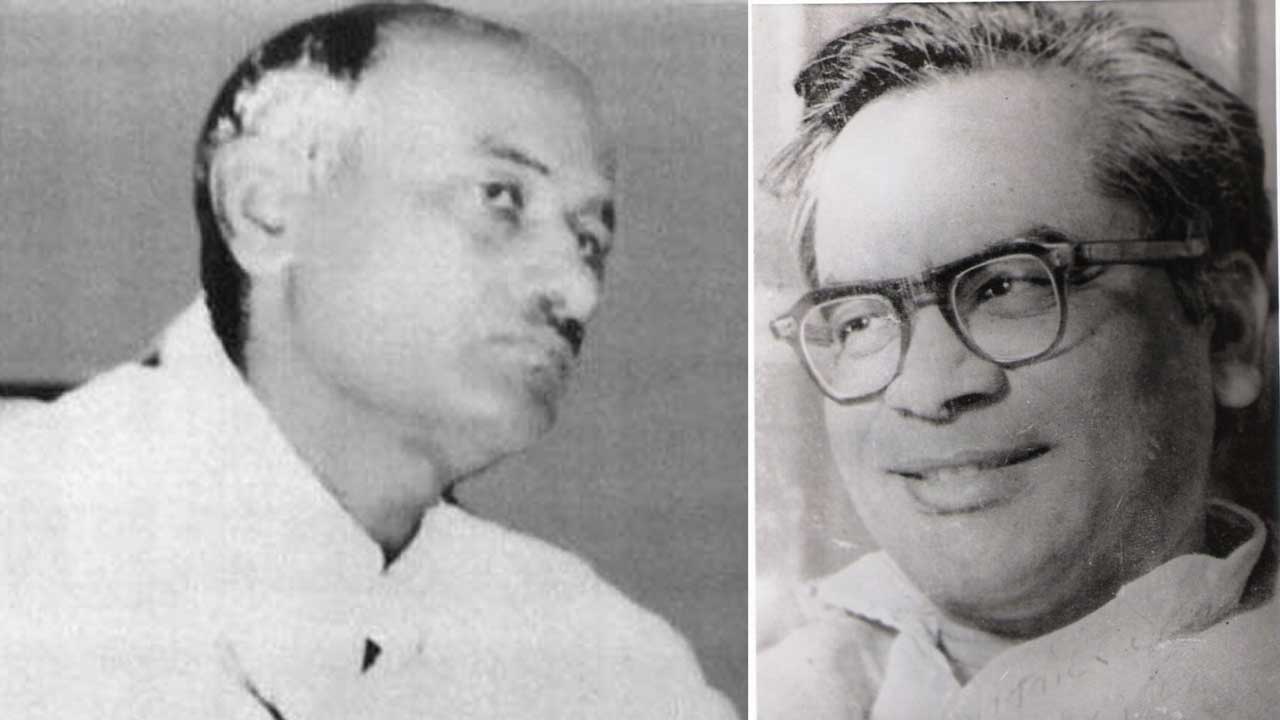
Political ideologies are not only about economy and administration. They are shaped by a country’s history, cultural traditions and social fabric. Dr Ram Manohar Lohia, E.V. Ramasamy Periyar and Jagdeo Prasad – all three defined socialism from the Indian standpoint, yet because of their different cultural and historical visions, they had a widely diverse understanding of the concept.
For instance, Dr Lohia believed that “The Ramayana is not an Aryan text. Dividing Indians into Aryans, Dravidians, and Mongoloids is an idea of mainly foreign origin. Rama and Krishna symbolize the unity of the Indian subcontinent. The Ramayana and the Mahabharata are not merely epics of joy, love and peace. We all know that Rama united north and south India and Krishna brought eastern and western India together and that Ram’s story is the fountainhead of modern Indian languages.”[1]
In sharp contrast, Periyar rejected the story of Ram. Periyar says, “We cannot find anything good or just in the Ramayana from its beginning to its end. Every act of Rama is oppressive. How can we worship him? … Can anyone dare say how the Ramayana serves the interest of a majority of the people … ?”
Periyar’s Ramayana Pathirangal (Characters of the Ramayana) was translated into English under the title Ramayana: A True Reading. Periyar Lalai Singh brought it to the readers of north India by publishing its Hindi version titled Sachhi Ramayan. Lalai Singh, Arjak Sangh founder Ramswaroop Verma – who burnt copies of the Manusmriti and the Ramayana – and Jagdeo Prasad were ideologically proximate. It was because of his understanding of history and his cultural vision that in his speeches and writings Jagdeo Prasad repeatedly referred to the anti-Brahmanism Dravidian culture and Tamil Nadu in the context of social justice.
While speaking on the motion of thanks on the Governor’s address in the Bihar Vidhan Sabha in 1970, shortly after Daroga Prasad Rai took over as the chief minister, Jagdeo Prasad pointed out that of the 747 teachers in the Patna University, only 124 were from the exploited classes. Replying to him, Janardan Tiwari from the Janasangh (the former avatar of the BJP) said, “The honourable member Jagdeo Babu had better shift base to Madras because his wishes have come true there”. Jagdeo Prasad retorted, “Don’t worry. I will turn Bihar into Madras.”
Periyar and Jagdeo Prasad saw Rama as a symbol of Dwij cultural hegemony. Periyar viewed the Ramayana as a brahmanical political text. He opined that the Ramayana was written to justify the victory and the hegemony of the north-Indian Aryans over the non-Aryans of south India, and that it was a brahmanical cultural device for establishing the domination of the Dwij over the Non-Dwij and of men over women. On the other hand, for Dr Lohia, Rama was Maryada Purshottam (supreme, ideal, righteous man) and a worshippable symbol of Indian culture.
Left-wing critic Khagendra Thakur writes, “Dr Lohia, with his belief in the cyclical theory of history, militarism and idealist monarchy, seems to be close to philosophers like Spengler who are said to be the harbingers of the fascist ideology … The result was that the best remnant of the Socialist Party was George Fernandes, whom Prime Minister Atal Bihari Vajpayee cherished more than any Sanghi leader. Interestingly, it was during Vajpayee’s premiership that pro-democracy and secular forces first felt that fascism could become a threat to the nation.”[2]
There is no denying the fact that Lohia played a key role in providing a religious-cultural validation to the politics of Hindutva and in preparing the ground for the Sanghi version of Fascism to emerge as a potent threat to the country’s democratic order.
If the Rashtriya Janata Dal (RJD) and Janata Dal United (JDU) leadership in Bihar and the Samajwadi Party (SP) leadership in Uttar Pradesh do not have a clear, scientific and rational outlook on cultural issues, it is partly due to the influence of Dr Lohia. That is why Akhilesh Yadav eulogizes Parshuram and describes Ramcharitmanas as “cultural constitution”. Statements like these cause the OBC-Dalit-Minorities (PDA) grouping to stray with regard to social, cultural and political issues.
In sharp contrast, Jagdeo Prasad categorically rejected the idea of striking any kind of compromise with the feudal and capitalist forces. Lohia’s socialism was not a direct assault on the age-old socio-religious structure. His socialism included experiments like the holding of “Ramayan Melas”. On the other hand, Jagdeo Prasad, who adhered to the ideology of the Arjak Sangh would say that the exploited couldn’t have durable control of the levers of power unless the brahmanical cultural hegemony and religious superstitions were not dismantled and discarded.
Jagdeo Prasad’s vision is more practical and radical in comparison with Jayaprakash Narayan’s socialism and his model of Sampoorna Kranti. JP’s socialism mainly relied on voluntary endeavours like Sarvodaya, moral transformation and Bhudaan. It did not lend a sharp edge to class consciousness. Instead it banked upon an all-inclusive appeal. Jagdeo Prasad, on the other hand, was unequivocal that the exploiter class would never give up its privileges voluntarily. For him, concepts like “change of heart” and “appeal to the morals” would only help perpetuate feudal exploitation.
As the “Lenin of Bihar”, Jagdeo Prasad urged the exploited to fight on the ground to secure their rights over wealth, land and power. Today, when the socialist politics seems to be losing its ideological moorings, Jagdeo Prasad’s three-pronged model of socio-cultural transformation, economic redistribution and Bahujan solidarity offers the most viable means of ushering in socialism. Only this model can promise a revolution of the exploited.
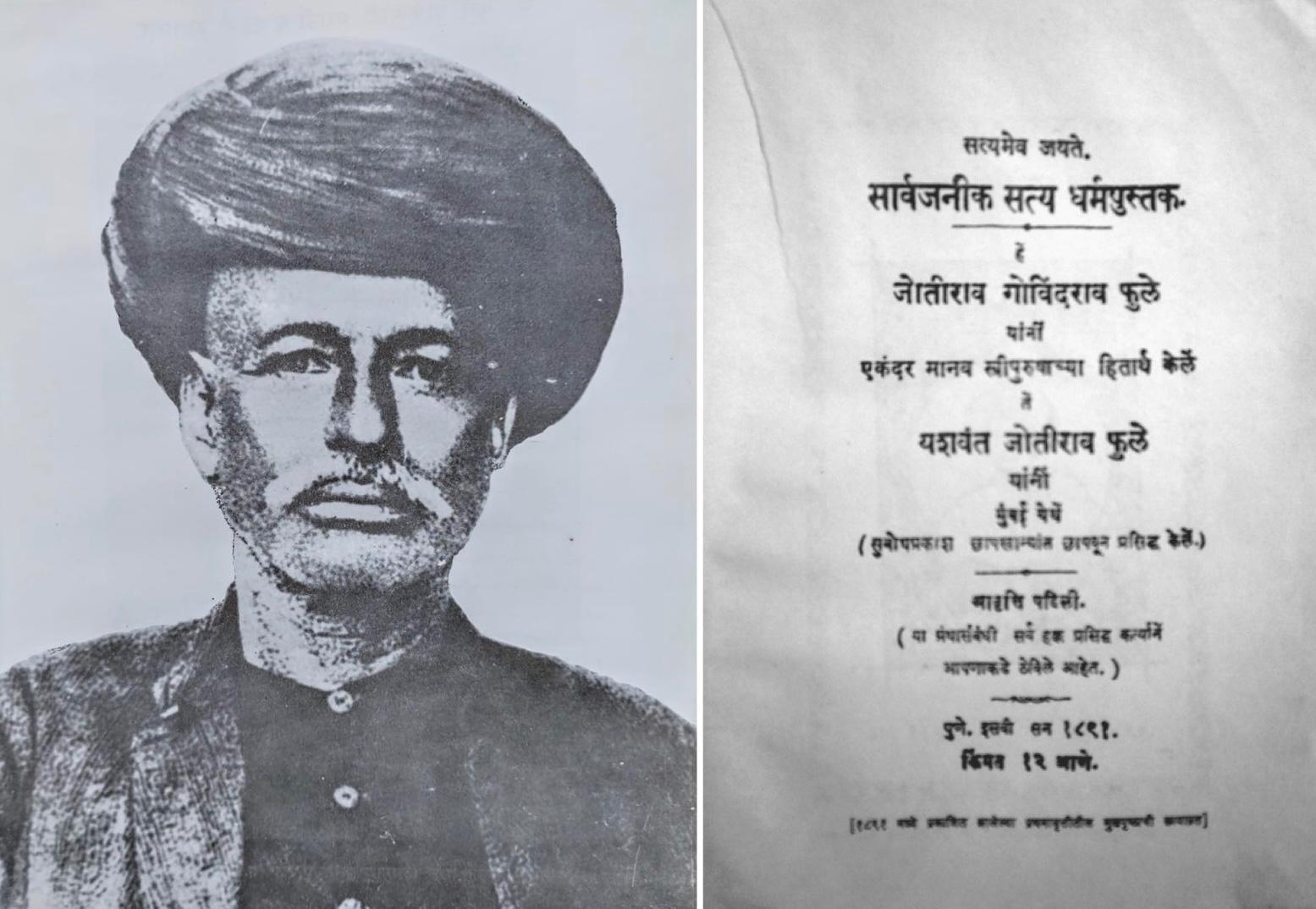
Jagdeo Prasad was of the view that the Gandhian concept of trusteeship and “change of heart” were merely tools for perpetuating caste-based and feudal exploitation. He shunned compromise and instead opted for combative politics and staking a claim to power. His ideas were a unique combination of the Marxian concept of revolution and the Bahujan’s quest for social justice. His socialism was close to the revolutionary stream of scientific socialism, imbued with the Ambedkarite and Phuleite social consciousness.
Dr Lohia and Jagdeo Prasad were both from the Indian socialist stream and both symbolized the struggle against the caste system and inequality. But they held fundamentally different views on Brahmanism. For Lohia, political representation, reservation policy and the principle of “special opportunities” were the lynchpins of the struggle against brahmanical inequality. Jagdeo Prasad, on the other, did not see Brahmanism as merely a social evil, but as an ideological and cultural tool for perpetuating feudal and capitalist exploitation – a citadel, the demolition of which was a prerequisite for genuine emancipation of the exploited and the deprived Bahujan, who formed 90 per cent of the country’s population.
Lohia’s Saptakranti, JP’s Sampoorna Kranti and Jagdeo Prasad’s Shoshit Kranti have some commonalities and in the current political scenario, there is a distinct possibility for exploring a common ground between them. Having said that, we do need to ponder which of the three is the truly revolutionary socialist ideology, incorporating the crucial value of secularism.
[1] Dr P.N. Singh, ‘Pratikon Ke Shilpakar: Dr Ram Manohar Lohia’ in Dr Lohia Aur Satat Samajvad (ed. Kanhaiya Tripathi), Prabhat Prakashan, p 74
[2] Khagendra Thakur, ‘Lohia Ki Itihas Drishti Aur Gair-Congresswad’ in Dr Lohia Aur Satat Samajwad (ed. Kanhaiya Tripathi), Prabhat Prakashan, p 167
(Translated from the original Hindi by Amrish Herdenia)
Forward Press also publishes books on Bahujan issues. Forward Press Books sheds light on the widespread problems as well as the finer aspects of Bahujan (Dalit, OBC, Adivasi, Nomadic, Pasmanda) society, culture, literature and politics. Contact us for a list of FP Books’ titles and to order. Mobile: +917827427311, Email: info@forwardmagazine.in