e n

Dalitbahujans grieve Father Stan Swamy’s death

“In India, those working for the Dalits and Adivasis are not allowed to live. You will find many a Dalit-Adivasi leader in the country but few are ready to lay down their lives for the cause of these peoples. These few leaders are an eyesore for the ruling classes. ” This is how Anil Chamadia and other Dalitbahujan intellectuals reacted to Father Stan Swamy’s death

Father Stan Swamy passed away on 5 July 2021. Fingers are being pointed at the Government of India and the judiciary for his death in judicial custody.

Stan Swamy was suffering from Parkinson’s, because of which he could not even hold a glass of water in his hands. Besides, he was hard of hearing. He had had many bad falls in jail. Having been operated for hernia twice, he was also suffering from lower abdominal pain. 

READ THE FULL ARTICLE HERE: Dalitbahujans grieve Father Stan Swamy’s death

About The Author

Sushil Manav

Sushil Manav is an independent journalist and a litterateur. He is also engaged in the sociopolitical activism of labourers in Delhi and the rest of the National Capital Region

Related Articles

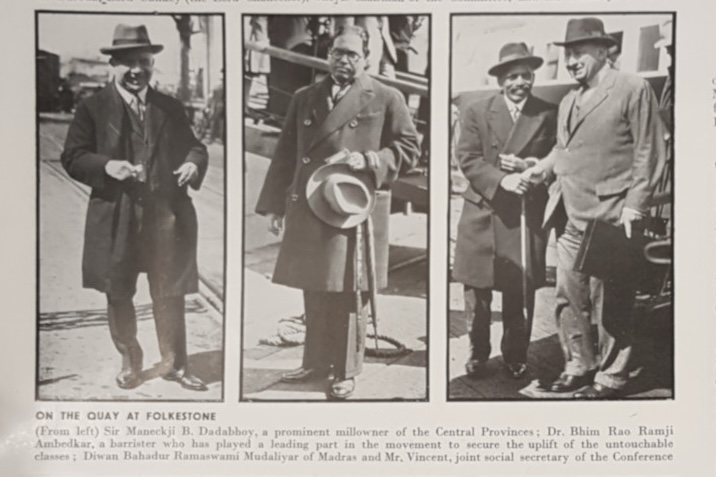
Discovering Babasaheb’s lost speeches in the West
At the time of the Round Table Conferences, Dr Ambedkar had become a sought-after speaker in the UK, the US and Canada, as a...
Jotirao Phule’s ideology and literature
Phule challenged the traditional concept of literature. For him, literature was not only about aesthetics. It was a tool for ushering in social justice....
How Kanshi Ram’s slogans became the gospel for the masses
It is time we revived these slogans in our political spheres, in our social spaces and university corridors and connected with villages, bastis and...
Discovering young Ambedkar’s Indo-US trade petition
‘We, the representatives of India and members of the Indian Society for the Promotion of Commerce, request to the high-intelligence of the officers of...
Beyond Sacrifice: Reflections on the multifaceted life of Ramai
Was Ramabai just a dutiful housewife of Babasaheb, or was she an active co-emancipator who, like Babasaheb, envisioned a society free from man-made divisions...