Some time ago, a leading English daily ‘The Hindu’ carried a full-page article on the ‘death’ of Maoism in India. The piece sought to explore how and why Maoist ideology has spread in Adivasis areas and dwelt on what the government should do next. The theme of the article was that the Fifth Schedule areas, that is, the areas with substantial Adivasi population, became the hotbed of Maoist insurgencies due to administrative neglect, exacerbating discontent; a lack of representation of Adivasis in local bodies; and so on; and that it should now be ensured that there is effective governance in these areas and that the Adivasis are represented in the administrative setup.
That is all fine. But then some questions pop up. There are many communities in the country that are more neglected than the Adivasis. They include several Dalit and OBC castes. But why did Maoist ideology not strike roots among them? Why did only Adivasi-dominated areas become epicentres of Maoism?
Here, it would be pertinent to mention that the Naxalbari Movement, which began in 1967-68, initially gained substantial ground in the Dalitbahujan-dominated areas. Dalitbahujan victims of feudal oppression formed the vanguard of the movement. But the armies of the feudal lords and the government crushed them mercilessly. This violent movement, led by Charu Mazumdar, soon disintegrated and its philosophical underpinnings underwent a series of changes. They gave up the strategy of “individual annihilation” which, in local parlance, was described as “Chah inch chhota kar dena” (reducing one’s height by six inches by beheading). That was because killing zamindars would not have ended the zamindari system or feudalism. Without going into the details, suffice it to say that barring a few, most Naxal groups joined party politics.
But Maoism, which was birthed in the border area of Bengal and Bihar, in parallel with the Naxalbari Movement, survives to this day. The fundamental difference between the Naxals and the Maoists is that the latter never accepted parliamentary politics. They firmly held the view that power flows from the barrel of the gun. Ideological shifts were alien to them. Their strategy was simple: use forests and hills as sanctuaries to attack the plains and expand their area of influence using guerilla tactics. They declared areas under their control as “freed”. It was as a part of this strategy that they made forests their base. Coincidentally, forests and hills are also home to the Adivasis. The vast green belt encompassing swathes of land extending from Jharkhand, Madhya Pradesh and Chhattisgarh to Dandakaranya in south also happens to be a Fifth Schedule area.
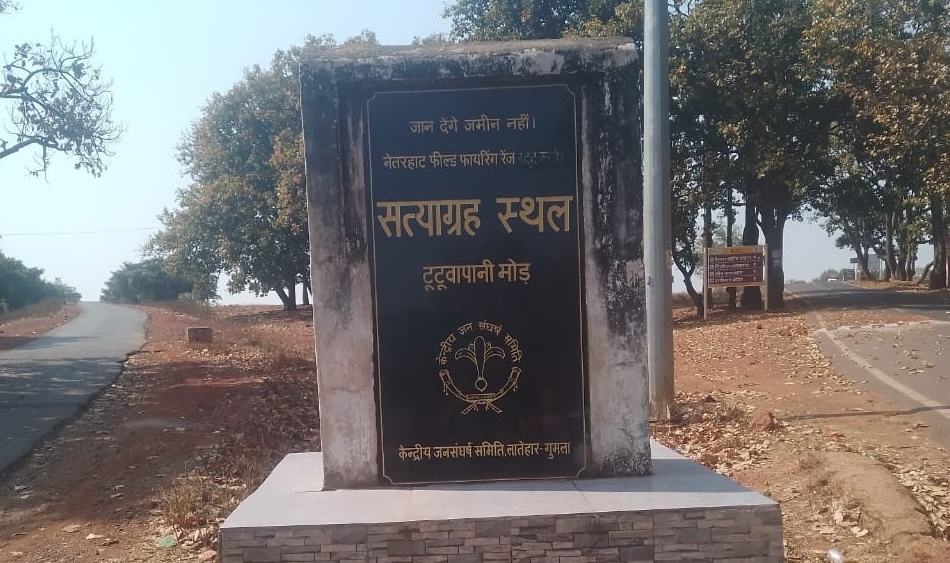
So, let us begin correcting our view about whether Maoists were actuated by concern for the Adivasis – whether they made Adivasi areas their base for saving Jal-Jangal-Zameen (water-forest-land) and protecting the areas from mining?
It is clear that the Adivasis are not the “proletariat” and neither are they abjectly poor. A vast section of Dalits is landless and is fighting for Baasgeet Parcha (a document issued by the Bihar Government declaring landless poor as owners of the land on which their dwellings stand). They have survived on land owned by the feudal lords. In contrast, even the poorest of Adivasis have a house to live in, and land to till.
It is true that industrialization, and the consequent displacement, has adversely affected the socio-economic order of the Adivasis. But a visit to Adivasis areas can help you understand the difference between the deprivation of the Adivasis and those of other vulnerable communities. Moreover, the Adivasis have always been ready to defend their Jal, Jangal and Zameen. When, after the advent of the British Raj, these came under threat, the Adivasis rose against the imperial rulers in a series of revolts – Sido-Kanhu’s “Hul” and Birsa Munda’s “Ulgulan” being the better known ones among them. It was these bitter struggles and innumerable sacrifices that ultimately led to the promulgation of the Chhota Nagpur and Santhal Pargana Tenancy Acts and development of the concepts of Fifth and Sixth Schedule Areas.
Their struggle to save Jal, Jangal, Zameen continued in independent India. The Narmada Bachao Andolan, the struggle against the construction of dams under Damodar Valley Project, the protests against Bauxite mining in Niyamgiri and against Tata’s steel plant in Kalinganagar – these were some instances of this struggle. But their struggles were always open and their revolts saw massive public participation. They never opted for secretive, guerilla warfare and they never aimed at grabbing state power. In the Adivasis area under their influence, Maoists have been persistently urging the people not to participate in the election process. But the voting percentage in areas inhabited by the Adivasis has been consistently higher than in the other areas.
The Indian version of Maoism was born in the Parasnath mountain ranges on the Bihar-Bengal border. In the 1970s, the Maoists tried to make inroads into Tundi via Chhapra and Giridih. But at the time, Tundi was the epicentre of the struggle led by Shibu Soren against exploitation by moneylenders and the Maoists could not get a toehold there. But some years later, Shibu Soren joined parliamentary politics and that area was overrun by the Maoists. Shibu moved to Santhal Pargana and became involved in electoral politics. His supporters immersed themselves in money-making enterprises, acquiring quotas and permits from the government. The aggressive elements of his movement joined the Maoists and became their cadres. In 1990, their party Unity merged with the People’s War Group of south India and their strength kept on increasing.
But no violent movement can stand up to the State with its unlimited might. None can match the military might of the State. Clearly, political violence has no future. If the Maoists still survived in Bastar it was because of its geography. The boundaries of three states meet in Bastar. It was easy for the Maoists to commit an act of violence in one state and slip into another. This they did successfully for decades. But when the governments of all the three states launched a joint operation, they were wiped out. Here, we won’t go into discussing whether Gandhi’s non-violence is more effective than violent politics. However, it is clear that the violent politics of Maoists has reached a dead end.
But for many, that has not ended the romance of an armed revolution. They continue to sing paeans to it. They feel that even if they themselves are not in the battlefield, they are still partners in the revolution-that-was-not. Thus, during a protest at Jantar-Mantar in Delhi against the city having turned into a gas chamber, some students from the JNU raised slogans like “How many Hidmas will you kill? A Hidma will emerge from every home.”
Ironically, when these slogans were being raised, Maoists were writing to the chief ministers of three states, saying that they want to surrender jointly. In that open letter, they also urged their cadres not to surrender individually in a hurry, but to do it together.
Mao told his followers to go among the people, learn from them and codify that knowledge. But the Maoists never learnt anything from the Adivasi people. They forgot that the first line of the Communist Manifesto says, “The history of all hitherto existing society is the history of class struggles.” But Adivasis have no classes. They ignored the fact that among Adivasis, all important decisions are taken at the village Akhda, in which all villagers – old and young, men and women – take part. The decisions are taken not by the majority but by consensus. In case of Maoists, however, decisions are taken by the politburo or a committee of select comrades and everyone has to adhere to their decision. The Maoists realized that Siddo-Kanhu and Birsa Munda never formed fighting contingents. Their fighters were the farmers who tilled the land with them and those who danced with them in Akhdas.
The central government has set 31 March 2026 as the deadline for ending Maoism. Of course, it is naive to believe that Maoism or, for that matter any kind of violent politics, can be extinguished completely by a given date. Even the best of socio-political-economic systems can have malcontents. Today, when the system that prevails nationally is founded on exploitation and oppression, malcontents are a given. So, there will always be discontent and unrest. But the way out lies in establishing a truly democratic system. People will stage sit-ins, they will hold demonstrations, they will resort to individual satyagrahas and fasts-unto-death. And the government will have to lend its ears to them. Suppressing them by use of force will only invite violence.
As for the Adivasis, whether Maoists remain or disappear, their struggle for Jal-Jangal-Zameen will continue. Parliamentary politics and consumerist culture will only be minor roadblocks in their way. Adivasis, and especially their youth, will never give in, or give up.
(Translated from the original Hindi by Amrish Herdenia)
Forward Press also publishes books on Bahujan issues. Forward Press Books sheds light on the widespread problems as well as the finer aspects of Bahujan (Dalit, OBC, Adivasi, Nomadic, Pasmanda) society, culture, literature and politics. Contact us for a list of FP Books’ titles and to order. Mobile: +917827427311, Email: info@forwardmagazine.in