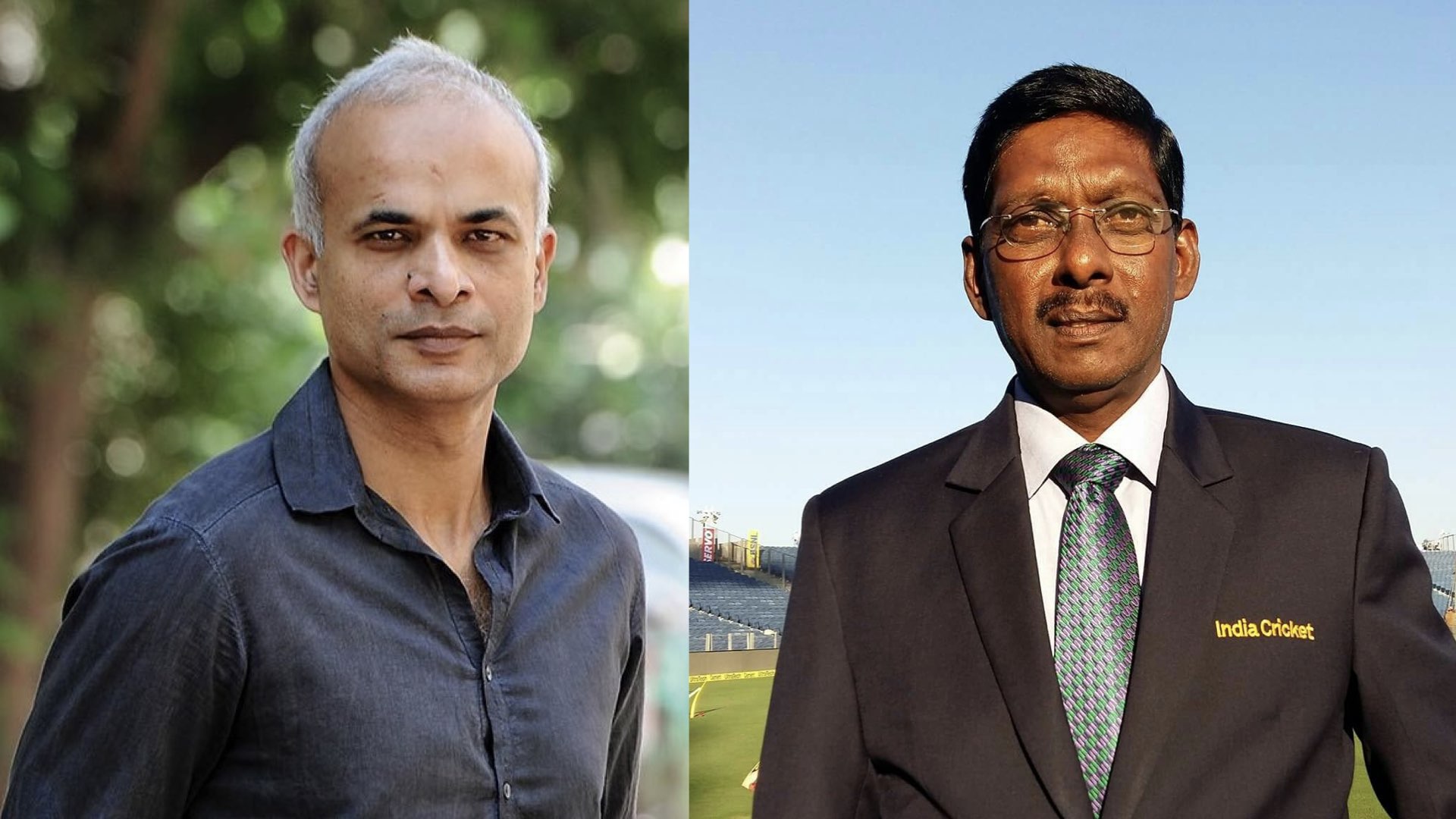
In his Mint column published on 29 March 2026, ‘The paradox of being both upper-caste and dark-skinned in a deeply unequal society’, Manu Joseph argues that colour-based prejudice in India operates in complex ways that can cut across caste privilege itself. Using the experiential account of Laxman Sivaramakrishnan, a former Indian cricketer and commentator, Joseph suggests that dark-skinned upper-caste individuals may experience a distinct form of alienation because they face appearance-based discrimination without the solidarity that traditionally marginalised communities often share.
What makes Joseph’s essay provocative is his attempt to problematise privilege in Indian society. India is undeniably obsessed with skin colour. Dark skin can make a difference in how people are received, desired, trusted, or “presented” in public. There is no denying the fact that racism is a part of Indian commonsense. The problem arises when Joseph stretches this observation into a much larger claim: that being dark-skinned and upper-caste in India is somehow “worse” than being dark-skinned and lower-caste. That is exactly where the essay conflates structural inequality into experiential equivalence. To put it simply, it treats the feeling of being looked down upon as though it were the same thing as being systematically kept down.
These are not the same thing. Not even close.
Joseph, albeit somewhat inconsistently, attempts to establish how the caste-race-class triad becomes cemented in Indian society. What is meant by “presentability” in his words is what sociologists recognise as cultural capital, and it remains one of the most crucial markers of caste in India. Caste here has never functioned through ritual status alone. It survives through grammar of taste, language, schooling, network, confidence, appearance, surnames, and social circle. Through the ordeal of Sivaramakrishnan, Joseph seeks to convey that the caste-inflicted Indian psyche often assumes that lower caste equals lower class equals dark skin, and therefore upper caste equals upper class equals fair skin. This is true to an extent, and any deviation from that arrangement is often considered abnormal. But social reality is always far more complex than the neatness of such equations. For instance, in the state I come from, Assam, there is a widely accepted superstition that a dark-skinned Brahmin (Kola Bamun) is inauspicious or harmful. Yes, it is humiliating to be considered inauspicious or harmful because of one’s skin colour. Dark-skinned upper-caste individuals may indeed create a certain friction within the established hierarchy. When someone does not fit the aesthetic imagination of caste, people become awkward, suspicious, confused. But does being a dark-skinned Brahmin in any way prevent a person from accessing the privileges of status, legitimacy and social capital that their caste location grants them? Most evidently not.
Joseph writes that “some people may not be moved by his [Sivaramakrishnan’s] plight. But the fact is that it is worse to be dark-skinned and upper-caste in India.” This is precisely where Joseph’s argument is overstretched and redundant at the same time. Does it become “worse” because someone like Sivaramakrishnan cannot fathom that privilege does not arrive as a complete package? That caste privilege and economic privilege do not automatically guarantee socially validated aesthetic privilege too? Does the humiliation intensify because he expects to check off every marker of social desirability and suddenly discovers a crack in that arrangement? Why does being mistaken for “support staff” or a “driver” hurt the privileged so much in the first place? How is it worse to be mistaken for poor and socially deprived than actually being poor and socially deprived? Worse according to whom? And measured by what? If the metric is embarrassment — being underestimated at a party, excluded from the aesthetic elite of “presentability”, temporarily misread by strangers as someone belonging to the “service-class” then yes, there is some kind of discomfort there. Vanity wounds are still wounds but they are not worse than the embodied humiliation that a section of Indian society generationally has lived with. We need to stop mistaking wounded self-perception for structural disadvantage.
An upper-caste man with dark skin like Sivaramakrishnan may experience symbolic downgrading in certain interactions. Yet the architecture beneath him remains intact. His caste location still supplies inherited legitimacy, networks, educational access, social confidence, and the presumption of merit. Even when he is misrecognised, the system eventually corrects itself and returns him to his assigned floor. For historically marginalised castes, humiliation does not arrive as an interruption. It is woven into the fabric of their everyday life. Untouchability, discrimination, educational exclusion, employment bias, social segregation, coded language, inherited stigma and the many forms of otherisation that make up their experiential reality are not isolated incidents of embarrassment but are truths that shape their life trajectories. In Joseph’s account, one person is dealing with dissonance within privilege. The other is dealing with structural constraints as a perpetual social condition. These are not two versions of the same experience. They emerge from entirely different relationships to power.
What makes Joseph’s argument especially strange is the emotional logic beneath it. He argues that the dark-skinned upper-caste individual suffers more because he feels discriminated against by his “own flock”, while lower castes and the “underclass”, as he puts it, at least have the comfort of collective suffering and community support.
This is an outrageously flawed argument to make.
Anyone with even a basic understanding of human experience would agree that occasional loneliness is not comparable to historical oppression. More importantly, the assumption that humiliation becomes more tolerable when shared is itself inherently shallow. Suffering does not become lighter simply because others suffer too. Ask someone who has lost a loved one whether grief becomes easier merely because other family members are grieving alongside them. The same applies to caste-inflicted humiliation. A humiliated person does not find the humiliation less because humiliation is socially distributed. Oppression, in no way, reduces its weight simply because millions carry it together. This is not to undermine the importance of community. Community matters enormously in unequal societies. Shared experience can produce resistance, political consciousness and solidarity, and enable survival. But shared oppression does not heal humiliation, does not make hierarchy bearable, nor does it necessarily bring any social change. If anything, to speak sociologically, the collective nature of caste suffering is precisely what makes caste structural.
Lastly, Joseph’s bizarre proposition that fails to make any sense is that the underclass (and lower castes) derive some sense of relief from the fact that today there is supposedly very little interaction between the privileged and the deprived. How can such a statement be made when neoliberal conditions have, in fact, visibly produced even greater entanglements between the two? Joseph perhaps did not give enough thought to the vast sections of “helpers” whose labour makes comfort of the privileged possible – those who clean their homes, cars and toilets, guard their gated societies, sweep their roads and drains, drive their cars and walk their dogs, deliver groceries at their doorstep in ten minutes, and often die inside manholes that the privileged would not even dare to look into.
Forward Press also publishes books on Bahujan issues. Forward Press Books sheds light on the widespread problems as well as the finer aspects of Bahujan (Dalit, OBC, Adivasi, Nomadic, Pasmanda) society, culture, literature and politics. Contact us for a list of FP Books’ titles and to order. Mobile: +917827427311, Email: info@forwardmagazine.in