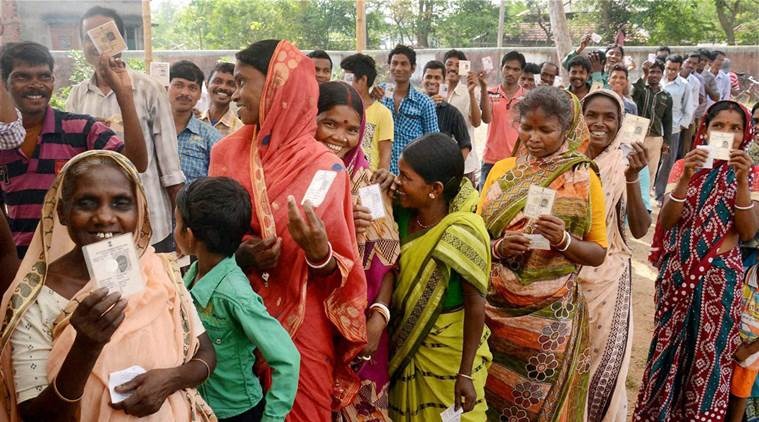
The state of Tamil Nadu is widely recognized as an exemplar of progressive welfare governance in India. The state’s institutional outcomes across public health, primary education, nutrition, gender-targeted welfare, and broader human development indices have consistently attracted serious attention from policymakers, comparative scholars, and development practitioners nationwide. Historically, Dravidian political parties, which have been in power the longest, have secured and reproduced their democratic legitimacy by anchoring their platforms to the promise of social justice. This has been operationalized through expansive, universalist welfare programmes and the reservation system, both designed to democratize structural opportunities for historically marginalized communities.
Nevertheless, a persistent analytical question remains central to contemporary discourse: has material welfare and measures to make higher education and public employment representative been sufficient to comprehensively deliver social justice? The reality is far more nuanced than the binary positions held by either the absolute critics or the uncritical proponents of welfare and reservation politics. Universalist welfare and targeted representational initiatives (reservations) have undeniably transformed millions of lives by increasing school enrolment, ensuring food security, expanding healthcare access, and accelerating social mobility for disadvantaged groups.
Yet, despite these monumental developmental milestones, deeply entrenched structural inequalities stubbornly persist. Interventions in material distribution have not completely eradicated housing insecurity, uneven access to safe drinking water, systemic sanitation deficits, caste-based discrimination, and visceral violence against marginalized populations.
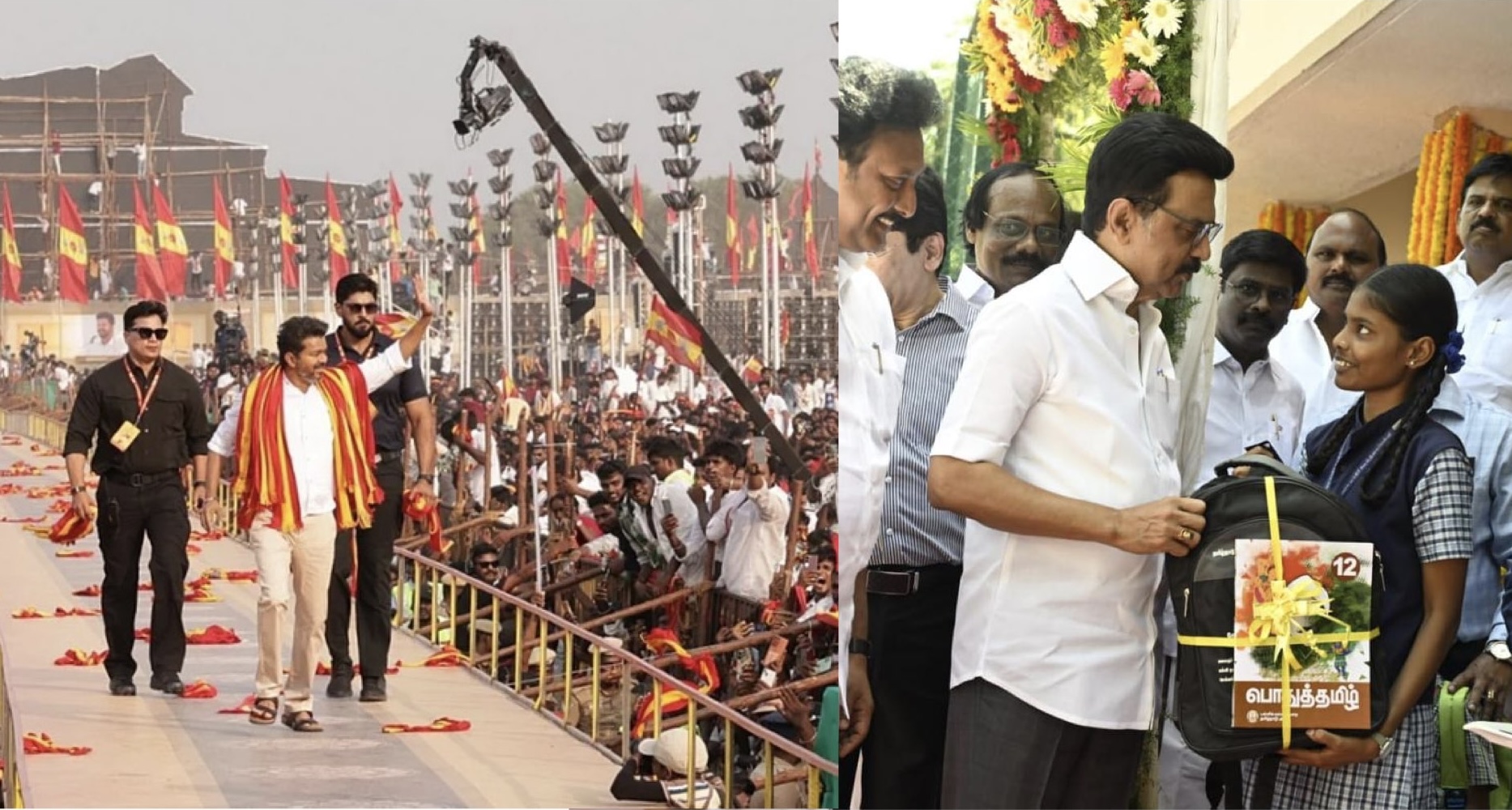
To unpack this sociopolitical contradiction, analytical clarity requires a conceptual separation between welfare and social justice. Welfare infrastructure primarily redistributes resources, public services, and baseline opportunities. Social justice, on the other hand, encompasses the broader, more egalitarian distribution of institutional power, structural dignity, social recognition, and equal citizenship. This distinction echoes Dr. B. R. Ambedkar’s foundational warning that political democracy remains a hollow shell if it is not anchored in a ‘social democracy’ that actively redistributes institutional power and guarantees structural fraternity. As Gopal Guru notes, while state-directed material distribution can alleviate absolute physical deprivation, it possesses no intrinsic mechanism to eradicate the structural humiliation and everyday spatial exclusions that define caste operations. Consequently, while robust welfare mechanisms act as a necessary catalyst to bring a society closer to social justice, they do not automatically dismantle the deeper, socialized exclusions created by the caste system and legacy social structures. The impact of reservations, on the other hand, is going to be limited and slow unless there is significant investment in public institutions of higher learning and the public sector to create job opportunities.
Crucially, this structural gap is no longer unfolding within a purely material or analog arena. In contemporary Tamil Nadu, the historical consensus undergirding the Dravidian model faces a dual challenge: a lingering material deficit in structural equality alongside a rapid transformation in the communication ecosystem. This raises a vital question for modern political analysis: can a legacy of political legitimacy built on material welfare delivery and reservations endure when the public sphere transitions into an increasingly digital, attention-driven, and hyper-mediated environment?
The Dravidian legacy of inclusion
Analytical perspectives from scholars like Narendra Subramanian suggest that Dravidian populism broadened democratic participation beyond mere advocacy for social change. By systematically contesting legacy caste hierarchies and socialized exclusions, the movement democratized structural opportunities for historically marginalized groups. Through the strategic use of reservations, universalist welfare, and expanded educational access, these political forces fundamentally redefined the institutional relationship between the state and disadvantaged communities.
Tamil Nadu keeps doing better than most other Indian states on a number of social development measures. Programmes such as the Puratchi Thalaivar M.G.R. Nutritious Meal Program, the Chief Minister’s Breakfast Scheme, public health drives, schooling help programs, and women’s welfare schemes have significantly improved the common man’s everyday life. The state’s welfare approach has become a kind of reference point in conversations about inclusive development.
Reservations and the politics of representation
Reservations deserve to be treated separately from welfare. Reservations in Tamil Nadu, which are the most comprehensive in the country and applicable to 69 percent of the seats and positions in higher educational institutions and public employment, respectively, have been a key part of the Dravidian model. Welfare redistributes resources, whereas reservations redistribute opportunities and representation. Tamil Nadu’s expansion of affirmative action in education and public employment has enabled historically marginalized communities to enter universities, government service, and political institutions. These gains cannot be reduced to welfare alone. Rather, they represent a long-term project of democratizing access to power and public life.
This distinction is important because social justice is not only about receiving benefits but also about participating in decision-making processes and public life. The Dravidian movement’s most enduring contribution may therefore lie not only in welfare provision but also in the democratization of representation.
Can reservations eliminate caste inequality?
Reservations have undoubtedly reduced barriers to education and public employment. They have opened pathways of upward mobility for many historically excluded communities and have helped diversify public institutions.
However, reservations alone cannot eliminate caste inequality, especially when higher public education institutions and public employment opportunities remain limited.
Caste is a social, cultural, and economic system reproduced through family networks, marriage practices, social interactions, and everyday norms. Consequently, reservations can weaken structural disadvantages, but they cannot by themselves transform social attitudes or erase caste boundaries.
Their long-term effectiveness depends on complementary efforts in expanding the public education system, social inclusion, anti-discrimination enforcement, and democratic participation.
Where welfare falls short
It is within these persistent socio-economic gaps that the changing nature of political communication alters the terrain of dissent. While the legacy Dravidian parties historically mastered analog, top-down communication networks from print to cinema and satellite television, the current digital landscape operates on decentralized, algorithmic rules. Today, young voters do not merely consume state-sponsored welfare narratives; they bypass legacy party gatekeepers through decentralized meme culture, instant messaging networks, and interactive digital spaces. In this highly fragmented attention economy, the mere bureaucratic distribution of welfare benefits struggles to capture political imagination or guarantee absolute legitimacy among a generation demanding dignity and structural accountability alongside material goods.
At the same time, welfare success should not obscure continuing inequalities.
There are still a few districts where access to basic services is uneven. It still feels like some places receive more attention than others. There are continued reports of inadequate housing, drinking water shortages, weak sanitation facilities, and limited infrastructure, which disproportionately affect the most vulnerable communities. This is particularly true in some Dalit settlements and other socially marginalized localities where development outcomes remain below state-level averages. The experience of “Samathuvapuram” settlements, established to promote caste integration and social inclusion, illustrates both the achievements and limitations of state-led interventions. While these initiatives created opportunities for greater social interaction and inclusion, they also revealed the persistence of social barriers and unequal access to public goods in some areas. These disparities suggest that welfare expansion does not automatically translate into equal access to public services and development outcomes.
Even though Tamil Nadu has made real headway in expanding educational and political opportunities, incidents of caste discrimination and caste-based violence still occur. Crimes of pride (honour killings), or just conflicts arising from inter-caste relationships, social exclusion, and discrimination in public spaces make news from time to time, reminding us that assertion of social hierarchies is still a reality. Welfare expansion may reduce some kinds of inequality, but it does not automatically reshape attitudes that are deep-rooted. Reservation can effect change, but it is gradual and is often met with resistance.
Crimes of pride and the backlash against social change
The persistence of crimes of pride (often referred to as “honour killings”) could mean both inadequacies of measures to usher in a social democracy and such measures being resisted. Cases involving inter-caste marriages in districts such as Dharmapuri and Udumalpet suggest that social mobility and greater representation can generate resistance from groups seeking to preserve caste boundaries. In this sense, honour killings may be understood not simply as evidence of failed social change but also as a backlash against the gradual democratization of social relations. The expansion of educational opportunities, reservations, and political participation has opened up new possibilities for historically marginalized communities, but these gains continue to encounter resistance from entrenched social hierarchies.
This volatile mix of sub-regional caste pride and youthful disillusionment finds fresh expression through new political actors, most notably the party now in power, the Tamilaga Vettri Kazhagam (TVK). By leveraging digital media ecosystems and tapping into a generation that views welfare as a baseline entitlement rather than a political favour, these emerging forces are actively decoupling social justice and youth identity from Dravidian party affiliation.
From welfare to constitutional citizenship
The persistence of these challenges raises an important policy question: what should the next phase of social justice look like?
Future policy efforts might need to put more weight on the feel and outcome of quality public services and local infrastructure as well as on constitutional rights and plain institutional accountability. A house for every family along with drinking water, sanitation, and broader public infrastructure may matter just as much as adding fresh welfare schemes. Legal provisions are needed to make sure existing safeguards for tackling discrimination and exclusion are implemented on the ground.
The Indian Constitution gives a key framework for this kind of discussion. The principles of equality, dignity, liberty, and social justice were meant not only to be legal assurances but also a necessity for democratic citizenship. Welfare programmes are a step in that direction by lifting material living conditions. Still, constitutional values call for more radical measures so that every citizen can take part in public life in full and on equal terms.
Still, Tamil Nadu’s welfare model remains one of the most significant achievements of post-independence state politics. Now, the challenge is to ensure that welfare continues to advance the constitutional principles of equality, dignity, and social justice, championed by Periyar and Ambedkar, that originally inspired the Dravidian project. In this sense, welfare should be understood not as an endpoint but as part of an ongoing effort to build a more inclusive and equitable society.
The next chapter of Tamil Nadu’s social justice project
The evolution of Tamil Nadu’s developmental trajectory offers an essential lesson for post-broadcast, competitive democracies globally. Material welfare schemes are an indispensable foundation for inclusive governance, yet they cannot serve as a permanent structural substitute for genuine social recognition, dignity, and equal citizenship.
When a subnational governance framework relies primarily on resource redistribution while leaving the underlying structures of social hierarchy and localized exclusion intact, it leaves its democratic consensus vulnerable to fragmentation. Once the communication ecosystem modernizes, decentralized digital spaces will inevitably weaponize these lingering material and social contradictions.
Therefore, the next chapter of social justice requires moving beyond the reductive paradigms of material clientelism. Future governance must prioritize the quality of universal public institutions, strict legal enforcement of anti-discrimination protections, and localized infrastructural accountability. The conceptual framework must shift from treating the voter as a passive recipient of welfare benefits to recognizing them as an active stakeholder in constitutional citizenship. Ultimately, for a welfare-based system to withstand the volatile pressures of a digital attention economy, it must evolve from a mechanism for ensuring material survival into an active vehicle for structural equality and democratic dignity.
References
Ambedkar, B. R. (2014). The Constitution of India: Debates and Principles of Social Justice. Critical Quest. (Original work published 1949).
Guru, Gopal. (2009). Humiliation: Claims and Context. Oxford University Press.
Harriss, John. (2015). “What Is Happening in India’s States?” Economic & Political Weekly, Vol 50, No 13.
Subramanian, Narendra. (1999). Ethnicity and Populist Mobilization: Political Parties, Citizens, and Democracy in South India. Oxford University Press.
Raj Kumar, M. R., & Srinivasa Rao, Y. (2025). Water Discrimination: Dalit Losing Control Over Water Resources in Tamil Nadu. Cross-Currents: An International Peer-Reviewed Journal on Humanities & Social Sciences, 11(11), 230-234.
Thiruppathi, P., & Anil Kumar, V. (2025). Political Communication of Dravidian Parties in Tamil Nadu: Activism, Populism, and Welfare. Working Paper No 596, Institute for Social and Economic Change.
Thiruppathi, P. (2024). Contesting marginality: Examining Samathuvapuram as a case of social inclusion of the Dravidian public policy. In V. K. Mishra & T. A. Sabri (Eds), Public Policy and Marginalised Social Groups in India (pp 253-268). Century Publications. ISBN: 9788197666032.