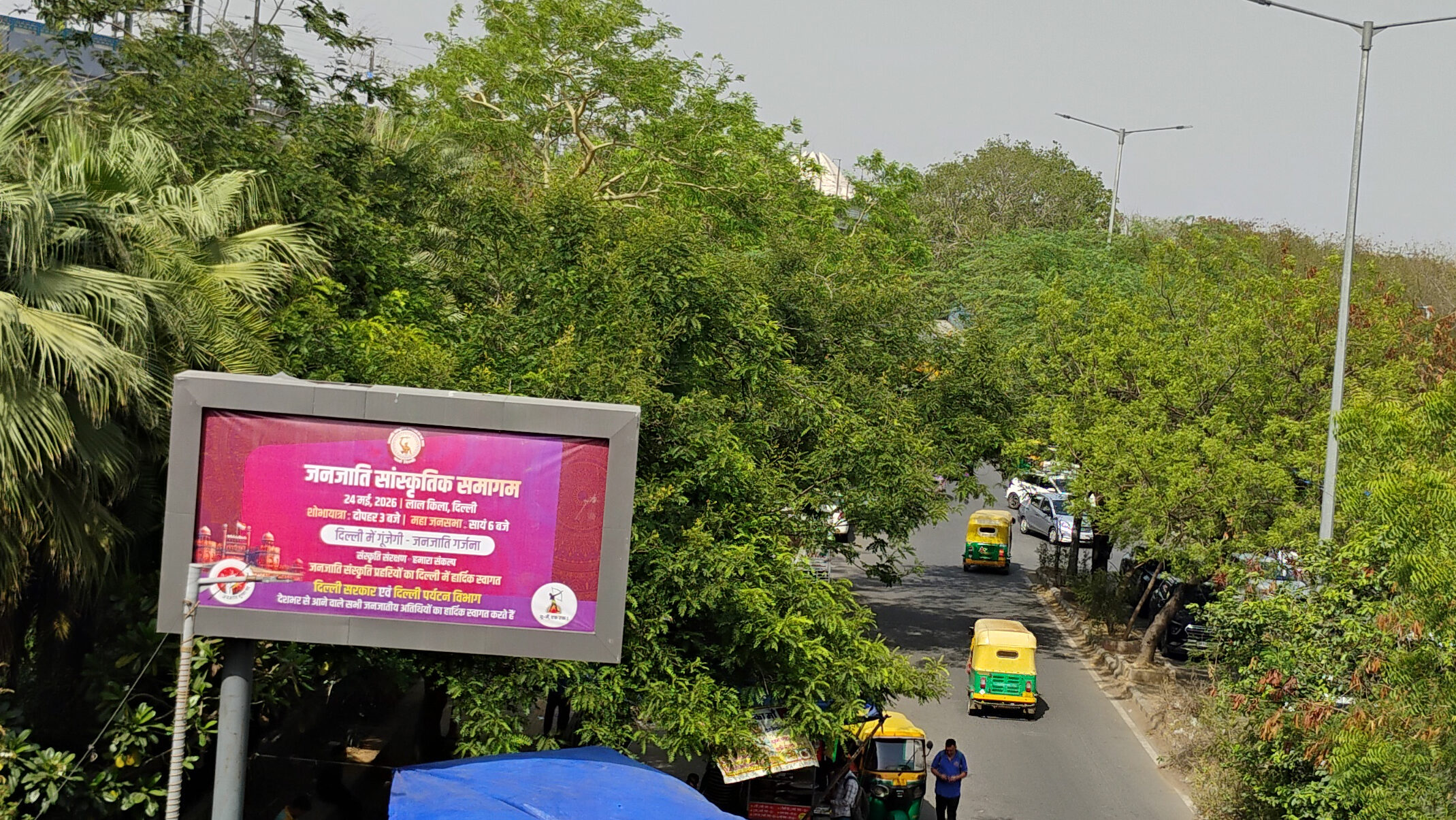
The so-called “Janjati Suraksha Manch” (Forum for Protection of the Tribes) will hold a “Janjati Sanskritik Samagam” (Cultural Gathering of the Tribes) in New Delhi on 24 May. The organizers are Hindutva fundamentalists associated with the Rashtriya Swayamsevak Sangh (RSS) – an organization wedded to the idea of Hindu Rashtra – and its progeny, the Vanvasi Kalyan Ashram. The RSS’s political arm, the BJP, is in power at the Centre and in most of the north Indian states, which means the success of the event is a given. But what was the need for such a fundamentalist Hindu organization to hold a cultural gathering of Adivasis? This is a question that is bound to evoke curiosity, because Hindu mythological texts use pejoratives like Anarya, Rakshas, Asur, Dasyu, Dasa and even Vanar (monkey) for Adivasis and even today such organizations avoid addressing them as Adivasis, or original inhabitants of this land, which they are.
Almost all of their festivals – whether it is Holi, Dusshera or Diwali – celebrate the killing of Adivasis. The gods whom they revere take incarnations to kill Hiranyakashyapu and non-Aryan Ravana. Their Durga slays Mahishasur and their Vishnu assumes the form of an enchanting woman to kill Bhasmasur. Why are such people holding a convention of Adivasis? What is their objective?
We all know that the Varna system, ordained by Manu, is the backbone of Hinduism. The Varna system recognizes Brahmins, Kshatriyas, Vaishyas and Shudras. Adivasis don’t figure in it. There would have been one of the two reasons why the Adivasis were kept out of the Varna system: either the Adivasis did not want to be a part of it or the Brahmin priests did not wish to include them. But after Independence, the Hindu organizations developed a sudden love for the Adivasis. Why? They do appoint Droupadi Murmu – an Adivasi deeply enamoured of the RSS ideology – as President of the country, but don’t invite her to the Pran Prathistha at Ayodhya’s Ram temple or to the inauguration of the new Parliament building. The same set of people are now organizing a cultural gathering of Adivasis. If this is not hypocrisy, what is?
There is no need to rack one’s brain to pin down their intention. Adivasis form 8 to 10 per cent of the country’s population and inhabit almost all parts of India – right from Ladakh in the northwest to Manipur and Mizoram in the northeast to the deep south. But it is in central India that they have a sizeable presence and are in a position to influence the outcome of the elections that are foundational to parliamentary democracy. That’s the reason, the Vanvasi Kalyan Ashram has been busy since Independence luring the Adivasis and confusing and misleading them. Earlier, one of their popular slogans was “Hum Ram ke vanshaj hain, tum sevak Hanuman” (We are the descendants of Rama, you are his servant Hanuman). Over the past one decade, the constant refrain has been that Sarna and Sanatan are one and the same thing. They even did not allow the use of the word “Adivasi” in the Constitution and picked the word “janjati” for them. That was because the word “Adivasi” would have automatically accorded them the status of the original inhabitants of this land. They chose the term Vanvasi (forest dwellers) for them instead.
The cultural gathering is only another attempt to fool the Adivasis for securing their votes. Over the past three decades or so, they have managed to get a foothold in the Adivasi-dominated areas. The BJP’s success in winning all the 14 parliamentary constituencies in Jharkhand – carved out of the erstwhile Bihar – played a key role in A.B. Vajpayee becoming prime minister. But in the last (2024) general elections, they could not get a majority on their own. One of the key reasons was the BJP’s below-par performance in constituencies reserved for the Scheduled Castes and the Scheduled Tribes. That’s why they have become hyperactive and have vigorously peddled the narrative of Sarna and Sanatan being the same religion in the Adivasi areas.
Predominantly-Adivasi areas have become important for them as their corporate friends want to grab the subterranean treasure trove of minerals in these areas. They could fell trees in the forests in Hasdeo, Chhattisgarh only after establishing their political domination over the state. Similarly, it was only after they formed their government in Odisha they could attempt to drive the Kandh Adivasis inhabiting the Niyamgiri hills out and grab the bauxite mines in the area. So, they are bound to continue with their campaign of subsuming the Adivasi identity into the wider Hindu fold.
Be that as it may, we need to dwell on the fundamental differences between the Adivasi and the non-Adivasi / Hindu philosophy. They are:
- All religions have a concept of god. For the non-Adivasis, god is “sagun”, that is it has a definite form, and is male. Their scriptures portray Rama, Krishna and Vishnu as men with supernatural powers. Even their “nirgun” (formless) god has human attributes. The Adivasis, on the other hand, are nature worshippers. They worship hills, forests and trees. There is no temple in any Adivasi village. Their gods reside in the hills and the jungles and that is where their places of worship are situated.
- The Hindu socio-economic order is based on the Varnashrama Dharma. The society is divided into four classes – Brahmins, Kshatriyas, Vaishayas and Shudras. The Brahmins are priests and teachers, the Kshatriyas are the rulers, the Vaishyas are traders and the Shudras are supposed to serve all of them. All manual work is the lot of the Shudras. The Hindus and their scholars justify this system by arguing that it was not supposed to be an inflexible, rigid system. But the fact is that those born to Dalit parents were treated as Dalits and untouchables forever. The Adivasis, however, do not have a Varna system.
- The Adivasi society is based on labour, while the non-Adivasis live off the toil of others. A rickshaw puller earns his living by the sweat of his brow. But if someone makes others pull rickshaws, then he is an exploiter. A large section of the non-Adivasis is also dependent on farming for their livelihood. But in their case, a farmer may not work the fields at all. The agricultural economy of north India is entirely dependent on daily-wage labourers. In Adivasi society, such an arrangement is unthinkable.
- The economy of the non-Adivasis is based on surplus production and surplus value. Surplus production and profit are essential for development. Human society began developing when some people began producing more than they needed for their survival. The rest chose different occupations and that paved the way for the progress of human civilization and culture. Now, some people could devote themselves to academics and research. Others became experts in fighting wars. Still others gained expertise in singing and dancing. Some turned into middlemen. The problem with this system was that it accorded the lowest value to manual labour and those involved in the activity were relegated to the lowest position in society. The farm and leather workers, the weavers – all of them were the Most Backward Castes and Dalits and economically the weakest. On the other hand, surplus production, surplus value and profit have no place in the Adivasi society. They produce only as much as suffices to meet their needs. They don’t worry about tomorrow. That is the reason they exploit nature without harming it. They work their fields themselves. And in case there is work like sowing that cannot be done alone, they help each other. But someone leasing out their entire land to sharecroppers was unimaginable among the Adivasis until recently. Since there is no surplus production everyone needs to toil. Adivasis do have their Pahaan, Pujar and Bhumka (those who lead their rituals), but none gets food without labour.
- Almost all non-Adivasis know how to make a profit, hence they are able to start their own businesses. Although, some are good at it, others are not. But even the wealthiest of Adivasis don’t do business. There are no moneylenders among the Adivasis.
- This difference in the socio-economic system also manifests itself in the field of the arts. The non-Adivasis have theatres, auditoriums, actors and audiences. But there is no such differentiation among the Adivasis. Both sad and happy occasions have their own artistic manifestations in which everyone takes part. When Adivasis dance on a moonlit night after harvest, every man and every woman is an artiste. If someone is an accomplished flute player, it is just seen as an additional quality. That doesn’t free him from working in his field.
Thus, the Adivasis and the RSS’s brahmanical society are poles apart. But despite that, if they are holding a “Janjati Sanskritik Samgam” it is just a stratagem for duping and misguiding the Adivasis. The Adivasi community should exercise caution.
(Translated from the original Hindi by Amrish Herdenia)