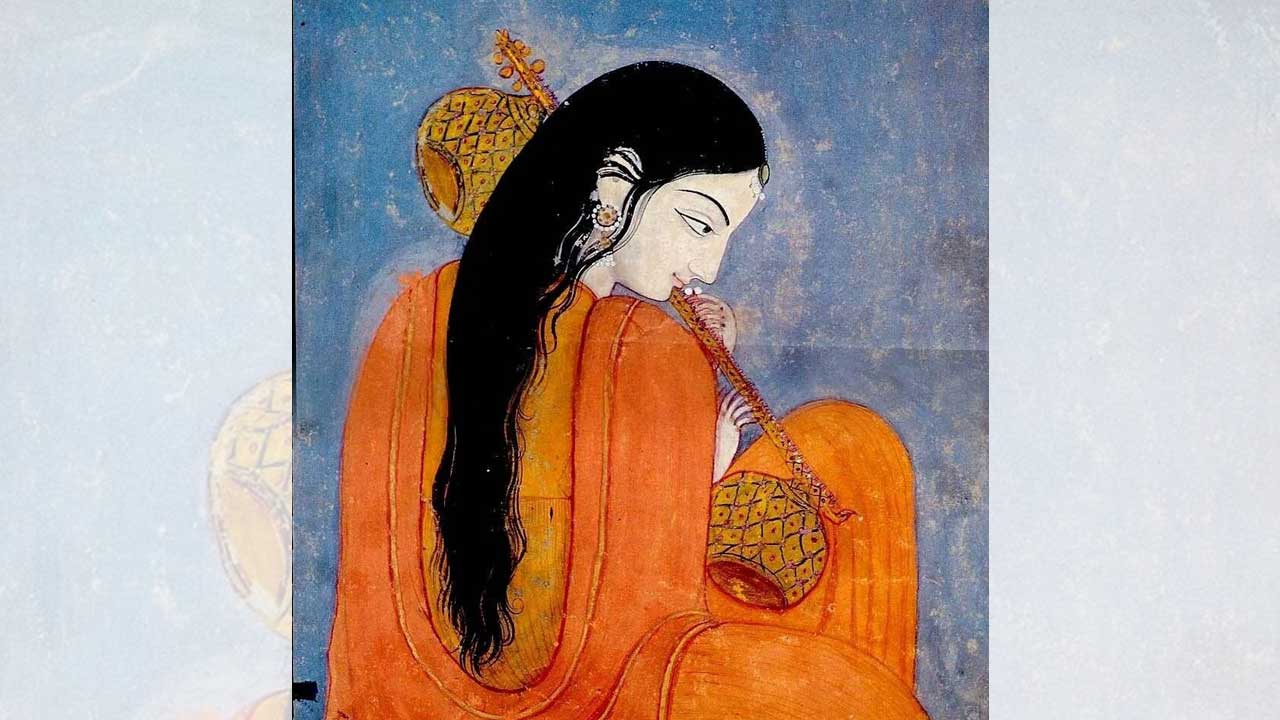
Was Raidas Meera’s guru? This is akin to asking whether Ramananda was Kabir and Raidas’ guru? Ramananda was a Sagunvadi (believer in god with attributes) – he believed in the Vedas, in the Varnashram system and in an afterlife. Kabir and Raidas were Nirgunvadi (believer in a god without attributes). Hence, Ramananda could not have been Kabir and Raidas’ guru. Similarly, Raidas cannot be accepted as Meera’s guru, as she worshipped a Sagun god and is popularly depicted with an idol of Krishna. But should this be the sole criterion to define Meera and Raidas’ relationship? There are some other aspects of Meera’s personality and life which need to be taken into account. So far, Meera, Raidas and their relationship has been seen only through the lens of Brahmin critics and their lopsided analyses. Dalit critics had not revisited Meera and Raidas until I attempted it.
Some time ago, I posted a short comment on Facebook just to find out what people think on the issue. I wrote: “If Meera was a devotee of Krishna, then Raidas could not have been her guru. And if Raidas was her guru, then Meera could not have been a Krishna devotee. She could not have been both a Krishna devotee and a Raidas mentee.” In response, Gopeshwar Singh wrote, “Raidas and Meera lived in different times, and chronology rules out the possibility of Meera being a disciple of Raidas. She was probably influenced by some sect or tradition owing its origin to Raidas and that might have led to the birth of the guru-disciple legend. Scholars who have studied Meera have thrown ample light on this. Meera’s verses include some addressed to ‘Yogi’. This has led to speculation that she came in contact with some yogi. Anyway, she was not Raidas’s disciple.” In another comment, he said, “Raidas and Kabir were contemporaries. During their time, Ibrahim Lodi ruled India. Meera, on the other hand, is considered a contemporary of Akbar. She was the tai [wife of father’s elder brother] of Maharana Pratap. Meera could not have been Raidas’ disciple. She is believed to be a devotee of Krishna with no association with any particular sect.”
Some historians say that Kabir and Raidas were not contemporaries of Ibrahim Lodi but of Bahlul Khan Lodi. Others insist the duo lived in the times of Sikandar Lodi. Bahlul Lodi ruled from 1450 CE to 1489 CE. He was succeeded by Sikandar Lodi, who ruled from 1489 CE to 1517 CE and was the king who came in touch with Kabir (and Raidas). His son, Ibrahim Lodi, ruled up to 1526 CE. According to Dalit scholars (Brahmin scholars locate the period of Dalit icons to suit their agenda), Raidas was born in Samvat 1455 (1398 CE) and died in Samvat 1575 (1518 AD)[1]. According to scholars (most of them Brahmins) who have studied Meera, she was born in Samvat 1555 (1498 CE) and died in Samvat 1603 (1546 CE)[2].
Going by this chronology, Meera could have made Raidas her guru. But before dwelling on it, let us look at what Brahmin critics have to say on the issue. Most of them agree with critic Pandit Parshuram Chaturvedi, who writes: “Who was Meera’s Guru? Raidas, Tulsidas, Vitthalnath and Jeev Goswami are cited as possible candidates. Among them, Raidas enjoys the highest acceptance among scholars. Meera mentions Raidas in many of her verses. One instance: ‘Guru miliya Raidas ji, deenhee gyan ki gutki’. But he was not Raidas, the saint-poet. He is another person from the Raidas sect. That’s because for geographical and chronological reasons, Meera could not have been the disciple of Raidas, who is supposed to have lived from around Samvat 1455 to Samvat 1575. Thus, at the time of Raidas’ death, Meera would have been 18 years of age at the most and Kunwar Bhojraj would have been alive. Hence, it was impossible for Meera to have accepted Sant Raidas as her guru at the chowk [intersection] in Kashi any time before Samvat 1575.”[3]
Pandit Parshuram Chaturvedi’s argument is childish and laughable. He does not explain what he means by the Raidas sect. Even if there was such a sect, it must have been a group formed by the chamar caste. But history does not tell us about any such sect of chamars, though in eastern Uttar Pradesh and Bihar, [the surname] ‘Raidas’ is considered a sub-caste of chamars. If Meera’s Guru was not Sant Raidas, but some other member of the Raidas sect, he must have been on a par with Sant Raidas in terms of popularity and scholarship. Obviously, Meera could not have picked an ordinary person as her guru. Pandit Chaturvedi is ready to accept that an ordinary member of Raidas sect was Meera’s guru, but not Raidas himself. Why this anti-Raidas complex?
Chaturvedi’s argument also goes against the history of the Hindus. Among Hindus, especially among the Brahmins and the Rajputs, eight was considered an appropriate age for marrying off girls. In British India, a legislation to raise the age to 14 was vehemently opposed by Brahmins from all over the country and among them was Pandit Madan Mohan Malaviya, a nationalist leader who was considered an ideal by the Hindus.[4] So, when an 8-year-old girl was not considered immature for marriage, how could an 18-year-old be considered incapable of accepting someone as her guru? But as the matter concerned Sant Raidas, Brahmin critics were unwilling to accept that a Rajput woman could have chosen a chamar as her guru.
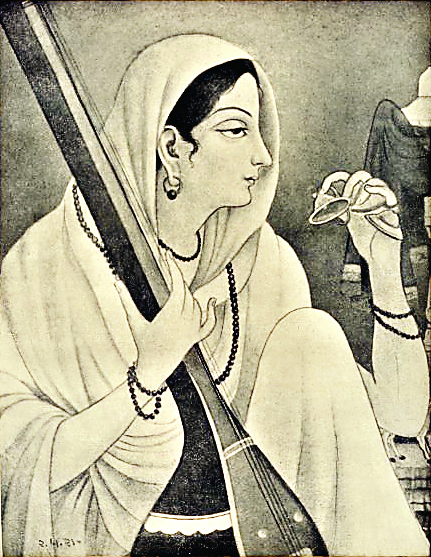
At another place Chaturvedi says that comparing Meera’s faith in Vairagya (asceticism) with that of Raidas would be improper but he also admits, “There is a great similarity between Raidas’ Param Vairagya [absolute asceticism] and Meerabai’s Sahaj Vairagya [spontaneous asceticism].”[5]
But here commonalities between the asceticism of Meera and Raidas are of little consequence. The issue is whether Raidas was Meera’s guru. Almost all Brahmin scholars refer to chronology to answer this question in the negative. As I have stated above, Raidas died in 1518 and at the time, Meera must have been 20 (Parshuram Chaturvedi himself says that Meera was born in 1498 and died in 1546). How can then a 20-year-old Meera coming in contact with Raidas be declared an impossibility.
Parshuram Chaturvedi has also listed Tulsidas, Vitthalnath and Jeev Goswami among the possible gurus of Meera. But most of the scholars, including Chaturvedi himself, on the basis of chronological calculations and the chain of events, have ruled out the possibility of any of the three being Meera’s guru.[6] But some are of the view that Meera had indeed met Jeev Goswami. So, could Jeev Goswami have been Meera’s guru? Let us try to test this conjecture on the touchstone of Brahmanical Hinduism. Now, Tulsidas, Vitthalnath and Jeev Goswami – all the three were Brahmins. It needs to be mentioned here that Brahmins respected only a handful of Nirgun saints – those whom they had thoroughly Brahmanized and Vaishnavized. Most of the Brahmin saints were anti-women. Can we imagine Brahmins, who were not ready to accept Nirgun saints, accepting a Rajput woman who believed in a Nirgun god? The following verses by Meera may have an answer.
Tero koyee nahin rokannhaar magan hoyee Meera chali.
Laaj, saram, kul ki marzada sir sai door kari.
Maan apmaan dou dhar patke niksi hoon gyan gali.
Sej sukhmana Meera sohe, subh hai aaj ghari.
Tum jao Rana ghar apne, mere toree naahin sari[7]
Lok laaj kul kann jagat ki, dayee bahay jas paani
Apne ghar ka parda karle, main abla baurani[8]
Could Tulsidas, Vitthalnath or Jeev Goswami, or for that matter any Brahmin guru have tolerated Meera’s no-holds-barred attack on the norms and rules of behaviour and conduct laid down by the Brahmins for women, especially, when proximity to women was considered a grave sin for the Brahmin priests? It is said that when Meera reached Jeev Goswami’s abode in Vrindavan to meet him, he sent her a message saying, “I don’t meet women”.[9] Would such an anti-women Brahmin have accepted Meera as his disciple? And would Meera have accepted an anti-women Jeev Goswami as her guru? It is said that Meera had given Jeev Swami a piece of her mind.[10]
Now, the question is whether Meera was Sagunvadi or Nirgunvadi. The answer to this question may not help us determine whether Raidas was Meera’s guru but it will rule out the possibility that a Brahmin could have been Meera’s guru. Shedding social inhibitions, Meera walked the streets with her face uncovered. She participated in satsangs (gatherings for spiritual discourse). All this was against the brahmanical religion. Meera saying “Apne ghar ka parda kar lo, main abla baurani” was a unilateral declaration of independence. Meera clarified that she had broken free from the restrictions imposed by the scriptures. This was in keeping with Nirgunvad, which entails freedom from the scriptures. Sagunvad, on the other hand, involves adhering to the holy texts. As a devotee of Krishna, Meera did worship a Sagun god. While that may give some degree of satisfaction to Brahmin critics, it needs to be understood that her devotion for Krishna was not inspired by the teachings of any Brahmin saint. The sadhus and saints whose company Meera enjoyed – “Sadha ding baith-baith, lok laaj khuyan”[11] – were surely not Brahmin Sagunvadi (Vaishnav) saints because the latter were tied to the scriptures and were anti-women. In the “Chaurasi Vaishnavjan Ki Varta” written by Goswami Gokulnath in 1640 CE, there are two stories on Meerabai. The first one is titled “Ath Meerabai Ke Purohit Tinki Varta”. It goes like this:
“One day, Ramdasji was reciting verses in front of Meerabai’s Shrithakurji [idol]. Shri Acharyaji Ramdasji was singing in praise of Mahaprabhu. Meerabai said, ‘Let the next verse be in the praise of Shrithakurji.’ Ramdasji replied, ‘O Meerabai, dari [slut], rand [a pejorative for widow]. In whose honour is this verse? Is this the head of your khasam [a pejorative for husband]? From today, I won’t see your face. Then, Ramdasji got up to leave along with his associates. Meerabai requested him to stay but Ramdasji did not stop. He did not turn back to look at Meerabai’s face. He loved his god. After that day, he never saw Meerabai’s face. He discarded her. He did not even walk past her village. Meerabai invited him many times but he did not come.”[12]
When Meera’s own Brahmin priest abused her with words like “dari” and “rand”, how would other Brahmins have treated her? After her Brahmin priest humiliated her, could Meera have invited him again? Probably not. Meera had discarded her family, her varna and social norms. Could she have made such a Brahmin her priest? Meera had merely asked Ramdas Purohit to sing verses in honour of Thakurji [Krishna], which angered him so much that he abused her. This also shows that Meera did not revere Vallabhachari Mahaprabhu of Ramdas Purohit.
Another story deserves a mention. It describes Krishnadas Adhikari insulting Meera. It goes like this:
“Krishnadas Shudra once went to Dwarika to visit Ranchhod ji’s temple. On the way back, he stopped at Meerabai’s village. Harivansh and many other Vaishnavians were already there. Some had been staying for eight days, some for ten and some for fifteen days. Their departure was awaited. But soon after his arrival, Krishnadas declared his intention of leaving. Then Meera offered him some muhars [gold coins] for Shrinath ji. Krishnadas did not accept them saying that she was not a devotee of Shri Acharyaji Mahaprabhu, so he could not even touch her gift. He got up and left.”[13]
Most of the scholars hold the view that these stories lack an authentic source. But they do reveal aspects of Meera. One, that she was a contemporary of Vallabhacharya[14] and two, that these Vaishnavs had little respect for her. According to Dr Shrikrishna Lal, “These excerpts show that despite the Vallabh sect trying to pressurize her by means fair and foul, she did not get initiated into it. She was liberal and magnanimous and unlike other devotees and saints, was not communal and narrow-minded. Purohit Ramdas rains abuses on her over a petty issue, but Meera sends presents for him. Krishnadas Adhikari believes that it is his religious duty to humiliate Meera but Meera treats him with due respect and even tries to send an offering for Shrinath ji[15] through him. This reflects the greatness of her character.”[16]
But Meera’s greatness is not to be attributed to her offering gifts to Brahmins. Her greatness is derived from her rebellion against the patriarchal social order. We need to understand the circumstances that turned Meera into a devotee – and a rebel. At the time, on the Indian subcontinent, and particularly in its northern regions, Brahmanism and feudalism together had fashioned a set of patriarchal norms for Brahmin and Rajput women that were extremely stifling and tortuous. The varna system crafted by the Brahmins divided society into varnas, with every varna’s duties clearly defined. Women were not a separate varna. They were treated as Shudras and were pushed into a constricted space, hemmed in by bans and curbs. The system enslaved women. Worshipping their husbands and serving them was their religion. Husbands were their gods, whom they had to obey. Women were objects, not human beings. As part of this feudal order, women were burnt alive on the pyre of their husbands. This custom was called Sati.
Meera came from the Mewar royal family of Rajasthan. Mahapandit Rahul Sankrityayan has given a poignant description of the life of women in the royal palaces of Rajasthan in his book “Rajasthani Ranivas”. In the introduction to the book he writes, “The kind of life they lead will soon fade into history. It is necessary to document it so that the descendants of the Asuryapashya and lovers of history may know about it.”[17]
“Asuryapashya” meant women who never saw the sun and lived in perpetual darkness. Rahul Sankrityayan has depicted the life of a Rajput woman called Gauri, based on events from 1910 to 1952. If this was the condition of the women in the 20th century, could it have been far worse in the 15th century when Meerabai lived? Rahul Sankrityayan writes:
“For women, it wasn’t good fortune to be born into Kshatriya, ruling families. In fact, they were singularly unfortunate. The purdah [veil and curtain] system was so strong that they could not even peep out from the antahpur [the inner part of palaces or mansions where women lived]. They had to spend their entire life confined to that quarter and courtyard. If the mother-in-law was a bit liberal, she allowed them to play hide-and-seek and other such games. If not, till the death of the mother-in-law, they lived like prisoners.
“On the death of their husbands, the Thakur women were locked up in a cubbyhole for six months. They not only had to eat and drink but also relieve themselves and bathe in the same room. With a thick curtain hanging at the door, there was no way they could see the sun. Locked up in a small, dark room, it would be a surprise if they did not contract TB. After six months, a few lucky widows would manage to return to their parents’ home.
“Although they hardly needed it, the queens and the Thakurayans were taught enough to enable them to write letters. Tulsidas’ Ramayan, Gangalehri, Gopal-Sahastranam etc were also available in antahpur.
“The fortresses of Thakurs had their own temples, where the women confined to antahpur could perform puja and view the idol. Due to the strict purdah norms, Brahmin women used to be the priests of these temples.
“How small and appalling the rooms in the quarters of the queens used to be can still be seen in the forts of Agra and Gwalior. There was no way fresh air or sunlight could enter them. The makers knew that the rooms were not being built for a free person but for a lifelong prisoner. So they made sure that any attempt to escape to freedom had little chance of success. The Thakurs and the kings had many wives and the ones who commanded greater respect because of their husbands or their sons, held sway. All the others spent their lives inside the claustrophobic rooms. The purdah system was so strict that even a 90-year-old great grandmother’s shadow could not fall outside the purdah (curtain). Once, when a finger of a queen sleeping in a chariot happened to slip outside the curtain, her husband cut it off with a sword.”[18]
But for the opium of religious devotion, these women would have lost their minds. But they did fall ill and often succumbed to TB. Can we say with any degree of certainty that Meera was not one of the victims of this torturous order? But, apparently, she did not accept it as her fate. Her parental home must not have been very different from her in-laws’ place. She was somehow putting up with whatever was thrown at her. But after her husband’s death, things turned worse. Her poetry tells us that attempts were made to kill her by administering poison and by snakebite. It is entirely possible that Meera refused to accept what was ordained for her as a widow by her in-laws. In one of her verses she says:
Saas lade meri nand khijawe, Rana rahaya risay
Pehron bhi raakhyo chauki bitharyo tala diyo jaday
Nahin sukh bhave tharo deslado rangrudo
Thare desa mein Rana sadh naahi chhai, log basein sab kudo
Gahna gathon Rana ham sab tyaga, tyagyo kar ro chudo
Kajal teeki ham sab tyaga, tyagyo chai baandhan judo
Meera ke prabhu Girdhar Nagar, var paayo chhai pooro[19]
This verse tells us what all Meera had to give up after her husband’s death. She says that those inhabiting Rana’s country are not good people. Meera was a born rebel and she revolted against the patriarchal customs that trampled upon the freedom of women. She was the first woman from a royal family to have raised her voice against patriarchy, varna system and Brahmanism. She chose freedom over the golden cage of the royal palace. Meera’s defiance was nothing short of a revolution. Only someone who has been enslaved or imprisoned can experience the elation that freedom brings. Nobody else can. After Meera walked out of the royal palace, she could breathe free, she could see the blue sky and she could dance at will. She summarizes her feelings thus:
Pag baandh ghoongharayaan naachyaan ree.
Log kahein Meera baabaree, saasoo kahyaan kulanaasee ree.
Lokalaaj kul kaan jagat kee, daee bahae jas paanee.
Apne ghar ka parda karale, main abala bauraanee.[20]
Brahmin critics have described this quest for freedom as asceticism. They have written that Meera became an ascetic, left her “medta” (place of birth) and went on a pilgrimage. Their accounts of her “pilgrimage” mention only travel to Vrindavan, where she began living.[21] They never say that she visited Kashi because that would have meant conceding the possibility of her meeting Raidas. But the fact is that when Meera visited Kashi, the Brahmins boycotted her for being a “destroyer of religion”. It was there that she met Raidas and possibly Kabir, though Kabir does not find mention in her works. But Meera did have a satsang with Raidas, which introduced her to the Nirgun ideology – according to which god has no name and can be addressed by any name – Ram, Krishna, Madhav, Hari, Allah, Rab, Maula etc. He has no form or colour either. He does not belong to any clan, gotra, varna or caste. He was never born and he will never die. He does not cause the birth or death of anyone. Nirgunvad does not believe in the other world or rebirth. It has no faith in the Varna system and in texts like Vedas, Purnanas or Quran. It is opposed to temples and idol worship and considers them hypocritical. It is egalitarian and stands for the dignity of every man and woman. Needless to say, Meera was deeply influenced by Nirgun philosophy and accepted Sant Raidas as her guru, as is apparent from the following verse:
Sataguru miliya saansa bhaagya, sain bataee saanchee.
Na ghar tera na ghar mera, gaavai meera daasee.[22]
Guru Raidas mile mohin poore, dhur se kalam bhidee.
Satguru sain gaee jab jaake, jot mein jot ralee.
Guru gyaan rangoo tan kapada, mann mudra pherungee ho.
Prem preet soon hari gun gaoon, charanan lipt rahoongee ho.
Satguru oshad aisee deenheen, room room bhai chaina.
Satguru miliya soonj pichaanee aisa brahm main paati.[23]
Guru miliya Raidas jee, deenhee gyaan kee gutakee.
Khojan phiro bhed va ghar ko, koee na karat bakhaanee.
Raidaas sant mile mohin sataguru, deenh sukh sahadaanee.[24]
In these verses “Satguru”, “Raidas Sant” and “Satguru Raidas” – all these three names have been used. This puts paid to the speculation that “Satguru” refers to some other person. The verses clearly say that the knowledge imparted by Satguru Raidas gave peace and happiness to Meera. But Meera, having met Raidas in the evening of the latter’s life, could not get the opportunity of participating in more satsangs with him. But even one Satsang impacted her profoundly and she switched from Sagunvad to Nirgunvad. This change, this impact, is visible in her verses.
Saahab paaya aadi anaadee, naatar bhav mein jaatee.[25]
Raam hamaare ham hain raam ke, haree bin kachhu na suhaave.
Mero toh ek raam naam doosara na koee.
Doosara na koee saadho sakal lok joee.[26]
Seel santosh dharoon, ghat bheetar, samata pakad rahoongee ho.
jaako naam niranjan kahie, taako dhyaan dharoongee.[27]
Paavan paanee donon hee jaayenge, atal rahe avinaasee.[28]
Mainne raam ratan dhan paayau.
Vasatu amolak dee mere sataguru, kari kirapa apanaayau.
Janam janam kee poonji paee, jag mein sab khovaayau.[29]
Lagee mohi raam khumaaree ho.
Sataguru bhed bataiya, kholee bharam kivaaree ho.
Sab ghat deesai aatma, sabaheen soon nyaaree ho.
Deepak joun gyaan ka, chadhoon agam ataaree ho.
Meera daasee raam kee, imarit balihaaree ho.[30]
In these verses, Meera – a devotee of Krishna – seems to have turned into a Rama devotee: “She has only one Rama. My god is eternal. I am treading the path of piety, contentment and equality. I now pray to a god who is unblemished, immortal and indestructible. I have got the precious treasure of Rama, which is my Satguru’s invaluable gift to me. Whatever I had received till now pales in comparison with this wealth. Now, I am under the spell of Rama. Satguru has shared all the secrets with me. All my misconceptions and illusions have dissipated. Now, I can see the almighty in every heart. Meera has now become the slave of Rama.”
Meera’s Sagunvad
We also need to discuss Meera’s Sagun poetry. According to Vidyaniwas Mishra, “Like the Vaishnav poets of Gujarat, Meera can be slotted as a poetess solely of neither Nirgun Bhakti, nor of the Sagun Bhakti stream. She is both. But as she leant towards a tangible god and his actions, she is normally considered a part of the Sagun Bhakti stream. In fact, in the Bhakti poetry, Meera and to some extent Sur (in a few of his verses) are like bridges that bring the notions of the invisible (formless) and the visible gods together. They are like the horizon where the two ideas meet.[31]
But here, I am not concerned with Sur, whose poetry sought to promote Nirgun over Sagun. I would confine myself to the Sagun Bhakti poetry of Meera. As I have noted above, quoting from Rahul Sankrityayan’s “Rajasthani Ranivas”, bhakti (devotion) was the sole anchor that kept the women living in the mansions of the royals and the Thakurs afloat. Starting from their childhood, it was drilled into their minds that treating husband as god and accepting unquestioningly the dictates of the scriptures was their duty. Meera also spent her childhood performing pujas and being devoted to god.[32] The Krishna Bhakti sect that Vallabhacharya had established was at its zenith in the Rajasthan of that era. The palaces of all rulers and landlords had Krishna temples, managed by Brahmin priests who were mandated with turning the women into ardent devotees of Krishna. That’s why, when the poetess in Meera awoke, she only wrote Bhakti poetry. Hence, description of the enchanting beauty of Lord Krishna, his playfulness and a complete devotion to him marked the initial poetic expressions of Meera. No compilation of her poetry is available. Her poems were popular among the Bhil Adivasis and the lower castes and were put to paper by others who heard them sung.[33] Hence, it is difficult to say whether the compilers avoided alterations in her poetry in keeping with their outlook and taste. What needs a mention here is that in medieval India, both male and female poets wrote only Bhakti poetry. Even in the modern era, Bhartendu Harishchandra’s poems are replete with “Jai-Jai Ram” and “Jai-Jai Krishna”.[34] The only reason was that they all came from upper castes and class and did not face any socio-economic problems. They had no social concerns. They could have written only Bhakti poetry. Even the poetesses, despite being caught up in the web of patriarchal values and being forced to curb their desires and wishes, wrote only about Bhakti. Hemmed in, as they were, by walls of patriarchy, they could not gather the courage to pull them down. They were well aware of the risks that rebellious expressions entailed. They could preserve their life and honour only by confining themselves to devotional writings. For example, just have a look at the ‘Stree Kavyadhara’ compiled and edited painstakingly by Jagdishwar Chaturvedi and Sudha Singh. It covers the poetesses from the 16th to the 20th centuries.[35] Going through the book, it did not surprise me that the poetesses wrote nothing except poems hailing and worshipping Rama and Krishna. Due to lack of space and the fear of digression, I am not quoting those poems here. But they need to be referred to in the context of Meera as she was not just another woman. She was a rebel. Once she became aware of women’s dignity and independence, she did not remain silent. She revolted against patriarchy, abandoned the comfort of the palaces and joined the ordinary women.
Who was Meera’s Girdhar Nagar?
I have so far stuck to facts as far as analyzing the personality and the writings of Meera go. Her real evaluation is still awaited. That is because the entire body of scholars who critiqued Meera’s personality and her writings, did not try to understand Meera against the backdrop of the mortal world.
They linked Meera’s love and her longing for her lover only to the supernatural realm of Bhakti and mysticism – in other words to an imaginary world. Some said that Meera was an adherent of the Nath sect. Others linked her to Sufism. These critics could discern the truth. But they ignored it, for they lacked the courage to take on the patriarchal customs. Parshuram Chaturvedi is right when he writes that she lost her husband but they could not see the pain of a widow in her works. He writes, “As soon as she lost her husband, she broke free from all worldly relations. She discarded everything else and devoted herself solely to her deity.”[36] Vishwanath Tripathi also supports this view.[37] Is this the correct interpretation of what actuated Meera? No, this is wrong. To understand Meera, let us revisit one of her verses. She says.
Lokalaaj kul kaan jagat kee, daee bahaay jas paanee.
Apae ghar ka parda kar le, main abala bauraanee.[38]
In the context of this verse, I wish to make it clear that Meera shedding social inhibitions was not about quitting royal life and embracing a spartan existence; it was about a widow being drawn to a man, loving him, and wanting to marry him. Meera wrote, “You call women ‘abla’ [helpless] but I, one of them, have gone crazy. I have demolished the tradition that dictates that a widow cannot love. I have thrown the social norms to the winds. I have broken free from the tradition that says that a widow cannot fall in love. I am in love. And now, you better save your widows because in the coming times, patriarchal norms will disappear.” Meera was screaming out a dare to keep houses under purdah as she knew that umpteen widows were imprisoned within the four walls of these homes and were forced to lead a very painful life. They did not have the right to remarry.
Another verse indicating that Meera’s love was worldly goes like this:
Main Girdhar ke ghar jaoon
Girdhar mhaaro saancho preetam, dekhat roop lubhaoon.
Rain pade tab hee uthi jaoon, bhor pade uthi aaoon.
Rain dina jaake sang kheloon, jyoon tyoon vaahi lubhaoon.
Jo pahiraavai soee pahiroon, jo de soee khaoon.
Meree usakee preet puraanee, un bin pal na rahoon.
Jahan baithaave titahee baithoon, beche to bik jaoon.
Meera ke prabhu Girdhar nagar, baar-baar bali jaoon.[39]
The critics have interpreted this verse as a conversation between the god and his devotee. They see it as the highest form of love – where the devotee becomes one with their god. One critic writes, “This is the climax of devotion when the devotee turns delirious, driven either by boundless happiness or the pain of separation.”[40]
But the fact is that these critics have fallen prey to brahmanical traditions. The problem with them is that once they encounter a tradition associated with Brahmanism, their critical faculties shut down. There is probably not a single Dwij critic who has tried to interpret this verse in worldly terms. In this verse, Meera unambiguously addresses her lover and asserts that she will come to his place. That lover is not Vallabhacharya’s Krishna – an incarnation of Vishnu. But he is a handsome man of flesh and blood, whom she loves. She was so enamoured of her that she wanted to spend the night at his home and return at dawn. Can anyone return in the morning after spending the night at god’s abode? And where is this god’s abode? The critics never thought of engaging with this issue. She has fun with him day and night, she tries to seduce her. Can this be possible with the idol of a god? Meera wants to surrender to her lover. She says she won’t complain to him about anything. She will wear whatever he provides her. She will eat whatever he gives her. She won’t complain. Now, where is the idol of a god that provides its devotees clothes and food? What we have seen is that the idol does not even eat what is offered to it. Meera says that her love is not newfound; it has been there for ages. In some verses, she refers to it as love from an earlier birth.[41] References to love transcending births and rebirths are common. They are just idiomatic expressions to underline the permanence of love and are not to be taken literally. But what should be noted is that Meera says that her affection has lasted so long that she can’t live without her lover for a moment. This is a sentiment only the real lovers – who were in love like Heer and Ranjha and Manjnun and Laila – can identify with. In this kind of love, each word of the lover is an order to be complied with. Meera was ready to settle wherever her Girdhar would ask her to – “Jahn baithave, titahin baithoon”. To bring Meera out of her reverie, she must have been cautioned by others that her lover may betray her. “He may sell her into prostitution.” There must have been incidents of men entrapping a woman and selling her to a brothel. But Meera was even ready for that. “Beche to bik jaon” (If I am sold, I will get sold). Hers was true love.
The critics were wrong when they interpreted “Girdhar Nagar” as another name for Krishna. Someone being named Ramswaroop does not make him Rama, and a Bajrangi is not Hanuman. Similarly, a person named Girdhar Nagar does not automatically become Krishna. The critics interpreted “Girdhar” as a name of Krishna but they ignored the surname “Nagar”. Nagars are an old Brahmin community inhabiting Gujarat and Rajasthan. According to acclaimed author Ramanlal Vasantlal Desai, “Bappa Rawal, the mightiest king of Mewar, was a Nagar.”[42] Now the Gurjars also use Nagar as their surname. But Girdhar Nagar, Meera’s love, was a Brahmin Yogi and Meera was not only ready to become a jogan (female ascetic) but had become one. Just see this verse.
Tere khaatir jogan hongee, karavat loongee kaasee.
Meera ke prabhu Girdhar Nagar, charan kanval kee daasee.[43]
Meera’s words should not be seen as euphemisms for the supernatural but as worldly expressions.
Heree mha to darad deevaana, mhaara darad na jaanya koy.
Ghaayal ree gat ghaayal jaanya, hivado agan sanjoy.
Jauhar kee gat jauhar jaanya, kya jaanya jin khoy.
Darad kee maarayaan dar-dar dolyaan, vaid milya na koy.[44]
It is not the devotee Meera speaking in this verse. It is the widow Meera sharing her pain – the pain of a woman who was widowed at a young age of 18-20 and could never become a mother. Meera was in pain – a pain that no one else could understand – “Mhara darad na janya koy”. Who experiences pain? One who is hurt. A very moving description of “jauhar” also forms a part of her poetry. In kingdoms of yore, on the death of the king, not only the queens but also the maids, who had their own husbands and children, had to die by jumping into the pyre. This was called jauhar. For the women, it was a horrific and ghastly custom. Only a woman being forced to perform jauhar could experience its horror. Similarly, the pain of the widow Meera could only be understood by a woman who knew what being a widow meant.
Here is Meera’s another verse:
Jogi mat ja, mat ja, mat ja, paai paroon main teree cheree ho.
Prem bhagati ko paidon hee nyaaree, hamakoon gail chala ja.
Agar chandan kee chita rachaoon, apane haath jala ja.
Jal bal bhaee bhasm kee dheri, apane ang jala ja.
Meera kahe prabhu Girdhar Nagar, jot mein jot mila ja.[45]
Meera is pleading with her lover jogi. He is not interested in marrying Meera and is going away, leaving her behind. Holding his feet, Meera is begging her not to go. She tells the jogi, “The path of love-devotion is unique. If you do want to go, take me along.” And then, she says something that is deeply moving, “If I build a pyre of sandalwood for myself, you set it afire. And after it is reduced to ashes, rub some of it on your body. And I will feel your love.” It is akin to “Kaaga sab tan khaiyo, chuni-chuni khiyo maans; duee naina mat khaiyo, jaame piya milan kee aa” (O crow, eat my entire body. Eat the flesh of every part. But don’t eat my two eyes, for they are full of longing for meeting my beloved). “I have been burnt to ashes, come and embrace me. O my master Girdhar, join my flame with yours.” Meera is imploring her lover to become one with her. I want to ask the scholars who have critiqued the works of Meera whether anyone would say such things to an idol. In this context, the following verse also merits attention:
Jogiya jee aajyo jee in des.
Nainan dekhoon naath nai, dhaee karoo aades.
Aaya saavan bhaadava bhareeya jal thal taal.
Raaval kun vilmai raakho, virahanee hai behaal.
Bichharaya bauho din bhaya bisarayo palak na jai.
Ek beree deh pheree, nagar hamaare aai.
Va moorati mhaare mann base chhin bhari rahyaui na jai.
Meera re koee naaheen doojau, darasan deejai aai.[46]
Meera says, “The months of Sawan-Bhado are here. Rainwater has flooded paths and filled ponds. I am longing for you. I cannot forget you for a moment. Jogiji, come to my land. I will see you to my heart’s content. I will run around fulfilling your orders. O my king, my love, whose enticement is holding you back? I have been away from you for a long time. Come to my town once. Your image is always in my heart. I can’t forget it even for a moment. You are Meera’s lover. No one else is. Why don’t you come and give me a chance to see you?”
Another beautiful verse expressing similar feelings goes like this:
Bheeje mhaaro daanvan cheer, saavaniyo loom rahyo re.
Aap to jaay bidesaan chhaaye, jivado dharat na dheer.
Likh likh patiyaan sandesa bhejoon, ghar aavai mhaaro peev.
Dagar buhaaroon, panth nihaaroon, rom rom ankhiyaan raatee.
Raati divas mohi kal na padat hai, heeyo phatat meree chhaatee[47]
It is the month of Sawan and Meera is addressing her lover. “Sawan is in full swing and my clothes are wet. But you are somewhere else. How can I remain patient? I sent so many messages to you to come. But you didn’t. The whole night my eyes wait for you. But when you don’t come, my heart aches.”
There are many such verses in which a widowed Meera expresses her spiritual and physical love for her beloved. In his “Hindi Sahitya Ka Vaigyanik Itihas” (Part 1), Dr Ganpati Chandra Gupta writes that Meera considered Krishna her husband. Her courtship is that of a wife, not of a lover. On the basis of this observation, Dr Dharamvir concludes, “Meera’s entire poetry is the poetry of a Hindu window. Blinded by their presumption that Meera was a devotee of Krishna, the scholars did not bother to try and understand that Meera’s pain is the pain of a Hindu widow who wants to remarry. The old social order and the Hindi critics just handed over a stone idol of Krishna to Meera and ensured that the demand for allowing Hindu widows to remarry was not even considered for the next 350 years.”[48]
Dr Dharamvir is only talking about widow remarriage. He did not touch the aspect of falling in love. One doesn’t know whether he approved of widows falling in love. But the question is why a widow cannot love another man. Widow remarriage is a separate issue. The Hindu community has accepted it. But a widow falling in love with a man is yet to get social acceptance. Meerabai’s revolt was for both the right to fall in love and the right to remarry.
References
[1] See my book ‘Sant Raidas: Ek Vishleshan’, Second edition, 2000, Bodhisattva Prakashan, Rampur, p 31
[2] Parshuram Chaturvedi (ed), ‘Meerabai ki Padavali’, Hindi Sahitya Sammelan, Prayag, 20th edition, 1998, pp 18-25
[3] Prof Deshraj Singh Bhati, ‘Meerabai Aur Unki Padavali’, Ashok Prakashan, Nai Sadak, Delhi, latest edition 2000, pp 31-32
[4] See, October 1929 issue of Hindi monthly ‘Chaand’ (Volume 7, Part 2, No 6), pp 737-747
[5] Parshuram Chaturvedi (ed), ‘Meerabai ki Padavali’, op cit, pp 74-75
[6] Ibid, introduction
[7] Shrikrishna Pal, ‘Meerabai’, Hindi Sahitya Sammelan, Prayag, 1970, p 14
[8] Parshuram Chaturvedi (ed), ‘Meerabai ki Padavali’, op cit, verse 38, p 111
[9] Ibid, p 24
[10] Ibid
[11] Ibid, verse 18, p 104
[12] Dr Kamlashankar Tripathi (ed), ‘Goswami Gokulnath krit Chaurasi Vaishnavan Ki Varta’, Uttar Pradesh Hindi Sansthan, Lucknow, 2008 edition, p 114
[13] Ibid. See last Varta ‘Ath Krishnadas Adhikari tinki varta’, p 188
[14] Parshuram Chaturvedi (ed), ‘Meerabai ki Padavali’, op cit, p 24
[15] A name for Krishna. It is said that when Vallabhacharya installed himself as Goswami in Gokul, Krishna manifested himself as Shrinathji at Govardhan Hills. And this then, this name gained currency (‘Bharatiya Dharma Shakhayein Aur Unka Itihaas’, Vachaspati Gairola, Chaukhambha, Varanasi, 1988, p 410)
[16] Shrikrishna Pal, ‘Meerabai’, Hindi Sahitya Sammelan, Prayag, 1970, p 23
[17] Rahul Sankrityayan, ‘Rajasthani Ranivas’, 1952, Kitab Mahal, Allahabad (Introduction)
[18] Ibid, p 5, 12, 30 and 32
[19] Parshuram Chaturvedi (ed), ‘Meerabai ki Padavali’, op cit, verse 32, 42, pp 109, 112
[20] Ibid, verse 36, 38, p 111
[21] Ibid, p 24
[22] Deshraj Singh Bhati, ‘Meerabai Aur Unki Padavali’, op cit , p 46
[23] Parshuram Chaturvedi (ed), ‘Meerabai ki Padavali’, op cit, verse 16, p 243
[24] Ibid, verse 118, p 135, Pad (Annexure) Verse 11,13, pp 242-243
[25] Ibid, verse 17, p 244
[26] Ibid, Pad (Annexure) 2, p 239
[27] Ibid, verse 12, p 242
[28] Ibid, verse 24, p 106
[29] Ibid, verse 13, p 243
[30] Ibid, verse 14, p 243
[31] Vishwanath Tripathi, ‘Meera Ka Kavya’, Vani Prakashan, New Delhi, 2006, p 2 of Vidyaniwas Mishra’s introduction
[32] Parshuram Chaturvedi (ed), ‘Meerabai ki Padavali’, op cit, pp 228-229
[33] Vishwanath Tripathi, ‘Meera Ka Kavya’, op cit, p 80
[34] Jayati jayati Shri Radhika charan jugal kari nem.
Jaakee chhata prakash ten paavat paamar prem.
Namo namo shri hari-charan shiv-man-mandir roop.
vaas hamaare ur karo jaani paryau bhaav-koop.
Ramachandra Shrivastava ‘Chandra’, Dr Kailash Chandra Agrawal (ed), ‘Bhartendu Kavyamrit’, Ravi Prakashan, Agra, p 53
[35] See Jagdishwar Chaturvedi, Sudha Singh (ed), ‘Stree-Kavyadhara’, Anamika Publishers, New Delhi
[36] Parshuram Chaturvedi (ed), op cit, p 21
[37] Vishwanath Tripathi, ‘Meera Ka Kavya’, op cit , pp 62-63
[38] Parshuram Chaturvedi, ‘Meeraabai Ki Padavali’, verse 38, p 111
[39] Ibid, verse 20, pp 104-105
[40] Shrikrishna Lal, ‘Meerabai’, op cit, pp 146-147
[41] Parshuram Chaturvedi (ed), ‘Meerabai Ki Padavali’, op cit, verse 51, p 115
[42] See Wikipedia, Nagar Brahmin Samaj
[43] Parshuram Chaturvedi (ed), ‘Meerabai Ki Padavali’, op cit, verse 49, p 114
[44] Ibid, verse 70, p 120-121
[45] Ibid, verse 46, p 114
[46] Ibid, verse 116, p 134
[47] Ibid, verse 122-123, pp 136-137
[48] Dr Dharamvir, ‘Seemantanee Upadesh’, Vani Prakashan, New Delhi, 2006, p 18-19
(Translated from the original Hindi by Amrish Herdenia)
Forward Press also publishes books on Bahujan issues. Forward Press Books sheds light on the widespread problems as well as the finer aspects of Bahujan (Dalit, OBC, Adivasi, Nomadic, Pasmanda) society, culture, literature and politics. Contact us for a list of FP Books’ titles and to order. Mobile: +917827427311, Email: info@forwardmagazine.in