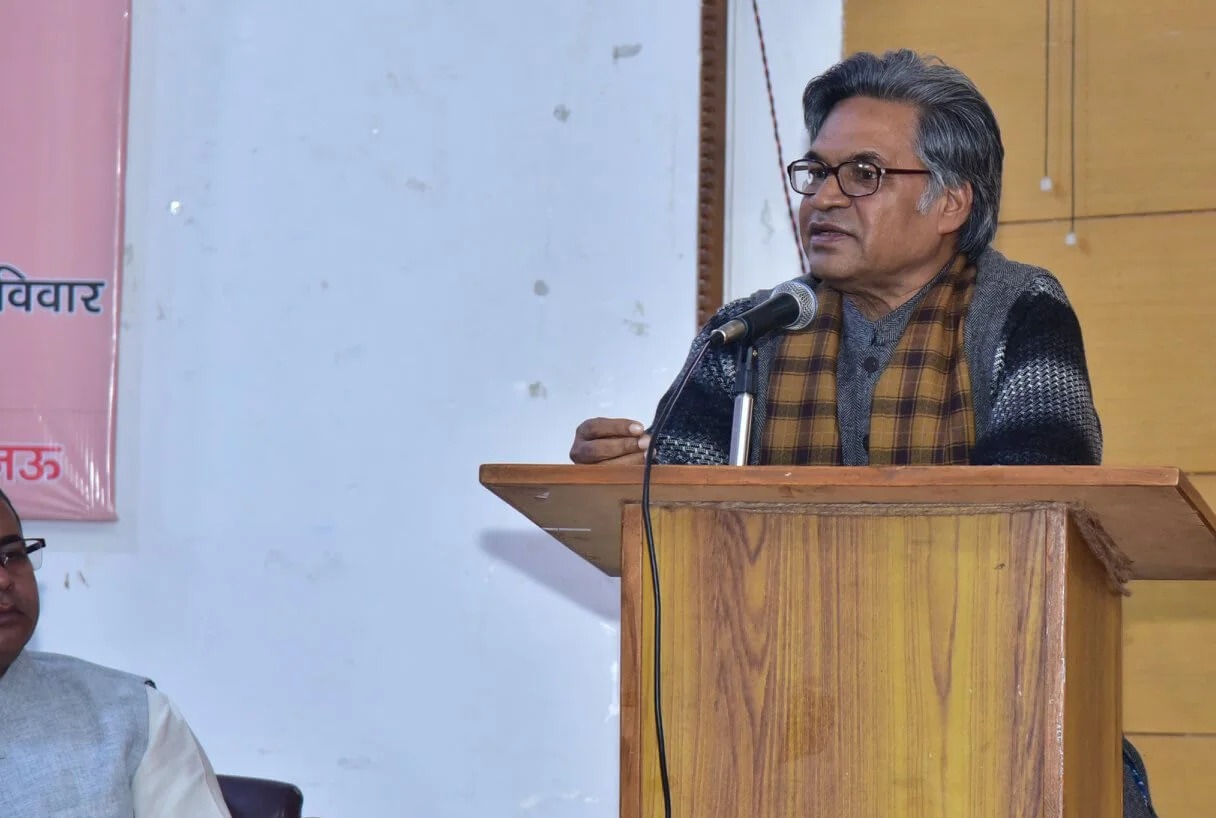
Few Indian public intellectuals have challenged the ideological foundations of Indian history and society as relentlessly as Kancha Ilaiah Shepherd. For more than three decades, beginning with his landmark book Why I Am Not a Hindu, followed by influential works such as Buffalo Nationalism and Post-Hindu India, Prof Ilaiah has consistently argued that India’s productive castes, the Shudras, Dalits and Adivasis, have been written out of the nation’s intellectual and civilizational story.
His latest work, Harappa: God’s City of Civilisation, extends that lifelong intellectual project into an unexpected genre: the illustrated civilizational fable.
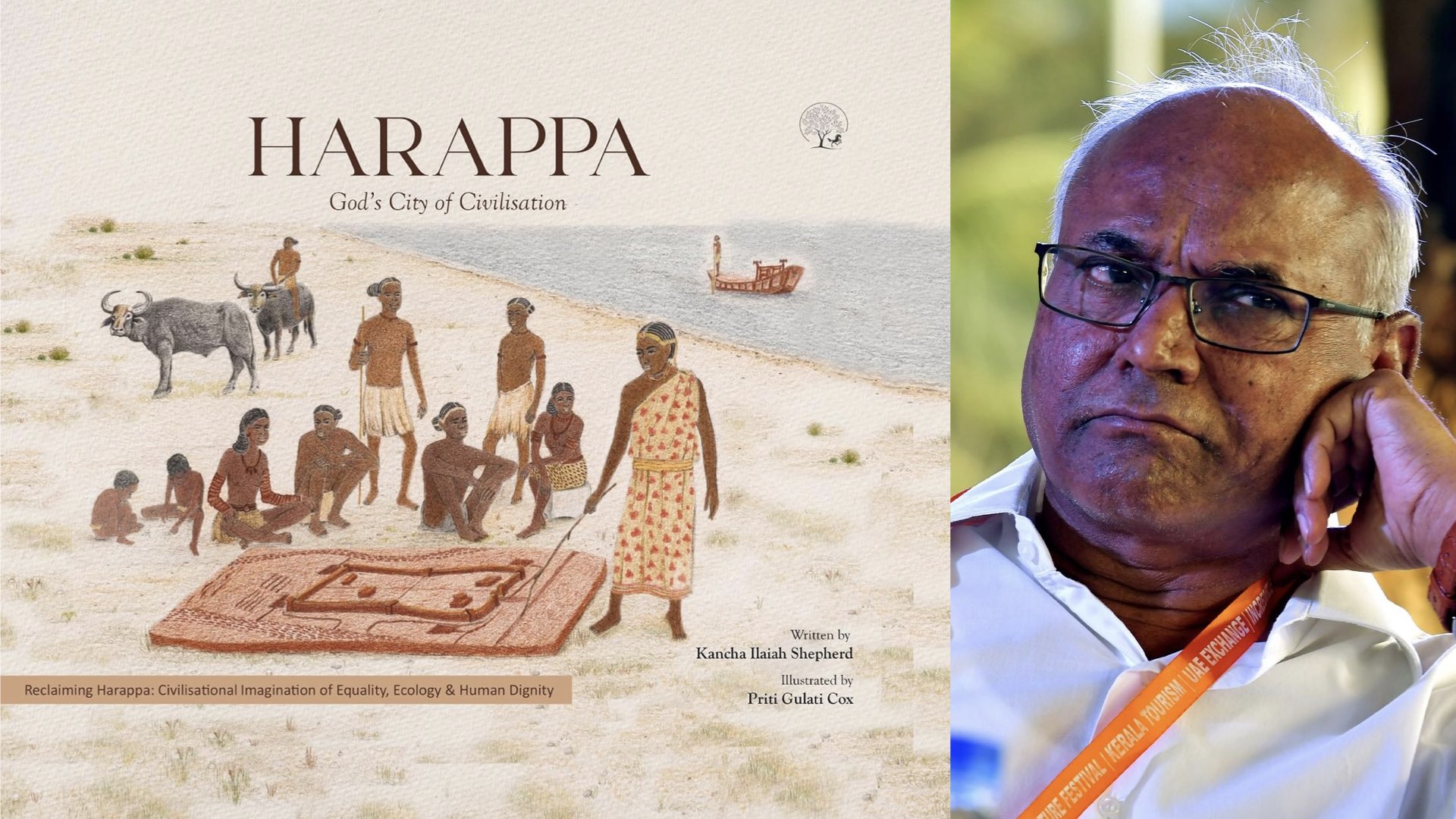
Prof Shepherd has never been content merely to challenge dominant narratives, he overturns them. Harappa: God’s City of Civilisation is an audacious act of literary and intellectual imagination that reclaims the Indus Valley Civilization from the long shadow of Vedic mythology. Instead of gods obsessed with sacrifice, ritual and heavenly rewards, Prof Ilaiah presents a civilization built by ordinary people whose greatness lay in domesticating animals, cultivating crops, discovering new technologies, building towns and creating the material foundations of human progress.
At first glance, the book appears to be a children’s story. It begins with Kathamma, a village storyteller and healer, who narrates the forgotten history of Harappa to an eager group of children living near the ruins of the ancient civilization. But this deceptively simple narrative device allows Prof Ilaiah to accomplish something far more ambitious. Through myth, memory and storytelling, he reconstructs an alternative civilizational imagination. One in which shepherds, hunters, women, artisans, farmers and animal keepers become the true makers of history.
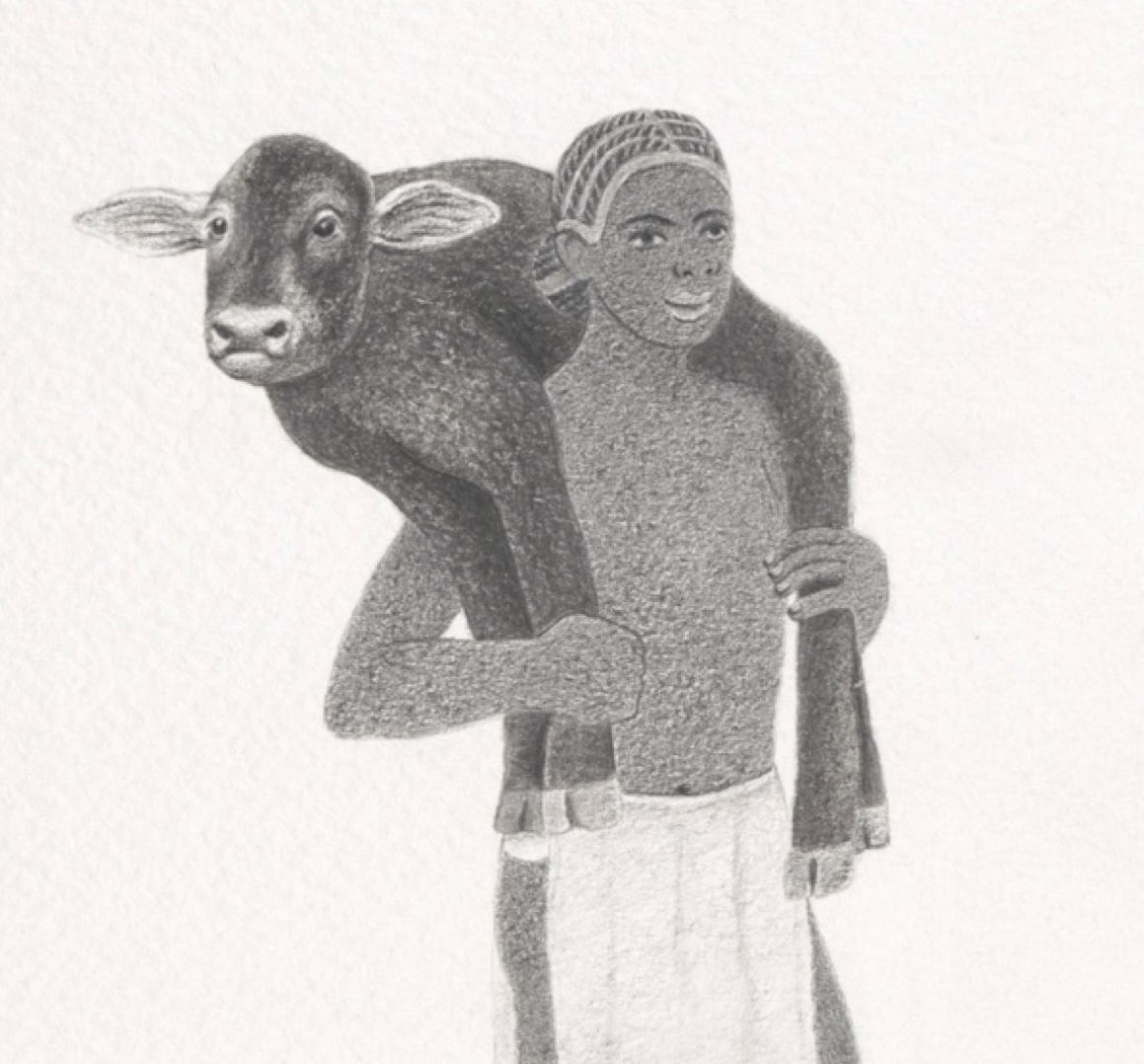
The hero of the story is not a warrior king or divine sage but a young pastoralist named Harappa. His greatest achievements are neither military conquest nor spiritual revelation. Instead, he observes animals patiently, learns from nature, experiments fearlessly and transforms the economy of his community through the domestication of sheep, goats, buffaloes and chickens.
When the young Harappa goes to graze his sheep in the forest, he encounters a baby buffalo and manages to bring it home, turning around the village economy. As he comes of age, he meets a curious girl, Maisamma, who is experimenting with ways to conserve water and even succeeds – an important step in the development of a civilization. The so-called lowly works of leathercrafting and tanning in present India are given their due place in Prof Ilaiah’s imagination. Be it the stepping into the Bronze Age or the shunning of human-worship, the reader is given sound reasoning, while still being left to inquire further. That is the power of a well-written book.
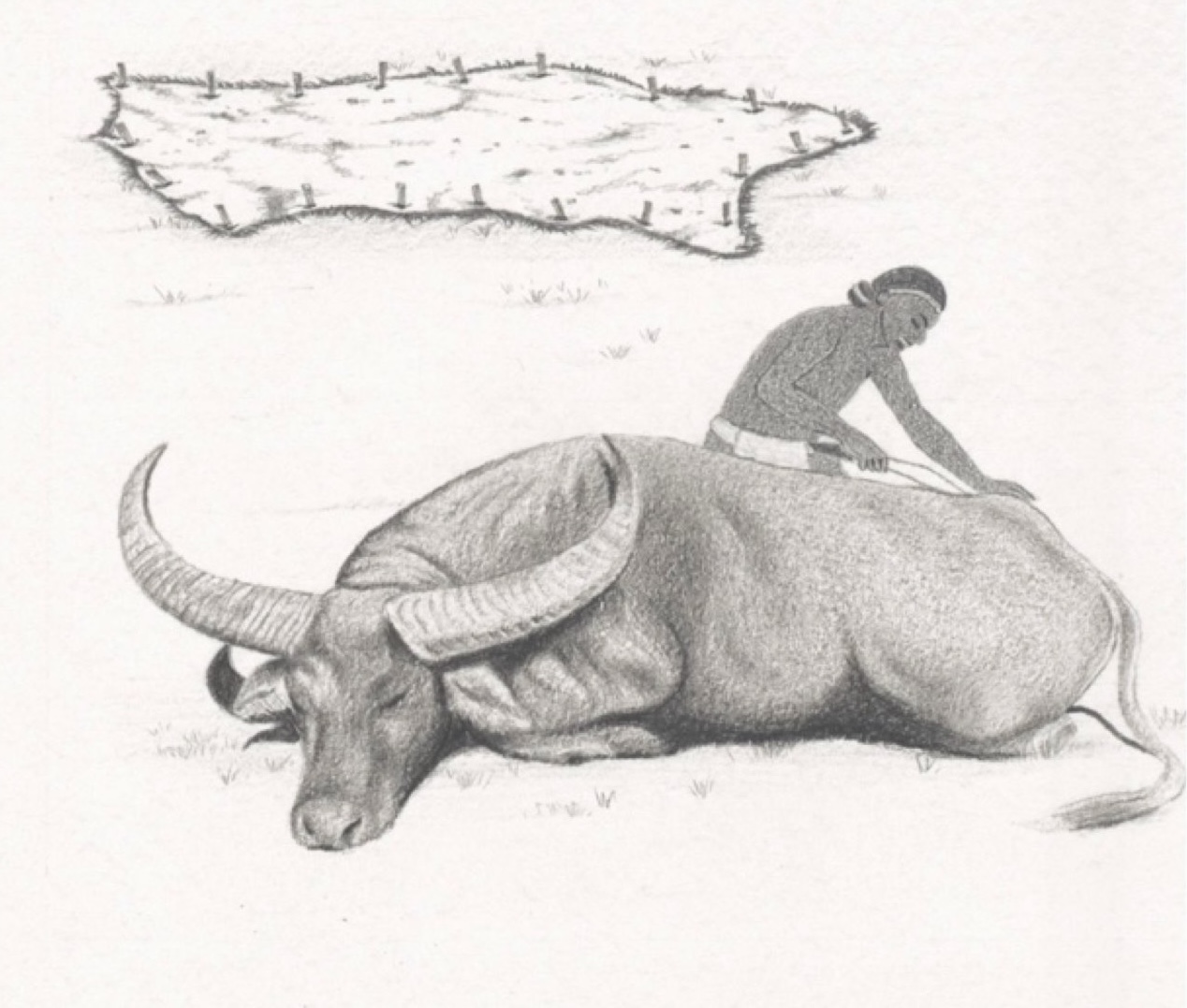
In Harappa’s world, civilization emerges not from revelation but from labour; not from rituals performed by priests but from discoveries made by ordinary working people. This inversion is the book’s most radical intervention. For generations, school textbooks and popular culture have celebrated kings, sages and conquerors while treating productive labour as socially invisible. Prof Ilaiah reverses that hierarchy. Herding animals becomes scientific inquiry. Milking goats becomes technological innovation. Women discover fermentation, develop methods of preserving milk, and experiment with cooking and pottery. Each practical breakthrough adds another brick to the edifice of civilization. The cumulative effect is to redefine what counts as history itself.
Readers familiar with Prof Ilaiah’s earlier writings will immediately recognize recurring themes. In Buffalo Nationalism, he famously elevated the buffalo over the sacred cow as a symbol of India’s productive classes. Here too, the buffalo occupies centre stage. Rather than being reduced to a ritual symbol, it becomes the foundation of an entire economic and social revolution. Domestication of the buffalo is portrayed not merely as an agricultural breakthrough but as one of humanity’s defining achievements. This celebration of labour, productivity and material life has always distinguished Prof Ilaiah’s scholarship from mainstream cultural nationalism.
Women occupy an equally transformative place in the narrative. Characters like Sindh and Maisamma are innovators rather than passive companions. They discover new food practices, experiment with milk products, manage water, and contribute essential technological knowledge to society. In doing so, Prof Ilaiah quietly dismantles patriarchal assumptions embedded within many traditional origin stories, replacing them with a vision of civilization built through collective creativity.
Some readers may question the historical liberties the book takes. Archaeologists understandably distinguish carefully between evidence and speculation. Prof Ilaiah, however, is not writing conventional history. He openly inhabits the territory of civilizational imagination. His Harappa is a literary reconstruction rather than an archaeological report. That distinction is crucial.
What makes this book remarkable is not simply its celebration of Harappan civilization, but its refusal to accept that only the powerful have the privilege of myth-making. Ilaiah deliberately fashions a counter-myth. Not because history is irrelevant, but because history itself has long been colonized by those who claimed exclusive ownership of India’s past. If dominant traditions have employed epics, Puranas and sacred narratives to legitimize social hierarchy, Prof Ilaiah responds by creating an equally compelling narrative rooted in the dignity of labour and collective human endeavour. Harappa, an ardent observer and a keen inquirer, does not instantly believe in or bow down to any mystical deity, but displays a rational temperament instead.
This strategy is likely to provoke strong reactions. Admirers will celebrate it as an overdue act of intellectual decolonization. Critics may dismiss it as ideological counter-history, marred by factual inaccuracies. Yet both responses miss the point. The book’s purpose is less to settle archaeological debates than to expand the imaginative possibilities through which India understands itself.
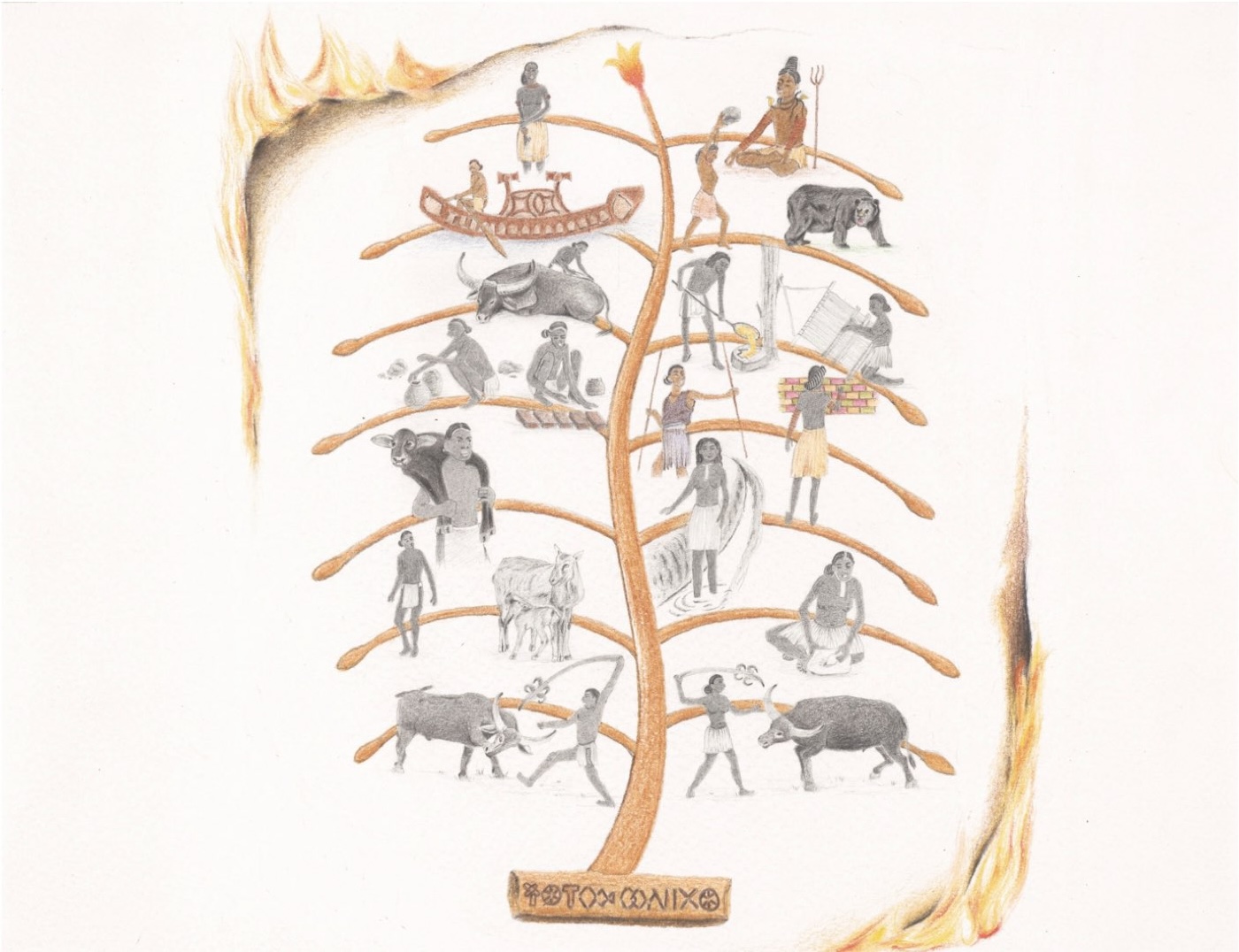
The illustrations by Priti Gulati Cox strengthen this vision spectacularly. Rendered with warmth and simplicity, they evoke a world where humans, animals and landscapes exist in intimate relationship. Rather than merely decorating the pages, the illustrations reinforce the text’s central philosophical message that civilization grows from cooperation with nature rather than domination over it.
The prose itself is accessible, almost oral in rhythm, reflecting the traditions of village storytelling. Songs, conversations and repeated motifs give the narrative the feel of an epic told around evening fires rather than inside university classrooms. This accessibility allows the book to function on multiple levels: as children’s literature, political allegory, social philosophy and intervention in contemporary debates about Indian identity.
Harappa: God’s City of Civilisation deserves to be read not as an archaeological textbook but as a bold intervention in India’s ongoing struggle over memory, identity and history. It invites praise, discomfort and fierce debate in equal measure, and that is precisely its achievement. It is a courageous declaration that the oppressed, too, have the right to imagine, narrate and reclaim their own civilizational inheritance.
Details of the Book
Title: Harappa: God’s City of Civilisation
Author: Kancha Ilaiah Shepherd
Illustrator: Priti Gulati Cox
Publisher: Unbound Script
Format: Hardcover
Book Length: 80 pages
Price: Rs 349 or $18