The Kurmis of the Adivasi-dominated Jharkhand, and West Bengal and Odisha are on the agitation path, with the protests in Jharkhand drawing the most attention. They are demanding their inclusion among the Scheduled Tribes (STs).
At present, the community is classified among Other Backward Classes (OBC) in all the three states and has been demanding ST status for some time. The Adivasi communities, however, don’t agree. They say that the Kurmis have nothing in common with them with respect to traditions, lifestyle and religious ideas, and thus their demand is untenable.
The Kurmis of the three states have forged a joint front called Adivasi Kurmi Sangathan for pressing their demand. According to Shailenda Mahto, a member of the front, the Kurmi caste was among the STs prior to 1950 but later, they were classified as OBC.
The agitation by the Kurmis has picked up pace since 14 September 2022, when the Union Cabinet gave its nod to grant ST status to Narikoravar and Kuruvikaran communities from Tamil Nadu, Binjhia from Chhattisgarh, Gond from Uttar Pradesh and Betta-Kuruba from Karnataka. It needs mention here that the Jharkhand and West Bengal governments had sent a proposal to the Centre in 2005 and 2007 respectively, urging the inclusion of Kurmis among the STs.
One reason for the intensification of this movement in Jharkhand is a series of decisions taken earlier this year by the Hemant Soren-led state government. For instance, at the beginning of the year, the local languages Bhojpuri, Magahi and Maithili were included in the syllabi for examinations for recruitment to government services. The Adivasis had opposed the move.
Then, the Soren government made fundamental changes to its domicile policy. Now, only those who have documents to prove that they owned landed property in the state in the year 1932 or earlier will be considered permanent residents.
While the Adivasis welcomed the move, it drew the ire of the non-Adivasis. That is because a number of non-Adivasis had settled in Jharkhand well after the cut-off year, when it was still part of Bihar, to work in the mining and other industries that came up in the area. A section of the Adivasis also opposed the move saying that only a few Adivasis have land documents dating back to 1932.
In some parts of Jharkhand, Kurmis are known as Kudmis. There is a substantial population of the Kurmis in neighbouring Bihar, of which Jharkhand was a part till the year 2000. In Bihar, Kurmis are considered a “forward community” politically, educationally and economically.
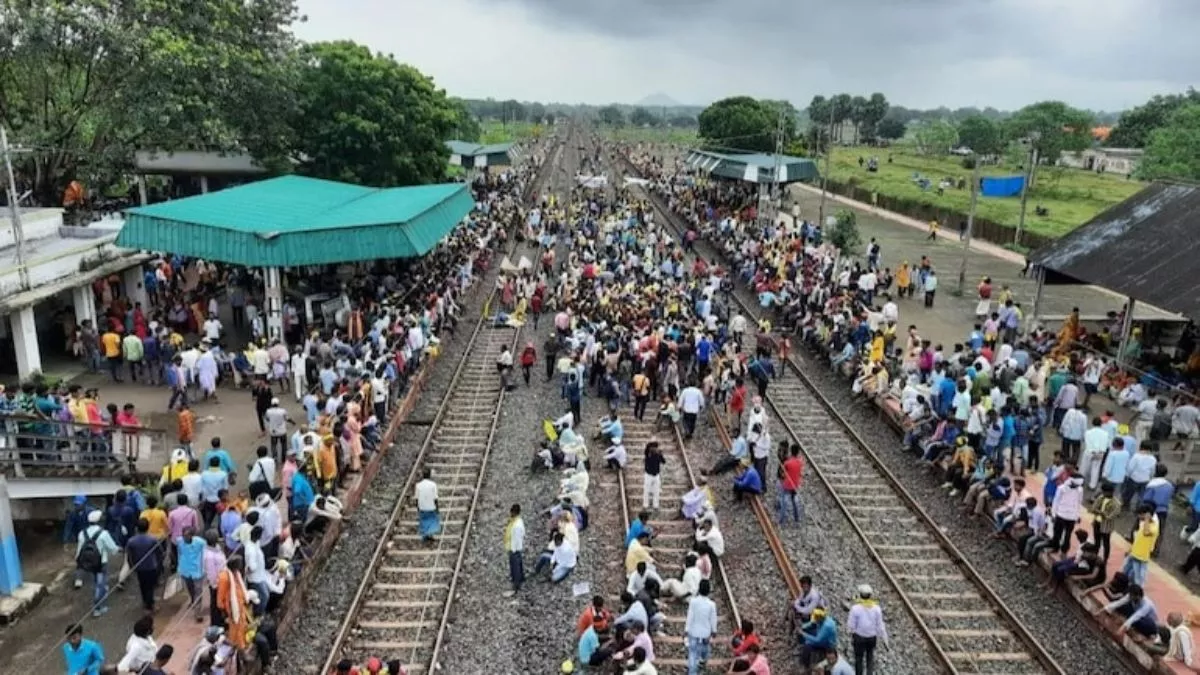
For five days, the Kurmis agitated vigorously in Jharkhand for ST status. Trains and road traffic were blocked at several places in the state. To counter them, representatives of the Adivasis held a day-long sit-in and fast at the Morabadi Maidan in Ranchi on 27 September 2022. Former Bharatiya Janata Party (BJP) MP Salkhan Murmu and Geeta Oraon, who was a minister in the former Raghubar Das-led BJP government, took part in the sit-in.
Speakers at the protest said that the Kurmis are Hindus and share no social, religious, economic, spiritual, intellectual or ideological bonds with the Adivasis. Their lifestyle, customs, traditions, religion and culture are very different from the Adivasis, and therefore, their demand for inclusion among STs is unconstitutional.
Be that as it may, the agitation by Kurmis has heated up the politics of Jharkhand. But it is difficult to say, given their small population, how successful their agitation will be.
(Translated from the original Hindi by Amrish Herdenia)
Forward Press also publishes books on Bahujan issues. Forward Press Books sheds light on the widespread problems as well as the finer aspects of Bahujan (Dalit, OBC, Adivasi, Nomadic, Pasmanda) society, culture, literature and politics. Contact us for a list of FP Books’ titles and to order. Mobile: +917827427311, Email: info@forwardmagazine.in)