Justice Surya Kant, the Chief Justice of the Supreme Court, compared a section of Indian society to cockroaches in open court. In his subsequent clarification, too, he literally repeated the same observation. He clarified that he was not referring to the unemployed, and that the media had misinterpreted his comment. But he confirmed that he was talking about those with bogus degrees who have managed to sneak into professions considered noble. He did not deny that he had compared humans with cockroaches.
In the past too, the Supreme Court has compared the oppressed sections of society and the victims of the socio-political-economic order with animals, or with people with disabilities. What one uses as reference points for comparing and contrasting, often reveals one’s mindset.
Indian society and institutions are yet to turn truly democratic. Courts are yet to truly become institutions birthed by a Constitution founded on equality. All kinds of biases inform the judgments pronounced by the judges. They make unwarranted comments, too. The judges seem to believe that they are the courts. Trying to understand why it is so will help one align oneself with the ideology and the objectives of democracy.
A team of researchers has done a study on similes used for oppressed and exploited castes, and communities by the Supreme Court from time to time. In his dissenting judgment delivered in 1963 in the case of T. Devadasan vs. The Union of India, Justice K. Subba Rao, said, “To make my point clear, take the illustration of a horse race. Two horses are set down to run a race – one is a first class race horse and the other an ordinary one.” In 1992, Justice B.P. Jeevan Reddy, in the case of Indra Sawhney Etc. Etc. vs. Union Of India And Others, Etc. Etc. wrote, “Crutches cannot be provided throughout one’s career.”
These kinds of comments are not in keeping with the dignity expected of the judges by the Constitution. The research says that using “crutches” as a metaphor is equating institutional social exclusion due to being born in a particular caste, class or community, with a physical disability. The judges who do this can’t comprehend the experiences and the struggles of neither the disabled people nor the oppressed classes.
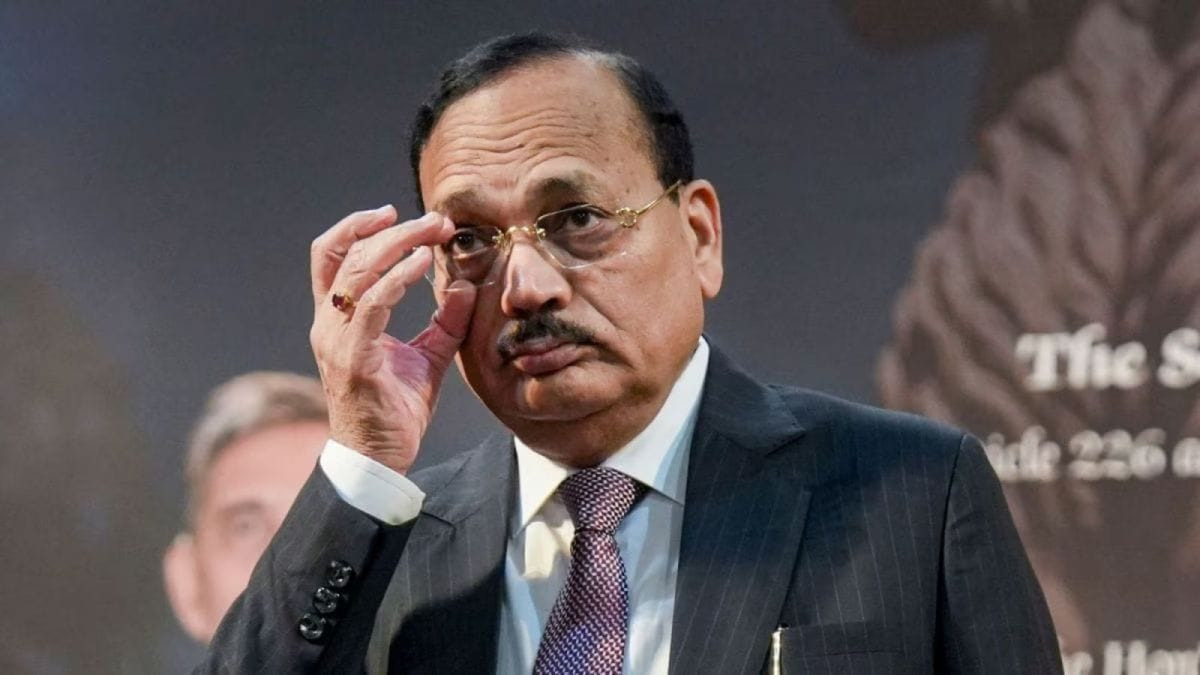
Some feel that the Supreme Court is steeped in an elitist culture. The process of appointment of judges to the Supreme Court has led to a situation where people of a particular kind are constantly perched at the top of the judicial system. Their powers extend to interpreting the Constitution – which is the product of the movement for freedom from slavery – from their own perspective. In the past, given the political climate, the judges were under a kind of pressure to interpret the Constitution in line with its underlying spirit of equality and secularism. But that is no longer so. Now, the constitutional provisions are interpreted by standing its core values on their head. Comparing humans with cockroaches is an example of this kind of attitude.
We need to understand clearly that the comments, orders and directives of the judges have a nexus with the prevailing political climate. The personal, political and social biases of the judges don’t cease to operate when they are seated on the dais. When the political climate is favourably inclined towards egalitarianism, even judges from privileged backgrounds think twice before going against it. But when the political atmosphere does not seem to be aiming at narrowing socio-economic disparities, judges from such backgrounds tend to become unrestrained.
The present Chief Justice of India (CJI) seems to have forgotten that the Constitution’s preamble says that “to promote … fraternity assuring the dignity of the individual” is one of the objectives of enacting and adopting the Constitution. The CJI differentiating between the unemployed and those holding fake degrees in his explanation is, per se, against the spirit of the Constitution. If India is teeming with such a large number of fake-degree holders that the CJI is forced to sit up and take notice, it is a matter of shame for the entire system. If the country has a huge army of unemployed, that, too, is equally shameful.
Secondly, when the CJI talks of bogus degree holders and unemployed youth entering the fields he has listed, it exposes his inability to comprehend the idea of democracy, its essence and the way it operates. RTI activists, social activists and those who devote themselves to the field of media are people who feel that it is their duty to work for protecting democracy and the Constitution. Those active on social media include people who feel hurt and concerned by persistent assaults on democracy. They are worried about the future. Their degrees are not issued by any institution. They issue their own degrees. They are inspired by the democratic consciousness and culture.
It can be said without an iota of hesitation that in terms of social background, the current CJI belongs to the establishment and, as such, has his limitations. Consequently, he could not develop the broad social outlook that promotes and strengthens the idea of democracy and the spirit of the Constitution. The comparison with cockroaches shows what kind of mindset persists.
Democracy is not about power. The real carriers of democratic ideas and culture are those who, instead of entering the corridors of power, try to ensure that those in power behave in a democratic manner and in keeping with the culture of the Constitution. If the CJI’s cockroach simile had not been criticized, the CJI might not have realized how he had gone against the concept of “dignity” enunciated in the Preamble to the Constitution.
Judges can put others in the dock for contempt of court. But those working for strengthening democracy have an open court that includes social media, media and society. They don’t try anyone for contempt, they do not use the language of penalties and punishments – for them, protecting the Constitution and democracy are of paramount importance. They criticize the system because the system treats them like cockroaches. The CJI comparing humans with cockroaches exposes a mindset that doesn’t believe in cleansing the system but that hates the yearning to survive in the decaying and rotting system.
(Translated from the original Hindi by Amrish Herdenia)
Forward Press also publishes books on Bahujan issues. Forward Press Books sheds light on the widespread problems as well as the finer aspects of Bahujan (Dalit, OBC, Adivasi, Nomadic, Pasmanda) society, culture, literature and politics. Contact us for a list of FP Books’ titles and to order. Mobile: +917827427311, Email: info@forwardmagazine.in