On 3 July 2026, Honey Trehan’s long-delayed film Satluj inspired by the life of human rights activist Jaswant Singh Khalra (played by Dilijit Dosanjh) finally became available to Indian audiences on OTT platform Zee5. However, within two days, the central government ordered a ban on the movie. It remained accessible outside India. The ban marked the latest chapter in a journey that had already included title changes, prolonged certification disputes and demands for extensive cuts. Long before audiences could debate its cinematic merits, Satluj had already become a political object.
Film censorship has rarely been only about obscenity, violence or morality. More often, it has reflected struggles over political authority, historical memory and institutional legitimacy. The films that generate the greatest anxiety are frequently not those that shock audiences through explicit imagery but those that re-open unresolved histories, challenge official narratives or question the moral authority of governments. Cinema occupies a unique position in public life because it shapes collective memory in ways that books, academic research and court judgments often cannot. A film can transform forgotten victims into public symbols and obscure legal cases into national conversations. Precisely because cinema possesses this capacity, States have long sought to regulate it. Independent India inherited much of the colonial censorship architecture established by the British. Although freedom of expression became constitutionally protected, cinema continued to occupy an exceptional legal position through prior certification requirements. The underlying justification remained remarkably consistent: films possess extraordinary emotional and social influence and therefore require regulation in the interests of public order, decency and national security.
Over time, however, the language of censorship has changed. Earlier controversies frequently revolved around sexuality or religion. Contemporary disputes increasingly concern history, State violence, caste, insurgency and institutional accountability. The central question is no longer simply what audiences should be allowed to watch but who possesses the authority to narrate the past. Streaming platforms initially appeared to offer an escape from this regulatory environment. Without theatrical certification requirements, many assumed that digital distribution would create new spaces for artistic freedom. That optimism has faded rapidly. Platforms now operate within expanding regulatory frameworks while commercial calculations and political pressures often encourage self-censorship.
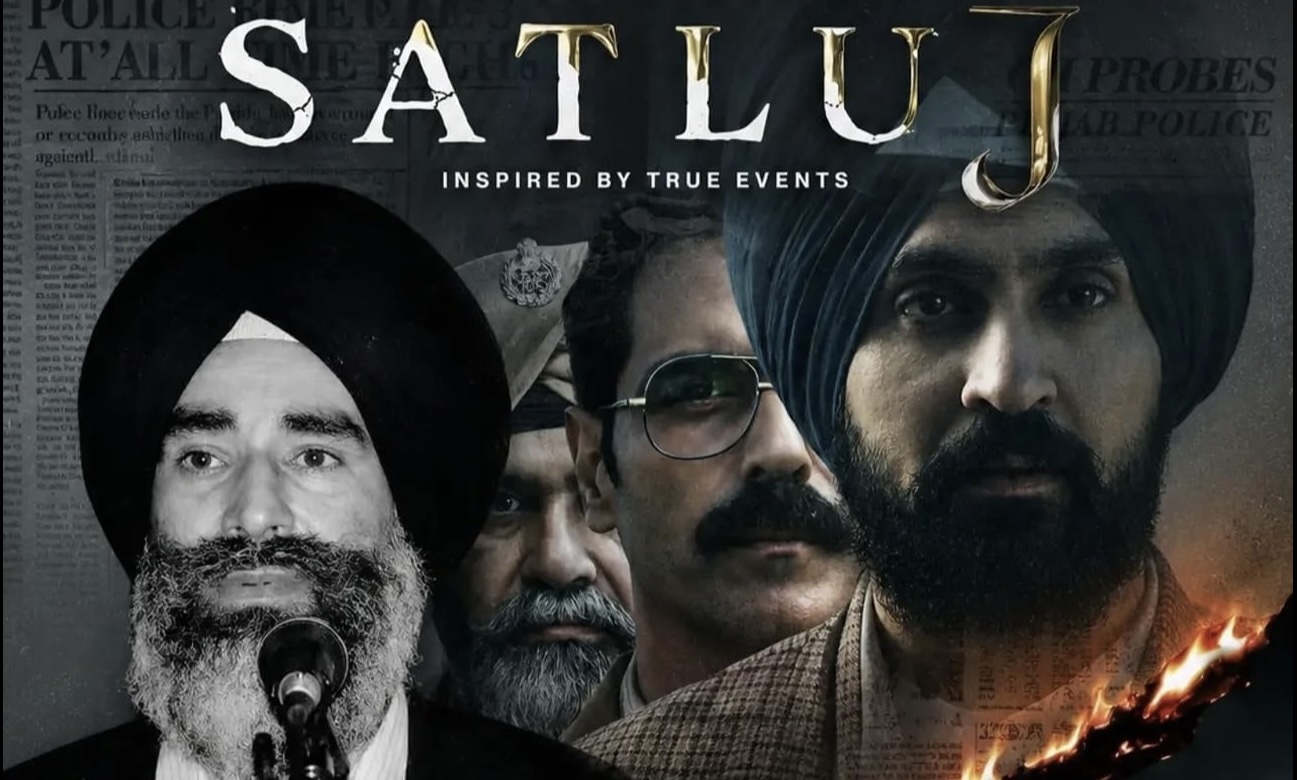
Censorship has not disappeared. It has simply changed form. It is within this landscape that Satluj acquires significance. Every conflict produces competing histories. Governments construct official narratives, commissions document events, journalists gather evidence and survivors preserve memory through testimony. Artists, meanwhile, transform fragments of these histories into literature, theatre and cinema. The Punjab insurgency of the 1980s and early 1990s remains one of independent India’s most contested historical chapters, remembered simultaneously as a period of terrorism, counter-insurgency, extraordinary State action, human rights violations and immense civilian suffering. It is into this unresolved historical terrain that Satluj enters. Inspired by the life of Jaswant Singh Khalra, the film shifts attention away from militancy itself and towards what happened after people went missing. Khalra’s investigations focused on municipal cremation records in the Amritsar region. By comparing official registers with police documentation, he alleged that numerous unidentified bodies had been secretly cremated without legal process and that many deaths had never been accounted for before families.
His work challenged official understandings of Punjab’s counter-insurgency operations and attracted national and international attention to allegations of enforced disappearances and extrajudicial killings. In September 1995, Khalra himself went missing from outside his home. Multiple investigations followed, eventually resulting in the conviction of several Punjab Police personnel for his abduction and murder. In 2011, the Supreme Court upheld life sentences for four police officers involved in the case. Yet one fact continues to resonate with extraordinary force: Jaswant Singh Khalra’s body was never recovered.
The political sensitivity surrounding Satluj became visible long before its release. Originally announced under the title Ghallughara – a term carrying profound historical significance within Sikh memory – the project underwent several transformations before appearing as Punjab ‘95 and eventually Satluj. Public reports suggested that certification authorities sought extensive alterations involving character names, references to institutions and historical details. The filmmakers resisted many of these changes, arguing that such interventions would fundamentally alter the film’s ethical core.
When Satluj finally began streaming on ZEE5, many assumed the controversy had ended. Instead, the film disappeared from the platform in India within two days of its release. Even more strikingly, within a week it was also removed from ZEE5’s international catalogue, making it unavailable to audiences outside India as well. This sequence of events demonstrated that digital distribution has not eliminated the political sensitivities surrounding cinema. Apart from formal bans, contemporary censorship increasingly operates through opaque institutional and platform-level decisions that shape what audiences are ultimately allowed to see.
The significance of Satluj lies not in whether every aspect of its interpretation is historically complete or entirely accurate. Cinema is not a judicial inquiry or an archival document. Films condense events, fictionalize characters and organize reality into narrative form. The more revealing question is why particular stories attract extraordinary institutional attention while others do not. What makes certain histories appear so threatening that they invite prolonged scrutiny, demands for alteration or restrictions on circulation? The answer also lies in memory. Satluj reopens unresolved questions about State power, accountability and democratic legitimacy during moments of national crisis. It asks whether democratic societies can confront periods in which institutions themselves become subjects of scrutiny. The resistance it encountered suggests that the politics of remembering can be every bit as contentious as the politics of governing.
The controversy surrounding Satluj also reveals how caste operates within Indian visual culture through selective visibilization of suffering. Mainstream Indian cinema has historically privileged narratives centred on dominant-caste experiences while marginalizing, sanitizing or altogether ignoring the histories of Dalits and other oppressed communities. Stories documenting caste violence, structural discrimination or State complicity rarely receive comparable institutional support, commercial investment or sustained circulation. Instead, the screen often (re)produces a selective national memory in which the experiences of marginalized communities remain peripheral or invisible. In this sense, the removal of Satluj is not simply about restricting a single film; it reflects a broader politics of representation in which certain histories are rendered difficult to narrate and even more difficult to sustain within the public sphere. By narrowing the range of stories that can circulate, cinema risks producing a monolithic understanding of the nation, one that privileges official narratives while excluding voices from its social margins. Dr Ambedkar insisted that “Cultivation of mind should be the ultimate aim of human existence …” (BAWS, Vol 2). Cinema, as one of the most influential cultural forms, contributes to that cultivation. When films documenting uncomfortable histories are marginalized or removed, public understanding itself becomes narrower.
The question is no longer simply whether films can be completely suppressed. Increasingly, it is who gets to shape their meaning. The controversy surrounding Satluj tells us much about the changing relationship between cinema, democracy and political authority. States have rarely feared violence in cinema itself. What frequently unsettles governments is the possibility that cinema might reorganize public memory or alter how citizens understand the legitimacy of institutions. The elaborate disclaimers preceding Satluj capture this paradox perfectly. Before asking audiences to confront difficult questions, the film first reassures the State that asking those questions should not be mistaken for hostility. Yet perhaps the most powerful moment arrives after the narrative ends. Across a black screen appears a statement attributed to Jaswant Singh Khalra: “I Challenge the Darkness.” Whatever one’s opinion of the film’s interpretation of Punjab’s history, the sentence resonates beyond the events it depicts. It speaks to the enduring role of art in confronting silence, official certainty and collective forgetting. Dr Ambedkar’s call to “Educate, Agitate, Organize”, reminds us that democracy depends upon informed citizens willing to question inherited narratives. Cinema cannot fulfil that democratic function if politically inconvenient histories are repeatedly erased from public view.
But debate is fundamentally different from suppression. Democracies strengthen themselves by encouraging citizens to engage with competing narratives rather than insulating official accounts from examination. The transition from theatres to streaming has not diminished these tensions; it has merely changed their form. Decisions about visibility are now distributed across governments, certification boards, streaming platforms and technology companies, each exercising different forms of influence over public access. Contemporary battles over cinema are increasingly fought not over obscenity or profanity but over memory, identity and legitimacy. The films that generate the greatest resistance are often those that refuse settled narratives and insist that the project of writing history remains unfinished. The most important question raised by Satluj is whether democratic societies possess the confidence to face uncomfortable stories without seeking to silence them. If cinema has an enduring political function, it is not to provide final answers. It is to illuminate the questions that power would often prefer to remain unasked.
Forward Press also publishes books on Bahujan issues. Forward Press Books sheds light on the widespread problems as well as the finer aspects of Bahujan (Dalit, OBC, Adivasi, Nomadic, Pasmanda) society, culture, literature and politics. Contact us for a list of FP Books’ titles and to order. Mobile: +917827427311, Email: info@forwardmagazine.in