Somnath Waghmare’s documentary Gail and Bharat is not simply a biographical account; it is a political and emotional archive of a life lived in commitment to social transformation. Through an Ambedkarite lens grounded in lived experience, Waghmare crafts a documentary that resists distance from the subject. It stays close, to people, to memory, and to the textures of everyday struggle. In a documentary landscape still largely shaped by “upper caste” sensibilities, he is among the rare independent filmmakers who consistently bring Bahujan histories and Bahujan heroes into the cinematic frame, not as subjects of curiosity or sympathy, but on their own terms.
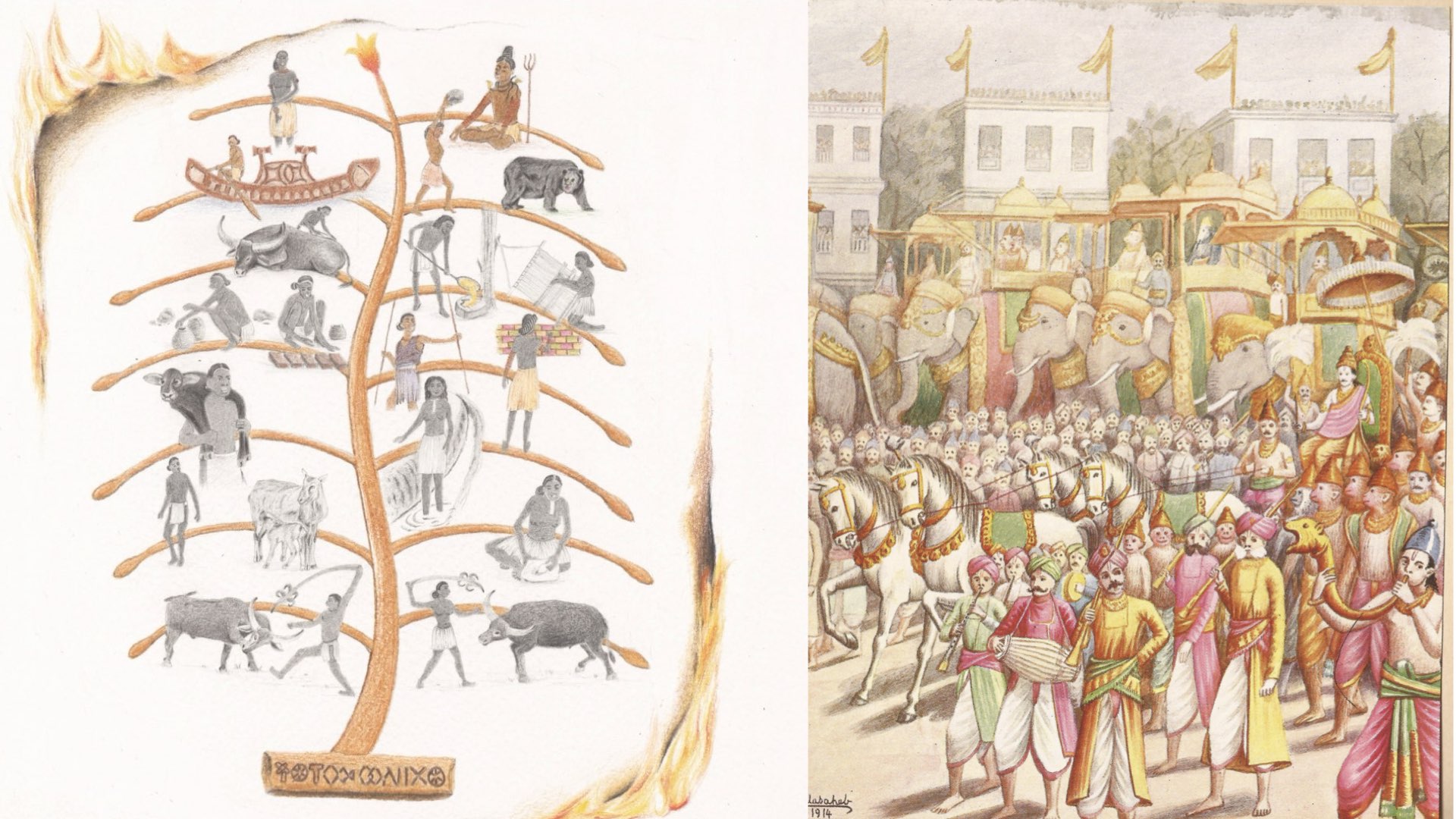
His earlier films establish this commitment clearly. The Battle of Bhima Koregaon: An Unending Journey (2017) reconstructs the story of 500 Mahar soldiers who fought for the East India Company against the Brahmin Peshwa empire – an act of Dalit assertion that brahmanical historiography has long sought to diminish or erase. The film does not let the viewer forget what was at stake: as recently as in the 18th and 19th century, in Pune, Untouchables had to tie brooms to their backs to erase their own footprints behind them as they walked, to hang earthen pots around their necks to spit into so that their saliva would not pollute the ground, and to carry bell-fitted sticks to announce their approach, so that “upper caste” Hindus could move away before their shadow “polluted” them. To place the Battle of Bhima Koregaon in this context is to understand it not merely as military history, but as an act of radical refusal to be subjected to oppression.
Chaityabhumi (2024) continued in this vein, earning screenings across university spaces and community gatherings worldwide. Zooming in on the site where Dr B.R. Ambedkar was cremated, where millions gather every 6 December on his death anniversary, the film reads the space as a site of ongoing contestation. In the faces of those who have travelled through the night to be there, exhausted but luminous, Waghmare finds something that no official monument can offer: a living, collective claim to dignity.
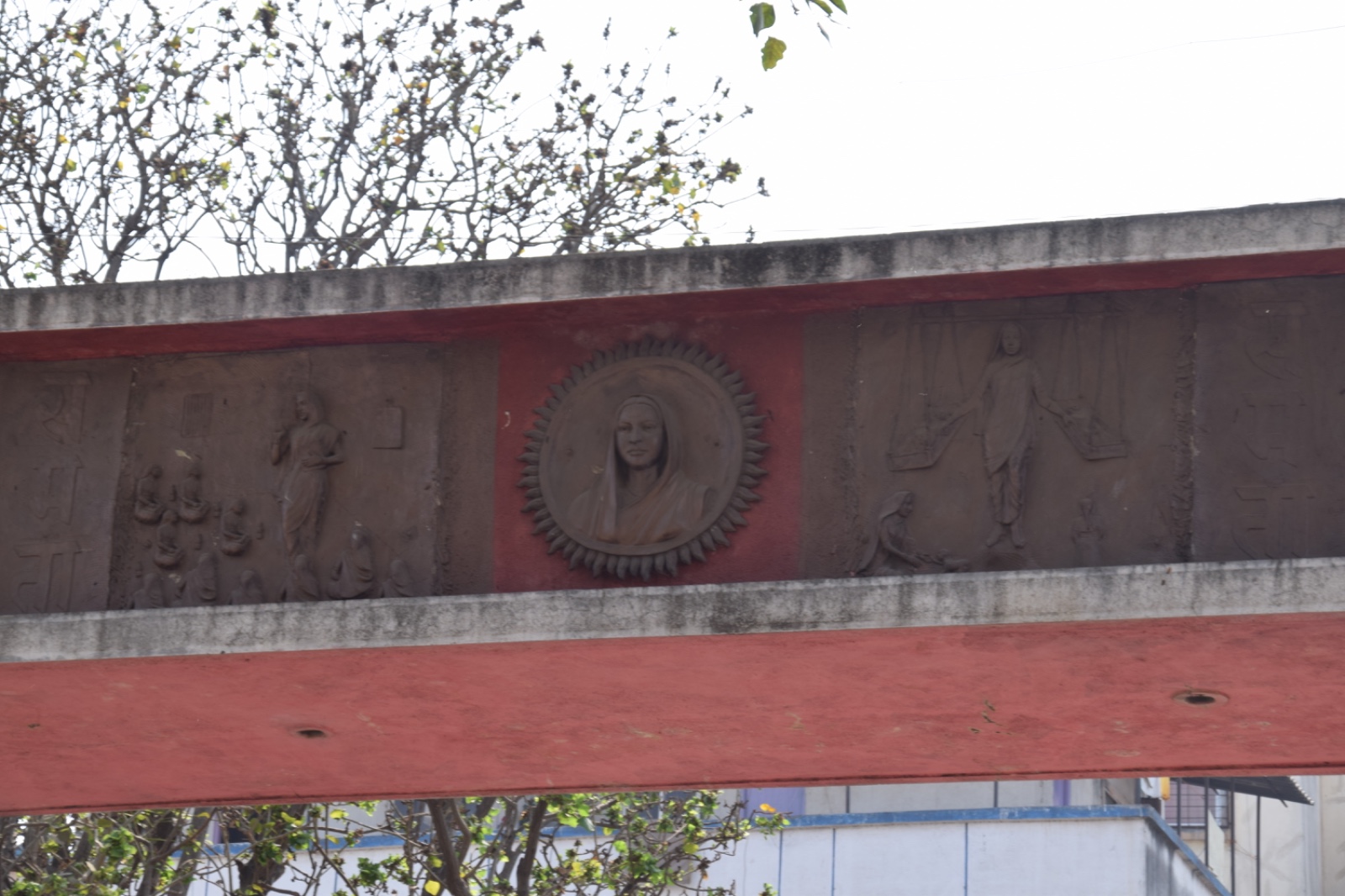
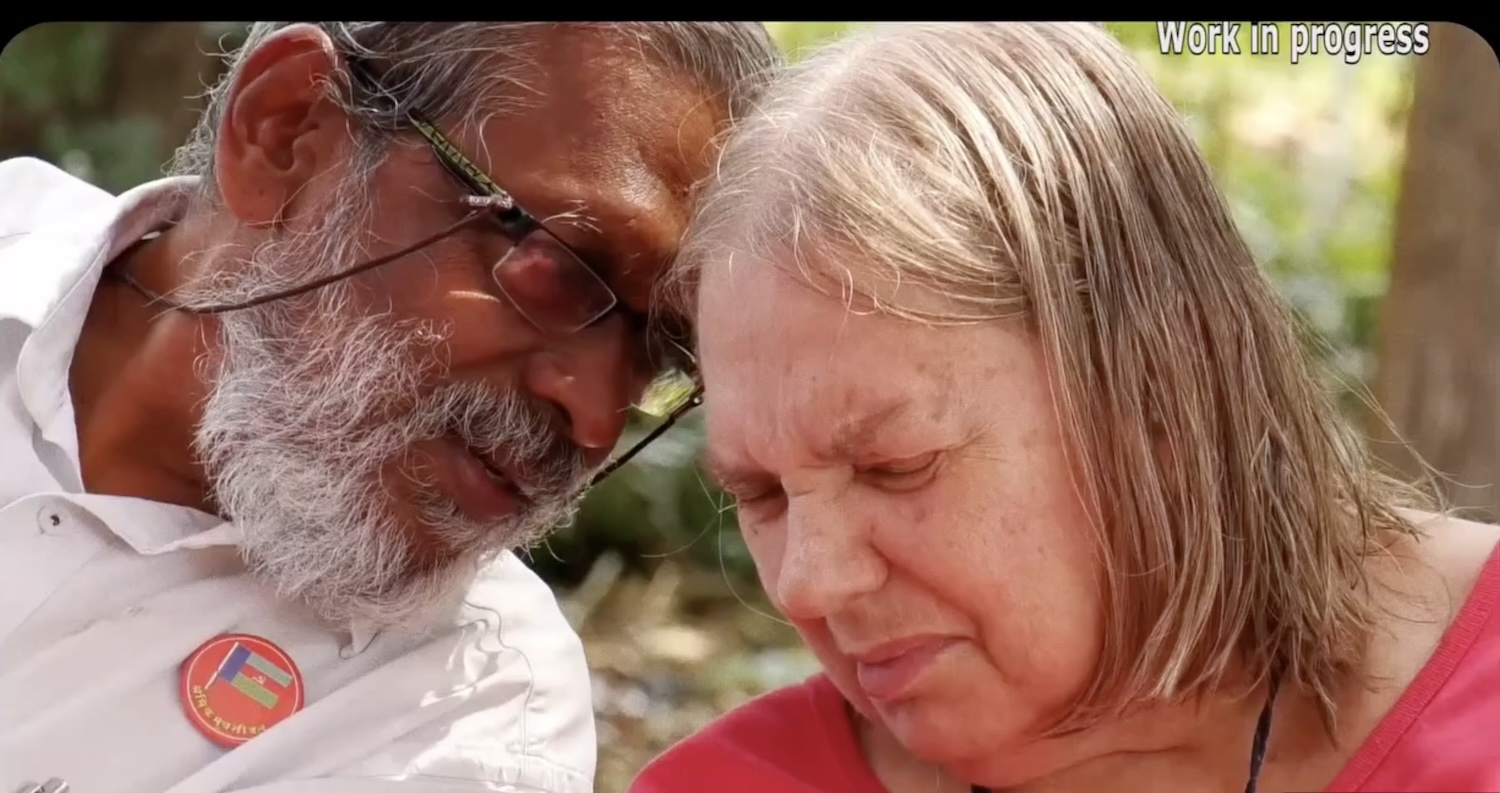
Gail and Bharat is the natural next step in this body of work, and perhaps its most emotionally demanding chapter. The film documents the lives of sociologist and activist Gail Omvedt and her husband and activist Bharat Patankar, and the decades of labour they devoted to the Bahujan movement. But it is not merely a record of intellectual achievement or political contribution. What Waghmare captures – with patience, honesty and deep affection – is the texture of a life lived in full commitment: to each other, and to society. The intimacy in Gail and Bharat’s relationship mirrors their intimacy with the struggles around them. In Waghmare’s hands, the personal and the political do not compete, they illuminate each other.
The documentary also takes on the weight of mourning for those others who fought for human dignity, justice and equality. We are reminded of those other contemporary voices who refused to be silent – Dr Narendra Dabholkar, Dr M.M. Kalburgi, Gauri Lankesh, Govind Pansare – all of whom raised their voices against majoritarian and anti-constitutional forces, and all of whom were killed for it. Their presence is brief but weighty, connecting personal histories to a larger, ongoing struggle. Gail and Bharat situates its subjects within a tradition of principled, often dangerous, dissent.
The film moves fluidly between the archival and the immediate. Photographs trace Gail’s childhood in the United States and her long arc of participation, in feminist movements, in anti-caste organizing, in scholarship that fundamentally reframed how the world understood Ambedkar and the Bahujan movement. For those already familiar with her work, the film offers the rare pleasure of recognition. For those encountering her for the first time, it offers something equally valuable: proximity.
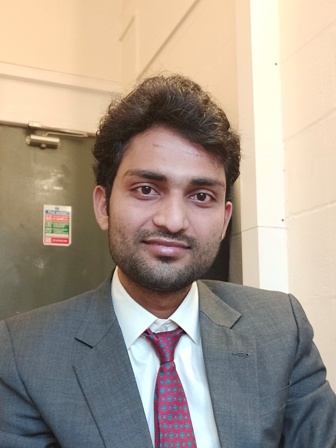
There is an informal feel to Waghmare’s filmmaking that is worth noting. His documentaries carry echoes of Dziga Vertov’s Man with a Movie Camera – a reflexive, embodied cinema in which the filmmaker does not pretend to be absent. Waghmare himself appears in several of his films, camera in hand, recording events as a participant rather than an observer. This is not aesthetic affectation. It is an ethical position: one that refuses the false neutrality of the invisible documentarian.
The film’s final sequence is its most devastating, and its most important. We see Bharat helping Gail eat, coaxing her gently, urging her with fond firmness to rise from her chair: “Let me see how you stand up, on your own.” She cannot. He helps her to her feet and walks her towards the room. The next scene is an aerial shot of Kasegaon at dusk, the village settling into the night, and then, inside the room, a wooden chair, empty. The camera holds. There is nothing more to say, and Waghmare wisely says nothing.
Over this imagery, we hear Ravish Kumar’s voice: Gail Omvedt, historian and sociologist, has passed away. The scene shifts to Kumar’s NDTV prime time broadcast, and then to the mourners – Bharat seated, receiving each person who comes to embrace him, everyone masked. It is the COVID-19 period. The masks, which rob us of the faces and reduce grief to a pair of eyes, become an inadvertent but powerful visual metaphor: death under conditions of collective isolation, mourning made strange and yet no less real.
Prachi, Gail and Bharat’s daughter, sits beside her mother’s body. Then the funeral procession, marked by slogans of “Jai Bhim” and “Lal Salaam”, situates her firmly within the traditions she helped shape and sustain. Buddhist rituals, vandana, a salute from the Samata Sainik Dal, the Satyashodhak Samaj prayer. And then, finally, Prachi lights her mother’s pyre. In this act, quietly but unmistakably, the film refuses one more orthodoxy, the one that has long barred women from the cremation ground and from performing the last rites of their dead.
It is a fittingly Ambedkarite conclusion to a fittingly Ambedkarite life. Gail and Bharat is a farewell song, an elegy composed with care and love. That Waghmare chose to keep his camera running through the cremation, when he himself was grieving, as a committed Ambedkarite who had known Gail closely, who had been shaped in part by her work, speaks to the filmmaker’s understanding of what documentation means in the context of a movement that has always had to fight to be remembered. To preserve Gail Omvedt in this way, through a personal visual narrative that carries both intellectual rigour and emotional truth, is an act of stewardship. This is the legacy of the Bahujan movement. And Somnath Waghmare has honoured it.
Forward Press also publishes books on Bahujan issues. Forward Press Books sheds light on the widespread problems as well as the finer aspects of Bahujan (Dalit, OBC, Adivasi, Nomadic, Pasmanda) society, culture, literature and politics. Contact us for a list of FP Books’ titles and to order. Mobile: +917827427311, Email: info@forwardmagazine.in