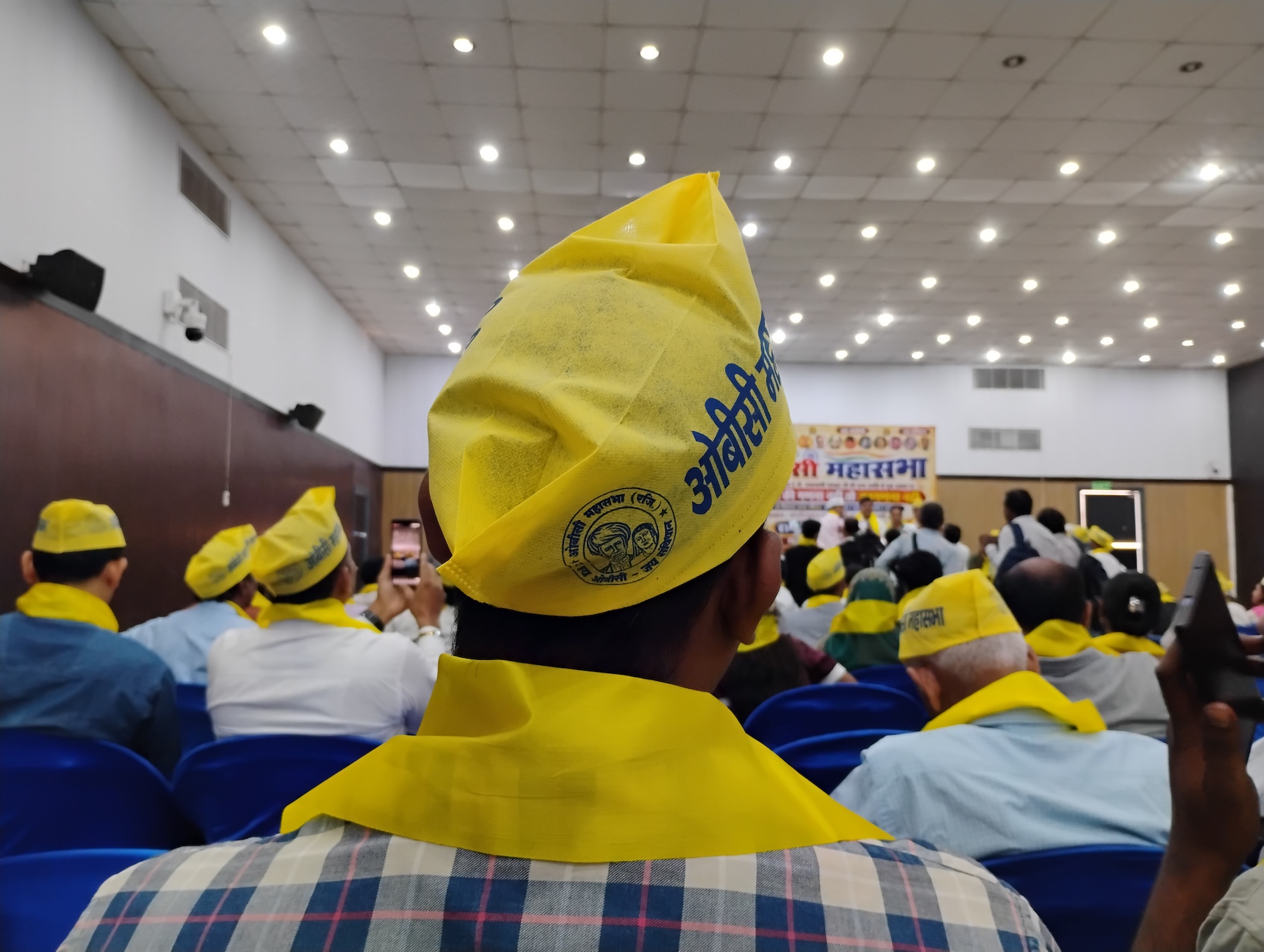
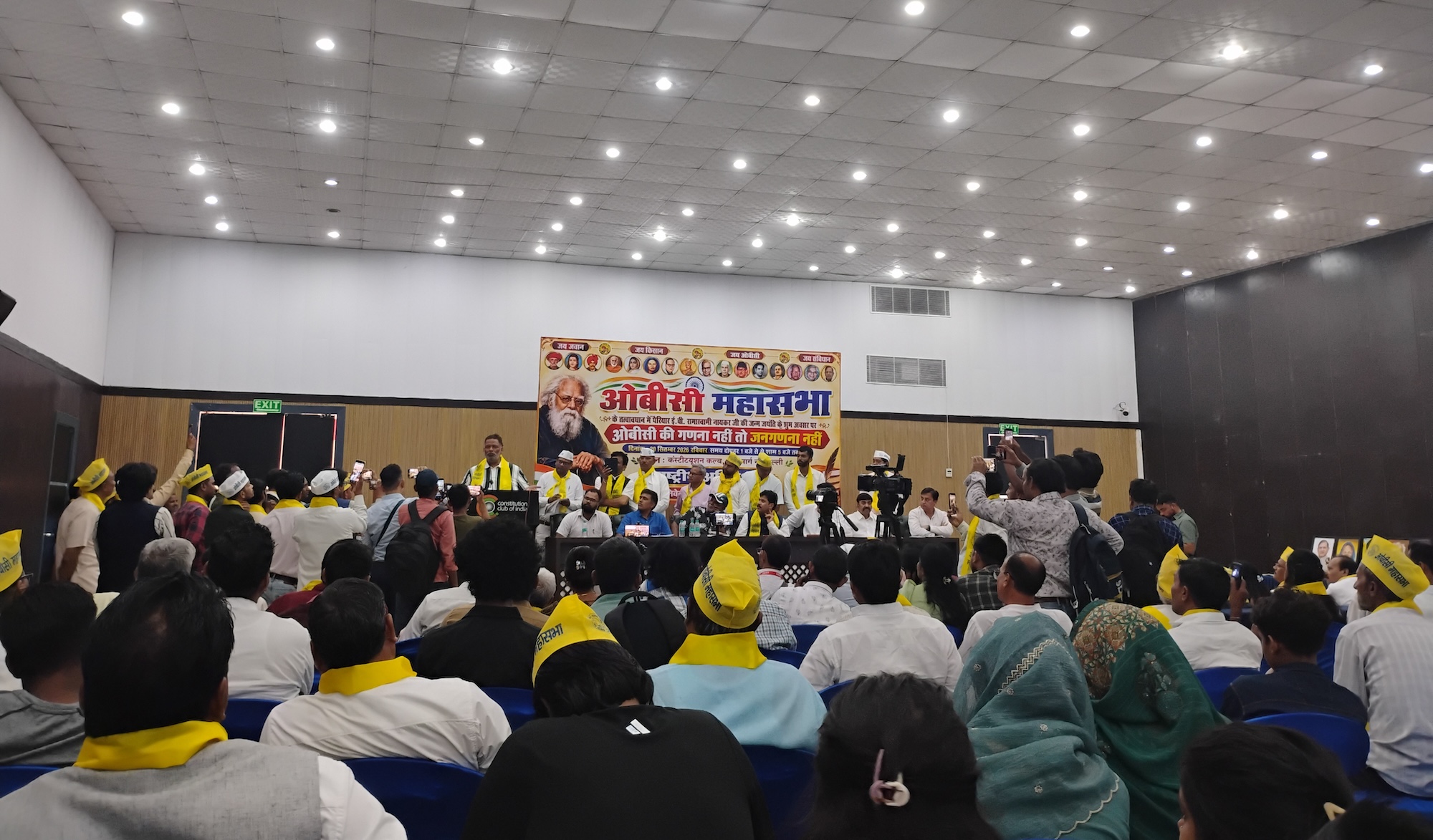
The OBC Mahasabha’s gathering at the Deputy Speaker’s Hall of the Constitution Club in New Delhi on 20 September 2026 to demand an OBC column in the census questionnaire was a pool of yellow caps and scarves. There were Kushwahas, Yadavs, Prajapatis, Nishads, Sahus, Pals, Mansuris and other Pasmandas, DNTs, representing most of the Hindi-speaking states, as well as representatives from Gujarat and Kerala. There were men and women, with men outnumbering the women, as is usually the case. But they were all yellow for the three-hour-long meeting.
Ever since the enumeration for Census 2027 began in the snowbound states, the government has faced criticism for the open-ended column on caste. Social-justice activists and members of opposition parties have urged the government to include an OBC column with a drop-down menu of castes from the central and state lists. They speak from the experience of the 2011 Socio-Economic and Caste Census, when the vast data on castes collected proved to be unanalyzable. The proportion of OBCs in the population (52 per cent) used today is based on the 1931 Census and only a fresh count will give a picture of the real extent of their marginalization in governance, economy and the media. Only two of the recommendations of the Second Backward Classes Commission (Mandal Commission) have been implemented, namely reservations in public employment and higher education, and that too, halfheartedly. Up-to-date census data will compel the central and state governments to implement the recommendations in full and give OBCs their due.
“We may be from various castes but we have a single Constitutional identity”, said Radheshyam Sahu, the president of the Chhattisgarh chapter of the Mahasabha. “If OBCs are not counted, we will boycott the census.”
Bir Singh Baghel, president of the Delhi chapter of the Mahasabha, talked about the OBCs’ hunger for dignity. C.V. Kushwaha, the president of the Madhya Pradesh chapter, said “the government is afraid to count us”.
The meeting was dedicated to OBC hero, E.V. Ramasamy Periyar, whose birth anniversary was celebrated a few days earlier, on 17 September. While he held the pride of place in the poster, it also had pictures of Jotirao Phule, Savitribai Phule, Shahu Maharaj, Ambedkar, Fatima Sheikh, Kanshi Ram, Jagdeo Prasad, B.P. Mandal, V.P. Singh, Sharad Yadav and others. Slogans like ‘Jotiba Phule Amar Rahe’ (Long Live Jotiba Phule), ‘Periyar Amar Rahe’, ‘Fatima Shaikh Amar Rahe’ and ‘B.P. Mandal Amar Rahe’ were raised.
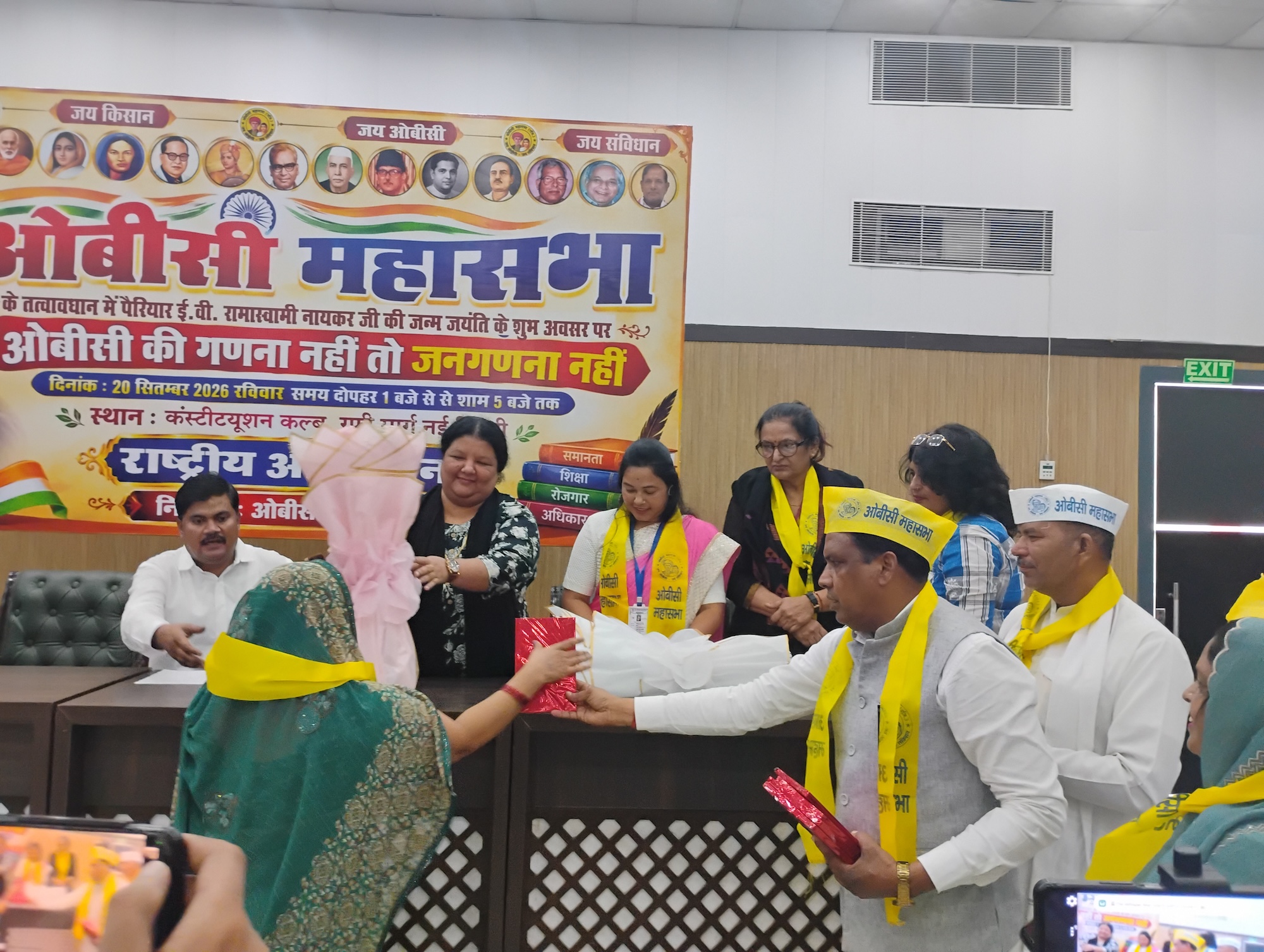
The meeting began with the paying of respects to framed portraits of the Phule couple, Kanshi Ram, Periyar, Ambedkar, Fatima Sheikh and Sharad Yadav kept next to the stage. MP from Purnia (Bihar), Pappu Yadav, who walked in with his entourage around a couple of hours into the meeting, said V.P. Singh’s photo should have been there too. “He was from an upper caste, but he fought for us.” Challenging the audience, Pappu Yadav said the “OBCs are incapable of starting a revolution by themselves. They need the help of Dalits and Adivasis. Only the Ambedkarites are fighters.”
Little did he know that the OBC Mahasabha were determined to shed this image – as was evident from the speeches that preceded his. Radheshyam Sahu, president of the Chattisgarh chapter, said the Mahasabha has been holding cadre camps and is aiming for 20,000 state-level cadres by the end of 2026. They plan to have cadres at the district and block levels, too. All this means bringing 95 castes under one banner through its Samajik Sarokar Karyakrams (Social Concern Programmes).
Mehdi Hasan, representing the Mansuri Federation of India, said 80 per cent of Muslims are OBCs and that the Mansuri community alone makes up 4 per cent of India’s population. He termed the preponderance of the upper castes in the four pillars of democracy, the executive, legislature, judiciary and the media, rule of the 15 per cent over the 85 per cent.
Alokbhai Yadav, president of the Gujarat chapter of the Mahasabha, urged the Mahasabha to hold its meeting in Gujarat despite the firm grip of the RSS and the BJP on the state.
Advocate Raziya Bibi from Kerala emphasized the need for unity among the OBCs and said everybody should be able to move ahead in life, not just the ones who are already ahead.
Vidya Yadav, Madhya Pradesh state president, Women’s Front of the OBC Mahasabha, said, “Manuwadi thought has looted the OBCs and pushed us backward. We, the women, have been especially entangled in Manuwadi thought. We dutifully observe these rituals forced on us, waste money on them and have little left to spend on our children’s education.”
Khileshwari Sahu, Chattisgarh state president, Women’s Front of the OBC Mahasabha, said the OBCs had to organize and walk in the footsteps of their heroes. She questioned the Nari Shakti Vandan Adhinayam and demanded reservation for OBC women in the legislature.
Bijendra Yadav, national general secretary, OBC Mahasabha, said, “If we remain divided into castes, we will keep begging for reservation.”
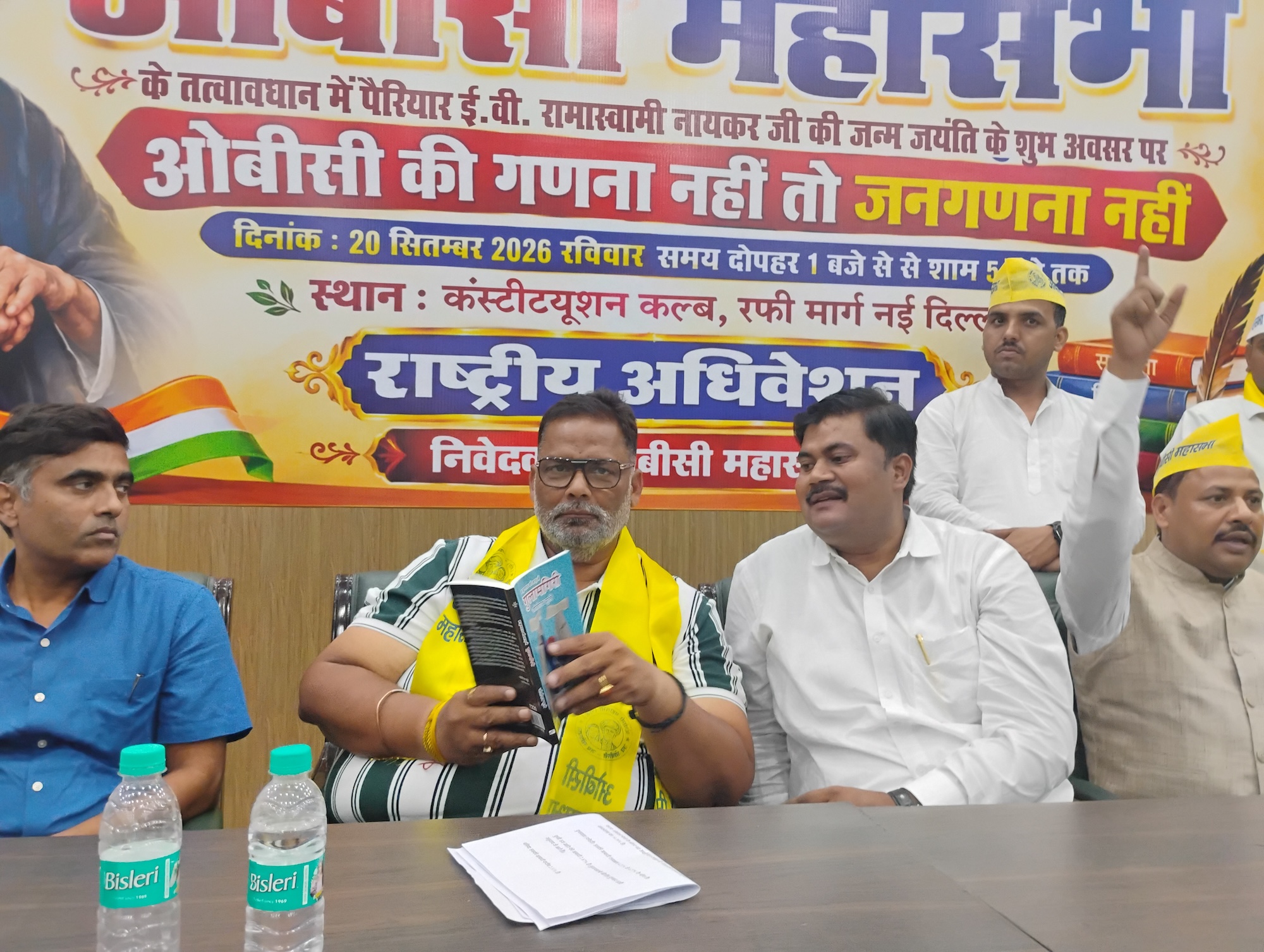
Advocate Dharmendra Kushwaha, member of National Core Committee of the OBC Mahasabha, said that the Mahasabha would protest at Jantar Mantar in New Delhi before the next Parliament session if the OBC column was not included in the Census questionnaire by then. That could be the day when Pappu Yadav is proven wrong.
Others who spoke were Sunil Sardar (Delhi), Shakil Mansuri (General Secretary, OBC Mahasabha, Delhi), Sunil Nishad (President, OBC Mahasabha, Uttar Pradesh), Brijendra Yadav (President, OBC Mahasabha, Jharkhand), Bansilal Chaudhari (President, OBC Mahasabha, Jammu & Kashmir), Kalyan Singh (President, OBC Mahasabha, Uttarakhand), Mithilesh Kumar (Executive President, OBC Mahasabha, Uttar Pradesh), Advocate Viswajit Ratania (National Spokesperson, OBC Mahasabha), Shivkumar Pal, Krishna Lodhi, Bhanwar Singh Dhakad (Farmers’ Front, OBC Mahasabha), Prakash Dhakad (Convenor, OBC Mahasabha, Madhya Pradesh), Dr B.L. Kushwaha (National Secretary, OBC Mahasabha), Mamna Begum (Media In-Charge, OBC Mahasabha), Surendra Pal, Shishupal Pal, Ganga Singh Chaudhari, Rahul Pal, Chandra Prakash Prajapati, Prof Suraj Mandal and Prof Sudhanshu. Rang Bahadur Yadav (Vice President, OBC Mahasabha, Delhi) conducted the proceedings.
(Edited by Amrish Herdenia)