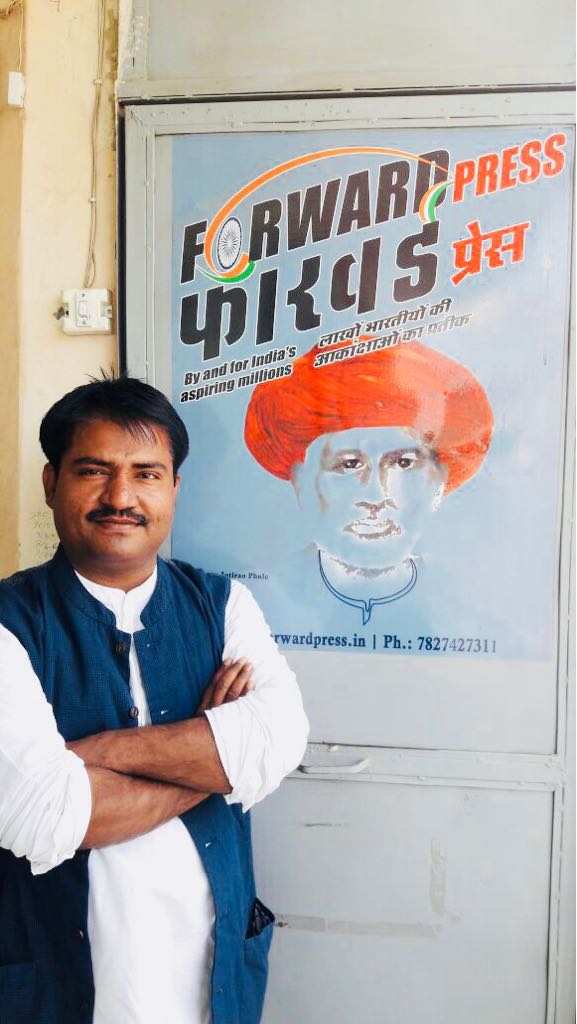
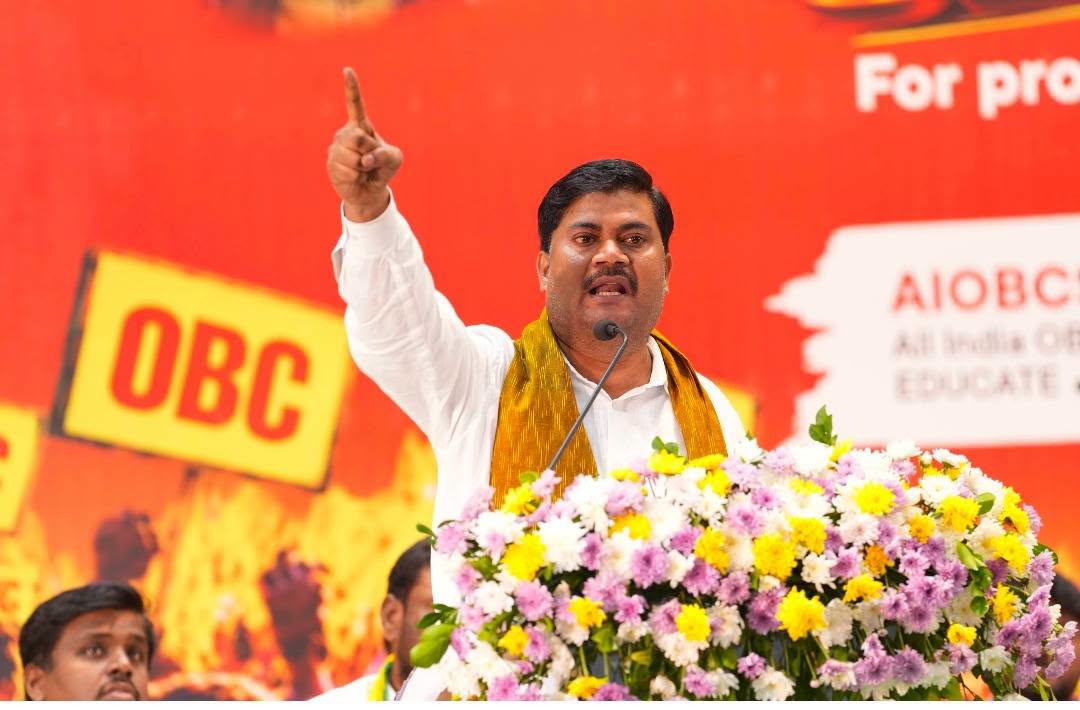
Dharmendra Kushwaha hails from Gwalior, Madhya Pradesh, and is a member of the national core committee of the OBC Mahasabha. A lawyer by profession, he believes in the ideology of Phule and Ambedkar and has been at the forefront of the protests against the methodology of counting the OBCs in the ongoing census. Kushwaha talked to Forward Press’ Hindi editor Nawal Kishore Kumar at the Constitution Club in Delhi. Excerpts:
You have been engaged in struggles on issues that concern the backward classes – from caste census to reservation in judiciary. When did this journey begin? And how?
This journey began in 2016. Before that, I was with the Satyashodhak Samaj – from 2006 to 2016. In 2006, a mega rally was held at Delhi’s Ramlila Maidan on OBC issues. The call for the rally was given by Chhagan Bhujbal, who was the national president of Akhil Bharatiya Mahatma Phule Samta Parishad. We felt that a major nationwide movement focusing on OBC issues, including the demand for implementation of the remaining recommendations of the Mandal Commission, needed to be launched. That rally made us realize that despite our huge numbers, we hadn’t been able to get our due share. Mandal messiah Lalu (Prasad Yadav), Sharad (Yadav) and Communist leader A.B. Bardhan also attended the rally. Sriprakash Jaiswal also spoke.
In that rally, way back in 2006, Chhagan Bhujbal raised the demand for a caste census. That was when I realized why caste census was necessary. At the time, most of the people did know what caste census was and why it was necessary and what its advantages were. Yet, some members of the audience did respond saying, “Yes, we should be counted.”
At the time, Kishore Kanere was the president of the Maharashtra unit of Akhil Bharatiya Mahatma Phule Samta Parishad. In 2008, he filed a petition in the Supreme Court. The petition said that a caste census had not been conducted since 1931. Leaders including Gopinath Munde had demanded caste census in Parliament. Relevant excerpts from the proceedings of Parliament were attached with the petition. The United Progressive Alliance (UPA) government was in power. The government announced that it would carry out a caste census. The Supreme Court also said that it should be done. But the government developed cold feet. It held talks with Kanere and Chhagan Bhujbal, who were the petitioners, and their counsel Y.B. Singh. The government said that it was going to conduct a caste census and requested that the petition be withdrawn. The petition was withdrawn, but the then Union Home Minister P. Chidambaram and Defence Minister Pranab Mukherjee made a vicious move. They were Manuvadis who did not want the Backward Classes to get their due.
So, what was done was that instead of the Registrar General & Census Commissioner, the responsibility of conducting the caste census was given to the Union Rural Development Ministry. The statistics that emerged from the exercise were misleading. It was a conspiracy, similar to the one being hatched by the present government.
You are talking about the caste census. My question to you was about your personal journey.
Let me begin by telling you that my entire family and I were associated with the BSP [Bahujan Samaj Party] and BAMCEF [All India Backward and Minority Communities Employees Federation]. Kanshi Ram used to visit our home. My father was not formally a member of the BSP, but he was a supporter. At the time, the OBCs, SCs and STs had great expectations from the BSP. The BSP was a cadre-based party and its cadres were introduced to the discourse around Jotirao and Savitribai Phule. Given the community from which I come, but for Kanshi Ram’s movement, I would have spent my entire life in the company of shovels and trowels. How would I have known who Phule was?
I am speaking from my heart. It was the 1990s. My entire family was associated with the BAMCEF movement. We joined the BAMCEF cadres wherever they went. I had developed a great interest in the Bahujan movement when I was 12-13 years of age. Since then, I have been working for the movement. I did nothing for my personal benefit. There is this song, “Apne liye jiye to kya jiye, tu ji e dil zamane ke liye.” I have been doing this. I have always been an ordinary worker, never a leader. I also worked as a Satyashodhak. We launched “Jativaad todo, Manuvaad todo” campaign. We launched “Bhaichara Utsavs” [Celebration of brotherhood)]. We also organized many weddings in keeping with the Satyashodhak system. [Pointing at one of his friends seated there] For instance, we solemnized the wedding of Pinki Bhai. It was done as prescribed in Mahatma Phule’s Sarvajanik Satyadharma. Then, we organized “Bhaichara Utsavs” in the rural areas. We held meetings of different castes, told them about social justice. I organized mass inter-caste marriages adhering to the Satyashodhak system in Hamirpur and Maudaha near Kanpur in Uttar Pradesh.
When was this?
In 2010. At least 22 couples tied the knot at that event. Kushwahas and Jatavs, Yadavs and Valmikis forged marital ties. Thus, we tried to build unity between the OBCs and SCs. It was a success and it had an impact in our Madhya Pradesh, too. I am talking of Gwalior. There Jatavs and Kushwahas began to inter-marry. Marriages between OBCs and Dalits indicated great progress. That’s how our movement grew. In 2012, we formed Arakshan Samarthak Morcha [Pro-Reservation Front]. Then, Rohit Vemula’s case emerged and we took the issue to the students. We worked to take the movement of Phule, Ambedkar and Shahu forward. In 2016, we constituted the OBC Mahasabha in Madhya Pradesh.
Did you form the OBC Mahasabha alone, or was there a team?
There was a team.
Who all were there?
We had Dr Pushaparaj Singh Patel from Rewa. Also, Arvind Dangi and Mahendra Singh Lodhi. There were many others. Earlier, we used to work with the Akhil Bharatiya OBC Mahasabha established by Lalit Kumar. Then, some disputes cropped up. I didn’t have any dispute with anyone. I avoid getting into disputes. I was the national general secretary and other friends held different posts. You see, it is the “Ekla chalo re” (Walk alone) attitude that fractures organizations. Today, 90 per cent of the social activists focus on themselves. That breaks up organizations and it is happening even now.
Faced with such a situation, we had the OBC Mahasabha registered. Now, since there is a stipulated process for registration, we had to decide who the president and the general secretary were. We formed a core committee. I may be the president of this OBC Mahasabha, but I am not its identity. The organization, not individuals, is important.
I will tell you, with examples, how organizations revolving around particular individuals failed to click. There was this Jat movement. Its supremo was its president Natwar Singh. He ruined the movement. Hardik Patel destroyed the Patidar movement, Kirori Singh Bainsala finished the Gurjar movement.
At OBC Mahasabha, we don’t do such things because we want our organization to last long. Now, since we wanted our movement, our organization, to last long so we designed a system to ensure that the government cannot target us. The government may target an individual. If there are 8-10 people, it may wean away one or two, but not all. That is how the OBC Mahasabha has been working, and now we have a presence in 18 states.
The present government is conducting a caste census. What do you find wrong with it?
Look at our state, Madhya Pradesh. In 2001, the Digvijay Singh-led government raised the OBC reservation quota from 14 per cent to 27 per cent. But the decision was shot down by the High Court. Then, Kamal Nath reinstated the 27 per cent quota, and again, the High Court did not allow its implementation. The court has been demanding data. But when no census has been conducted, where would the data come from? Another reason is that they lack the will. You must be aware that in the Indira Sawhney case, the Supreme Court had sought reports on OBCs from all the states. Other states submitted their reports but the Madhya Pradesh government, led by Sunderlal Patwa, did not. They have been dishonest from the very beginning. As for the ongoing caste census, our demand is simple: “Jiski jitni sankhya bhari, utni usko hissedari” (Representation in proportion with population).
In Madhya Pradesh, Sukhlal Kushwaha was our leader. He was also elected as an MP from the BSP. He defeated two chief ministers while he was in prison. One was Arjun Singh and the other was Virendra Kumar Saklecha. When the BSP changed its policies, he formed his own party called “Samanata Dal”. Now, till 2004, Madhya Pradesh had had no OBC chief minister. Kushwaha coined the slogan: “Madhya Pradesh ki majboori hai, OBC ka mukhyamantri zaroori hai” (Madhya Pradesh has to have an OBC chief minister. There is no other option).
That slogan made the Bharatiya Janata Party (BJP) sit up and take notice. It wanted to base its politics on the OBCs. So, the BJP appointed Uma Bharati as the chief minister, next, it named Babulal Gaur, followed by Shivraj Singh Chouhan. Now Mohan Yadav is the chief minister. All the four have been OBCs. But what they did was that while they framed a law to increase OBC reservation, Rashtriya Swayamsevak Sangh (RSS) people were signalled to file petitions challenging it.
The same thing is happening now. Whenever a pro-OBC initiative is taken, the RSS people file petitions against it, they try to block it. Now, the judges are also their people. The number of OBC judges in Madhya Pradesh High Court is negligible. Recently, 24 judges were appointed to different High Courts. Not one of them was an OBC. There are just a few OBC judges who have been picked from among lawyers. And all of them are associated with the RSS.
All this could happen because of the Collegium system. But in this context, I do need to talk about Justice Suresh Kumar Kait, who served as the chief justice of Madhya Pradesh High Court. He gave representation to the Dalitbahujan. He himself was a Dalit but he appointed OBCs as judges, as senior advocates. He gave respect and opportunities to women.
Justice Kait is from Haryana. When he came to Madhya Pradesh, he said in his speech that the credit for whatever he had achieved should go to Dr Ambedkar. We felt he was someone from our movement. When Justice Kait visited the Gwalior Bench of the Madhya Pradesh High Court, it so happened that we had filed a petition in the Supreme Court for 27 per cent reservation for OBCs in the state. Thus, we had been frequenting the Supreme Court premises. I saw Ambedkar’s statue on the premises. It was installed at the initiative of Vivek Kumar Yadav from Nagpur. When he visited the top courts of different countries, he had found that statues of the architects of their respective constitutions were installed on their premises. So, he had met the then CJI, Justice DY Chandrachud, and brought up the matter: When other countries had honoured their constitution-makers in this manner, why did the Indian Supreme Court not have a statue of Ambedkar on its premises? He even promised that the OBC people would collect the money needed for it. However, Justice Chandrachud said that they had the funds and would get the statue installed. Ultimately, Babasaheb’s statue on Supreme Court premises was unveiled on 26 November 2023.
Advocates Vivek Kumar Yadav, Varun Thakur and Ramkaran Prajapati told me about this. I was very impressed. I thought that when Ambedkar’s statue could be installed on Supreme Court premises, why not on the premises of the Gwalior bench of the High Court, where I practise? So when Justice Suresh Kumar Kait came to Gwalior, I, along with my associate, advocate Vishwajeet Ratonia, met him and submitted a memorandum that like at the Supreme Court, a statue of Ambedkar should also be installed on High Court premises. He accepted our memorandum and issued appropriate orders. After approval by the district collector and the building committee, a platform for the statue was built.
Justice Kait, in his order, said that Babasaheb did not belong to a class of lawyers alone. He belonged to everyone and so his statue should be installed using public funds. We launched a collection drive and collected Rs 10.5 lakh – the cost of the statue. But some casteist lawyers opposed the idea. They kicked up a ruckus and did not allow the statue to be installed.
Following Sukhlal Kushwaha’s exhortation, only OBCs have been appointed as chief minister of Madhya Pradesh. You have launched a movement to awaken the OBCs. Are the OBCs from Madhya Pradesh responding? Are they joining you?
Yes. One hundred per cent. Many are joining us. I will quote just one instance. Lodhi was one caste that had opposed the Mandal Commission. But today, Lodhi community is demanding implementation of the Mandal Commission report. They want the recommendations of the Ramji Mahajan Commission to be implemented. The Lodhis are now raising slogans like Jai Joti, Jai Bhim, Jai OBC and Jai Samvidhan. They now recognize Sharad Yadav, Lalu Prasad Yadav, Ramvilas Paswan, Kanshi Ram and Chaudhary Charan Singh as their messiahs. They have joined the struggle even in Bundelkhand once rife with superstitious practices. We at the OBC Mahasabha have done so many things. A large number of people have joined hands with us. We had never thought that 100,000 people would attend our programmes. But it happened at our event in Kajli Maidan in Sagar. When we laid siege to the chief minister’s residence in Bhopal, so many people joined us and a newspaper like Times of India reported that the government suffered a loss of Rs 60 crore due to it. The OBCs are joining us openly. There is frenzy everywhere.
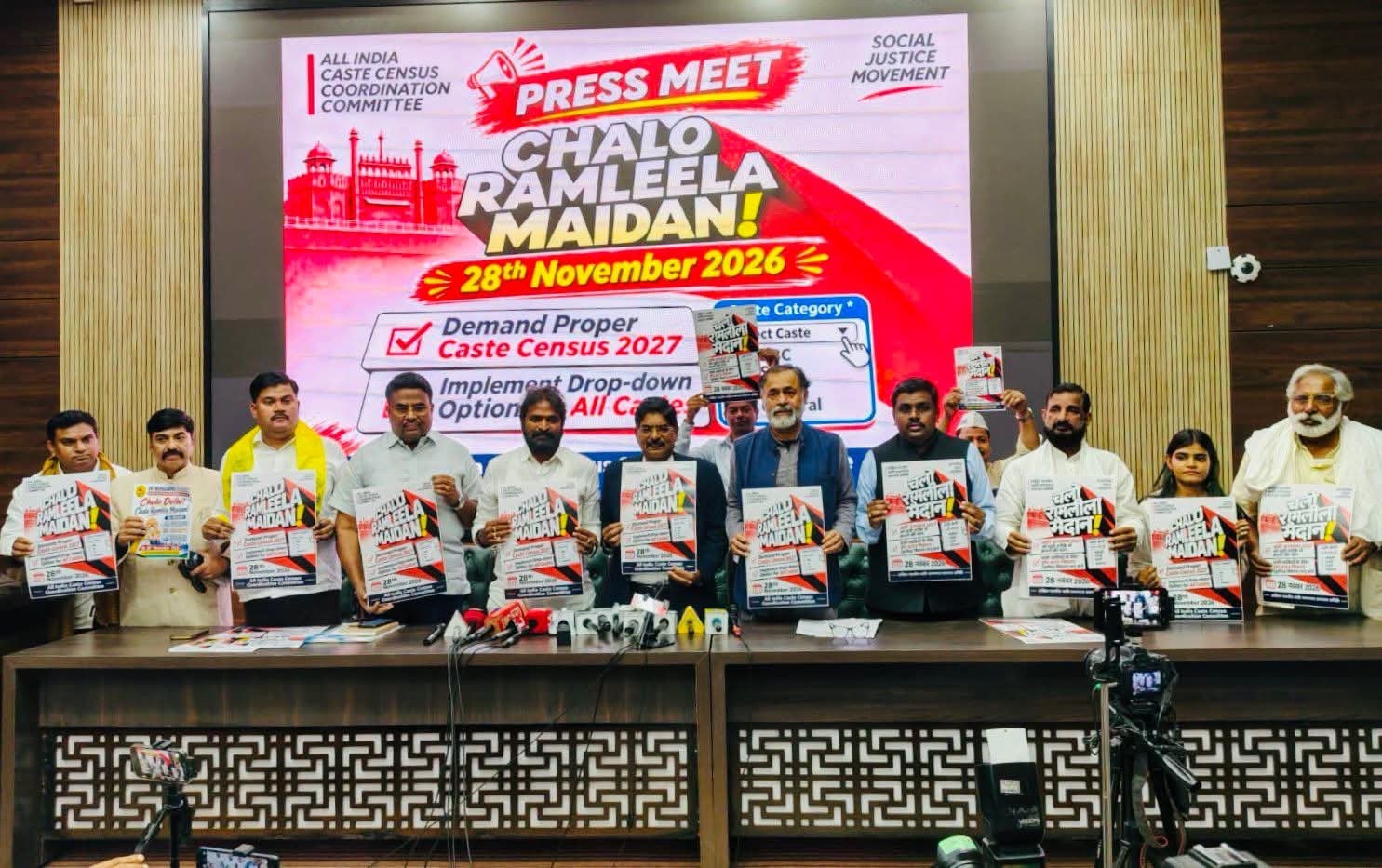
Tell us in brief the demands you plan to raise through your rally on 28 November. What is your agenda?
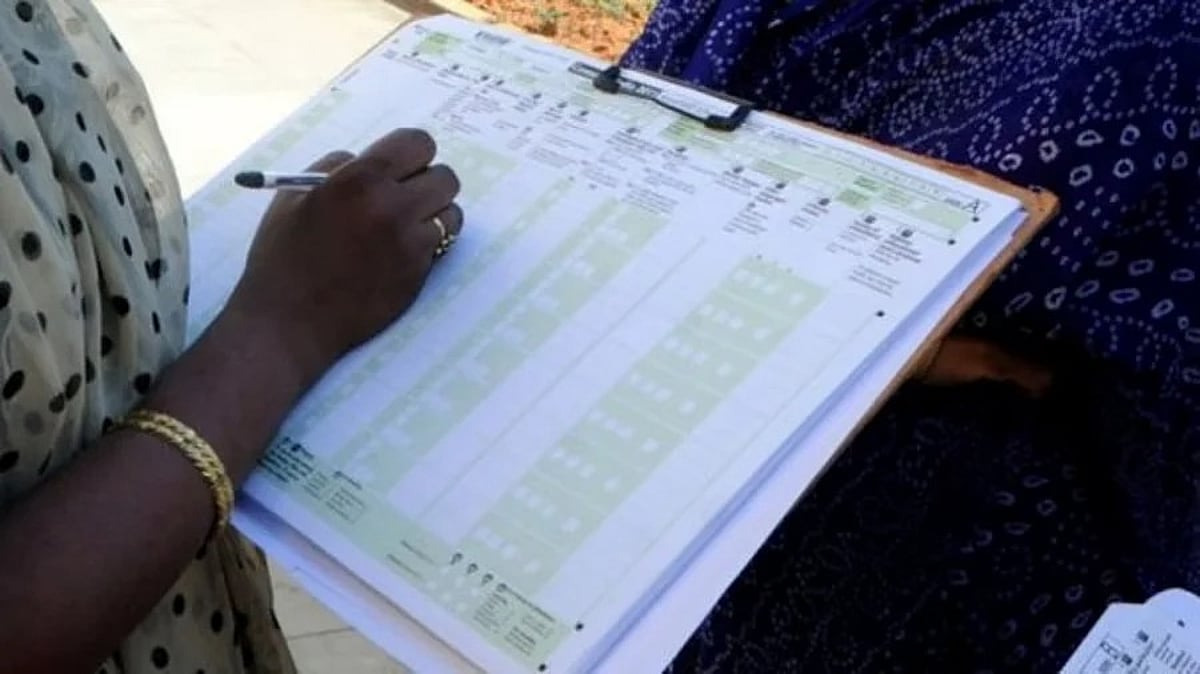
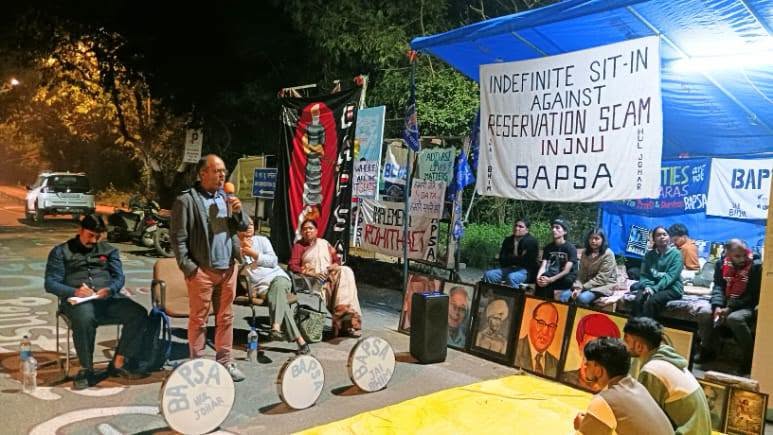
The most important agenda is the format for enumerating the OBCs. We want caste codes to be used in the tenth column. We had held a meeting in Delhi on 13 September that was attended by representatives from 56 organizations. It was decided that we would first visit the states and hold talks with all the organizations; we would launch a campaign. On 1 September, we, along with all other organizations, issued a warning that if our demands were not fulfilled, we would launch a protest during the Parliament session. It is in that context that we have given the call for a rally at Ramlila Maidan. We have appealed to all organizations, we have appealed to OBCs and all Bahujan, to join us. We will launch a movement of the Backward Classes from Ramlila Maidan to Parliament. It will be like the Gen Z movement, like the farmers’ movement, like the NRC movement. We have forged a joint front. OBC Mahasabha, All India OBC Students’ Front, Sakal OBC Morcha, Karpoori Thakur Foundation, Yadav Mahasabha, United Front of India, All-India OBC Lawyers Association – all of us are together.
Are political parties supporting your movement?
The RJD is with us openly. MK Stalin’s DMK is also backing us. Kavita ji from Telangana’s TRS has assured support to us. Abhay Singh Chautala’s party [Indian National Lok Dal] is backing us. We also have support from the Samajwadi Party. When we held a press conference at Constitution Club on 13 November, Dr Anil Jai Hind, national president of Congress’s OBC Cell, joined us. He also supported us. Many other smaller parties of the OBCs are also with us. I also wish to tell you that we had discussions with Rahul Gandhi on issues related to caste census and social justice during his Bharat Jodo Yatra in 2023. It was only after that that he began raising these issues.
Madhya Pradesh has had OBC chief ministers since 2004. Still, OBCs have not got 27 per cent reservation in the state. What does that show?
I want to make it very plain. Whether it is the OBC Prime Minister or the OBC chief ministers of our state, Madhya Pradesh, they all are basically masks. Behind the masks is the RSS, and the RSS doesn’t want us to get justice. These masks are of no use. They appointed 35 OBCs as ministers but did it change anything?
There is no reservation (for OBCs) in NEET. It was there in AIIMS, but that was also a sham. Recently, the railways announced vacancies but with no reservation for OBCs. In Uttar Pradesh, 65,000 posts of teachers were advertised with negligible reservation for the OBCs. It is clear that they will never give justice to us.
One more thing. I am certain that till we forge a party of OBCs as a third front, we will not get our rights. Whether it is the BJP or the Congress – they are parties of the upper castes – and they will never do justice to us. We will have to form a third front focused on social justice along the lines of Kanshi Ram’s BSP. Only then will we be able to achieve something.
(Translated from the original Hindi by Amrish Herdenia)