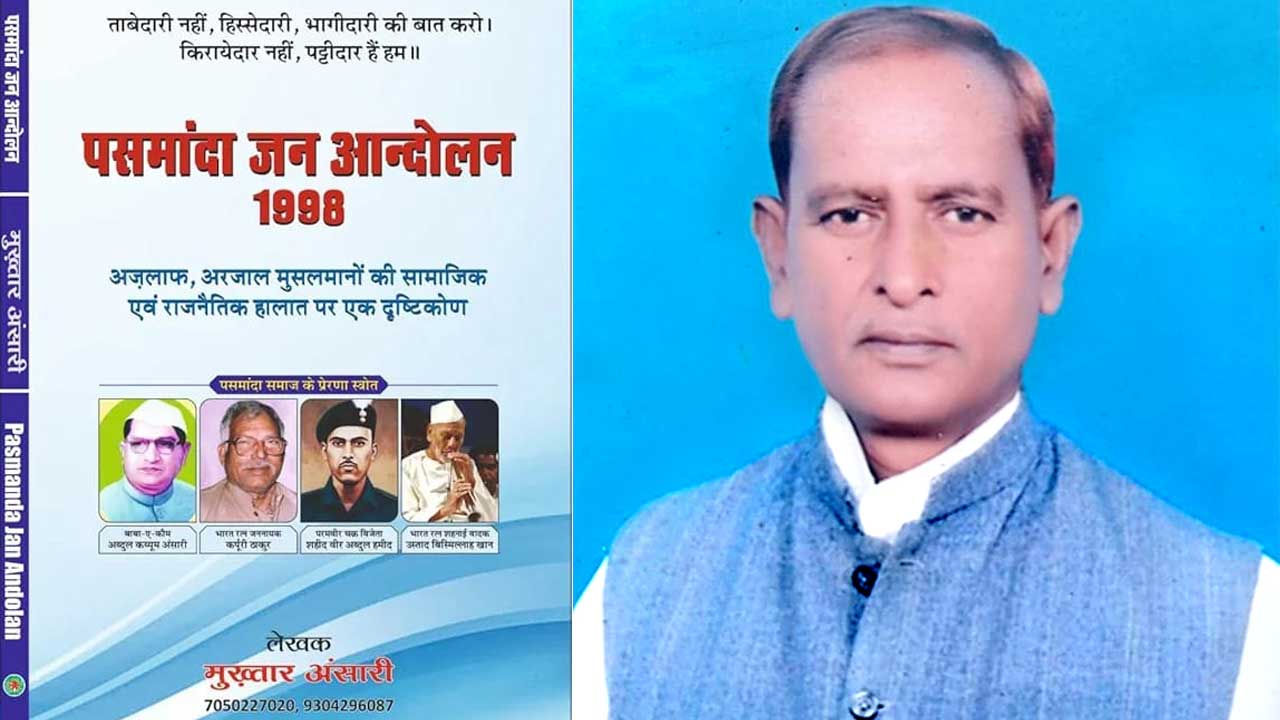
Mukhtar Ansari has been striving for social justice within the Muslim community in Bihar for the past 27 years. His autobiography ‘Pasmanda Jan Andolan 1998’ is not only about himself. It also documents the dark underbelly of the Indian Muslim community. Our leaders and historians either kept quiet on it as part of a conspiracy, or ignored it, or waved it off as a religious matter. The ‘1998’ in the book’s title refers to the year of Pasmanda uprising – the year which saw Ali Anwar Ansari, through ‘Pasmanda Muslim Mahaz’, challenging the long-standing equations and presumptions of Indian politics. Going through the book, it is apparent that Mukhtar Ansari is not only telling his story, but he is lending voice to the crores of Ajlaf and Arjal (Backward and Dalit) Muslims who have been enduring humiliation for centuries; whose voices were muzzled and whose screams went unheard. The Ashrafs have enjoyed power and pushed them to the margins.
The book introduces us to a bitter irony – and a fundamental question: If equality and justice are the cornerstones of Islam’s core philosophy, how come the poison of casteism and untouchability has seeped into the Indian Muslim community. This book is a detailed and courageous account of the continuing battle for “masawat” (equality).
The book begins with an account of the personal life of Mukhtar Ansari, but soon assumes the form of a social chronicle. Mukhtar Ansari was born in a small village in the Kaimur district of Bihar in 1956. Economic deprivation, social stigma and caste identity were his constant companions in his childhood. This has been the fate of lakhs of Pasmanda Muslims in the country. The author says that Pasmanda consciousness was not born of reading some book or hearing a speech. The humiliations, the rejections and the struggles of daily life have given birth to it. His marriage marked a crucial turn in his life. In a society where socio-economic parity is considered a prerequisite for marriage, he chose to wed a physically disabled and sickly Badrunissa. This was an exceptional and courageous decision. He does not present his decision as a deed dictated by morals but as fulfilling a human responsibility. This decision later formed the ideological foundation of the Pasmanda movement – that involved understanding the pain of the Pasmandas (those left behind).
His decision underlines that the Pasmanda movement is not only a political tool to secure a bigger share in power but it is also about human sensitivity, about standing by the weakest, the most helpless in society.
The author’s description of his wife’s struggles is deeply moving – how Badrunissa stitched clothes to make ends meet, how she endured social exclusion and how she supported him during the difficult phases of the movement. Such work, such sacrifices often go unsung in the history of movements. This book does not present the Pasmanda movement as an endeavour of its male leadership but links it with the struggle of the women, without which no social movement can move forward. The book tells us about the unnoticed sacrifices made by women from ordinary families, who risked their everything for the sake of the movement.
An important and unsettling part of the book is the analysis of casteism and untouchability prevalent among the Muslims. It is often claimed that caste has no place in Islam. But Mukhtar Ansari challenges this view, describing the ground reality. He argues that religious identity, by itself, does not end casteist mentality. He cites many incidents to underline that among Muslims, the Pasmandas are subjected to the same kind of inhuman behaviour as has been the lot of the Backwards and the Dalits in the Hindu community.
For instance, in 2001, in the Sirbit village of Kaimur district, a thirsty school teacher, who was an Ansari, was not allowed by his “Khan Saheb” (Ashraf) companion to drink water from the home of a Dhobhi (Pasmanda). Similarly, in Bikramganj (Haata, Kaimur), an Ansari, an invitee to a wedding, was not allowed to sleep on a cot as he was a Jolha (Weaver). Clearly, the feudal mindset still prevails in the Muslim community.
The Pasmandas have to face discrimination right from the mosques to the weddings and while drinking water and while sitting down to eat. Books say that Islam stands for equality – and so do we hear in speeches and sermons. But equality rarely marks real social life.
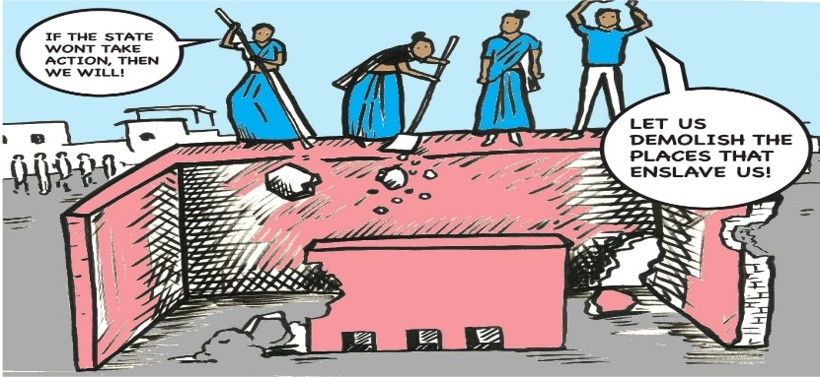
The description of an incident at Alhepur village in East Champaran district forms the most stinging and politically relevant part of the book. At the wedding of an Ansari girl, the groom, in wedding regalia, happened to pass through a locality of the Mirs. The reaction was swift and brutal. The wedding procession was attacked and the food cooked for the guests thrown on the ground. The Ansaris were humiliated to no end. In the same village, when the Ansaris tried to build a separate mosque on a piece of land purchased by them, the structure was demolished. On top of that, cases were filed against the victims. This incident exposes the hollow claims of Muslim solidarity. What sort of solidarity is this that people who worship the same god can’t even pray together.
The book also details the political journey of the Pasmanda movement. Mukhtar Ansari tells us how after 1998, the movement crossed the borders of Bihar and built an identity for itself nationally. The movement challenged the traditional notion informing Muslim politics that all Muslims are a homogenous minority. In Indian politics, “Muslim” was taken to be a homogenous minority community. But this movement let it be known to the world that there is a “majority Pasmanda section” within the minority Muslim community and that the 15 per cent Ashrafs have been usurping the rights of the Pasmandas for centuries. In 2004, the Pasmanda Muslim Mahaz took on a new name – All India Pasmanda Muslim Mahaz. This was a major turning point. It sent out a message that this section had awakened and that the awakening was reflected in the Dalit Muslim Mahapanchayat held at Delhi’s Ramleela Maidan on 4 December 2004. The presence of former Prime Minister V.P. Singh and well-known personalities like Prabhash Joshi and Yogendra Yadav at the event gave a new, national identity to the movement. Mukhtar Ansari says that as the word “Pasmanda” began gaining currency, the Ashrafs were rattled. To crush this movement, they branded it as anti-Islam and even as the “voice of Satan”. The services of the Imams of mosques were requisitioned to give it a bad name. The powers that be have been using the convenient and mean stratagem of branding those seeking justice as blasphemous. This stratagem was used against the Pasmanda movement, too.
The way Pasmanda Muslim Mahaz mobilized in the run-up to the 2005 Bihar Assembly Elections and voted out the Rashtriya Janata Dal (RJD) government in Bihar, forced everyone to sit up and take notice of its influence. The Pasmandas were no longer content with being the part of a crowd. They wanted their share. It was due to the growing clout of the movement that in 2006 chief minister Nitish Kumar constituted the Ati Pichda Varg Aayog (Extremely Backward Classes Commission), naming Mohammed Usman Halalkhor as a member of the commission and thus giving Arjal Muslims a share in power for the first time, and sent Ali Anwar Ansari to the Rajya Sabha. In the same year, on 23 February, violence was unleashed on the Pasmanda Muslims at a hearing of the Sacchar Committee in the auditorium of the Patna planetarium. The Pasmandas were attacked as they demanded the status of Scheduled Castes for themselves. The Ashrafs did not want the Pasmandas to get a distinct identity as they feared that it would deprive them of the status of the sole leaders of the Muslims. This was not only an attack on the Pasmandas, but it was an attack on their consciousness, on their awakening.
The book also details how, in the name of religion, the Pasmandas were used as political tools. The “Deen Bachao, Mulk Bachao” (Save the religion, save the nation) rally in 2018 exemplified this. The Ashrafs mobilized a huge crowd of Pasmandas to boost their political clout. But the Pasmandas did not get anything in return. Here, we must recall Kanshi Ram, who identified the brahmanical mindset of the Muslim leadership. His analysis links the Pasmandas to the broader Dalitbahujan politics.
The author not only waged a political battle but also fought on cultural and linguistic fronts. In his book, he lists the humiliating and coarse proverbs that were popularized to belittle lower castes like Julaha and Dhunia. For example, “Khet khaye gadha, maar khaye julaha”, “Barah baras tap kayeli, jolaha bhatar milal”, “Teesi ke khet mein jolha bhulaiyil”, “Savan kodo ann nahin, jolaha dhunia jan nahin”, “Maaza mare ghazi miyan, baanhal jaye dafali”, etc. These proverbs and sayings reflect the feelings of mental slavery and inferiority ingrained in our society. The author has also exposed the casteist insinuations in the names given to people. While the names of Ashrafs are dignified and underline their exalted status, the Pasmandas and Dalits are given humiliating names like Battakh Miyan, Somaru, Buddhu, Eidu, Bakreed, Sobrati, Jumrati, Barfati and Khairati. Similarly, their women have names like Eidni, Bakreedni, Sobratni, Barfatni, Sanichari and Atvaria.
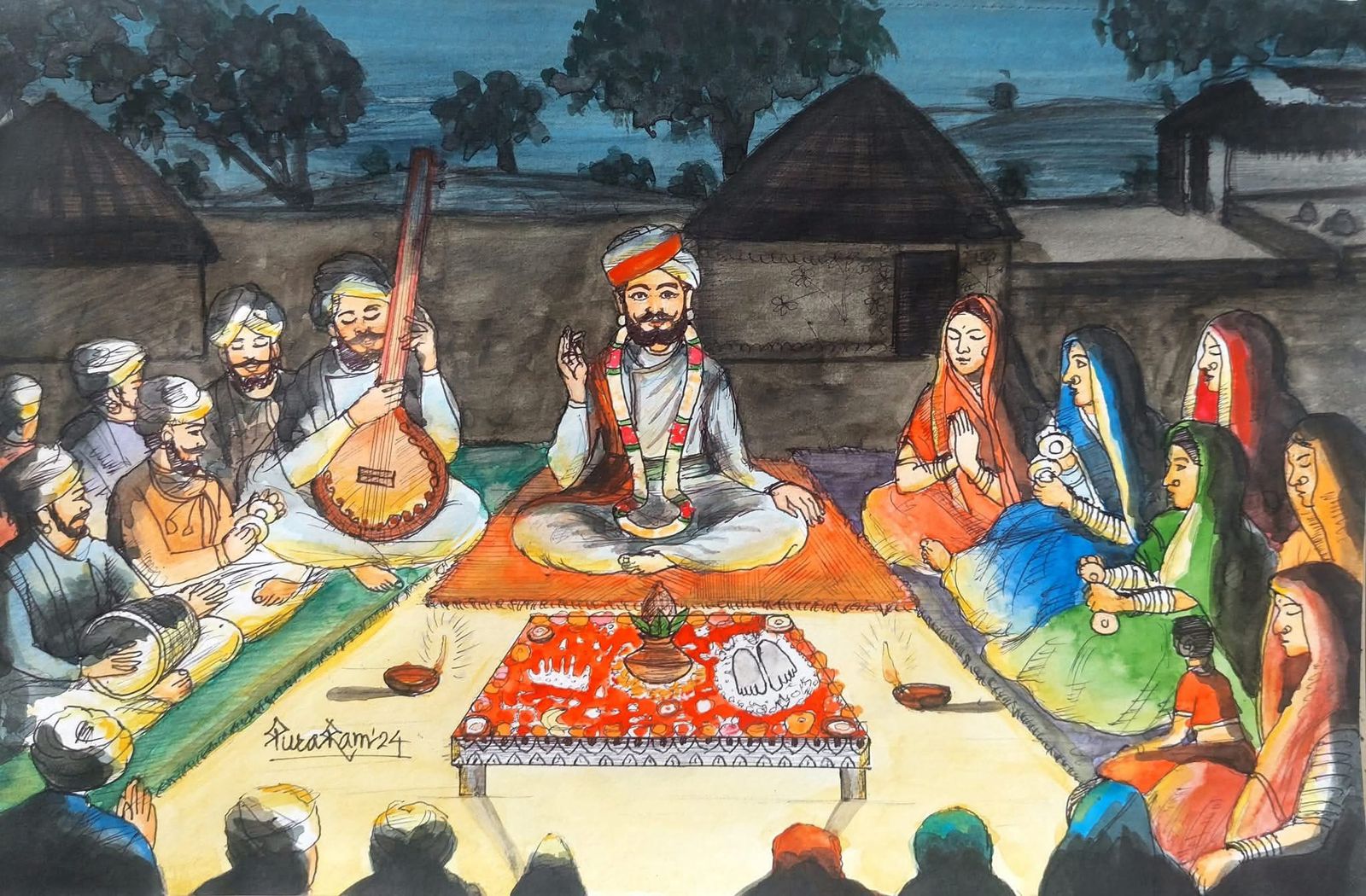
Mukhtar Ansari used folk songs as a powerful weapon to counter such insults. His Bhojpuri songs are not only cultural expressions but tools for political awakening. He tells Pasmandas that they will continue to suffer injustice as long as they don’t organize themselves and realize their worth. This message is mainly directed at the educated among the Pasmandas, who distance themselves from their roots once they get a job or some social status. The refrains of some of his folksongs are self-explanatory:
Dalit Pasmanda jaga jaga ho mahila
Chale ke baad dilli lade baat ehe kahila
(Wake up Dalits, Pasmandas and women; let’s go to Delhi and fight – this is my appeal)
…
Kah Mukhtar chala desh ke bachayee jaa
Neeraj Nadaan sabke ihe samjhayee jaa
(Mukhar says the country needs to be saved – singer Neeraj Nadaan conveys this message to everyone)
…
Kuch padal baa deshwa mein dangayee aey balam ji
Naahi ta loot jatee purukhan ke kamayee aey balam ji
(There are now rioters in our country; let’s unite, otherwise our ancestors’ achievements will be snatched away from us)
…
This book becomes even more relevant in the context of the current sociopolitical scenario. The representation of the Pasmandas in the State remains dismal. The issue of giving them a share in proportion to their population remains unresolved. The author says in no uncertain terms that terms like “minority” have only served to obfuscate the real identity of the Pasmandas. These terms convey a false sense of security and unity even as resources and power remain in the hands of a select few. This book is a call for action. Mukhtar Ansari’s life journey teaches us that the battle for justice is never easy. He was threatened, some of his associates were murdered (he says quoting from Ali Anwar’s book Masawat Ki Jung) but he did not back down. His analysis compels us to take a peek at the inner social structure of the Muslim community and discover that what looks beautiful and united from the outside is rotten and stinking from the inside.
This book is not only about the past. It also lays down the path for the future – the path to ensure that the Pasmandas get respect and dignity and a share proportionate to their numbers. Apart from being an ideological guide, the book has statistics, clippings of newspapers and election-related data. Its contents are useful for researchers, journalists and social workers. However, in some places, it feels like an information overload, impeding the flow of the narrative. This issue could have been dealt with during editing. But all said and done, the book is a milestone in the history of Pasmanda literature. It tells us that the battle for social justice is a long one but once people are awakened, it never stops. The book seeks to highlight a silent rebellion which has found its voice and won’t stop speaking up now. The author believes that the battle will remain inconclusive as long as our intellectual class doesn’t take pride in its roots. Giving examples from the struggles of Ambedkar and Kanshi Ram, the author tells us how a community in deep slumber can be awakened.
Title: ‘Pasmanda Jan Andolan 1988’
Author: Mukhtar Ansari
Publisher: Educational Publishing House
Price: Rs 150
(Translated from the original Hindi by Amrish Herdenia)
Forward Press also publishes books on Bahujan issues. Forward Press Books sheds light on the widespread problems as well as the finer aspects of Bahujan (Dalit, OBC, Adivasi, Nomadic, Pasmanda) society, culture, literature and politics. Contact us for a list of FP Books’ titles and to order. Mobile: +917827427311, Email: info@forwardmagazine.in